
Does Mulch Kill Grass and Weeds? Here Is What Actually Happens
Yes, mulch can kill both grass and weeds. But here is the part most guides leave out: it only works when you match your mulch depth to the specific plant you are trying to kill. Use too little and the weeds push right through. Use the wrong approach on Bermuda grass and you will be back to square one in two weeks.
I have cleared enough lawns and garden beds to know that the method matters more than the mulch itself. This guide walks you through exactly what works, what does not, and how to get it right the first time.
How Mulch Actually Kills Weeds
The science is simple. Mulch blocks sunlight from reaching the soil. Without sunlight, a plant cannot photosynthesize. Without photosynthesis, it cannot produce energy. Eventually, it runs out of stored reserves and dies.
Research from Iowa State University Extension shows that up to 90% of weed seeds fail to germinate under a proper mulch layer. That is a significant number. But notice that word again: proper.
Depth is everything here. A thin, uneven layer of mulch does almost nothing. The weeds simply grow around it or push through the gaps. A solid, consistent layer at the right depth is what actually gets the job done.
There is also a secondary mechanism at play. Thick mulch regulates soil temperature and retains moisture, which creates conditions that favor your garden plants but stress out opportunistic weeds trying to establish themselves.
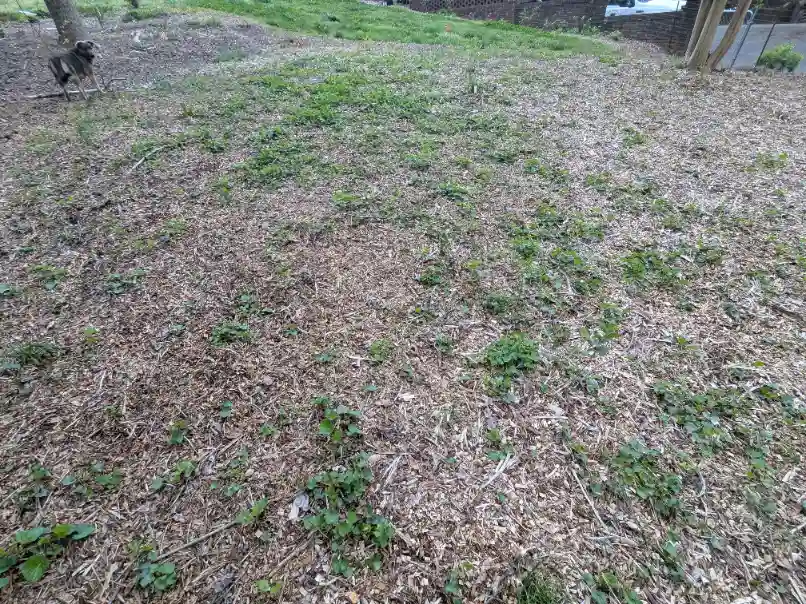
Annual Weeds vs. Perennial Weeds: Why This Distinction Changes Everything
This is the single most important thing to understand before you start spreading mulch, and almost no blog explains it clearly enough.
Annual weeds grow from seed, complete their full life cycle in one season, and die. Plants like crabgrass, chickweed, and henbit fall into this category. Their root systems are shallow and their stems are weak. A 2 to 3 inch layer of mulch is enough to block their germination and smother any that are already sprouting.
Perennial weeds are completely different. Plants like nutsedge, bindweed, English ivy, and greenbriar have deep root systems that store energy underground. Even if the top growth dies, the roots survive and send up new shoots. Mulch alone will not kill these weeds. You need to pull or cut them down to ground level first, and then apply your mulch layer to prevent regrowth.
The mistake I see constantly: someone lays mulch over a bed full of established perennial weeds, expects the problem to go away, and then wonders why the weeds are poking through three weeks later. The mulch did not fail. The preparation did.
Does Mulch Kill Grass?
Yes, it can. But just like with weeds, your grass type determines how easy or difficult that process will be.
Clumping grasses like tall fescue and Kentucky bluegrass grow from a central crown that sits right at the soil surface. When you lay a 4-inch layer of dense wood chips over them, moisture gets trapped around that crown and causes it to rot. The grass cannot regenerate without its crown. These grasses respond well to mulching and typically die within 4 to 6 weeks.
Spreading grasses are a completely different challenge, and this is where most US homeowners in warm climates get stuck. Grasses like Bermuda, St. Augustine, zoysia, and centipede spread through underground stems called rhizomes and above-ground runners called stolons. They do not depend on a single crown point. They can regenerate from almost any node along those stems.
To smother spreading grasses effectively, you need 6 to 8 inches of coarse wood chips, and you need to give the process time to work. A standard 2 to 3 inch layer will not do it. The grass will find its way around and through before it ever runs out of energy.
If you are dealing with Bermuda grass specifically, some lawn professionals push the depth to 8 to 12 inches for reliable results, especially in summer when the grass is actively growing and has maximum stored energy.
The Mulch Kill Confirm Method
Before you buy a single bag of mulch, run through these three checks. I call this the Mulch Kill Confirm Method because it works consistently when people actually follow it, and it breaks down into three decisions that any homeowner can make in under five minutes.
Check 1: Identify Your Target
Ask yourself two questions.
Is your weed annual or perennial? If you are not sure, look at the root system. Annual weeds pull out easily with shallow, fibrous roots. Perennial weeds resist pulling and often snap off at the surface because their roots go deep.
Is your grass clumping or spreading? Fescue and bluegrass form distinct clumps and do not spread aggressively. Bermuda and St. Augustine spread sideways rapidly and are hard to contain.
Your answers to these two questions determine your entire strategy.
Check 2: Apply the Right Depth
This is non-negotiable. Here is the depth guide based on target type:
| Target | Minimum Mulch Depth |
|---|---|
| Annual weeds | 2 to 3 inches |
| Perennial weeds (after pulling first) | 3 to 4 inches |
| Clumping grass like fescue or bluegrass | 4 inches |
| Spreading grass like Bermuda or zoysia | 6 to 8 inches |
| Aggressive rhizomatous grasses in warm climates | 8 to 12 inches |
Use coarse wood chips for the best results. They stay dense, resist compaction, and break down slowly enough to maintain their barrier for the full suppression period. Shredded bark works well too. Avoid fine mulches for this purpose because they compact quickly and let light through the gaps.
Check 3: Give It Enough Time
Mulch is not a spray. It works over weeks, not days. Here is what realistic timelines look like:
- Annual weeds begin to weaken within 7 to 14 days
- Clumping grasses start yellowing within 2 weeks and are typically dead by week 4 to 6
- Spreading grasses like Bermuda take 6 to 8 weeks minimum, sometimes longer in summer
- Stubborn perennial weed roots that were not fully removed can take 8 to 12 weeks to exhaust themselves
Do not pull back the mulch early to check on progress. Every time you disturb the layer you let in light and slow the process down. The one exception is a quick check at the 6-week mark for spreading grasses: pull back a small corner and see if the runners underneath are firm and green or soft and breaking apart. Firm and green means you need more time or more depth.
The Prep Step Most People Skip
Before you lay any mulch, mow your grass as low as your mower safely allows. Cut it right down.
This matters for two reasons. First, it removes stored energy from the plant and shortens the time it takes to die under the mulch. Second, it makes your mulch layer more effective because there is less plant material creating air pockets underneath.
After mowing, water the area deeply. Damp soil underneath the mulch accelerates decomposition and creates the humid conditions that break down crowns and roots faster.
These two steps take about twenty minutes total. They are the difference between mulch that works in six weeks and mulch that is still not working in ten.
Why Mulch Sometimes Fails
Mulch gets a bad reputation because people apply it incorrectly and then blame the method. Here are the most common failure points.
Too shallow. Anything under 2 inches is decorative, not functional. Light still gets through.
Wrong mulch type. Fine, light mulch compacts and shifts. It does not hold a solid barrier. Coarse wood chips are the most reliable for weed and grass suppression.
No prep. Laying mulch over tall, dry grass with no mowing and no watering is the single biggest cause of mulch failure. The grass has too much stored energy and the mulch cannot create the right conditions fast enough.
Perennial weeds left in place. As covered above, deep-rooted perennials will push through almost anything if the roots are not addressed first.
Mulch placed too close to plant stems. While you want depth over the grass and weeds you are trying to kill, keep mulch at least 3 inches away from the base of any plants, shrubs, or trees you want to keep. Mulch piled against a trunk traps moisture and causes crown rot and bark decay, which can eventually kill the plant.
What to Do When Weeds Come Through Anyway
Even a perfect mulch job will eventually see new weeds. New seeds arrive constantly by wind and birds, and they will happily germinate in decomposing organic mulch that has started to break down on the surface.
The fix is straightforward. Top up your mulch layer once a year, usually in spring before weed germination season picks up. Adding 1 to 2 inches annually keeps the barrier effective and prevents the gradual thinning that lets weeds re-establish.
For any weeds that do push through, pull them before they go to seed. A weed that seeds out in your mulch bed will create hundreds of new problems. Catch them early and the maintenance load stays very low.
Frequently Asked Questions
Will mulch kill weeds permanently? No mulch will kill weeds permanently. What it does is significantly reduce weed pressure while it is maintained at the right depth. New seeds will always arrive from outside. Annual top-ups and spot pulling of breakthrough weeds is the realistic long-term approach.
Can I put mulch directly over weeds without pulling them first? For annual weeds, yes. A 2 to 3 inch layer at the right depth will smother them effectively. For perennial weeds with established root systems, no. Pull or cut them to ground level first. Mulching over intact perennial roots just delays regrowth rather than ending it.
How long does it take for mulch to kill grass? Clumping grasses like fescue die within 4 to 6 weeks under a solid 4-inch wood chip layer. Spreading grasses like Bermuda take 6 to 8 weeks at 6 to 8 inches, and aggressive warm-season varieties can take longer. Season matters too. Summer heat speeds up decomposition and smothering significantly.
Does rubber mulch kill weeds? Rubber mulch suppresses weeds through light blocking just like organic mulch. However, it does not decompose or improve your soil, and some research raises concerns about heavy metals leaching into the ground over time. For pure weed suppression in a permanent bed, it works. For general lawn or garden use, organic wood chips are a healthier long-term choice.
What is the best mulch type for killing weeds? Coarse wood chips and shredded hardwood bark are the most effective for weed suppression. They stay dense, maintain depth, and decompose slowly enough to hold their barrier through the full suppression period. Straw and grass clippings decompose too quickly to be reliable on their own for this purpose.
Mulch is one of the most effective chemical-free tools available for clearing both grass and weeds from any area of your lawn or garden. The Mulch Kill Confirm Method keeps it simple: know your target, apply the right depth, and give it the time it needs. Get those three things right and you will rarely be disappointed with the results.
For more practical lawn guides, browse the full resource library at genlawn.com, or reach out to the GenLawn team directly if you want a personalized assessment of your lawn situation.
About the Author
Khalid Fazal is a seasoned lawn care specialist and horticultural researcher with over 15 years of hands-on experience transforming challenging landscapes into lush, resilient green spaces. His journey didn’t start in a lab, but in a backyard full of stubborn, cracked clay that “experts” said would never grow a healthy blade of grass. Refusing to accept a yard full of dust, Khalid spent years experimenting with organic soil restoration and precise mulching—eventually turning that wasteland into a neighborhood showpiece on a shoestring budget.
From mastering core aeration techniques to optimizing soil pH for specialized turf varieties, Khalid’s approach combines old-school grit with modern agronomic science. He founded Gen Lawn to provide homeowners with honest, research-backed advice that prioritizes long-term soil health over quick-fix chemical solutions. When he isn’t analyzing soil profiles, he’s developing precision tools to help others achieve professional results without the professional price tag.
References
- Iowa State University Extension, How to Kill Grass to Create a New Garden Bed: https://www.extension.iastate.edu
- Colorado State University Extension, Mulching: https://extension.colostate.edu/resource/mulching
- University of Maryland Extension, Excess Mulch Problems: https://extension.umd.edu/resource/excess-mulch-problems
- Texas A&M AgriLife Extension, Weed Management in Landscapes: https://agrilifeextension.tamu.edu
- Gardening Know How, Why Weeds Come Up In Mulch: https://www.gardeningknowhow.com/garden-how-to/mulch/weed-growth-in-mulch.htm
- Garden Professors, How to Get Rid of Your Lawn: https://gardenprofessors.com/how-to-get-rid-of-your-lawn

Lawn Winterizer: When to Apply by Grass & Region [2026]
Table of Contents Home / By Khalid Fazal | Updated:...
Read More
Spring Lawn Care: What to Do and When in Every US Region
Table of Contents Home / By Khalid Fazal | Updated:...
Read More
Lawn Maintenance Checklist by Season and Grass Type (2026)
Table of Contents Home / By Khalid Fazal | Updated:...
Read More
Liquid Fertilizer vs Granular Fertilizer: Which Wins?
Table of Contents Home / By Khalid Fazal | Updated:...
Read More