
The Best Mulch for Erosion Control: Types, Depth, and How to Apply It the Right Way
Introduction
You step outside after a heavy rainstorm and notice it — a thin layer of dark soil washed across your driveway, a bare patch on your slope where grass used to be, or a muddy channel forming in your yard.
That’s erosion. And it gets worse every time it rains.
Here’s the thing most homeowners don’t realize: it doesn’t take a hillside or a flood to lose topsoil. Even a gentle slope with bare ground loses soil with every rain event. Over time, that means exposed roots, patchy grass, and in some regions, stormwater runoff violations under local ordinances.
But wait — there’s a fix that costs far less than regrading or landscaping overhauls. According to the U.S. Environmental Protection Agency, proper mulching can reduce soil loss by up to 90% or more. That’s not a small number.
In this guide, we’ll break down the best types of mulch for erosion control, how deep to apply them, and exactly how to get it right — whether you’re dealing with a mild slope or a steep hillside.
Why Your Soil Erodes (And Why Bare Ground Is the Real Enemy)
How Rain Breaks Soil Apart Before It Even Runs Off
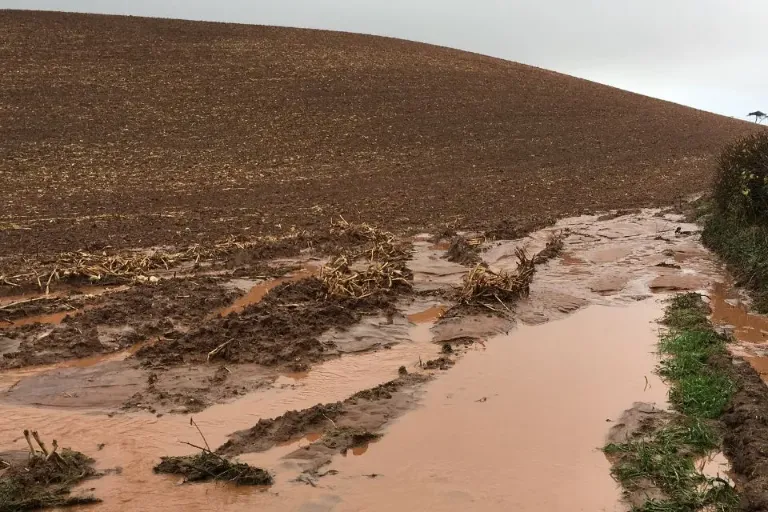
Most people think erosion is about water flowing across the surface. But the damage actually starts before that. When a raindrop hits bare soil, it dislodges individual soil particles in a process called splash erosion — essentially a tiny explosion of soil on impact. Those loose particles are then carried away by surface runoff.
Bare soil is also prone to surface crusting, where the top layer seals over after rain and blocks water from soaking in. That means more runoff, not less.
The Slope Problem: When Gravity Makes Everything Worse
Even a 10–15% slope changes the equation dramatically. Gravity accelerates surface water, giving it more energy to carry soil particles downhill. The steeper the grade, the faster it moves — and the more soil it takes with it.
This is why slope-specific mulch selection matters. What works on a flat garden bed won’t hold up on a hillside.
Warning Signs You Already Have an Erosion Problem
Keep an eye out for exposed roots near trees, soil buildup at the base of slopes, muddy water running off your property during rain, or gully lines forming in your yard. These are not cosmetic issues — they’re signs that your topsoil is actively leaving your property.
Best Mulch for Erosion Control: A Type-by-Type Breakdown
Not all mulch performs the same under pressure. Here’s what actually works — and when to use each type.
Straw Mulch — Fast, Cheap, and Temporary by Design

Straw is the go-to for newly seeded areas. It’s lightweight, biodegradable, and gets down fast. According to NC State Extension, straw mulch lasts about three months — typically long enough for grass seed to establish and take over erosion control naturally.
The catch: straw blows away easily. On any slope or windy area, it must be anchored using a tackifier (a spray-on binding agent) or crimped into the soil mechanically. Do not skip this step.
Wood Chip Mulch — The Heavy-Duty Workhorse
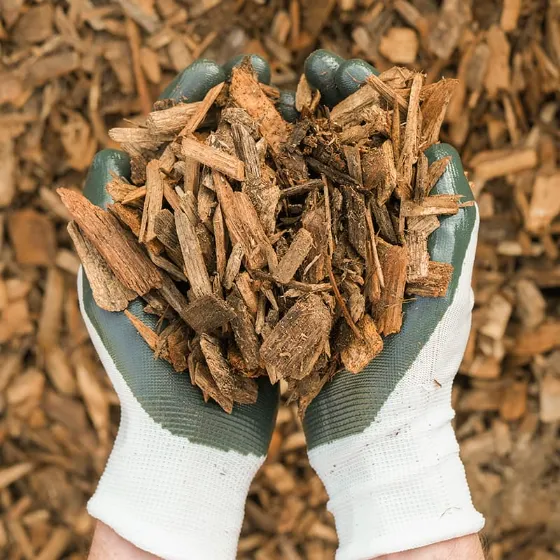
Wood chips are heavier than straw, which means they stay put better on mild-to-moderate slopes. They’re great for landscaped areas and around trees and shrubs. They also break down slowly, enriching the soil over 1–2 years before needing replenishment.
One note: wood chips are not ideal for fine turf areas. The Minnesota Stormwater Manual advises against using them in areas where lawn grass establishment is the goal.
Shredded Bark — Best for Sloped Landscaping Beds
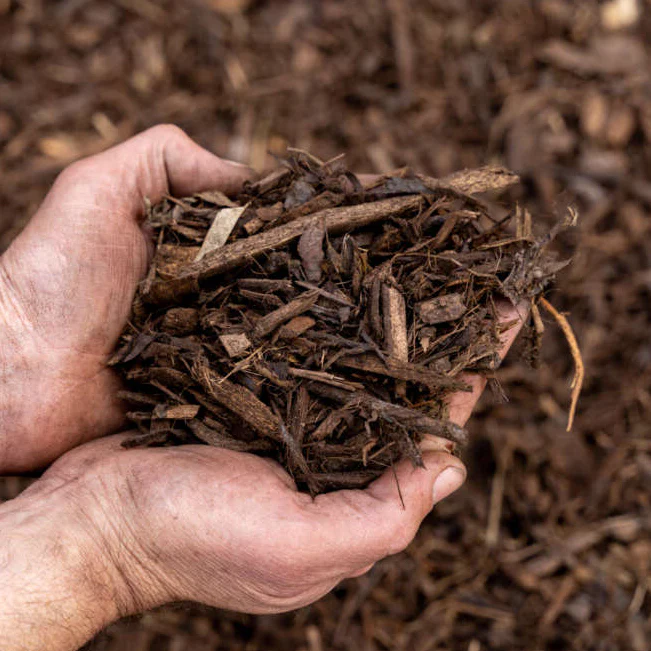
Shredded bark — particularly pine or hardwood bark — is the slope specialist. Its irregular texture locks pieces together, making it more resistant to sliding and washout than wood chips. It also looks polished in landscaped beds.
Bark lasts considerably longer than straw or wood chips. Under good conditions, bark mulch can last 4 to 7 years before needing significant replacement, though an annual top-off is recommended.
Compost — When You Want Erosion Control + Soil Health
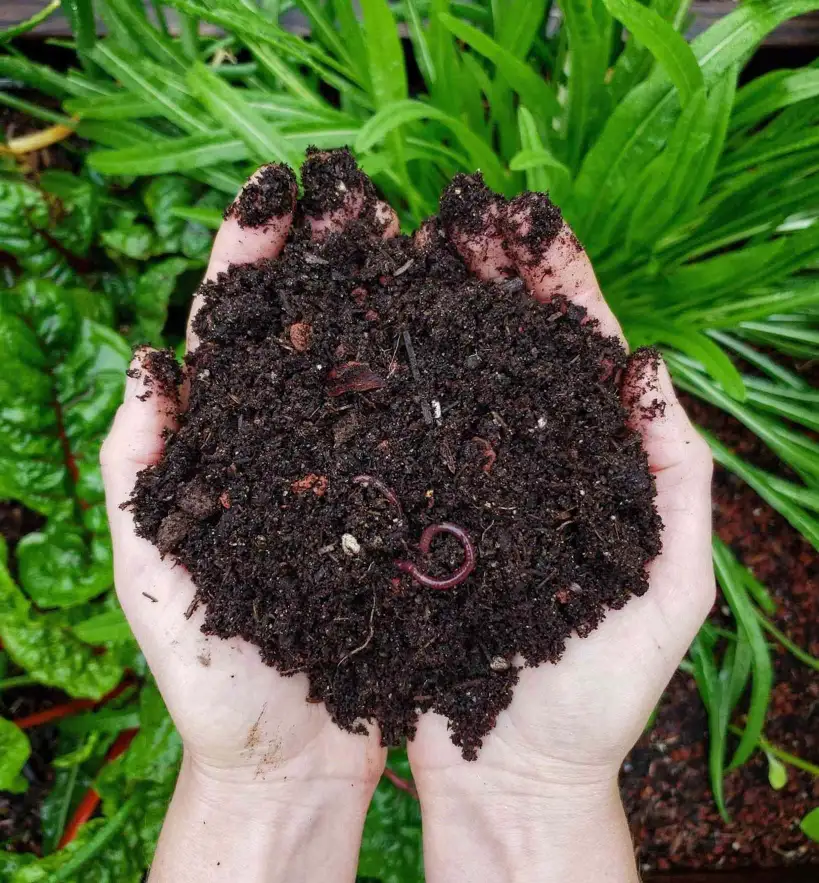
Compost does double duty: it protects soil from erosion while simultaneously improving soil structure and fertility beneath it. It’s the right call when you’re dealing with damaged, compacted, or nutrient-depleted soil that needs rebuilding alongside protection.
Apply compost at 1–2 inches on mild slopes. On steeper grades (2:1 or steeper), NC State Extension recommends up to 4 inches for adequate coverage. Replenish annually.
Gravel and Stone — When You Need Something Permanent
In high-flow areas — drainage channels, downspout discharge zones, or areas that stay wet — organic mulches wash away no matter how well you apply them. This is where gravel or stone steps in. According to EPA stormwater research, gravel application can reduce soil loss by up to 95%.
It doesn’t enrich the soil and costs more upfront, but it’s a one-time application in the right context.
Quick Comparison: Mulch for Erosion Control at a Glance
| Mulch Type | Best For | Slope Suitability | Lifespan | Relative Cost |
|---|---|---|---|---|
| Straw | Seeded areas, flat-to-mild slopes | Up to 2:1 | ~3 months | Low |
| Wood Chips | Landscaped beds, gentle slopes | Mild–moderate | 1–2 years | Low–Moderate |
| Shredded Bark | Sloped beds, visual landscaping | Moderate–steep | 4–7 years | Moderate |
| Compost | Damaged soil + erosion control | Mild–moderate | ~1 year | Moderate |
| Gravel/Stone | High-flow zones, permanent fixes | Any grade | Indefinite | Higher |
How Deep Should Mulch Be for Erosion Control?
The 2–3 Inch Standard (And When to Go Deeper)
For most residential erosion situations, a 2–3 inch layer is the target. This depth is thick enough to absorb raindrop impact and slow surface runoff, while still allowing water to infiltrate into the soil below rather than running off the top of the mulch itself.
Go too thin — under 1.5 inches — and you’re leaving soil exposed. Go too thick — over 4 inches in most cases — and you risk blocking air and moisture from reaching plant roots.
What Happens If You Apply Too Little — or Too Much
Under-mulched areas develop gaps where rain hits bare soil directly. You’ll see this as small craters or channels forming in the mulch over time. Over-mulched areas can suffocate grass and plant roots or create a thick mat that sheds water rather than absorbing it.
Slope-Specific Depth Guide
| Slope Grade | Recommended Depth | Notes |
|---|---|---|
| Flat to gentle (under 5%) | 2 inches | Standard application, minimal anchoring needed |
| Moderate (5–15%) | 2–3 inches | Consider netting on straw or lightweight mulch |
| Steep (15%+) | 3–4 inches | Use shredded bark or compost; anchor required |
How to Apply Mulch for Erosion Control — Step by Step
Step 1 — Clear and Grade the Area First
Remove weeds, rocks, and debris before you lay anything down. Fill any existing rills or gullies with fresh soil and compact lightly. Mulch applied over an uneven or rutted surface will perform poorly — water will find the low spots and channel underneath it.
Step 2 — Apply at the Right Depth for Your Slope
Spread mulch evenly using a rake, working from the top of the slope downward. Aim for consistent depth across the entire area — thin spots are where erosion breaks through.
Step 3 — Anchor Mulch on Steep Grades
On slopes greater than 2:1, mulch must be secured. Your options are:
- Tackifier spray — a biodegradable binding agent applied on top of straw
- Erosion control netting — staked mesh that holds mulch in place; remove once vegetation establishes
- Crimping — mechanically pressing straw into the soil surface using a crimping tool
For slopes steeper than 3:1, the Kentucky Division of Water recommends pairing mulch with erosion control blankets for full protection.
Step 4 — Water Lightly and Inspect After Rain
Give mulch a light watering immediately after application to help it settle. Then inspect after every significant rain event for the first month. Look for thin spots, displaced material, or early signs of channeling.
Step 5 — Seasonal Maintenance and Replenishment Schedule
Organic mulch breaks down — that’s part of how it works. But it also means you need to top it up. A general maintenance schedule:
- Straw: Replace after 3 months or when coverage drops below 75%
- Wood chips / compost: Top off annually in spring
- Bark: Inspect annually; major replenishment every 2–3 years
- Best time to apply: Early spring or fall, when soil is moist and temperatures are moderate
When Mulch Alone Isn’t Enough
Pairing Mulch with Ground Cover Plants on Severe Slopes
Mulch is a temporary or supplemental solution on steep grades. The best long-term erosion control is living root systems. Pairing mulch with deep-rooted native ground covers — like creeping juniper, native grasses, or crown vetch — gives you mechanical soil stabilization that mulch alone can’t provide.
Use mulch to protect the soil while those plants establish. Once rooted, they take over as the primary erosion defense.
Erosion Control Blankets: What They Are and When You Need One
Erosion control blankets (ECBs) are rolled mesh or fiber mats that are staked directly to the soil surface. They’re used on slopes steeper than 3:1, in drainage ditches, and anywhere mulch alone can’t stay in place. ECBs are often used in combination with seeding — seed germinates through the mat while the blanket holds everything together.
If your yard has a slope that’s washing out despite multiple mulch applications, blankets are the next step.
When It’s Time to Call a Lawn Professional
Some erosion problems are deeper than a mulch fix can reach. If you’re seeing large gully formation, foundation exposure, or runoff leaving your property onto neighboring land, you need a professional assessment. A lawn care specialist can evaluate slope grade, soil type, drainage patterns, and recommend the right combination of solutions — from regrading to retaining features to planting plans.
Frequently Asked Questions About Mulch for Erosion Control
What is the best mulch for erosion control on a slope?
Shredded bark is generally the best all-around choice for sloped landscaping beds — it’s heavy enough to stay put and lasts years. For newly seeded slopes, straw is the right first move, but it must be anchored with a tackifier or netting.
How deep should mulch be for erosion control?
Aim for 2–3 inches in most situations. Go up to 4 inches on steep slopes or in areas with heavy rain exposure. Anything under 1.5 inches provides minimal protection.
Does mulch actually stop erosion?
Yes — when properly applied, it does. The EPA documents soil loss reductions of 90% or more with correct mulch application. The key word is “properly” — depth, mulch type, and anchoring all determine effectiveness.
Can I use mulch instead of grass seed for erosion control?
Mulch is best used with grass seed, not instead of it. Mulch protects newly seeded areas and holds moisture for germination. Grass seed provides the permanent root system that takes over long-term erosion control once established.
How often should I replace mulch for erosion control?
Organic mulches like straw need replacement every 3 months. Wood chips and compost should be refreshed annually. Shredded bark can go 2–3 years between major replenishments, with light annual top-offs. Inorganic options like gravel are essentially permanent.
Conclusion: Protect Your Yard Before the Next Rain
Here’s what to take away from this guide:
- Mulch type matters — match it to your slope grade and whether you’re seeding or just stabilizing
- Depth is non-negotiable — 2–3 inches minimum, anchored on any slope over 2:1
- Organic mulch breaks down — build replenishment into your seasonal lawn care routine
- Severe erosion needs more than mulch — ground cover plants, blankets, and professional assessment are the next layer
Don’t wait for another storm to remind you. Apply mulch now, protect your topsoil, and if your yard needs a more comprehensive solution, reach out to a local lawn care professional for a site assessment.
References & Further Reading
- EPA Best Management Practice: Mulching — U.S. Environmental Protection Agency
- Mulch Options for Erosion Control on Construction Sites — NC State Extension
- Erosion Prevention Practices: Natural and Synthetic Mulches — Minnesota Stormwater Manual
- Protecting Soils with Mulch and Erosion Control Materials — Kentucky Division of Water / USDA-aligned resource
- USDA NRCS — Soil Erosion — Natural Resources Conservation Service
- Mulching Tips for Erosion Control — Pro Landscapes MD (industry practitioner reference)
About Author
Khalid Fazal is a seasoned lawn care specialist and horticultural researcher with over 15 years of hands-on experience transforming challenging landscapes into lush, resilient green spaces. His journey didn’t start in a lab, but in a backyard full of stubborn, cracked clay that “experts” said would never grow a healthy blade of grass. Refusing to accept a yard full of dust, Khalid spent years experimenting with organic soil restoration and precise mulching—eventually turning that wasteland into a neighborhood showpiece on a shoestring budget.
From mastering core aeration techniques to optimizing soil pH for specialized turf varieties, Khalid’s approach combines old-school grit with modern agronomic science. He founded Gen Lawn to provide homeowners with honest, research-backed advice that prioritizes long-term soil health over quick-fix chemical solutions. When he isn’t analyzing soil profiles, he’s developing precision tools to help others achieve professional results without the professional price tag.

Lawn Winterizer: When to Apply by Grass & Region [2026]
Table of Contents Home / By Khalid Fazal | Updated:...
Read More
Spring Lawn Care: What to Do and When in Every US Region
Table of Contents Home / By Khalid Fazal | Updated:...
Read More
Lawn Maintenance Checklist by Season and Grass Type (2026)
Table of Contents Home / By Khalid Fazal | Updated:...
Read More
Liquid Fertilizer vs Granular Fertilizer: Which Wins?
Table of Contents Home / By Khalid Fazal | Updated:...
Read More