
How to Store Mulch the Right Way (And Keep It Fresh for Months)
You bought a load of mulch. Maybe it’s sitting in your driveway right now. Maybe you have leftover bags from last season stuffed in the back of your garage.
Here’s what most homeowners don’t realize: mulch doesn’t just sit there safely. Left without proper care, it turns sour, grows toxic, and can actually kill the very plants you were trying to protect.
Here’s the good news — storing mulch correctly isn’t complicated. You just need to understand two things: moisture and airflow. Get those right, and your mulch stays fresh for months — even through an entire winter.
This guide covers everything: how to store bagged mulch, how to store bulk mulch, how to handle different mulch types, and how to rescue mulch that’s already showing signs of going bad. Nothing gets left out.
Let’s get into it.
Why Mulch Goes Bad in the First Place
Before jumping into storage steps, it helps to understand why mulch deteriorates. Because once you know the enemy, the solution becomes obvious.
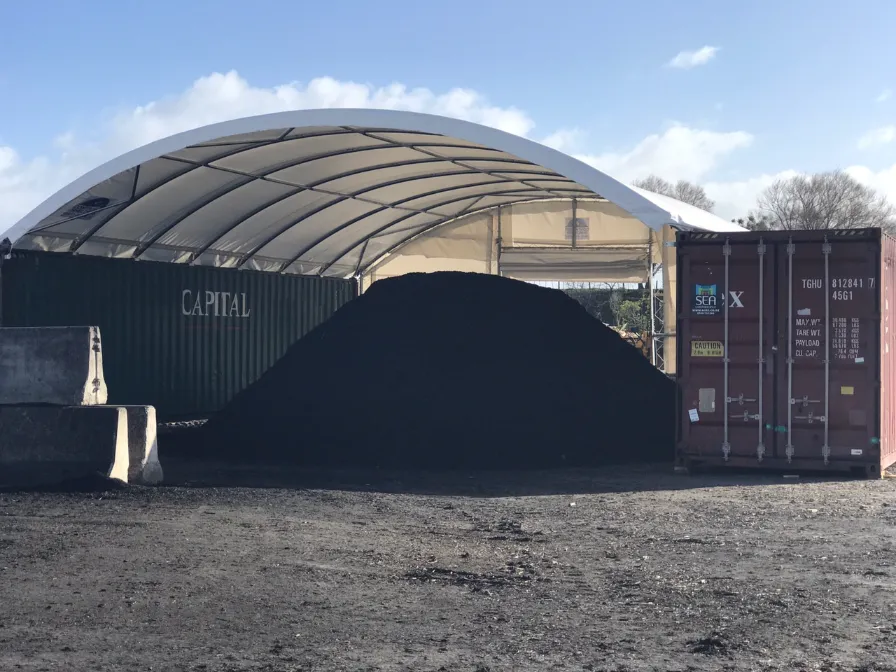
The Two Enemies of Stored Mulch
The two things that destroy stored mulch are excess moisture and poor airflow — and they almost always work together.
When mulch stays wet without air moving through it, the organic material inside begins a process called anaerobic decomposition — where bacteria break down organic matter without oxygen, producing harmful chemical byproducts in the process. The result is a pile that smells terrible and becomes genuinely hazardous to your plants.
The second culprit is trapped moisture alone — which creates a breeding ground for mold, fungi, and rapid breakdown even before the fermentation stage kicks in.
What Is Sour Mulch — And Why It’s Dangerous
This is the big one most homeowners never see coming.
According to the University of Maryland Extension, when wood mulch is stored in large piles without adequate airflow, it undergoes anaerobic fermentation — a process where microorganisms convert organic carbohydrates into compounds like ethanol and methanol. These volatile chemicals build up inside the pile and are released as gases that are directly toxic to plants. The technical name is wood alcohol syndrome, more commonly called sour mulch.
You’ll know it immediately by the smell: vinegar, rotten eggs, ammonia, or sulfur. If your mulch smells anything like that — don’t spread it. Not until you’ve treated it first (more on that below).
Plant damage from sour mulch shows up as bleached or scorched foliage, wilting, yellowing leaves, and in serious cases, plant death. Woody plants usually recover, but annuals and perennials often don’t.
How to Store Mulch in Bags — Step-by-Step
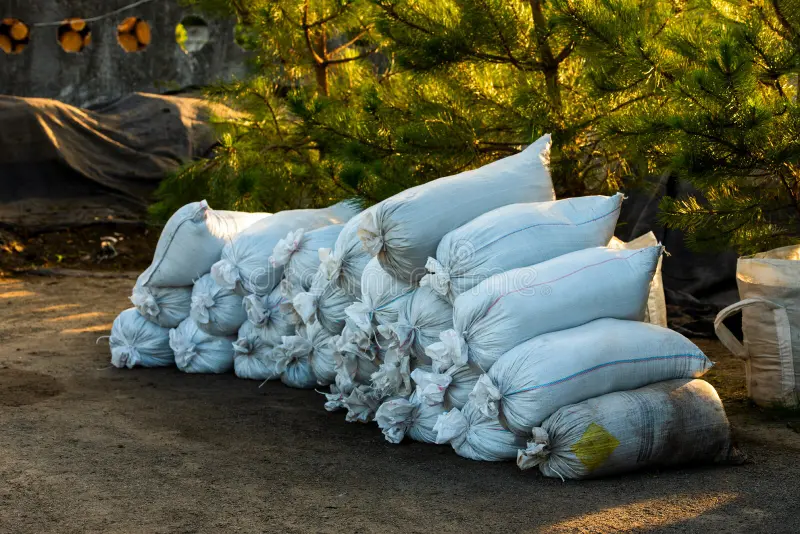
Bagged mulch is the most common format for homeowners — and also the most mishandled. Here’s exactly how to get it right.
Step 1 — Check the Ventilation Holes First
Most commercial mulch bags come pre-punched with small ventilation holes. But not all do — especially off-brand or bulk-packaged options.
Before putting any bag into storage, inspect each one. If it’s fully sealed, use a knife or screwdriver to poke 2–3 small holes on each side. The goal is controlled airflow — not wide exposure — so don’t slice the bag open wide.
Step 2 — Elevate the Bags Off the Ground
Never store mulch bags directly on bare soil or a concrete floor. Moisture seeps up from below — especially in garages and outdoor sheds — and quietly soaks into the bottom layers without you noticing until mold has already formed.
Use wooden pallets, bricks, or inverted plastic bins to get the bags off the surface. Stack them neatly with a small gap between layers for airflow.
Step 3 — Find the Right Storage Location
The best place to store bagged mulch is inside a garage, shed, or covered patio — anywhere that provides shade, a roof, and airflow.
If indoor storage isn’t an option, a heavy-duty outdoor storage box with side ventilation works well. Avoid storing bags near fertilizers, gasoline, or lawn chemicals — mulch absorbs odors and chemical residue from surrounding materials more easily than you’d expect.
How Long Does Bagged Mulch Last in Storage?
A fully sealed, completely dry bag can technically last for years. The issue is that most bags have small pre-punched holes that gradually allow moisture in — and once that happens, the useful window shrinks fast.
Here’s a practical storage timeline:
| Timeframe | Condition | What To Do |
|---|---|---|
| 1–4 weeks | Minimal risk | Keep dry, store in shade |
| 1–3 months | Moderate risk | Proper setup; check every 2–3 weeks |
| 3–6 months | Higher risk | Only use if earthy smell + looks clean |
| 6+ months | High risk | Smell test first; treat if sour |
If you’re in a high-humidity region — the Southeast, Pacific Northwest, or the Midwest in summer — check stored bags more frequently. Heat and humidity are the fastest way to turn a good bag of mulch into a problem.
How to Store Bulk Mulch Outdoors
Bulk mulch — ordered by the yard and delivered by truck — needs a different approach. You’re working with a larger volume, which means the risks (especially sour mulch) are amplified if you get the setup wrong.
Step 1 — Pick an Elevated, Well-Drained Spot
Never dump bulk mulch into a low-lying area where rainwater pools after a storm. Pick a spot that’s elevated or well-drained — a concrete slab, gravel pad, or base of wooden pallets all work well.
Avoid placing the pile in full sun. Direct heat dries out the outer layer rapidly, causing compaction and accelerating nutrient breakdown — while the core stays wet and oxygen-deprived.
Step 2 — Lay a Base Tarp First
Before placing your mulch pile, lay down a thick tarp or landscape fabric underneath it. This barrier does three important things:
- Blocks ground moisture from wicking upward into the pile
- Prevents the mulch from mixing with dirt, debris, or grass
- Makes cleanup and moving significantly easier when you’re ready to use it
If mulch sits directly on soil without a barrier, it begins decomposing from the bottom up — a mistake that’s invisible until the damage is done.
Step 3 — Cover Loosely — Never Seal It Tight
Place a second tarp loosely over the top of the pile. The keyword here is loosely.
You want to block rain, snow, and direct sun — but you absolutely do not want to wrap the pile airtight like a package. Leave air gaps at the corners and bottom edges for natural ventilation. Anchor the tarp with bricks, buckets, soil staples, or landscape pins — just never seal the edges down completely.
Here’s why this matters: a sealed pile traps condensation inside, creating exactly the wet, zero-oxygen environment that produces sour mulch. The tarp is a roof, not a bag.
Pro tip from the field: Keep bulk mulch piles under 6–8 feet in height. The University of Maryland Extension notes that beyond this height, the core of the pile gets fully cut off from oxygen — and that’s precisely where anaerobic fermentation begins.
Bulk Mulch Storage Timeline at a Glance
| Duration | Setup Needed | Check Frequency |
|---|---|---|
| 1–4 weeks | Loose tarp cover only | Once before use |
| 1–3 months | Full two-tarp method | Every 2–3 weeks |
| 3–6 months | Two-tarp + elevated base | Weekly smell check |
| 6+ months | Full setup + aeration | Aerate before use |
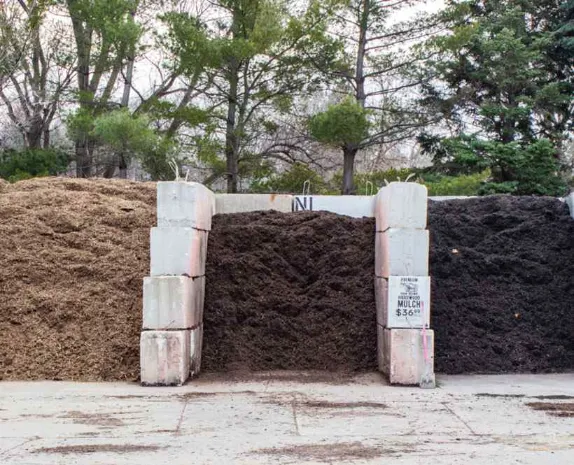
How to Store Different Types of Mulch
Not all mulch behaves the same way during storage. The type of mulch you have determines how careful you need to be.
Wood Chip or Bark Mulch
The most common and most forgiving type. Stored correctly, bark mulch can last from several months to multiple years. According to Penn State Extension, wood-based mulches are among the most effective when properly maintained.
The primary risk is piling it too high — keep bulk wood chip piles under 6–8 feet to prevent anaerobic conditions forming in the core.
Straw or Hay Mulch
Straw is the most moisture-sensitive mulch type available. Even moderate dampness accelerates breakdown fast. Store straw or hay mulch exceptionally dry — ideally indoors or under a weatherproof tarp in a consistently dry location.
In rainy regions like the Pacific Northwest or the Southeast, straw mulch is a poor candidate for long-term storage. Plan to use it quickly or skip the purchase until you need it.
Compost Mulch
Compost has already gone through decomposition once — which means it behaves differently from bark or wood chip mulch. It needs to stay slightly damp (not soaked) and should be turned periodically to prevent heavy compaction and clumping. A covered pile with consistent airflow is the best setup.
Leaf Mulch
Shredded or partially decomposed leaves compact easily when wet, blocking the airflow that keeps the pile healthy. Store leaf mulch in a covered spot with ventilation on the sides, and make sure to fluff the pile with a pitchfork before use if it’s clumped together.
Rubber or Stone Mulch
Rubber mulch and stone don’t decompose, so mold and rot aren’t concerns here. The main issue during storage is cleanliness — these materials collect mud, leaves, and standing water. Keep them covered and off messy ground so they’re ready to spread without a major cleanup step first.
Signs Your Stored Mulch Has Gone Bad — And What To Do
How to Tell If Mulch Is Sour
The smell test is your first and most reliable diagnostic tool. Fresh, healthy mulch smells earthy, woodsy, or mildly sweet. Sour mulch smells like vinegar, rotten eggs, ammonia, or sulfur. There’s no mistaking it once you’ve encountered it.
Visually, look for:
- Black or green slimy patches — anaerobic mold, treat before use
- Heavy compaction — pile too compressed, break it up and aerate
- Grayish-black color throughout — advanced decomposition, compost instead
The White Fuzz Confusion — What Mycelia Actually Is
Here’s the one that trips up almost every homeowner.
You go to check on your stored mulch and find long, white, hair-like strands running through the pile. Before you toss the whole batch — stop.
That’s mycelia — a completely beneficial fungus that naturally grows inside organic material. Mycelia break down organic matter into smaller nutrients that plant roots can absorb more easily. It looks alarming, but it’s actually a sign of healthy, active mulch doing exactly what it’s supposed to do.
The distinction is simple:
 White, hair-like fuzz = mycelia = perfectly safe. Use the mulch.
- Slimy black or green patches + sour smell = treat before using.
 White, hair-like fuzz = mycelia = perfectly safe. Use the mulch.
 Slimy black or green patches + sour smell = treat before using.
Don’t throw away good mulch just because of white fuzz. It’s not a problem — it’s a feature.
Can You Save Sour Mulch?
Yes — in most cases, you can.
Spread the mulch out in a thin layer (2–3 inches deep) on a tarp in direct sunlight. Turn it frequently with a pitchfork and let the sun and airflow evaporate the volatile acids. This typically takes 3–7 days. Once the sour smell is completely gone and it smells earthy again, it’s safe to use around your plants.
Alternatively, water the pile thoroughly to leach the toxic compounds down and away from the surface.
When should you compost it instead of saving it?
- The mulch is slimy with heavy black or green mold
- It’s clearly infested with ants, beetles, or other insects
- The texture has broken down to the consistency of dirt — it’s no longer mulch at this point
Frequently Asked Questions About How to Store Mulch
Can you store mulch in bags over winter?
Yes — winter is actually one of the safer seasons for storage. Keep bags ventilated (poke holes if sealed), elevate them off the floor, and store in a garage or shed. The cooler temperatures slow mold growth significantly compared to summer humidity.
How long can mulch be stored before it goes bad?
It depends on the type and storage conditions. Sealed, dry bagged mulch can last indefinitely. Properly stored bulk mulch stays usable for 3–6 months under good conditions. The best indicator is always the smell — earthy means good, sour means treat it first before applying.
Is it okay to store mulch in a garage?
Absolutely — a garage is one of the best storage locations available to most homeowners. It provides shade, protects from rain and snow, and stays cooler than outdoor temperatures in summer. Just make sure there’s some airflow and the bags are elevated off the concrete floor.
How do you store mulch to prevent mold?
Two non-negotiable rules: keep excess moisture out and keep air moving through the pile. Use ventilated bags, elevate off the ground, use a loose (never sealed) tarp for bulk piles, and avoid humid, enclosed spaces with no airflow. Checking regularly is what separates good storage from a mold problem.
What does it mean when mulch smells like vinegar?
It means the mulch has gone sour through anaerobic fermentation. Do not apply it to plants in this state — the volatile acids will scorch foliage and can kill plants. Spread it thin on a tarp in full sun, turn regularly, and let it air out for several days. Once the smell clears, it’s safe to use.
Key Takeaways
Here’s what to remember every time you handle stored mulch:
- Two enemies, always: Trapped moisture and poor airflow cause almost every storage problem
- Bagged mulch: Ventilate, elevate, store in shade — check every 2–3 weeks in humid climates
- Bulk mulch: Two-tarp method, elevated spot, loose coverage — never seal the pile airtight
- White fuzz = mycelia = completely safe. Don’t throw away good mulch over it
- Sour mulch can usually be saved: Spread thin, let sun and air work, give it a few days
Store it right, and your mulch will be ready to go whenever your lawn needs it — no waste, no repeat trips to the garden center, and no accidental plant damage.
Ready to put your freshly stored mulch to work? Whether you need help with mulch selection, lawn maintenance, or professional installation — Gen Lawn is here to help. Contact our team today and let’s keep your outdoor spaces looking their best all season long.
References & External Sources
- University of Maryland Extension — Toxic Mulch Problems
- Penn State Extension — Mulching Landscape Plants
- Leaf & Limb — When Good Mulch Goes Bad
- Gardening Know How — Storing Bagged Mulch & Mycelia
About Author
Khalid Fazal is a seasoned lawn care specialist and horticultural researcher with over 15 years of hands-on experience transforming challenging landscapes into lush, resilient green spaces. His journey didn’t start in a lab, but in a backyard full of stubborn, cracked clay that “experts” said would never grow a healthy blade of grass. Refusing to accept a yard full of dust, Khalid spent years experimenting with organic soil restoration and precise mulching—eventually turning that wasteland into a neighborhood showpiece on a shoestring budget.
From mastering core aeration techniques to optimizing soil pH for specialized turf varieties, Khalid’s approach combines old-school grit with modern agronomic science. He founded Gen Lawn to provide homeowners with honest, research-backed advice that prioritizes long-term soil health over quick-fix chemical solutions. When he isn’t analyzing soil profiles, he’s developing precision tools to help others achieve professional results without the professional price tag.

Lawn Winterizer: When to Apply by Grass & Region [2026]
Table of Contents Home / By Khalid Fazal | Updated:...
Read More
Spring Lawn Care: What to Do and When in Every US Region
Table of Contents Home / By Khalid Fazal | Updated:...
Read More
Lawn Maintenance Checklist by Season and Grass Type (2026)
Table of Contents Home / By Khalid Fazal | Updated:...
Read More
Liquid Fertilizer vs Granular Fertilizer: Which Wins?
Table of Contents Home / By Khalid Fazal | Updated:...
Read More