Mulch vs Soil: What’s the Real Difference — and Which One Does Your Yard Need?
You’re standing in the garden center. One hand on a bag of mulch. One hand on a bag of topsoil. Both look like brown stuff. Both cost around the same. And the label on each one somehow makes you more confused.
Here’s what most people don’t realize: mulch and soil are not interchangeable. They do completely different jobs — and using the wrong one in the wrong place is one of the most common (and costly) yard mistakes homeowners make every season.
By the end of this guide, you’ll know exactly what each one does, when to use each, how much they cost, and — most importantly — which one your yard actually needs right now.
What Is Soil? The Foundation Every Plant Needs
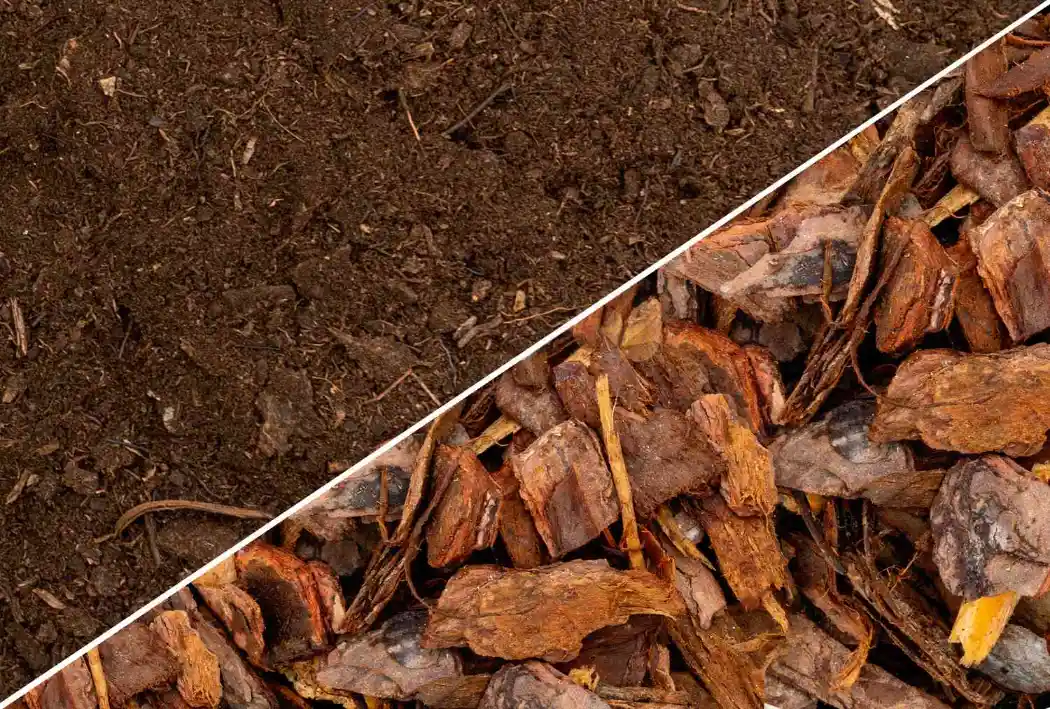
Think of soil as the bed your plants sleep in. It’s the medium where roots grow, stretch out, and pull in everything a plant needs to survive — water, oxygen, and nutrients.
Healthy soil is a living ecosystem. It’s made up of minerals, organic matter, water, air, and billions of microorganisms working together to support plant life. Without it — or without a good substitute — nothing grows.
The Three Types of Soil You’ll Find at the Store
Walk into any home improvement store and you’ll see multiple “soil” products. Here’s what they actually are:
| Soil Type | What It Is | Best For |
|---|---|---|
| Topsoil | The uppermost layer of earth, rich in nutrients | New garden beds, lawn repair, landscaping |
| Garden Soil | Pre-amended topsoil with added compost or fertilizer | Established flower or vegetable beds |
| Potting Mix | Lightweight blend with drainage materials | Containers and indoor pots only |
Quick warning: Potting mix in an outdoor garden bed leads to drainage problems. Topsoil in a container leads to compaction. Match the product to the job.
When to Reach for Soil
Soil is your starting point. Reach for it when you are:
- Starting a brand new garden bed from scratch
- Filling or building raised planters
- Overseeding bare or thin patches in your lawn
- Amending hard, compacted, or clay-heavy ground
- Transplanting new shrubs or perennials into the ground
The rule is simple: if something is going into the ground for the first time, soil comes first.
What Is Mulch? The Protective Layer Your Yard Is Probably Missing
Now picture mulch as the blanket on top of that bed. It doesn’t replace the soil — it protects it.
Mulch is any material spread across the surface of soil to shield it from the elements. It locks in moisture, regulates ground temperature, fights weeds, and — in the case of organic mulch — slowly breaks down to feed the soil underneath.
Organic Mulch vs Inorganic Mulch — What’s the Difference?
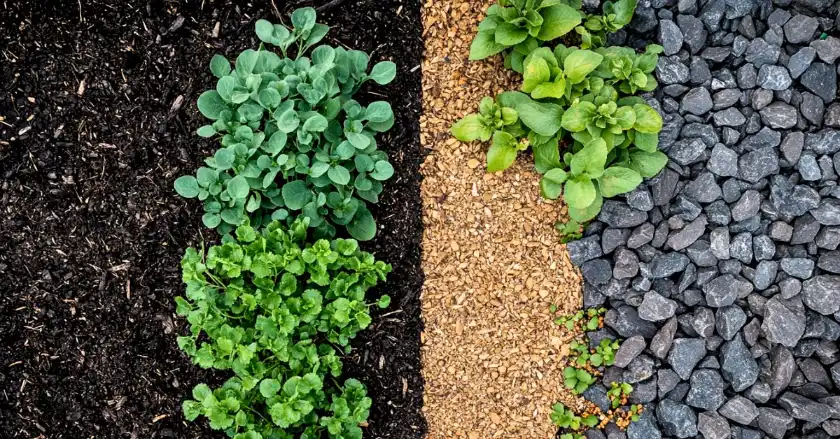
Organic mulch comes from natural materials that decompose over time:
- Wood chips and bark
- Straw and pine needles
- Grass clippings
- Shredded leaves and compost
As organic mulch breaks down, it adds nutrients and beneficial microorganisms back into the soil. The downside: it needs refreshing every 1–3 years.
Inorganic mulch doesn’t decompose:
- Gravel and river rock
- Rubber mulch
- Landscape fabric
It lasts longer and requires less maintenance — but it adds nothing to soil health and can actually trap heat around plant roots in summer.
When Mulch Is the Right Call
Use mulch when you need to protect and maintain what’s already planted:
- Covering established garden or flower beds
- Around the base of trees and shrubs (keeps lawn equipment from damaging roots)
- Suppressing weeds all season without chemicals
- Reducing how often you need to water — mulch can reduce soil moisture loss by up to 50%
- Insulating roots through winter temperature swings
Mulch vs Soil — Head-to-Head Comparison
Here’s the core of what most homeowners actually need to know, laid out clearly:
| Feature | Mulch | Soil |
|---|---|---|
| Primary role | Surface protector | Growing medium |
| Where it goes | On top of soil | Mixed in / below surface |
| Feeds plant roots? | Indirectly (organic only) | Yes, directly |
| Controls weeds? | Yes | No |
| Retains moisture? | Very well | Partially |
| Cost (bulk, materials) | $25–$135/cubic yard | $10–$55/cubic yard |
| Needs replacing? | Every 1–3 years | Rarely |
| Best used for | Protecting established plants | New planting and lawn setup |
The simplest way to remember it: Soil is the bed. Mulch is the blanket. One without the other leaves something missing.
Can You Use Mulch and Soil Together?
Absolutely — and you should.
The ideal setup for any garden bed looks like this:
- Loosen and amend your soil with compost if needed
- Plant your flowers, shrubs, or vegetables
- Lay 2–3 inches of mulch on top — keeping it a few inches away from plant stems
This layered approach gives your plants a nutrient-rich foundation to grow in, while the mulch above preserves moisture, blocks weeds, and regulates temperature. It’s not mulch vs soil — it’s mulch and soil, working as a team.
Common Mistakes That Cost Homeowners Time and Money
Even experienced gardeners make these. Knowing them saves you frustration.
Mulch Volcanoes — Piling Too Deep
Mulch volcanoes are what happens when mulch is piled up high against tree trunks or plant stems — it looks like a volcano. It’s one of the most common landscaping mistakes in the US, and it slowly kills trees and shrubs by trapping moisture against bark, inviting rot and pests.
The correct depth is 2–3 inches maximum. More than that, and you’re suffocating roots and blocking oxygen exchange in the soil. Always keep mulch a few inches clear of any trunk or stem.
Using the Wrong Soil Type
This trips up a lot of first-time gardeners:
- Potting mix outdoors — drains too fast, doesn’t hold weight, and breaks down too quickly in open beds
- Topsoil in containers — compacts under gravity, restricts root growth, and drowns plants
- Garden soil for lawns — usually too heavy and lumpy for overseeding
Always read the label. The right product for the right job makes all the difference.
Skipping Mulch After Planting
You did the hard work — you amended the soil, planted everything beautifully. Then you leave the soil bare.
Here’s what happens: direct sun dries the surface fast, weeds move in within days, and rain erodes the topsoil. Skipping mulch after planting is like making your bed and then throwing the blanket on the floor. One extra step saves hours of weekly weeding and watering.
What About Lawns Specifically?
Here’s where it gets a little different for lawn owners specifically.
Lawns don’t use traditional mulch the way garden beds do. You’re not going to spread wood chips over your grass. But the principles of soil health and surface protection still apply:
- Grass clippings left on the lawn after mowing act as a natural, free mulch — they decompose quickly and return nitrogen to the soil
- Lawn top-dressing — spreading a thin layer of compost (a soil product) over existing grass — is one of the best things you can do for thin or tired lawns
- Overseeding thin patches requires good seed-to-soil contact, which means lightly raking bare spots and applying topsoil before seed goes down
If your lawn has serious soil health issues — compaction, poor drainage, or pH imbalance — a professional assessment is worth the investment before you spend money on the wrong products.
Frequently Asked Questions About Mulch vs Soil
Can I put mulch directly on top of soil?
Yes — that’s exactly how mulch is meant to be used. Spread it 2–3 inches deep across the soil surface, keeping it away from plant stems and tree trunks. Never dig mulch into the soil; it belongs on top as a protective layer.
Does mulch eventually turn into soil?
Organic mulch does break down over time and contributes organic matter to the soil beneath — but this process takes years and the result is not the same as topsoil. You still need proper soil as your growing base. Mulch enhances soil health over time; it doesn’t replace it.
What’s the difference between mulch and topsoil?
Topsoil is a growing medium — it’s where roots develop and plants extract nutrients. Mulch is a surface covering — it protects the soil from heat, moisture loss, and weeds. Topsoil goes in the ground. Mulch goes on top of it.
Is mulch better than soil for flower beds?
Neither is “better” — they do different jobs. Soil is the base your flowers grow in. Mulch goes over the top to protect that soil. For established flower beds, mulch is what you’ll need most to maintain them season to season. For new beds, start with soil.
Should I use mulch or soil around trees?
Use mulch around trees — not soil mounded against the trunk. A proper mulch ring extending 3–4 feet from the trunk at 2–3 inches deep protects surface roots, retains moisture, and keeps lawn equipment at a safe distance. Never pile soil against a tree trunk.
The Bottom Line: Mulch vs Soil
Here’s your simple decision framework before you head to the store:
- Starting fresh? Planting something new? → Start with soil
- Protecting what’s already growing? → Reach for mulch
- Want the best possible results? → Use both, in the right order
The two products aren’t competing — they’re partners. Understanding that one difference will save you money, reduce maintenance, and keep your yard healthier year after year.
Not sure what your lawn actually needs? The team at Gen Lawn can assess your soil health and recommend the right approach for your yard — no guesswork required. [Get in touch with a local lawn care specialist today.]
References & Further Reading
- USDA — Soil Health Basics
- UConn Extension — Mulch Basics (PDF)
- EPA — Composting at Home
- University of Wisconsin Extension — Mulch Volcanoes
- Penn State Extension — Soil Organic Matter
- LawnStarter — Mulch Cost Guide 2026
- LawnLove — Topsoil Cost Guide 2026
About Author
Khalid Fazal is a seasoned lawn care specialist and horticultural researcher with over 15 years of hands-on experience transforming challenging landscapes into lush, resilient green spaces. His journey didn’t start in a lab, but in a backyard full of stubborn, cracked clay that “experts” said would never grow a healthy blade of grass. Refusing to accept a yard full of dust, Khalid spent years experimenting with organic soil restoration and precise mulching—eventually turning that wasteland into a neighborhood showpiece on a shoestring budget.
From mastering core aeration techniques to optimizing soil pH for specialized turf varieties, Khalid’s approach combines old-school grit with modern agronomic science. He founded Gen Lawn to provide homeowners with honest, research-backed advice that prioritizes long-term soil health over quick-fix chemical solutions. When he isn’t analyzing soil profiles, he’s developing precision tools to help others achieve professional results without the professional price tag.

Lawn Winterizer: When to Apply by Grass & Region [2026]
Table of Contents Home / By Khalid Fazal | Updated:...
Read More
Spring Lawn Care: What to Do and When in Every US Region
Table of Contents Home / By Khalid Fazal | Updated:...
Read More
Lawn Maintenance Checklist by Season and Grass Type (2026)
Table of Contents Home / By Khalid Fazal | Updated:...
Read More
Liquid Fertilizer vs Granular Fertilizer: Which Wins?
Table of Contents Home / By Khalid Fazal | Updated:...
Read More