
How to Stop Raccoons from Digging Up Grass (Before They Come Back Tonight)
You stepped outside this morning, coffee in hand — and stopped suddenly.
Chunks of turf turned over. Bare soil where your grass used to be. Entire sections of lawn rolled back like a rug someone peeled up in the middle of the night.
Here’s the reality: a raccoon did that damage in roughly three hours — and if nothing changes, it’ll be back tonight to finish the job. Raccoons are creatures of habit. Once they find a food source in your lawn, they’ll return every single night until it’s gone.
The good news? The fix is more straightforward than you think. This guide covers exactly how to stop raccoons from digging up grass — from understanding why they’re there in the first place, to proven deterrents, to repairing what they’ve already destroyed.
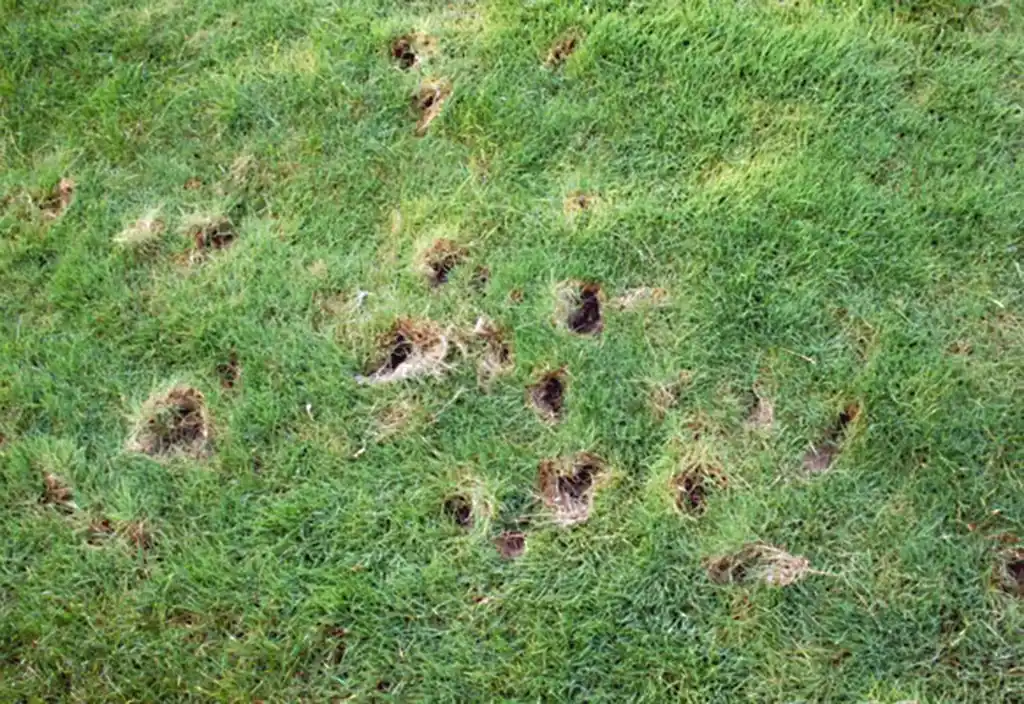
Why Are Raccoons Digging Up Your Grass?
It’s the Grubs — Every Single Time
Raccoons aren’t tearing up your lawn out of spite. They’re hunting.
Specifically, they’re after white grubs — the fat, C-shaped larvae of Japanese beetles, June bugs, and other beetle species that live just below the surface of your soil. These grubs spend most of their lives feeding on grass roots, which makes them an easy, protein-rich meal for raccoons whose front paws are sensitive enough to feel grub movement through the ground.
Here’s what makes fall particularly brutal: between September and November, grubs are at their largest, sitting closest to the surface, and at peak nutritional value for raccoons building up fat reserves before winter. Iowa State University Extension confirms that most raccoon and skunk lawn damage happens in late summer and fall for exactly this reason.
And this number should alarm you: just 5 grubs per square foot is enough to bring raccoons to your yard — even though healthy turf can technically handle up to 20 before showing visible grass damage. Most homeowners have far more than 5.
Your Lawn May Be Inviting Them Without You Knowing
Grubs are the main draw, but raccoons are opportunists.
Once they identify your yard as reliable, other attractants keep them coming back: unsecured garbage cans, pet food left outside overnight, bird feeders, fallen fruit from trees, or compost bins with the wrong contents. Raccoons have sharp memories. Mark a location as a food source, and they’ll come back every night until you remove the reason.
Is It Actually Raccoons? Confirm Before You Act
Before spending time and money, make sure raccoons are the culprit — not skunks or moles, which create similar-looking damage but require different fixes.
Raccoon vs. Skunk vs. Mole: The Visual Difference
| Animal | Damage Pattern | What It Looks Like | Peak Hours |
|---|---|---|---|
| Raccoon | Large rolled-back turf sections | Like a carpet being peeled up | 1–4 AM |
| Skunk | Small cone-shaped holes | Clustered, whirl-shaped digs | Dusk–midnight |
| Mole | Raised tunnels and ridges | Linear mounds, no surface tearing | Dawn and dusk |
Quick Confirmation: What to Look For
Look for hand-shaped paw prints — five fingers with visible claw marks — in soft soil around the damaged area. Raccoon tracks look distinctly human-like. If the sod is rolled back in large sections rather than punctured with individual holes, that’s a raccoon calling card.
Still not 100% sure? Set up an infrared trail camera aimed at the damage site, about 3 feet high, angled downward. You’ll have your answer by morning — no guessing required.
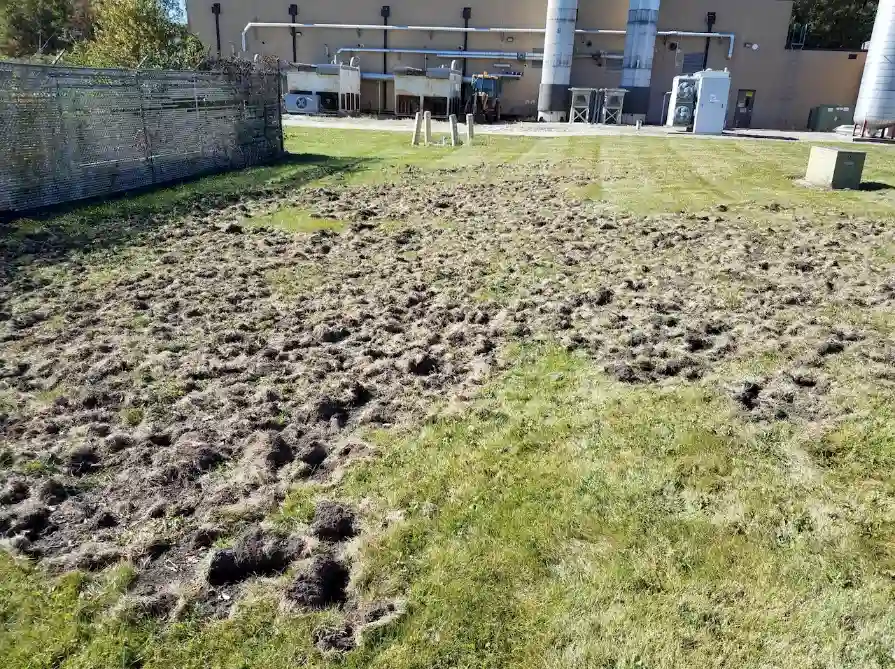
How to Stop Raccoons from Digging Up Grass — What Actually Works
Here’s the thing: no single method will solve this on its own. These steps work best as a combined approach. Start from the top and work your way down.
Step 1: Treat for Grubs First — This Is Non-Negotiable
Every deterrent you use will eventually fail if the food source is still sitting in your soil.
Start by reducing the grub population. You have two main approaches:
Organic options:
- Beneficial nematodes — microscopic roundworms that hunt and kill grubs in the soil. Apply them in late summer or early fall when soil is warm (above 55°F) and moist. Water the area before and after application.
- Milky spore — a naturally occurring bacteria (Paenibacillus popilliae) that infects and kills Japanese beetle grubs. Works long-term but has mixed results depending on your region and grub species.
Chemical options:
- Scotts GrubEx — a widely used preventive grub control applied May through July, before eggs hatch. One application provides all-season coverage for new larvae.
Timing is everything here. The ideal window for preventive treatment is May through July. If raccoons are already tearing up your lawn, it’s likely fall — which means you’re reacting, not preventing. Apply treatment now to stop next season’s infestation, and use Steps 2–5 for immediate damage control.
Step 2: Physical Barriers While the Treatment Kicks In
This is your fastest short-term fix while grub control takes effect.
Lay bird netting or hardware cloth flat across the areas raccoons are targeting and pin it down with landscape staples. Raccoons will attempt to lift it, fail a few times, and eventually move on. The key is patience — keep the netting in place for at least two weeks to break the return habit.
Move it every few days so it doesn’t embed itself in your regrowth.
Step 3: Install a Motion-Activated Sprinkler
Raccoons are easily startled. A cold water blast at 2 AM is one of the most effective deterrents on the market — and one of the most underused.
The Orbit Yard Enforcer and similar models detect motion up to 40 feet away and deliver a targeted burst of water immediately. Position the sprinkler at the main entry points to your lawn — not just directly over the damaged patches — to catch raccoons before they start digging.
Most models run on standard AA batteries, so no outdoor power outlet is needed.
Step 4: Remove Every Other Food Source — Tonight
Even if the grubs are gone, raccoons will linger if other food keeps them in the habit of visiting. Go through this checklist before dark:
- Lock your trash bins — use cans with locking lids or bring them into the garage overnight
- Bring pet food and water bowls inside — even a water bowl will attract thirsty raccoons
- Pick up fallen fruit daily — any fruit tree in your yard is a raccoon magnet in season
- Adjust bird feeders — move them to a raccoon-resistant position or bring seed trays inside at dusk
- Manage your compost — avoid meat, dairy, or strong-smelling scraps; use a sealed compost bin
Step 5: Use Repellents as a Supporting Tool — Not Your Main Plan
Repellents can help reinforce your other methods. Used alone, they rarely hold raccoons off long-term.
- Cayenne pepper sprinkled along lawn edges irritates raccoons’ sense of smell and deters them short-term — but washes off with rain or irrigation. Reapply after every watering cycle.
- Commercial repellents like Critter Ridder or Repels-All use capsaicin and predator scents to create an unpleasant zone. Apply around the perimeter and reapply weekly.
- Coyote urine granules — effective in rural areas where raccoons have actual coyote fear. In urban and suburban areas, city raccoons may not recognize coyote scent as a real threat and may simply ignore it.
What Doesn’t Work (Stop Wasting Time and Money on These)
Most homeowners try at least one of these before finding this article. Save yourself the effort:
- Mothballs — not EPA-approved for outdoor use. They’re toxic to children, pets, and beneficial insects. They also do almost nothing to deter raccoons.
- Chili flakes spread across the lawn — washes away with the first rain or sprinkler cycle. Zero lasting impact.
- Standard electric fencing — raccoons are strong climbers. Most basic setups won’t stop them.
- General insecticides — these kill beneficial soil organisms alongside grubs and don’t address the infestation correctly or sustainably.
- One-time repellent applications — a single spray achieves almost nothing. Repellents only work with consistent, regular reapplication.
How to Fix Your Lawn After Raccoon Damage
The deterrents are in place. Now let’s deal with the damage they’ve left behind.
Act Fast on the Turned-Over Sod
If the sod sections are still intact and just flipped over, fold them back into position before they dry out — even two to three hours of air exposure can kill the roots. Press the sod firmly back down, water it deeply, and apply a phosphorus-rich root-building fertilizer to help re-establish contact with the soil below.
Reseeding Bare Patches That Can’t Be Saved
For areas where the grass is gone:
- Loosen the top inch of soil with a hand rake
- Apply grass seed that matches your existing lawn type — cool-season grasses like fescue and bluegrass for northern US states; warm-season grasses like Bermuda or Zoysia for southern states
- Water lightly twice a day until germination (typically 7–14 days)
- Cover with straw mulch or temporary netting to protect the seed from birds and — importantly — from raccoons attracted back by freshly disturbed soil
Keep your deterrents active throughout the regrowth period. Freshly turned, unrooted soil is a signal to raccoons that there may still be food beneath it.
Frequently Asked Questions About How to Stop Raccoons from Digging Up Grass
What are raccoons actually looking for when they dig up grass?
Raccoons are hunting white grubs — the larvae of Japanese beetles and other beetle species — as well as earthworms and surface-dwelling insects. Their front paws are highly sensitive and can detect grub movement just below the surface of the soil, which makes your lawn an easy hunting ground when grub populations are high.
Does cayenne pepper stop raccoons from digging up grass?
It helps, but only partially and temporarily. Cayenne irritates raccoons’ sense of smell and can discourage digging in treated areas. The problem is that it washes away with rain or irrigation, requiring constant reapplication. It’s best used as part of a multi-method approach rather than as a standalone fix.
Will mothballs keep raccoons away from my lawn?
No — and you should not use them outdoors. The EPA explicitly warns that mothballs are registered only for use in enclosed, airtight spaces. Used outside, they pose a real toxic risk to children, pets, and beneficial garden wildlife.
How do I stop raccoons from digging up my grass at night specifically?
Motion-activated sprinklers are the most effective nighttime deterrent. Raccoons are most active between 1–4 AM, so a motion-detecting sprinkler covers exactly that damage window. Pair this with removing all food attractants before dark and covering vulnerable areas with bird netting.
Is it legal to trap raccoons in my yard in the US?
Trapping and relocation laws vary by state. In most states, you need a permit to trap and relocate wildlife, and some states prohibit relocation entirely due to disease transmission risks. Before setting any trap, check your state wildlife agency’s regulations or hire a licensed wildlife removal professional who already knows the rules in your area.
The Bottom Line
Raccoons digging up your grass comes down to one thing: grubs. Solve that, and you remove the reason they’re there.
Here’s your action plan:
- Tonight: Cover damaged areas with bird netting and remove all outdoor food sources before dark
- This week: Apply a commercial repellent around your lawn perimeter and install a motion-activated sprinkler
- This season: Schedule a grub treatment — beneficial nematodes if you prefer organic, Scotts GrubEx if you want chemical reliability
- Next year: Set a calendar reminder for May–July and treat preventively before grubs establish
Raccoons are stubborn — but they’re not irrational. Once your lawn stops yielding food and starts fighting back, they’ll move on to an easier target.
Have raccoon damage that’s gone beyond DIY? Explore Gen Lawn’s lawn repair services — we’ll handle the recovery while you handle the deterrents.
References & Further Reading
- Iowa State University Extension — Managing Skunk and Raccoon Damage to Lawns
- University of New Hampshire Extension — White Grubs Fact Sheet
- Maine Board of Pesticides Control — Does Milky Spore Disease Work?
- Clemson HGIC — Beneficial Nematodes
- Rhode Island DEM — Raccoon Disease and Safety Risks
- EPA — Safe Use of Mothballs
- USDA APHIS — Wildlife Damage Management
- Scotts GrubEx — Product Information
- EPA — Composting at Home
About Author
Khalid Fazal is a seasoned lawn care specialist and horticultural researcher with over 15 years of hands-on experience transforming challenging landscapes into lush, resilient green spaces. His journey didn’t start in a lab, but in a backyard full of stubborn, cracked clay that “experts” said would never grow a healthy blade of grass. Refusing to accept a yard full of dust, Khalid spent years experimenting with organic soil restoration and precise mulching—eventually turning that wasteland into a neighborhood showpiece on a shoestring budget.
From mastering core aeration techniques to optimizing soil pH for specialized turf varieties, Khalid’s approach combines old-school grit with modern agronomic science. He founded Gen Lawn to provide homeowners with honest, research-backed advice that prioritizes long-term soil health over quick-fix chemical solutions. When he isn’t analyzing soil profiles, he’s developing precision tools to help others achieve professional results without the professional price tag.

Lawn Winterizer: When to Apply by Grass & Region [2026]
Table of Contents Home / By Khalid Fazal | Updated:...
Read More
Spring Lawn Care: What to Do and When in Every US Region
Table of Contents Home / By Khalid Fazal | Updated:...
Read More
Lawn Maintenance Checklist by Season and Grass Type (2026)
Table of Contents Home / By Khalid Fazal | Updated:...
Read More
Liquid Fertilizer vs Granular Fertilizer: Which Wins?
Table of Contents Home / By Khalid Fazal | Updated:...
Read More