
7 Insects That Look Like Spiders But Aren’t — US Lawn & Yard Identification Guide
You’re pulling weeds in the garden when something fast and long-legged darts across your hand. Heart rate: through the roof. First thought: spider.
But here’s the thing — there’s a good chance it wasn’t one.
Dozens of bugs in US lawns and homes look convincingly like spiders at first glance. Some are harmless arachnid cousins. Some are true insects. And a couple — like spider mites and clover mites — are actual lawn pests you do need to deal with.
This guide breaks down the 7 most common bugs that look like spiders in the United States, how to ID each one quickly, and exactly what to do when you find them in your yard or home.
What Actually Makes Something a Spider?
Before we dive in, a quick but important distinction: not everything with long legs and a round body is a spider.
True spiders belong to the order Araneae within the class Arachnida. They share a very specific set of characteristics:
- Exactly 8 legs — always, no exceptions
- 2 body segments — a cephalothorax (the head and chest fused together) and an abdomen
- No antennae — ever
- No wings — spiders never have them
- Silk-producing spinnerets — located at the rear of the abdomen
Here’s the quick thing to remember: many creatures that look like spiders are actually members of entirely different arachnid orders, or in some cases, true insects. Calling them all “insects” is a common mistake — but it’s an understandable one.
The Fast 3-Check ID Test
Spotted something and not sure? Run through these three checks:
- Count the legs — 6 legs = insect; 8 legs = arachnid (may or may not be a spider)
- Look for antennae — if it has them, it’s definitely not a spider
- Count body segments — 3 separate segments points to an insect; 2 segments points to an arachnid
Simple as that. Now let’s apply it.
7 Common Bugs That Look Like Spiders in US Lawns and Homes
1. Spider Mites — The Lawn Owner’s Hidden Enemy
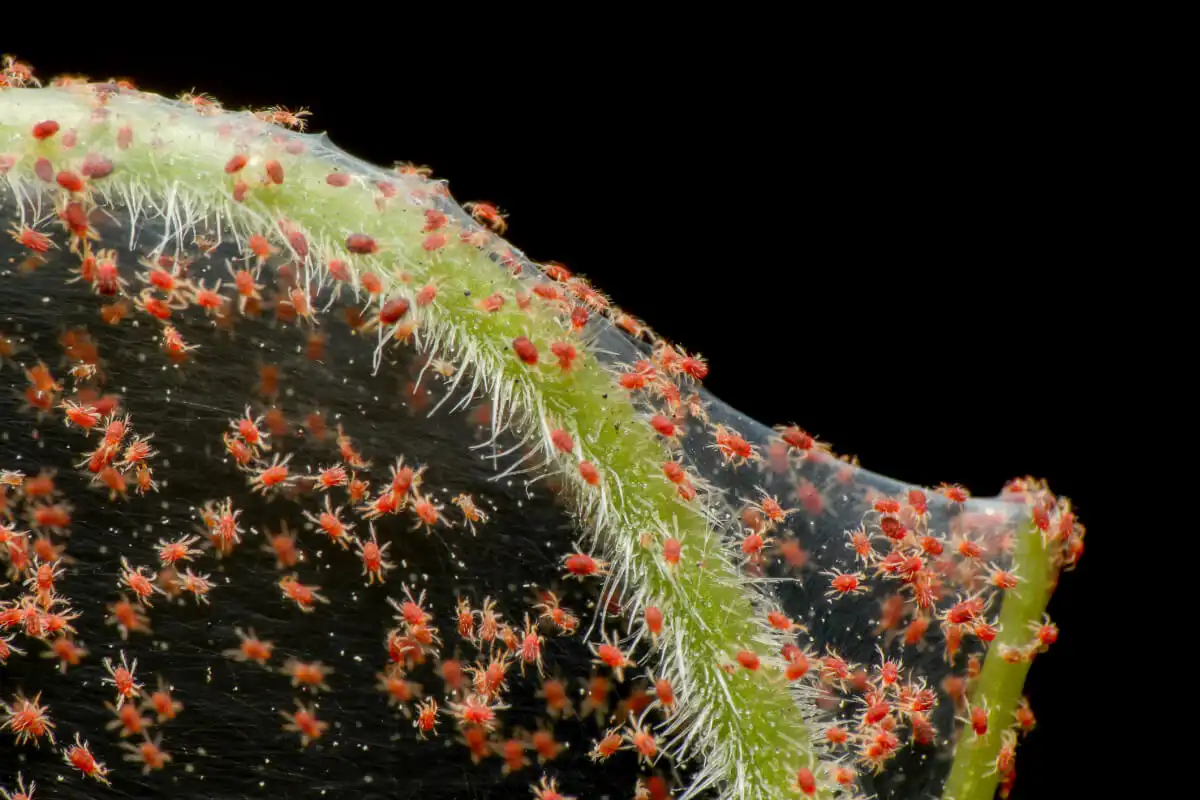
If you’re seeing tiny specks moving on your plants or fine webbing on your grass blades, you could be dealing with spider mites — and these are the one bug on this list you genuinely need to act on quickly.
What they look like: Near-invisible to the naked eye. Reddish, yellowish, or brownish specks that move in clusters. They leave fine, dusty webbing on leaves and stems — which is the main reason people mistake them for tiny spiders.
Where you’ll find them: On the undersides of grass blades, ornamental plants, shrubs, and garden beds. They thrive in hot, dry conditions and spread fast.
Threat level:  High — spider mites cause real, visible lawn and plant damage. They puncture plant cells to feed, turning leaves and grass yellow or bronze.
What to do: Start with a strong blast of water to knock them off foliage. For persistent infestations, insecticidal soap or neem oil are effective organic options. Severe cases warrant professional treatment.
2. Harvestmen (Daddy Long Legs) — America’s Most Misidentified Arachnid
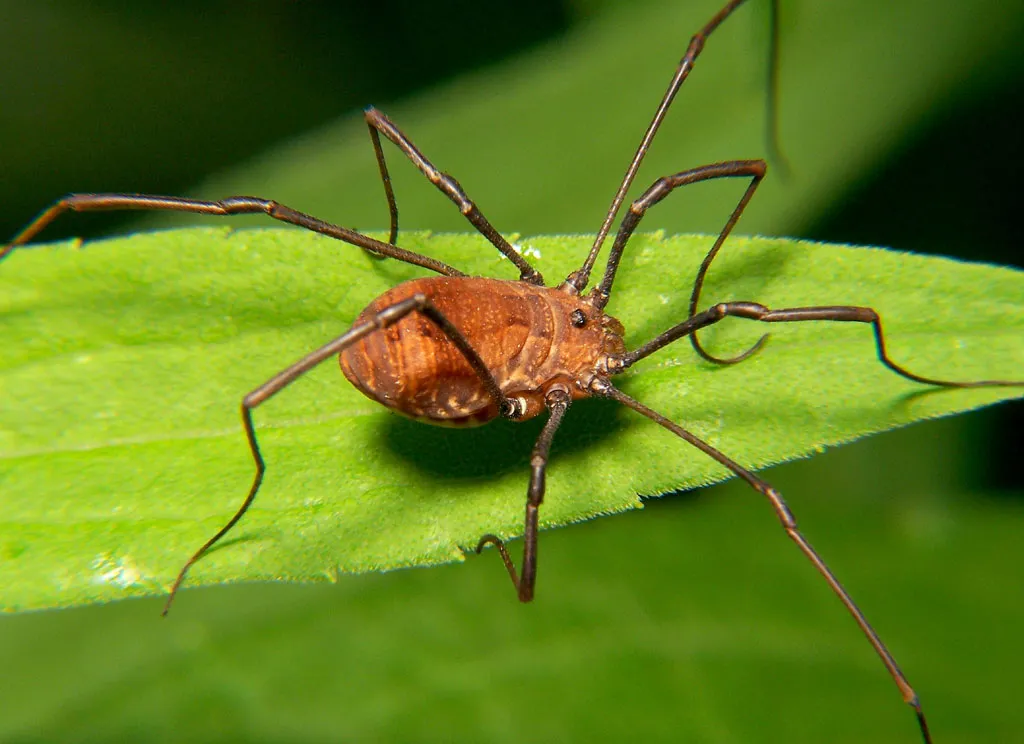
Harvestmen, commonly called “daddy long legs,” are probably the most frequently mistaken creature in the US. They look exactly like spiders — until you know what to look for.
What they look like: An impossibly small oval body on a set of comically long, thin legs. No visible waist or “neck.”
Key difference: Harvestmen belong to the order Opiliones — a completely separate group from spiders. They have one fused body segment (spiders have two), and only 2 eyes (most spiders have 8). Crucially, they cannot produce venom or silk at all. The famous myth that they’re the world’s most venomous spider is entirely false — they simply have no venom glands.
Where you’ll find them: Under rocks, logs, leaf litter, and garden walls. Extremely common across US lawns from spring through fall.
Threat level:  Completely harmless. Leave them be — they eat decaying organic matter and small insects.
3. Cave Crickets (Spider Crickets) — The Jumpers in Your Basement
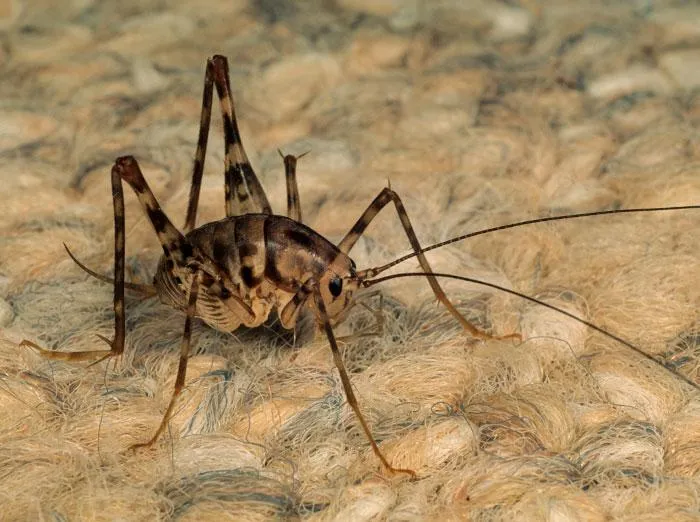
Cave crickets — also called spider crickets, camel crickets, or “sprickets” — are true insects that have earned their nickname honestly. One glance at them and the spider confusion makes complete sense.
What they look like: Long, spindly legs, a humpbacked arched body, light brown coloring, and a body that can reach up to 2 inches long.
Key difference: 6 legs and prominent long antennae. They also jump — often right at you when startled — which spiders typically don’t do. Their family, Rhaphidophoridae, is entirely distinct from arachnids.
Where you’ll find them: Dark, damp spaces. Basements, crawl spaces, garages, wood piles, and under decking. Originally from Asia, they’re now common invaders of American homes.
Threat level:  Low. They don’t bite or sting. Large indoor infestations may chew on fabrics and cardboard.
What to do: Seal foundation cracks and gaps, reduce basement moisture with a dehumidifier, and clear outdoor wood piles away from your home’s foundation.
4. Spider Beetles — The Pantry Pest That Nails the Spider Look
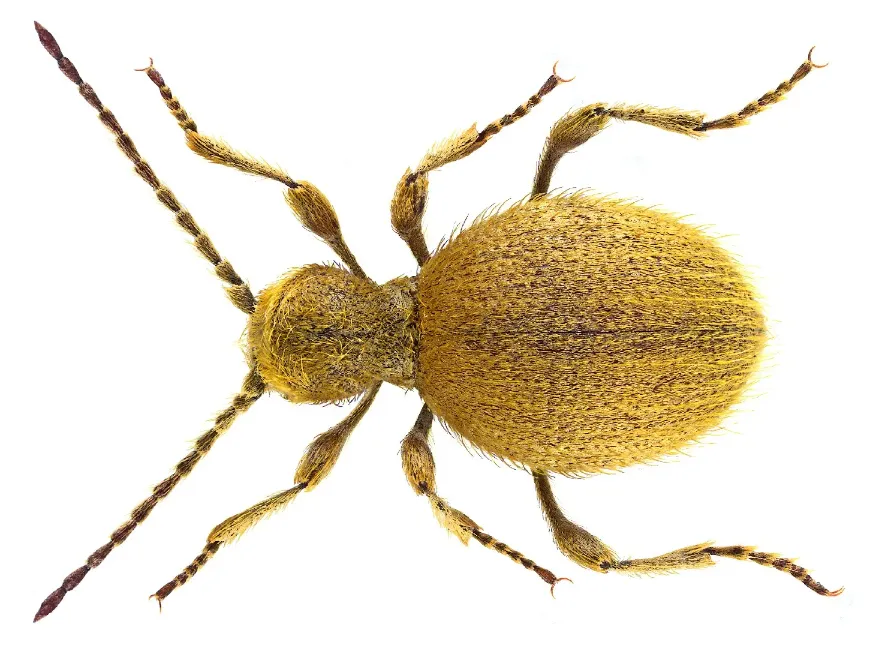
Spider beetles are true insects that have evolved a body shape remarkably similar to a small spider. Their round, shiny abdomens and slender legs make them one of the most convincing lookalikes on this list.
What they look like: Reddish-brown to black, 1.5 to 3.5 mm long. Glossy, globe-like abdomen. Long antennae extending from the head.
Key difference: 6 legs, 3 distinct body segments, and visible antennae. They belong to the family Ptinidae — a group of beetles, not arachnids. The American Spider Beetle (Mezium americanum) is the species most commonly encountered in US homes.
Where you’ll find them: Pantries, warehouses, museum storage, attics — anywhere there’s stored grain, seeds, dried food, or animal matter.
Threat level: Low outdoors, moderate indoors as a pantry pest. They don’t bite.
What to do: Check and discard contaminated dry foods. Thoroughly clean storage areas and shelving.
5. Pseudoscorpions — Tiny, Terrifying-Looking, 100% on Your Side
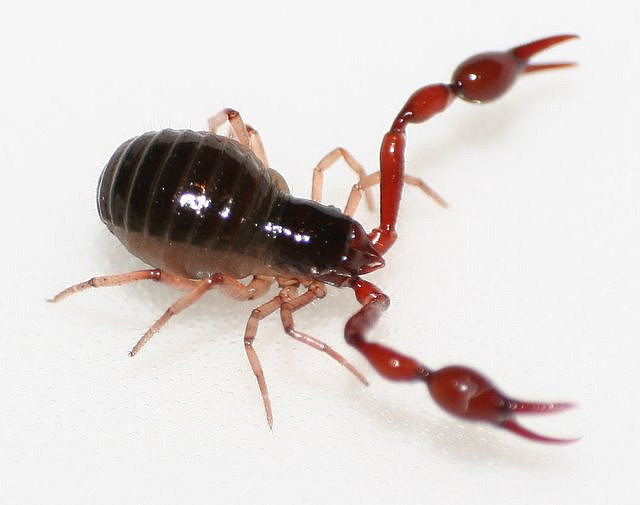
Pseudoscorpions are one of the strangest things you’ll ever find in your garden — and also one of the most useful.
What they look like: 2 to 8 mm long, flat teardrop-shaped body with large, crab-like front claws (pedipalps) like a scorpion. But no tail. No stinger.
Key difference: Those claws are their giveaway — spiders don’t have them. Pseudoscorpions belong to the order Pseudoscorpiones and are harmless to humans and pets. Their “venom” is effective only on tiny prey like mites and ants.
Where you’ll find them: Soil, leaf litter, under bark, and sometimes in homes — especially in books and old furniture.
Threat level: Completely harmless and genuinely beneficial. They actively prey on clothes moth larvae, carpet beetle larvae, mites, and small flies. They are allies, not pests.
6. Crane Flies — The “Daddy Long Legs” of the Sky
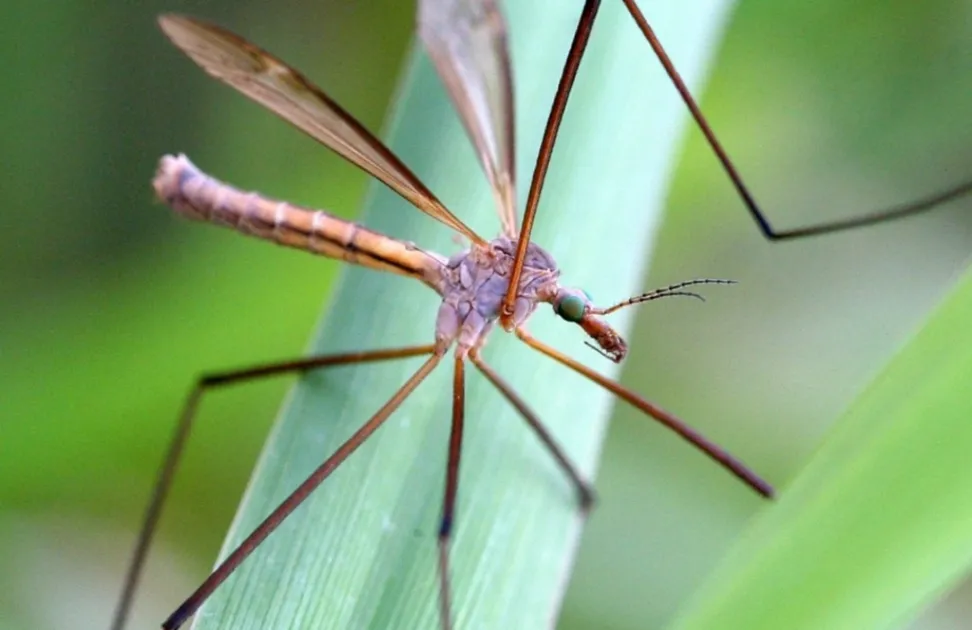
If you’ve ever seen what looks like a giant mosquito with impossibly long, dangly legs hovering near your porch light, that was a crane fly — and it’s neither a spider nor a mosquito.
What they look like: Long, trailing legs, thin body, and a single pair of wings. Often called “mosquito hawks” or, confusingly, “daddy long legs” — a name shared with harvestmen.
Key difference: Wings. Spiders never have them. Crane flies also have 6 legs and belong to the family Tipulidae within the insect order Diptera (true flies). Despite the mosquito-hawk nickname, adult crane flies do not bite or eat mosquitoes.
Where you’ll find them: Near moist soil and lawns, especially in late summer and fall. Their larvae — called leatherjackets — live underground and feed on grass roots.
Threat level: Adults are harmless. Larvae in large numbers can damage turf, causing irregular brown patches.
7. Camel Spiders (Solifuges) — Desert Myths, Mostly
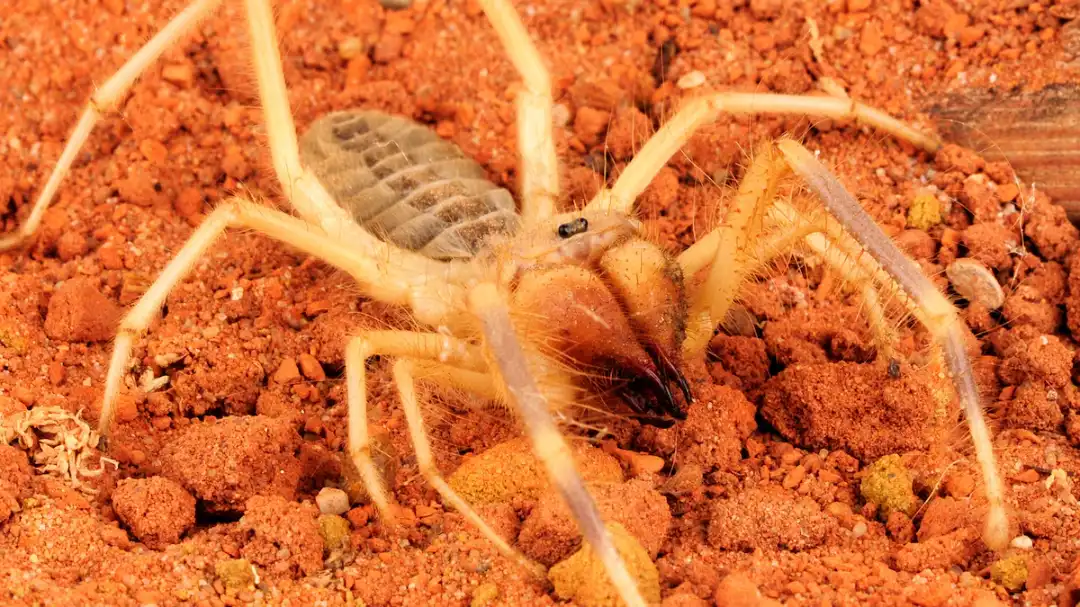
Few bugs have more unfair reputations than camel spiders. They’ve been the subject of viral exaggeration for decades — but most of what you’ve heard is fiction.
What they look like: Large (up to 6 inches including legs), yellowish-brown, with enormous jaw-like mouthparts called chelicerae that look almost as big as their body.
Key difference: Despite the name, camel spiders are not true spiders. They belong to the entirely separate order Solifugae. Of their four apparent leg pairs, only two are actual legs — the front two pairs are sensory appendages called pedipalps.
Where you’ll find them: Arid desert regions of the US Southwest — Arizona, New Mexico, Texas. Rare or nonexistent in most of the country.
Threat level: Not venomous. They can deliver a painful bite if handled, but pose no serious medical risk.
Quick-Reference Table — Insects That Look Like Spiders
| Bug | Legs | Antennae? | Found in US Lawns? | Threat Level |
|---|---|---|---|---|
| Spider Mites | 8 | No | Yes — on plants | Damages turf & plants |
| Harvestmen | 8 | No | Yes — very common | Harmless |
| Cave Crickets | 6 | Yes | Yard/damp basement | Nuisance indoors |
| Spider Beetles | 6 | Yes | Indoors/storage only | Pantry pest |
| Pseudoscorpions | 8 | No | Soil & leaf litter | Beneficial — leave alone |
| Crane Flies | 6 | Yes | Lawns — larvae in turf | Turf damage risk |
| Clover Mites | 8 | No | Yes — fertilized lawns | Lawn nuisance |
| Camel Spiders | 8 | No | Desert SW only | Non-venomous |
| Vinegaroons | 8 | No | Southern US | Harmless |
| Ticks | 8 | No | Tall grass & edges | Disease risk — act |
Found Something in Your Yard? Here’s What to Actually Do
Here’s the honest answer for most of what’s on this list: do nothing.
Harvestmen, pseudoscorpions, vinegaroons — these are free pest controllers. They hunt the bugs that actually cause damage to your lawn and home. Removing them works against you.
But wait — a handful do require action:
Leave them completely alone:
- Harvestmen, pseudoscorpions, vinegaroons, camel spiders (if outdoors)
Take mild preventive steps:
- Cave crickets → seal cracks and gaps in foundations; reduce basement moisture
- Spider beetles → inspect and secure dry food storage
- Crane flies → monitor in fall; treat larvae if turf patches appear
Act fast:
- Spider mites → treat immediately; they spread and cause real plant and turf damage
- Clover mites → create a bare-soil buffer along your foundation; professional treatment for heavy infestations
- Ticks → short grass, cleared leaf litter, check after outdoors, consider perimeter treatment
If you’re seeing repeated infestations or noticing real lawn damage from spider-like pests, a professional inspection is the right next step. Gen Lawn’s lawn care team can identify what’s going on and recommend targeted treatment — no guesswork, no overkill.
Frequently Asked Questions About Insects That Look Like Spiders
What bug looks exactly like a spider but isn’t?
The most convincing lookalike is the harvestman (daddy long legs). It has 8 legs, a round body, and moves exactly like a spider — but it lacks venom glands, fangs, and silk-producing spinnerets entirely. It belongs to a completely separate arachnid order with no close relationship to spiders.
Are daddy long legs actually spiders?
No. Harvestmen belong to the order Opiliones — not Araneae (true spiders). They have one fused body segment instead of two, only 2 eyes instead of the typical 8, and no venom or silk. The popular claim that they’re the world’s most venomous spider is a myth — they have no venom glands at all, according to UC Riverside entomologists.
What are the tiny bugs that look like spiders in my lawn or garden?
If they’re on plants and leaving fine webbing, they’re almost certainly spider mites — and worth treating quickly. If they’re bright red pinpoint-sized specks on your walls, siding, or grass blades, they’re likely clover mites. Both are common US lawn pests with different treatment approaches.
Can bugs that look like spiders bite me?
Most cannot or will not. Pseudoscorpions, harvestmen, and vinegaroons pose zero bite risk. Cave crickets may nibble fabric but rarely break skin. Camel spiders can bite if handled directly. Ticks are the real concern — they don’t bite in the conventional sense, but they latch and feed, and some carry serious disease.
How do I stop spider-looking bugs from taking over my yard?
Regular mowing, prompt removal of leaf debris, reducing standing moisture, and sealing home entry points collectively reduce habitat for most of these creatures. For turf-damaging species like spider mites and clover mites, targeted treatment applied correctly is the most effective long-term solution.
The Bottom Line
Most bugs that look like spiders in US lawns and yards are either harmless visitors passing through, or actively beneficial predators helping keep worse pests in check.
The ones worth your attention are spider mites (real turf threat), clover mites (lawn nuisance that invades homes), and ticks (genuine health risk). Everything else? Identify it, appreciate it, and let it do its work.
Key takeaways:
- 6 legs + antennae = insect, not a spider — guaranteed
- Most spider lookalikes are harmless or actively beneficial to your lawn
- Spider mites and clover mites are the actual lawn pests in this group
- Ticks carry the highest real-world risk and deserve consistent preventive action
- Regular lawn maintenance — mowing, debris removal, moisture control — reduces habitat for all of them
References & Further Reading
- UC Riverside Entomology — Spider Myths & Daddy Long Legs Facts
- Penn State Extension — Spider Beetles Identification
- University of Minnesota Extension — Pseudoscorpions
- Missouri Department of Conservation — Daddy Longlegs / Harvestmen
- UC Davis IPM Program — Spider Mites Management Guide
- University of Kentucky Entomology — Clover Mites
- Centers for Disease Control and Prevention — Ticks & Tick-Borne Diseases
- PestWorld.org — Camel / Cave Crickets
- Wikipedia — Solifugae (Camel Spiders)
- Texas A&M AgriLife Extension — Vinegaroons
About Author
Khalid Fazal is a seasoned lawn care specialist and horticultural researcher with over 15 years of hands-on experience transforming challenging landscapes into lush, resilient green spaces. His journey didn’t start in a lab, but in a backyard full of stubborn, cracked clay that “experts” said would never grow a healthy blade of grass. Refusing to accept a yard full of dust, Khalid spent years experimenting with organic soil restoration and precise mulching—eventually turning that wasteland into a neighborhood showpiece on a shoestring budget.
From mastering core aeration techniques to optimizing soil pH for specialized turf varieties, Khalid’s approach combines old-school grit with modern agronomic science. He founded Gen Lawn to provide homeowners with honest, research-backed advice that prioritizes long-term soil health over quick-fix chemical solutions. When he isn’t analyzing soil profiles, he’s developing precision tools to help others achieve professional results without the professional price tag.

Lawn Winterizer: When to Apply by Grass & Region [2026]
Table of Contents Home / By Khalid Fazal | Updated:...
Read More
Spring Lawn Care: What to Do and When in Every US Region
Table of Contents Home / By Khalid Fazal | Updated:...
Read More
Lawn Maintenance Checklist by Season and Grass Type (2026)
Table of Contents Home / By Khalid Fazal | Updated:...
Read More
Liquid Fertilizer vs Granular Fertilizer: Which Wins?
Table of Contents Home / By Khalid Fazal | Updated:...
Read More