
Cedar Mulch and Termites: Does It Attract or Repel Them?
You chose cedar mulch to protect your garden — and maybe because someone told you it keeps bugs away.
Now you’re hearing the opposite. That cedar mulch might actually attract termites. And suddenly that freshly mulched flower bed right next to your foundation feels like a decision you need to reverse immediately.
Here’s the truth: cedar mulch does not attract termites. It’s actually one of the smarter choices when termites are a concern. But there’s a catch — and if you miss it, even cedar mulch can quietly work against you.
This guide covers exactly how cedar mulch and termites interact, what university research has found, and the specific steps every US homeowner needs to take before laying down another bag.
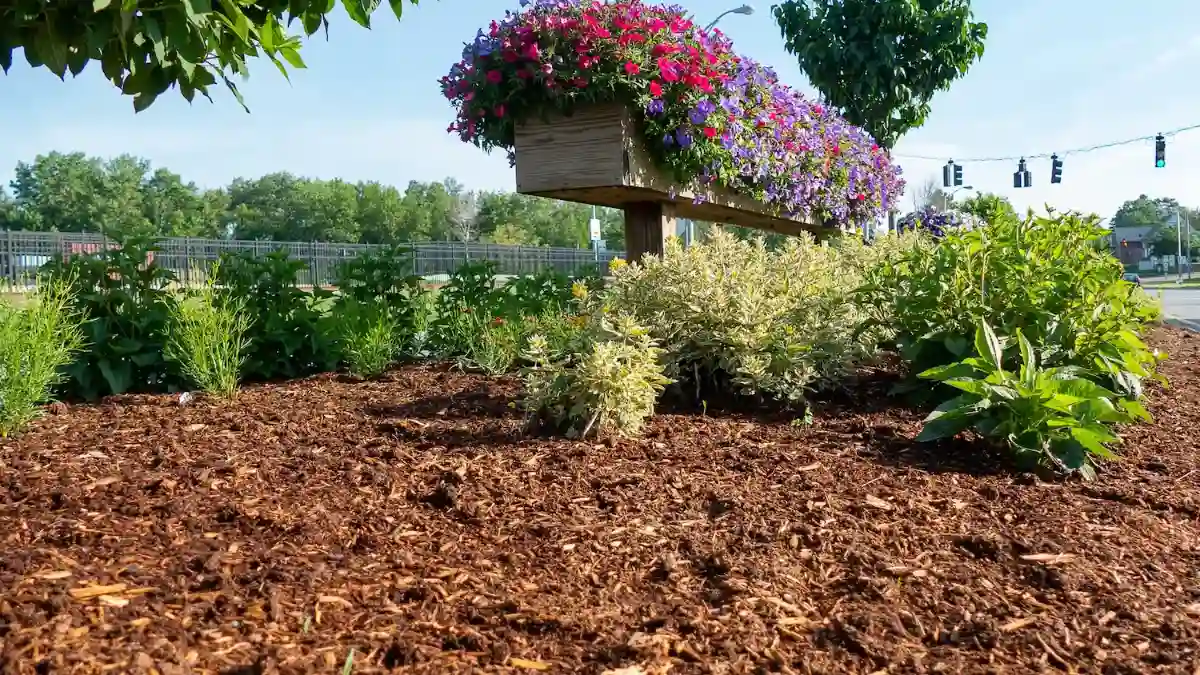
What Makes Cedar Mulch Different From Other Mulches?
Not all wood mulches are the same. Cedar stands apart because of what’s inside the wood itself — not just how it looks or smells on the bag.
The Natural Compounds That Repel Insects
Cedar contains three key naturally occurring compounds that give it pest-resistant properties: thujone, cedrol, and thujaplicin. These oils disrupt insect biology — they interfere with how termites breathe and make the wood unpleasant, even toxic, to feed on.
Think of it as cedar’s built-in defense system. It’s the same reason cedar chests have been used for centuries to protect clothing from moths — the oils drive insects away without any chemicals.
Heartwood vs. Sapwood — The Distinction Most Homeowners Miss
Here’s something most people buying cedar mulch never realize: there are two completely different parts of a cedar tree, and they don’t perform the same way.
Heartwood is the dense, dark inner core of the tree. This is where termite-repelling oils are concentrated at their highest levels.
Sapwood is the lighter outer ring. It contains far fewer of those oils — and in some cases, it can actually serve as a food source for termites.
The problem? Many bags of cedar mulch sold at garden centers and big-box stores are made primarily from sapwood. The label says cedar. The bag smells like cedar. But the termite protection may be minimal.
When shopping, look for bags that specifically mention heartwood, eastern red cedar, or a deep reddish-brown color throughout. Redder wood means more heartwood. More heartwood means more protection.
Does Cedar Mulch Attract Termites? The Real Answer
This is the question you came here for. Let’s not dance around it.
The Short Answer — And Why It’s More Nuanced Than Just “No”
Cedar mulch does not attract termites. Research from the University of Florida and Cornell University has confirmed that cedar mulch is significantly less attractive to termites than other wood-based alternatives. In controlled study conditions, eastern red cedar mulch has been linked to termite mortality rates as high as 76% — a result that clearly puts cedar in the “safer” category.
But — and this is critical — cedar mulch is not a termite prevention system. It won’t drive away a colony that’s already established near your home. And as we’ll cover shortly, certain conditions can neutralize cedar’s advantages completely.
What University Research Actually Found
A University of Hawaii study described the results for western red cedar as “highly variable,” noting that termite resistance was moderately correlated with the redness of the wood. The redder the cedar, the more heartwood — and the more resistant it tends to be.
Researchers at Iowa State University also clarified a common misconception: moist soil conditions don’t actively attract termite foragers from the wider landscape. What mulch does is create conditions where termites that are already nearby can survive and thrive more easily around your home.
Feeding vs. Sheltering — Why This Distinction Matters
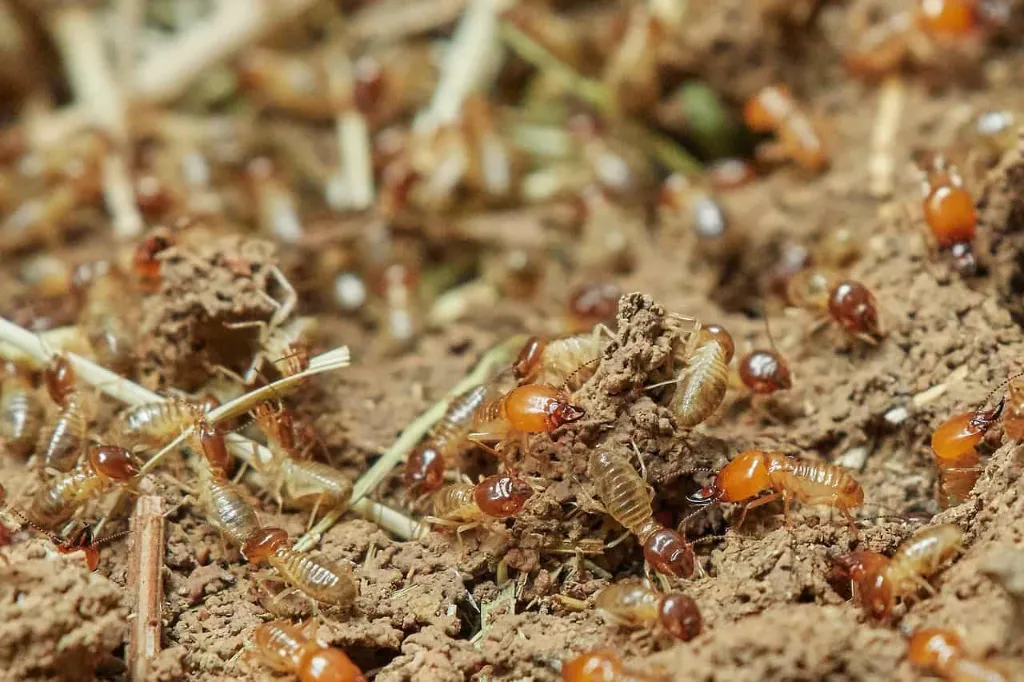
Here’s the thing most articles get wrong. Termites don’t necessarily eat cedar mulch. But they can absolutely use it as shelter.
Subterranean termites — the most destructive species in the US — live underground and travel through soil. A thick layer of mulch sitting close to your foundation gives them a dark, moist, protected highway toward your home’s wooden structures.
This is why how and where you apply cedar mulch matters just as much as the type you choose.
Cedar Mulch vs. Other Mulch Types — Which Carries the Least Termite Risk?
Not all mulches behave the same way when termites are nearby. Here’s a clear breakdown of how cedar compares to the most common options available in the US:
| Mulch Type | Termite Risk | Notes |
|---|---|---|
| Cedar Heartwood | 🟢 Low | Natural oils repel — fade with age |
| Cypress Heartwood | 🟢 Low | Highly resistant — verify it’s heartwood, not sapwood |
| Melaleuca | 🟢 Very Low | Best organic termite resistance available in the US |
| Redwood | 🟡 Low–Medium | Some resistance that fades over time |
| Cypress Sapwood | 🔴 High | 77% termite survival in research studies — avoid near foundations |
| Pine Bark | 🔴 High | Retains moisture and provides a potential food source |
| Pine Straw | 🔴 High | Highly moisture-retentive, minimal food value |
| Rubber Mulch | 🟡 Medium | No food source for termites, but still traps moisture in soil |
| Gravel / Stone | 🟢 Very Low | Best option for the 12 inches nearest your foundation |
Why Melaleuca May Actually Beat Cedar
If you’re in a high-risk termite zone — particularly the Southeast US — it’s worth knowing about melaleuca mulch. Termites don’t eat it and actively avoid sheltering beneath it. It’s also an environmentally responsible choice: melaleuca is an invasive species in Florida wetlands, so using it as mulch actually helps control its spread.
For homeowners in Florida, Georgia, Louisiana, or the Gulf Coast, melaleuca deserves a serious look alongside cedar.
When Cedar Mulch Can Still Become a Termite Problem
Cedar is one of the safer mulch choices — but it isn’t foolproof. These are the specific situations where even cedar can put your home at risk.
What Happens As Cedar Ages
Cedar’s termite-repelling power comes entirely from its natural oils. And those oils don’t last forever.
As cedar mulch weathers through rain, heat, and seasonal cycles, the oils evaporate. That sharp, pleasant cedar scent you notice opening a fresh bag? That’s the active repellent. When the smell fades, the protection fades with it.
Most cedar mulch stays meaningfully effective for 2–3 years. In humid climates — the Southeast, Gulf Coast, Pacific Northwest — breakdown happens faster. Plan to refresh or replace your cedar mulch at least every one to two years to maintain its pest-deterring properties.
The Moisture Factor — Cedar’s Biggest Vulnerability
This is the most underestimated risk in any conversation about cedar mulch and termites.
Subterranean termites require moisture to survive and expand their colonies. If cedar mulch is applied too thickly, overwatered, or left to compact over time, it traps moisture in the soil underneath — and that damp microenvironment overrides cedar’s natural repellent chemistry.
Keep mulch layers no more than 2–3 inches thick. Avoid overwatering mulch beds. Make sure your soil slopes away from your foundation to promote proper drainage. These steps preserve cedar’s effectiveness and reduce termite-friendly conditions.
Is the Cedar You’re Buying Actually Heartwood?
This brings us back to the earlier point — but it’s worth repeating because it’s where most homeowners get tripped up.
The majority of bagged cedar mulch at major US retailers contains a mix of heartwood and sapwood, or in some cases, primarily sapwood. According to pest management experts, a store-bought bag labeled “cedar mulch” can vary enormously in its actual termite resistance depending on the species and the part of the tree used.
When buying cedar mulch in the US:
- Look for labels specifying eastern red cedar or western red cedar heartwood
- Choose bags with a deep reddish-brown color — this signals higher heartwood content
- Opt for bags with a strong, sharp cedar aroma — fresh oils mean active protection
- Purchase from reputable bulk landscape suppliers where you can ask about the source
How to Use Cedar Mulch Safely and Reduce Termite Risk
Good news: you don’t have to remove your cedar mulch or give up on it entirely. You just need to use it the right way.
The Foundation Gap Rule
The single most important step any homeowner can take is maintaining distance between mulch and the home’s foundation.
The University of Florida’s extension service recommends keeping at least a 12-inch gap of bare soil between any mulch bed and your foundation. In high-risk termite states, some pest control professionals extend that recommendation to 18 inches.
This gap does two things: it removes the sheltered pathway that subterranean termites use to reach your home’s wood, and it gives you a clear sightline to spot mud tubes — the pencil-thin tunnels termites build when traveling above ground.
The Layered Zone Strategy
Here’s a practical landscaping approach used by professionals in termite-prone regions across the US:
- 0–12 inches from foundation: Bare soil, stone, or gravel only — no organic mulch of any kind
- 12–24 inches from foundation: Cedar heartwood or cypress heartwood mulch
- 24+ inches from foundation: Any standard mulch type, including pine bark or hardwood
This zoning system gives you a beautiful, well-maintained yard without handing termites a direct route toward your home’s structure.
Early Warning Signs of Termite Activity to Catch Now
Even when using cedar mulch with proper placement, regular monitoring is essential. Check your mulch beds and foundation perimeter at least every few months for:
- Mud tubes: Pencil-wide, brown tunnels running from soil up toward wood, siding, or the foundation wall — the clearest sign of subterranean termite activity
- Frass: Small pellet-shaped droppings near the base of mulch beds or along the foundation
- Swarms: Winged termites (often mistaken for flying ants) near mulch beds, especially in spring — a sign a colony is expanding
- Hollow-sounding wood: Tap on wooden trim, siding, or structural elements near mulch beds — a hollow or papery sound can indicate feeding damage inside
When to Call a Pest Control Professional
If you find any of those signs — don’t wait and hope it resolves itself. Termite colonies grow fast, and DIY treatments rarely address the source.
A licensed pest control professional can confirm whether you’re dealing with termites, identify the species, assess whether they’ve already reached your home’s structure, and apply targeted treatment before the damage compounds.
The EPA recommends contacting a qualified pest management expert at the first sign of suspected termite activity — particularly for subterranean species, which are responsible for the vast majority of structural termite damage across the US each year.
Frequently Asked Questions About Cedar Mulch and Termites
Does cedar mulch attract termites?
No. Cedar mulch does not attract termites. Its natural oils — thujone and cedrol — make it unappealing as a food source, and termites actively avoid cedar heartwood when other options are available. That said, improper application (too thick, too wet, too close to the foundation) can still create moist conditions that help nearby termite colonies survive and expand.
Is cedar mulch safe to use near a house foundation?
Cedar is one of the safer organic mulch options near foundations compared to pine bark or hardwood mulch. However, no organic mulch should be placed directly against your foundation. Maintain a minimum 12-inch gap of bare soil or gravel between any mulch bed and your home, regardless of mulch type.
What is the best mulch for termite prevention?
For organic mulches, melaleuca and cypress heartwood offer the strongest documented resistance. Cedar heartwood is a solid option when you can confirm you’re purchasing actual heartwood. For the highest level of protection — especially in the 12 inches closest to your foundation — stone or gravel is the best choice because it provides no food source and no moisture retention.
How long does cedar mulch keep its termite-repelling properties?
Fresh cedar mulch is most effective. As the natural oils evaporate — typically over 2–3 years — the protection fades significantly. In humid climates, this may happen faster. Refreshing or replacing cedar mulch annually is the best practice for maintaining both appearance and pest deterrence.
Can termites eat cedar wood?
Given a choice, termites strongly prefer other wood types. However, if cedar — especially aged sapwood with depleted oils — is the only material available, termites will feed on it. Cedar is a deterrent, not an impenetrable barrier. Never rely on mulch type alone as your sole termite protection strategy.
The Bottom Line on Cedar Mulch and Termites
Cedar mulch is a science-backed, practical choice for US homeowners who want an organic landscaping material that works against termites rather than for them.
Here’s what to take away:
- Cedar’s natural oils repel termites — but only when the mulch is fresh and made from true heartwood
- Oils degrade over time — aged cedar loses its protection, so refresh every 1–2 years
- Placement is everything — maintain a 12-inch foundation gap regardless of mulch type
- The layered zone strategy (gravel near the house, cedar in the middle zone, standard mulch farther out) is the most effective combined approach
- Monitor regularly — mud tubes, frass, swarms, and hollow wood are the signs to act on immediately
If you’re unsure whether your current mulch placement is putting your home at risk — or it’s time for a seasonal refresh — reach out to the Gen Lawn team for a professional lawn assessment. A quick inspection now costs a fraction of what termite damage repairs will.
References and Further Reading
- EPA — Termites: How to Identify and Control Them
- University of Florida IFAS Extension — Termite Prevention
- Iowa State University Extension — Mulch and Termites
- Penn State Extension — Subterranean Termites
- University of Minnesota Extension — Heartwood and Sapwood
- Garden Myths — Cedar Mulch and Insects (Research Analysis)
- USDA Forest Service — Eastern Red Cedar
About Author
Khalid Fazal is a seasoned lawn care specialist and horticultural researcher with over 15 years of hands-on experience transforming challenging landscapes into lush, resilient green spaces. His journey didn’t start in a lab, but in a backyard full of stubborn, cracked clay that “experts” said would never grow a healthy blade of grass. Refusing to accept a yard full of dust, Khalid spent years experimenting with organic soil restoration and precise mulching—eventually turning that wasteland into a neighborhood showpiece on a shoestring budget.
From mastering core aeration techniques to optimizing soil pH for specialized turf varieties, Khalid’s approach combines old-school grit with modern agronomic science. He founded Gen Lawn to provide homeowners with honest, research-backed advice that prioritizes long-term soil health over quick-fix chemical solutions. When he isn’t analyzing soil profiles, he’s developing precision tools to help others achieve professional results without the professional price tag.

Lawn Winterizer: When to Apply by Grass & Region [2026]
Table of Contents Home / By Khalid Fazal | Updated:...
Read More
Spring Lawn Care: What to Do and When in Every US Region
Table of Contents Home / By Khalid Fazal | Updated:...
Read More
Lawn Maintenance Checklist by Season and Grass Type (2026)
Table of Contents Home / By Khalid Fazal | Updated:...
Read More
Liquid Fertilizer vs Granular Fertilizer: Which Wins?
Table of Contents Home / By Khalid Fazal | Updated:...
Read More