
Native Georgia Grasses: The Complete Guide for Lawns and Landscapes
Here’s something most Georgia homeowners don’t know: the grass covering their yard probably isn’t from Georgia at all.
Bermuda grass — the most common lawn grass in the state — was brought to Savannah in 1751 by Governor Henry Ellis, imported from Africa. Zoysia came from Asia. St. Augustine from the Caribbean coast. Most of the grasses we mow every weekend have no roots in this soil, historically or ecologically.
That matters. Because if your lawn fights the summer heat, drinks water like a fish, or struggles with Georgia’s clay soil year after year — there’s a good chance the grass and the ground were never meant for each other.
Here’s the thing: Georgia is home to some of the most diverse native grass ecosystems in the entire Southeast. These grasses evolved here, survived here, and thrive here — without the fertilizer schedules, irrigation systems, and annual reseeding that imported species demand.
This guide covers what native Georgia grasses actually are, the best species for lawns and landscapes, how they perform in Georgia’s different climate zones, and how to choose the right one for your specific yard.
What “Native Georgia Grasses” Actually Means — And Why It Matters
True Native vs. Naturalized vs. Popular-but-Not-Native
The word “native” gets used loosely in lawn care — so let’s define it clearly before going further.
A true native grass is one that established itself in Georgia before European settlement, without human introduction. The U.S. Forest Service defines native plants as those “naturally occurring, either presently or historically, in any ecosystem” — and by that standard, the University of Georgia Extension has documented 48 grasses and 10 sedges that are genuinely native to the state.
A naturalized grass is a non-native species that’s been established here long enough to spread and survive on its own — but it didn’t originate here.
Here’s an honest breakdown of what fills most Georgia yards — and where those grasses actually came from:
| Grass | Origin | Native to Georgia? |
|---|---|---|
| Bermuda Grass | Africa |  No — arrived in Savannah, 1751 No — arrived in Savannah, 1751 |
| Zoysia Grass | Asia | No |
| St. Augustine Grass | Caribbean/Gulf Coast | No |
| Tall Fescue | Europe | No |
| Centipede Grass | China/Southeast Asia | No |
| Pink Muhly Grass | Eastern North America |  Yes Yes |
| Little Bluestem | North America | Yes |
| Switchgrass | North America | Yes |
| Buffalograss | North America | Yes* |
*Native to Georgia, though more dominant on the Great Plains
None of the common turf grasses are bad choices for a lawn. But none of them evolved here — and that gap between origin and environment is exactly why so many Georgia lawns require such intensive maintenance.
Why Georgia’s Climate Zones Make Grass Selection Critical
Georgia spans USDA Hardiness Zones 6a through 9a — from the cool, mountainous northeast corner to the subtropical south. Greater Atlanta sits in Zones 7b and 8a. That wide range means there’s no single best grass for the whole state.
Add in the soil difference between the clay-heavy Piedmont region in north and central Georgia versus the sandy, fast-draining Coastal Plain soils in the south, and the right grass becomes very location-specific.
Before selecting any grass species, two questions matter more than any other: What zone am I in? And what’s my soil like? A soil test through your local UGA Extension county office costs around $10 and gives you data that no lawn guide can replicate.
Best True Native Georgia Grasses for Landscape and Garden Use
These are the grasses that grew in Georgia long before turf lawns existed. They’re adapted to the heat, humidity, clay, and drought cycles of this state — and they bring genuine ecological value that imported species can’t match.
Pink Muhly Grass (Muhlenbergia capillaris) — Georgia’s Fall Showstopper
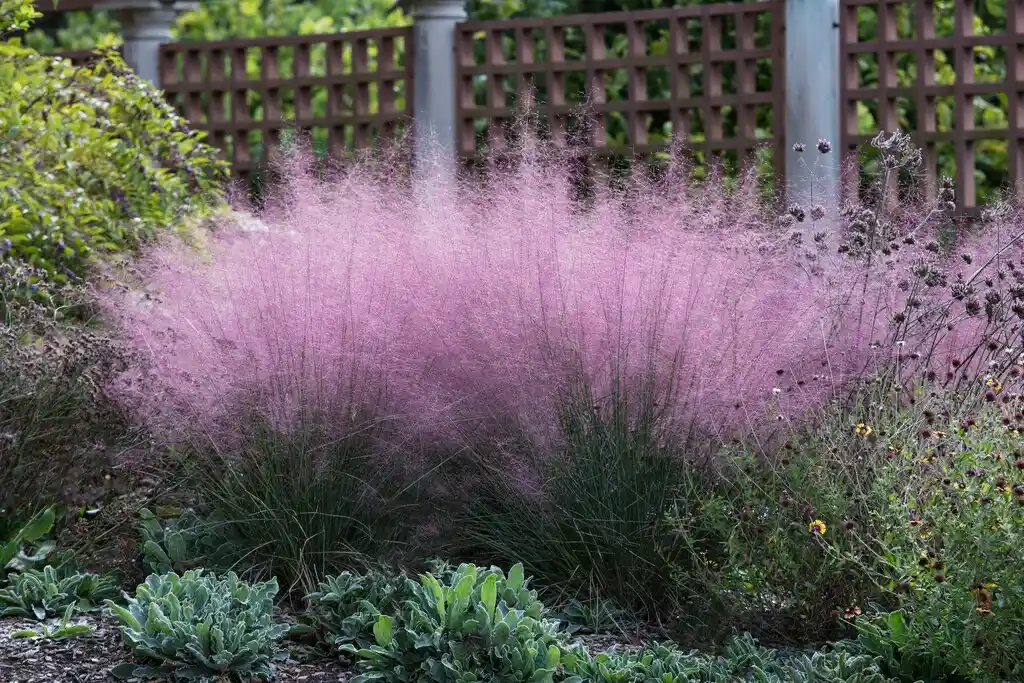
If you’ve ever seen what looked like a pink cloud hovering low over a landscape in October, you were looking at muhly grass.
This native produces striking clouds of pink-to-purple plumes from September through November, reaching 2–3 feet tall and wide. It thrives in sandy or loamy soil with full sun, and is exceptionally drought-tolerant and low-maintenance once established. It tolerates poor soils, minimal fertilizer, and has no serious pest or disease vulnerabilities under normal Georgia conditions.
The Lady Bird Johnson Wildflower Center confirms it attracts a wide range of pollinators and provides seed for songbirds through winter.
Best use: Mass plantings, mixed borders, rain gardens, pollinator habitats, or any spot needing year-round texture and a dramatic fall display.
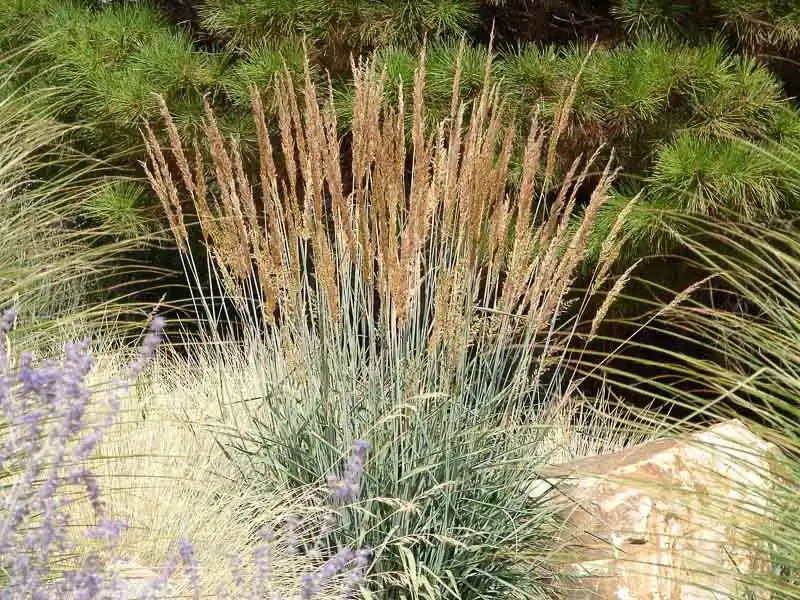
Little Bluestem (Schizachyrium scoparium) — Tough Beauty for Piedmont Clay
Here’s why experienced Georgia landscapers reach for Little Bluestem often: it thrives in exactly the conditions most imported grasses struggle with — poor, dry, clay-heavy Piedmont soil — without any coddling.
This warm-season perennial grows 2–4 feet tall, turns brilliant bronze-orange in fall, and serves as a documented host plant for multiple butterfly species. Its dense root system holds soil effectively on slopes and erosion-prone sites. UGA Extension specifically recommends it for meadows, wildlife gardens, and roadsides across Georgia.
The Georgia Native Plant Society lists it as one of the highest-value native grasses for supporting local insect biodiversity — which in turn supports birds and small mammals up the food chain.
Best use: Meadow plantings, erosion control on slopes, roadsides, wildlife gardens, and naturalized edges in full sun.
River Oats (Chasmanthium latifolium) — The Shade-Tolerant Native
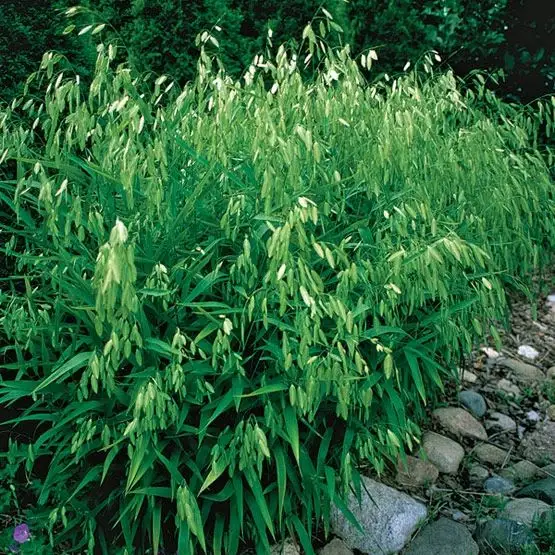
Almost every ornamental grass needs full sun. River Oats is a rare exception — and for Georgia homeowners with wooded lots, it’s invaluable.
This native handles partial to full shade, growing 3–4 feet tall with distinctive, dangling seed heads that resemble flattened oats. The foliage stays bright green through summer, turns bronze in fall, and the seed heads persist through winter, providing both visual interest and wildlife food.
The Oasis Landscape team in Atlanta highlights it as excellent for stream banks, woodland gardens, and shaded borders where other grasses simply won’t establish. It prefers moist, organically rich soil and can even help stabilize shaded slopes.
Best use: Woodland gardens, shaded borders, stream banks, and any corner where traditional grasses have repeatedly failed.
Switchgrass (Panicum virgatum) — Height, Drama, and Erosion Control
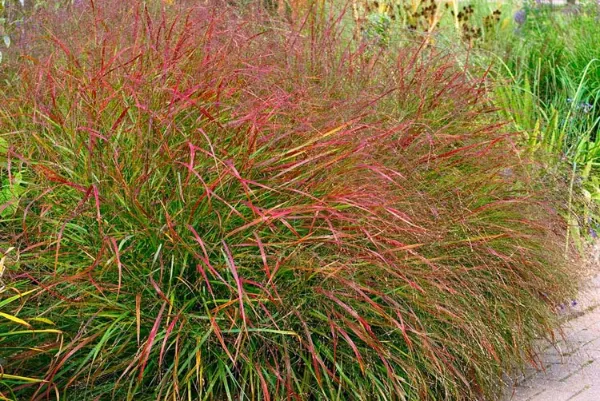
Switchgrass brings serious vertical impact and serious ecological function at the same time.
It grows 4–6 feet tall with an upright, architectural form — and it’s been native to Georgia’s wetlands, bottomlands, and open meadows for thousands of years. Its deep, fibrous root system makes it one of the most effective plants available for erosion control on slopes and in rain gardens. Dense clumps also provide critical winter shelter for birds and small mammals.
Because of its height and mass, switchgrass works particularly well as a privacy screen or background anchor in a naturalized landscape design.
Best use: Slopes, rain gardens, naturalized areas, wildlife habitat, privacy screens, and large-scale landscape restoration.
Big Bluestem (Andropogon gerardii) — The Prairie Icon
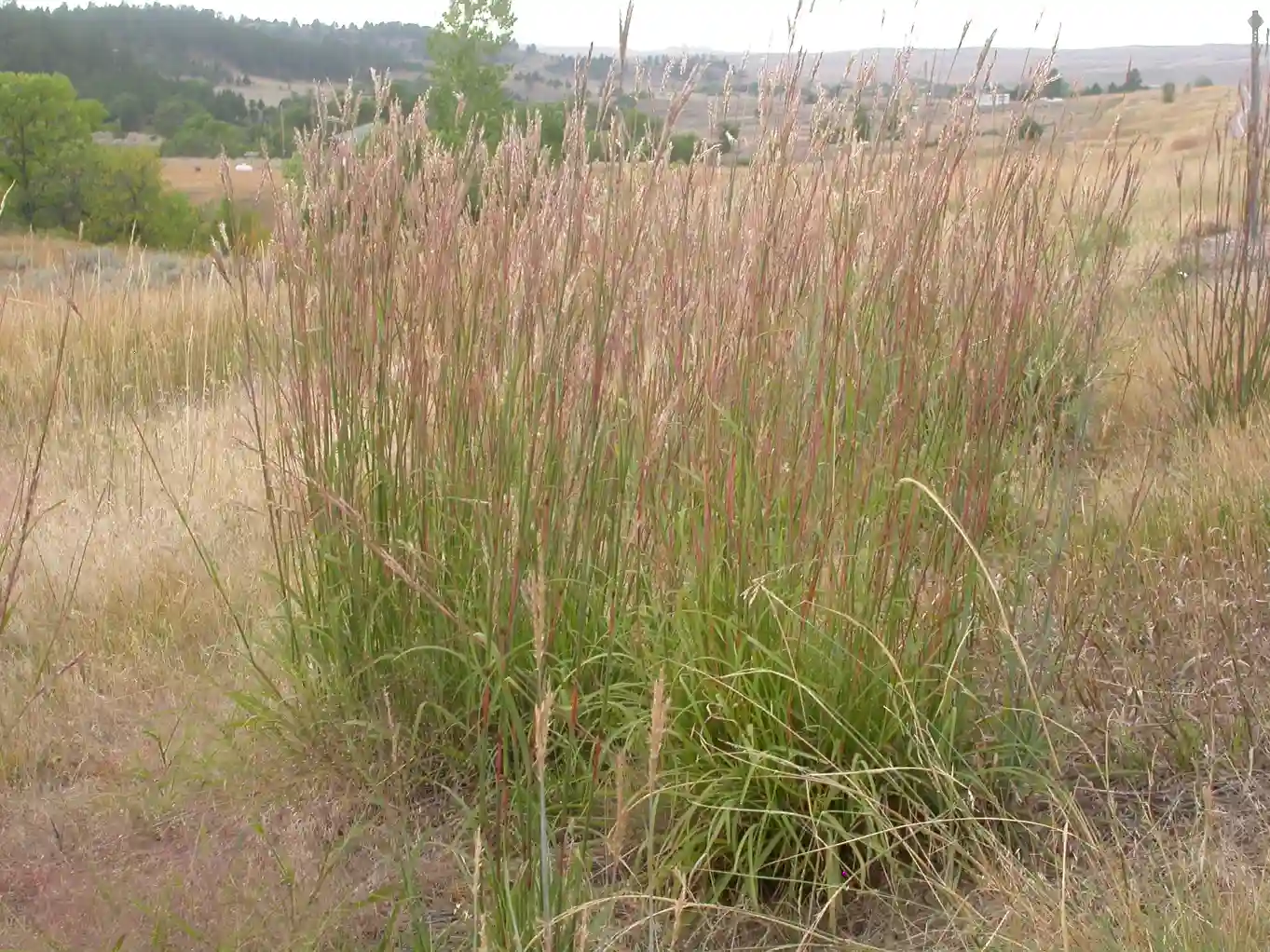
Big Bluestem was once the dominant grass across Georgia’s historic tallgrass prairies. Today it makes a bold landscape statement while doing serious ecological work.
It can reach 4–8 feet tall, with rich burgundy, rust, and copper fall color. The USDA Plants Database documents it as a native across most of the eastern U.S., with strong native populations throughout Georgia. It provides critical habitat for insects and ground-nesting birds, and its seed heads feed numerous bird species through late fall and winter.
Best use: Large landscape areas, meadow restoration projects, wildlife habitat gardens, and naturalized backgrounds.
Native-Adapted Grasses for Georgia Lawns (The Practical Picks)
True native grasses shine in landscapes, wildlife gardens, and naturalized areas. But what about a functional, mowable lawn? Here are the most practical options — with honest notes on their native status.
Buffalograss (Bouteloua dactyloides) — Georgia’s Truest Native Lawn Option
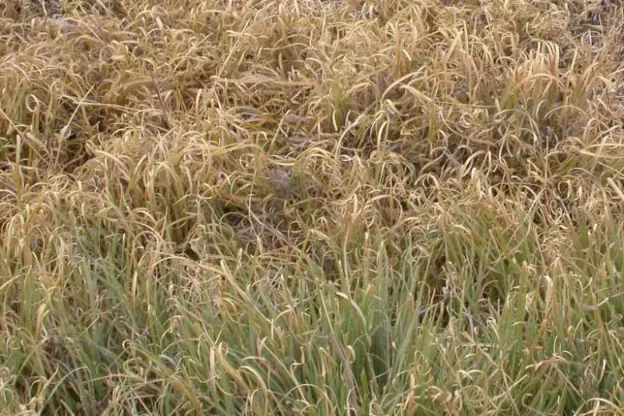
Buffalograss is one of very few true North American native grasses that can function as residential lawn turf — and the USDA confirms it as native to Georgia, though it’s more abundant on the Great Plains.
What makes it remarkable: it needs only 1.5 inches of rain per month to stay green. Left unmowed, it reaches 3–12 inches with a soft, blue-green appearance. Mowed, it creates a fine-textured, low-maintenance turf that goes dormant in drought and rebounds without intervention.
The catch: it needs full sun — at least 6 hours daily — and performs best in clay loam. If your yard can provide that, buffalograss is the most ecologically authentic lawn option available in Georgia.
Best use: Low-traffic lawns, full-sun eco-conscious landscapes, Central and North Georgia properties where irrigation reduction is a priority.
Centipede Grass (Eremochloa ophiuroides) — Georgia’s Low-Maintenance Lawn Standard
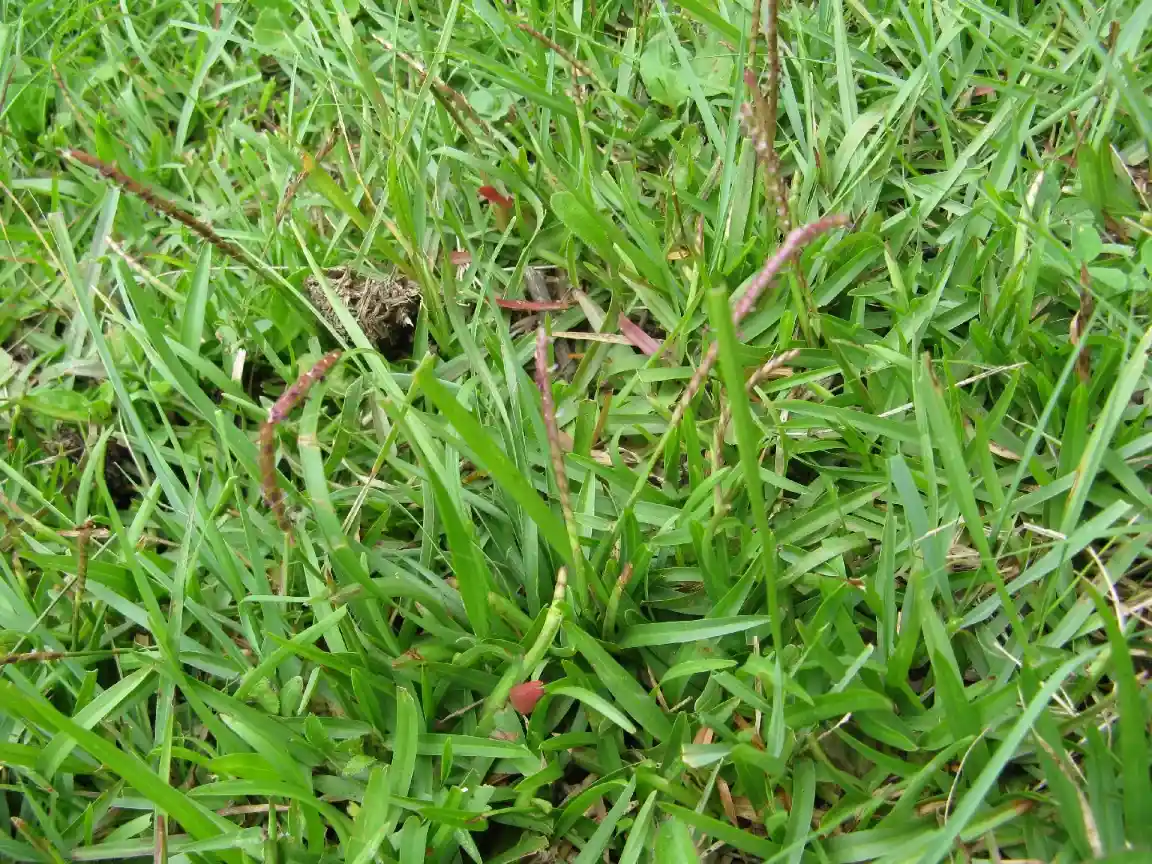
Centipede grass is not native, but it behaves more like a native than almost any other commonly available lawn grass. Originally from China and Southeast Asia, it is so well-adapted to the Southeast that UGA Extension calls it “well-adapted as far north as Atlanta and Athens” — a region that excludes most non-adapted species.
It thrives in acidic, low-fertility soils (ideal pH 5.0–6.5), requires minimal fertilizer, and spreads slowly through surface runners that stay out of flower beds. It’s often called the “lazy man’s grass” — not as an insult, but as a genuine description of how little management it asks for under the right conditions.
The biggest mistake with centipede: over-fertilizing. Heavy nitrogen causes rapid growth that’s actually more disease-prone and less resilient. Learn more about turfgrass fertility and centipede management from UGA Extension.
Best use: Low-traffic residential lawns in Central and South Georgia, especially on acidic or poor-fertility soils.
Zoysia Grass (Zoysia spp.) — Dense Coverage for High-Traffic Georgia Lawns
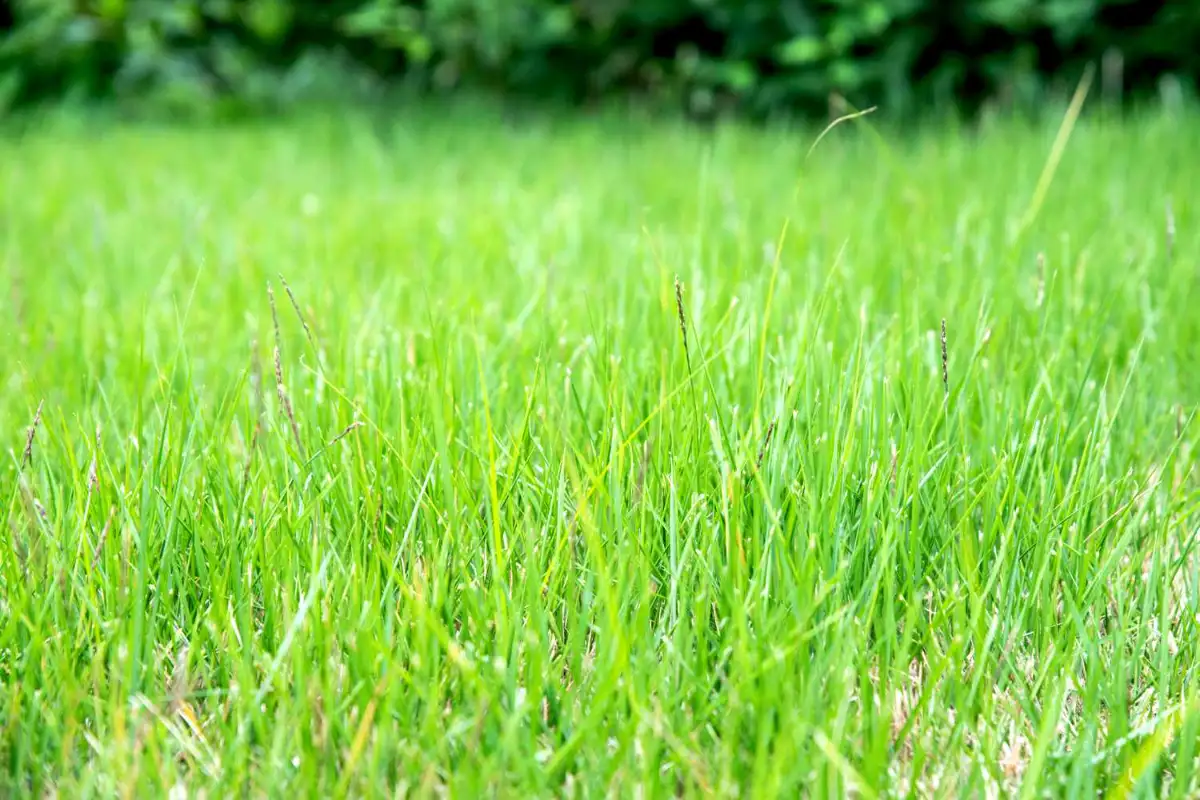
For homeowners who want a thick, polished lawn that handles foot traffic and Georgia’s heat without constant intervention, Zoysia is the most practical all-around pick.
It tolerates full sun and light shade, handles drought better than most warm-season grasses once established, and creates a dense, weed-suppressing turf that doesn’t rely on aggressive chemical programs. The trade-off: it establishes more slowly than Bermuda, and it will go dormant and brown in winter. For a deeper look at Georgia warm-season turfgrass options, UGA Extension’s Lawns in Georgia bulletin covers it comprehensively.
Best use: High-traffic family lawns, sloped yards, full-sun or light-shade properties across all of Georgia.
Full Comparison: Native Georgia Grasses at a Glance
| Grass | Native to GA? | Sun | Soil | Water Needs | Traffic | Best Use | Georgia Region |
|---|---|---|---|---|---|---|---|
| Pink Muhly Grass | Yes | Full sun | Sandy/loamy | Low | None | Borders, mass planting | Statewide |
| Little Bluestem | Yes | Full sun | Poor/clay | Low | None | Meadow, wildlife, erosion | Statewide |
| River Oats | Yes | Part–full shade | Moist, rich | Moderate | None | Shaded landscapes, stream banks | Statewide |
| Switchgrass | Yes | Full sun | Clay/wet | Low–mod | None | Slopes, rain gardens, habitat | Statewide |
| Big Bluestem | Yes | Full sun | Varied | Low | None | Large landscapes, meadow | Statewide |
| Buffalograss | Yes* | Full sun | Clay loam | Very low | Low | Eco lawns, low-traffic | Central/North GA |
| Centipede Grass | No | Full/part sun | Acidic, poor | Low | Low–mod | Residential lawns | Central/South GA |
| Zoysia Grass | No | Full/part sun | Varied | Moderate | High | High-traffic lawns | Statewide |
*Native to Georgia and North America; most dominant on the Great Plains
How to Choose the Right Native Georgia Grass for Your Yard
Answer these four questions before going to the nursery.
1. Lawn or landscape? If people and pets walk on it regularly — go with Buffalograss, Centipede, or Zoysia. If it’s a border, slope, garden bed, or naturalized area — native ornamentals like Muhly, Bluestem, or Switchgrass will outperform anything else.
2. How much sun does the spot actually get? Most native grasses need 6+ hours of direct sunlight. River Oats is the main exception for shade. Before planting anything, track sunlight across your yard for one full day in the current season — not what you think it gets, what it actually gets.
3. What’s your soil? North Georgia Piedmont clay? Little Bluestem and Switchgrass were built for it. Sandy Coastal Plain? Pink Muhly thrives. Never planted anything new before? Spend $10 on a soil test through your local UGA Extension office. It tells you pH, nutrient levels, and what your soil actually needs — data no blog post or nursery tag can replace.
4. Where in Georgia are you? Don’t buy a South Georgia coastal species for a Gainesville yard. Always check your USDA Hardiness Zone before selecting — and if you’re near the fall line (roughly the I-16/I-20 corridor), treat yourself as a transition zone and choose accordingly.
Planting and Caring for Native Georgia Grasses
Getting native grasses established is simpler than most people expect — the key is understanding that these plants don’t want what conventional turf gets.
Best planting time: Spring, after your last frost date. Warm-season native grasses need soil temperatures above 60°F to begin active root development. In most of Georgia, that window opens between late March and early May. For a frost date by location, Dave’s Garden Frost Date Calculator is a reliable reference.
Soil prep: For Piedmont clay, work 2–3 inches of compost into the top 6 inches of soil before planting to improve drainage. For sandy soils, minimal amendment is usually needed — native grasses adapted to poor sandy conditions don’t want rich growing media. When in doubt, match the amendment to what the species naturally grows in.
Watering: Water consistently throughout the first growing season to establish roots. After year one, most true native Georgia grasses need little to no supplemental irrigation. That’s the whole point — they evolved here without sprinklers.
The most common mistake — over-fertilizing: Native grasses evolved in low-nutrient soils. Heavy nitrogen applications cause weak, floppy growth and reduce the natural resilience that makes these plants valuable in the first place. Unless a soil test identifies a specific deficiency, don’t fertilize at all in year one.
Annual cutback for ornamental natives: Cut ornamental natives like Muhly, Bluestem, and Switchgrass back to 6–8 inches in late winter, just before new spring growth begins. This removes old foliage, lets sunlight warm the crown, and keeps the clump looking intentional.
HOA and community considerations: If your neighborhood has appearance requirements, the Georgia Green Landscape Stewards program offers a framework for sustainable native landscaping that can help with neighbor education and HOA conversations. Maintaining a clean mowed edge around native planting areas also signals intention rather than neglect — a small detail that makes a real difference.
Frequently Asked Questions About Native Georgia Grasses
Is Bermuda grass native to Georgia?
No. Bermuda grass is not native to Georgia or to North America. Historical records show it was brought to Savannah in 1751 by Governor Henry Ellis, imported from Africa. Despite being one of the most widely used lawn grasses in the South, it is an introduced species — not a native one.
What is the best native grass for a Georgia lawn?
Buffalograss (Bouteloua dactyloides) is one of the very few true North American native grasses suitable for residential lawn use in Georgia. It requires minimal water, stays low-growing, and needs no fertilizer under normal conditions. For a lawn that handles regular foot traffic and summer heat statewide, Zoysia is the most practical warm-season adapted option — though it is not truly native to Georgia.
Are native Georgia grasses drought-tolerant?
Yes — most true native Georgia grasses are exceptionally drought-tolerant once established. Pink Muhly Grass, Little Bluestem, Big Bluestem, Switchgrass, and Buffalograss all evolved without irrigation and hold up well through Georgia’s periodic dry stretches. The Georgia Native Plant Society notes that properly established native grassland plantings can increase pollinator presence by up to 300% — a sign of how ecologically healthy these systems become when given the chance.
What grass grows best in Georgia clay soil?
Little Bluestem and Switchgrass are among the strongest performers in Georgia’s Piedmont clay. Both evolved in conditions where clay, low fertility, and periodic drought are the norm. For lawn use in clay soil, Zoysia is a reliable choice — its deep root system handles compaction better than most other turf grasses. Before planting anything in Georgia clay, it’s worth running a soil test through UGA Extension to understand your specific pH and fertility profile.
Can I replace my lawn with native Georgia grasses?
Yes — particularly in non-traffic areas. Little Bluestem and Pink Muhly Grass in particular make attractive, low-maintenance alternatives to traditional turf that look great from summer through winter. The Lady Bird Johnson Wildflower Center offers excellent practical guidance on transitioning to native grass plantings. If you have an HOA, start with a defined border or naturalized strip, maintain clean mowed edges, and let results build the case before converting larger areas.
The Bottom Line
Most Georgia lawns are planted with grasses that didn’t evolve here — and that mismatch is why so many lawns work so hard just to survive what Georgia’s climate delivers naturally.
Here’s what to carry away from this guide:
- True native Georgia grasses — Pink Muhly, Little Bluestem, Switchgrass, River Oats, Big Bluestem — are built for this climate. Low water, minimal maintenance, high ecological value.
- Buffalograss is the most ecologically authentic lawn-use native available to Georgia homeowners, especially in full-sun, low-traffic scenarios.
- Centipede and Zoysia remain the most practical adapted choices for mowable, walkable lawns across most of the state.
- The right grass starts with four things: your hardiness zone, your soil type, your sun exposure, and how the space will actually be used.
If you’re ready to stop fighting your yard and start working with it, a local lawn care specialist can walk your property, assess your specific conditions, and help you choose the right species from the start. Getting the grass right the first time is always less expensive than correcting it later.
Sources & Further Reading
- UGA Extension — Native Plants for Georgia: Grasses and Sedges (Bulletin 987-4)
- UGA Extension — Lawns in Georgia: Selection and Species (Bulletin B1533-1)
- UGA Extension — Rewild Your Lawn
- USDA Plants Database
- Lady Bird Johnson Wildflower Center / Native Plant Database
- Georgia Native Plant Society
- USDA Plant Hardiness Zone Map
- UGA Extension County Offices — Soil Testing
- Georgia Green Landscape Stewards Program
- U.S. Forest Service — Native Plants Overview
About Author
Khalid Fazal is a seasoned lawn care specialist and horticultural researcher with over 15 years of hands-on experience transforming challenging landscapes into lush, resilient green spaces. His journey didn’t start in a lab, but in a backyard full of stubborn, cracked clay that “experts” said would never grow a healthy blade of grass. Refusing to accept a yard full of dust, Khalid spent years experimenting with organic soil restoration and precise mulching—eventually turning that wasteland into a neighborhood showpiece on a shoestring budget.
From mastering core aeration techniques to optimizing soil pH for specialized turf varieties, Khalid’s approach combines old-school grit with modern agronomic science. He founded Gen Lawn to provide homeowners with honest, research-backed advice that prioritizes long-term soil health over quick-fix chemical solutions. When he isn’t analyzing soil profiles, he’s developing precision tools to help others achieve professional results without the professional price tag.

Lawn Winterizer: When to Apply by Grass & Region [2026]
Table of Contents Home / By Khalid Fazal | Updated:...
Read More
Spring Lawn Care: What to Do and When in Every US Region
Table of Contents Home / By Khalid Fazal | Updated:...
Read More
Lawn Maintenance Checklist by Season and Grass Type (2026)
Table of Contents Home / By Khalid Fazal | Updated:...
Read More
Liquid Fertilizer vs Granular Fertilizer: Which Wins?
Table of Contents Home / By Khalid Fazal | Updated:...
Read More