
Tall Fescue Cutting Height: The Seasonal Guide for a Thick, Healthy Lawn
The ideal tall fescue cutting height is 3 to 4 inches — but that number is not fixed. It shifts with the season, your climate zone, and the type of mower you use. Most homeowners pick one number and apply it all year. That’s where the brown patches, thin coverage, and weed problems start.
This guide breaks it all down: the right height for every season, the science behind why it matters, and the practical steps to set your mower correctly — even if you’ve been cutting at the wrong height for years.
What Is the Correct Tall Fescue Cutting Height?
The 3–4 Inch Standard — Why Most Sources Disagree
Search “tall fescue cutting height” and you’ll find numbers ranging from 2.5 to 4.5 inches. Confusing? It doesn’t have to be.
Here’s why the range exists:
- Climate zone matters. Tall fescue in the transition zone — covering Virginia, North Carolina, Tennessee, and parts of Texas — faces brutal summer heat. It needs to be kept taller (3.5 to 4 inches) just to stay alive. In cooler northern states, 2.5 to 3 inches is workable.
- Mower type matters. Commercial zero-turn mowers run 4 to 4.5 inches in summer. Standard residential walk-behind mowers typically max out around 3.5 to 4 inches.
- Season matters most of all. The correct tall fescue cutting height in spring is different from summer, fall, and winter — and we cover all four below.
The safe, year-round minimum? Never go below 2.5 inches. Most turf experts put the practical default target at 3.5 inches as a reliable all-season setting.
Why Tall Fescue’s Crown Changes Everything
Here’s what most homeowners don’t know.
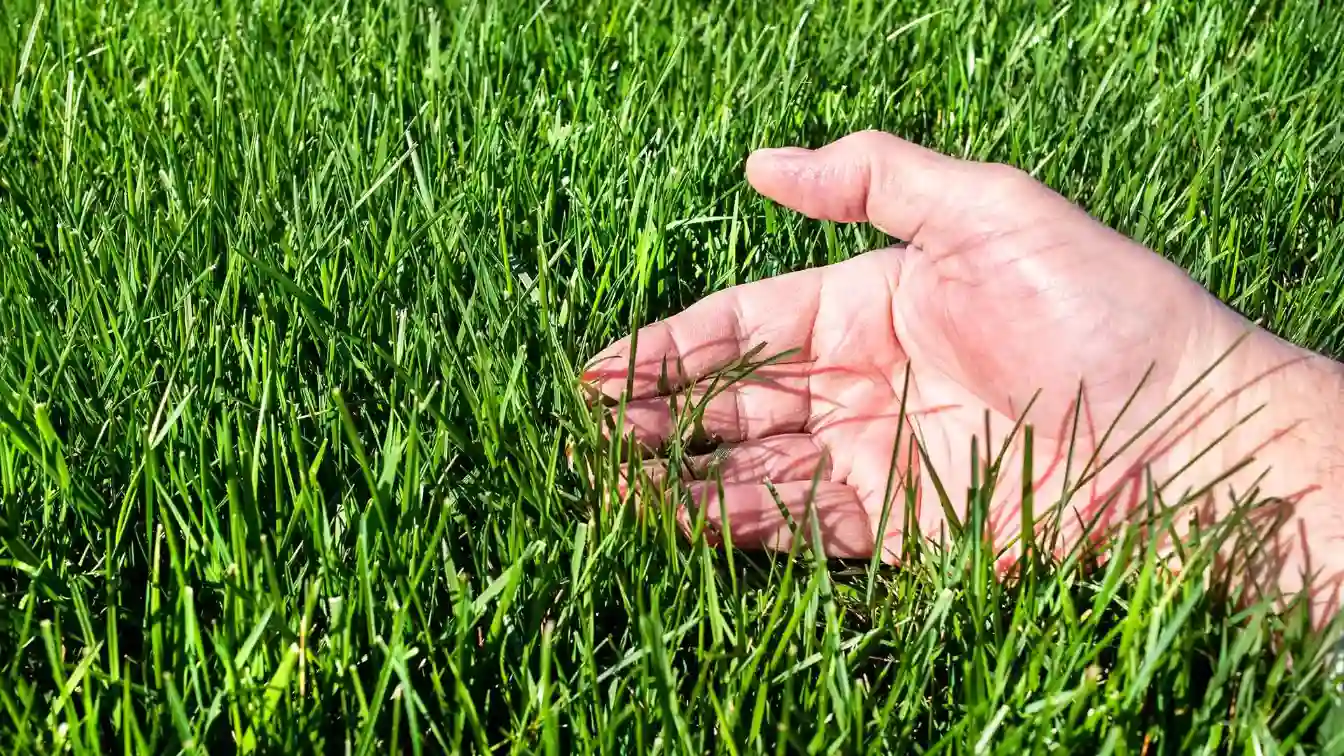
Tall fescue has a unique growth structure. Its crown — the growing point of the plant — sits higher off the ground than most grass types, typically around 3 inches from the soil surface. Cut below that point and you’ve exposed the crown directly to heat, drought, and disease pressure. The plant can recover, but it takes weeks and comes at a real cost to the lawn’s density and thickness.
This is exactly why tall fescue requires a taller cut than Bermuda, Zoysia, or St. Augustine. It’s not just preference — it’s biology.
Tall Fescue Cutting Height by Season
Spring (March–May) — 2.5 to 3.5 Inches
Spring is when tall fescue wakes up fast. Growth rates spike, and most homeowners fall behind quickly.
According to the NC State Extension Tall Fescue Maintenance Calendar, mow to 2.5–3.5 inches from March through May. During active spring growth, you may need to mow as often as every five to seven days to stay within the one-third rule (more on that below).
Pro tip: Don’t start the season at the lowest setting trying to “clean up” winter growth. That’s a scalping mistake, and it sets the lawn back for weeks.
Summer (June–August) — Raise to 3.5–4 Inches
Summer is survival mode for tall fescue.
When temperatures push above 85°F, raise your mower deck to 3.5–4 inches minimum. Taller blades do two things: they shade the soil (keeping the root zone cooler) and store more carbohydrates (giving the plant reserves to handle drought stress).
Mowing frequency drops naturally here. Tall fescue slows its growth in the heat — you may only need to mow every 10–14 days, and that’s perfectly fine. Don’t mow on a fixed calendar. Mow when the grass tells you it’s time.
Fall (September–November) — Lower to 2.5–3 Inches
Fall is tall fescue’s favorite season — and yours too, if you’re planning to overseed.
Growth picks back up as temperatures drop. Lower your cutting height to 2.5–3 inches. The shorter cut opens the canopy and improves seed-to-soil contact when overseeding bare or thin spots. After new seed germinates, raise the deck slightly to about 3–3.25 inches to protect seedlings while they establish.
Fall is also the best time to fertilize. Coordinate your mowing height with your fertilization schedule for maximum recovery and thickness heading into winter.
Winter (December–February) — Hold at 3 Inches
Tall fescue stays semi-green through winter, unlike warm-season grasses that go fully dormant.
Keep it at around 3 inches if mowing at all. Avoid mowing frost-covered or frozen grass — the blades become brittle and you’ll cause breakage rather than a clean cut. If the lawn hasn’t grown much, skip the mow entirely. It’s fine.
The One-Third Rule — Non-Negotiable for Tall Fescue
This is the single most important mowing principle, and it applies to every grass type — but it’s especially critical for tall fescue.
The rule: Never remove more than one-third of the grass blade in a single mowing session.
Here’s how it works in practice:
- If your tall fescue has grown to 4.5 inches, the lowest you should cut it is 3 inches.
- If it’s grown to 6 inches (it happens after a rainy week), the lowest safe cut is 4 inches.
- Cutting below those thresholds in a single session — no matter how overdue — causes more damage than skipping the mow.
Why? Removing too much at once puts the plant into immediate stress. Photosynthesis drops sharply because you’ve removed the leaf surface the grass needs to produce energy. The result: yellowing, browning, and a weakened root system that can take weeks to bounce back.
You can read more about the science behind the one-third rule at Penn State Extension’s lawn management resources.
Signs You’re Cutting Tall Fescue Too Short
Cut it right and your lawn rewards you. Cut it too short and the signs show up within 24 hours.
Watch for these:
- Brown or tan patches directly after mowing — this is scalping, where the mower removes the green blade entirely and exposes the brown stem below
- The crown visible through the turf — the growing point is now exposed, which is serious
- Thin, patchy coverage that doesn’t fill back in between mowings
- Rapid weed invasion — especially crabgrass and clover, which thrive when the canopy is too short to shade them out
Here’s the data point that should change how you think about mowing height permanently: according to University of Maryland Extension research, maintaining tall fescue at 3–4 inches can reduce weed pressure by up to 80%. Your mowing height is your first — and most effective — line of weed defense.
If you’ve already scalped your lawn: raise the deck immediately, water deeply, and give the lawn two to three weeks to recover before cutting again. Do not fertilize during that window — it adds stress, not support.
Practical Mower Settings for Tall Fescue
Don’t Trust the Numbers on Your Deck
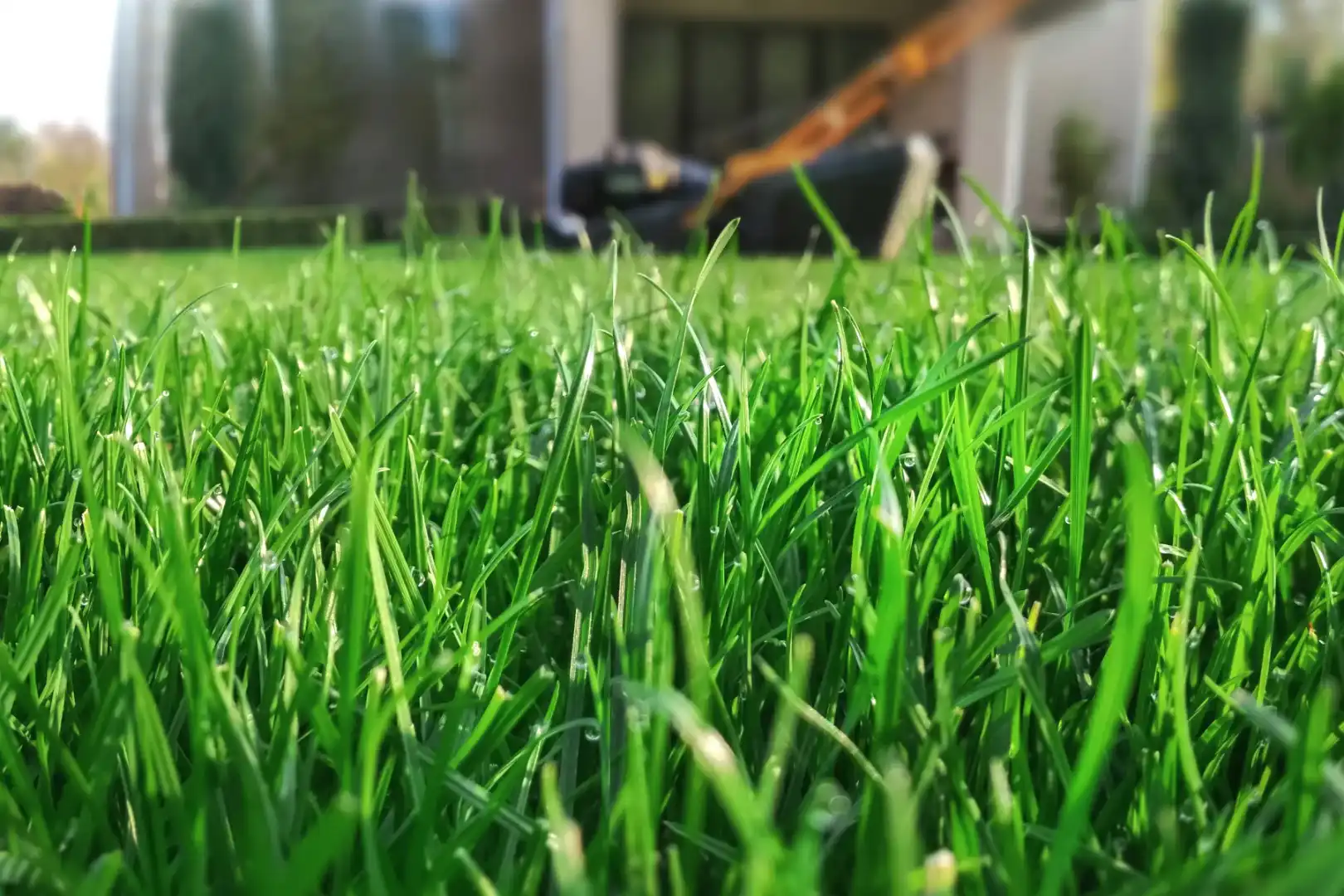
Most residential mowers have numbered height settings (1 through 5, or similar). Here’s the problem: those numbers don’t mean inches. A “setting 4” on one brand might cut at 3 inches, while on another brand it cuts at 3.75 inches.
Always verify with a ruler. After setting your deck, mow a small test strip, then measure from soil to the tip of the cut blade. This takes 60 seconds and saves you from months of cutting at the wrong height.
Walk-Behind vs. Riding Tractor vs. Zero-Turn
| Mower Type | Recommended Summer Height | Notes |
|---|---|---|
| Walk-behind (rotary) | 3.5–4 inches | Set to highest position |
| Riding tractor | 3.5–4 inches | Raise fully in peak heat |
| Zero-turn (commercial) | 4–4.5 inches | Commercial tall fescue standard |
Blade Sharpening — The Overlooked Factor
Dull mower blades tear grass instead of cutting it cleanly. A torn blade tip turns white or tan within 24 hours — a warning sign of stress and disease risk, not just appearance.
Sharpen your blades every 20–25 hours of mowing time, or roughly every three months for lawns under half an acre. A well-sharpened blade makes a clean cut that heals quickly. A dull one leaves a wound.
Leave Your Clippings on the Lawn
Don’t bag them. Seriously.
Grasscycling — the practice of leaving clippings on the lawn — is one of the easiest wins in lawn care. Grass clippings from tall fescue decompose quickly and return nitrogen directly to the soil. NC State Extension data shows they can supply up to 25% of your lawn’s annual fertilizer needs — for free, every single mow.
The one exception: if you’ve let the grass grow too long and clippings are clumping heavily, collect them that session to prevent smothering the turf beneath.
Frequently Asked Questions About Tall Fescue Cutting Height
What is the best cutting height for tall fescue in summer?
Raise your mower to 3.5–4 inches from June through August. The taller height shades the soil, reduces moisture loss, and protects the crown during heat stress. Some commercial operators go up to 4.5 inches in extreme heat regions. See NC State’s summer tall fescue guidelines for region-specific recommendations.
Can I cut tall fescue at 2 inches?
You can, but you shouldn’t. Cutting below 2.5 inches exposes the crown, dramatically increases heat and drought stress, and opens the canopy to weed seed germination. Some specialty turf varieties tolerate shorter cuts with intensive management, but for standard home lawns it does more harm than good.
How often should I mow tall fescue?
Spring and fall: every 5–7 days. Summer: every 10–14 days, or based on actual growth. Never mow on a fixed calendar — mow based on how much the grass has grown relative to your target height and the one-third rule.
What does scalped tall fescue look like?
Scalped grass appears brown or tan immediately after mowing, with patches where only the stem is visible instead of healthy green blade. If you can see soil or a pale crown through the turf after mowing, it’s been scalped. Raise the deck and give the lawn time to recover before the next cut. Learn more about diagnosing and recovering from lawn scalping at NC State TurfFiles.
When should I mow new tall fescue for the first time?
Wait until seedlings reach approximately 4.5 inches tall, then cut to no lower than 3.5 inches on that first mow. Use sharp blades — dull blades pull young roots right out of the soil. More on establishing a new tall fescue lawn: Clemson HGIC’s Tall Fescue Care Guide.
The Bottom Line
Getting tall fescue cutting height right is one of the highest-impact, lowest-cost changes you can make for your lawn. No products. No treatments. Just setting your mower deck correctly — and adjusting it with the seasons.
Quick recap:
- Spring: 2.5–3.5 inches | mow every 5–7 days
- Summer: 3.5–4 inches | mow every 10–14 days
- Fall: 2.5–3 inches | lower slightly before overseeding
- Winter: ~3 inches | skip if frozen
- Always apply the one-third rule — no exceptions
- Verify your mower height with a ruler, not the deck setting
- Leave clippings — they’re 25% of your annual fertilizer budget, free
If you’re not sure whether your current mowing setup is helping or hurting your lawn, our team at Gen Lawn is here to help. Contact us today for a free lawn evaluation, and we’ll build a mowing and care plan designed for your grass type, your region, and your goals.
References & Further Reading
- NC State Extension — Tall Fescue Lawn Maintenance Calendar
- NC State TurfFiles — Tall Fescue Overview and Mowing Guidelines
- Clemson HGIC — Tall Fescue Establishment and Maintenance
- University of Maryland Extension — Lawn Care and Weed Pressure Research
- Penn State Extension — Lawn Management Resources
- Britannica — Photosynthesis (for the science behind leaf surface and energy production)
About Author
Khalid Fazal is a seasoned lawn care specialist and horticultural researcher with over 15 years of hands-on experience transforming challenging landscapes into lush, resilient green spaces. His journey didn’t start in a lab, but in a backyard full of stubborn, cracked clay that “experts” said would never grow a healthy blade of grass. Refusing to accept a yard full of dust, Khalid spent years experimenting with organic soil restoration and precise mulching—eventually turning that wasteland into a neighborhood showpiece on a shoestring budget.
From mastering core aeration techniques to optimizing soil pH for specialized turf varieties, Khalid’s approach combines old-school grit with modern agronomic science. He founded Gen Lawn to provide homeowners with honest, research-backed advice that prioritizes long-term soil health over quick-fix chemical solutions. When he isn’t analyzing soil profiles, he’s developing precision tools to help others achieve professional results without the professional price tag.

Lawn Winterizer: When to Apply by Grass & Region [2026]
Table of Contents Home / By Khalid Fazal | Updated:...
Read More
Spring Lawn Care: What to Do and When in Every US Region
Table of Contents Home / By Khalid Fazal | Updated:...
Read More
Lawn Maintenance Checklist by Season and Grass Type (2026)
Table of Contents Home / By Khalid Fazal | Updated:...
Read More
Liquid Fertilizer vs Granular Fertilizer: Which Wins?
Table of Contents Home / By Khalid Fazal | Updated:...
Read More