
Starter Fertilizer for Grass Seed: The Complete Guide to Faster, Thicker Growth
You spread your grass seed. You watered. You waited. And two weeks later, you’re staring at thin, patchy growth that looks nothing like the lawn you imagined.
Here’s what likely went wrong: the fertilizer step.
Most homeowners either skip starter fertilizer entirely, use the wrong type, or — worse — grab a bag with weed killer in it that quietly kills every seed they just planted. The result? Wasted seed, wasted money, and another season of a lawn that never quite gets there.
Here’s the fix. This guide covers exactly what starter fertilizer does for new grass, how to read NPK ratios like a pro, when to apply based on where you live in the US, and which products are actually worth your money. By the end, you’ll know exactly what to grab before you scatter a single seed.
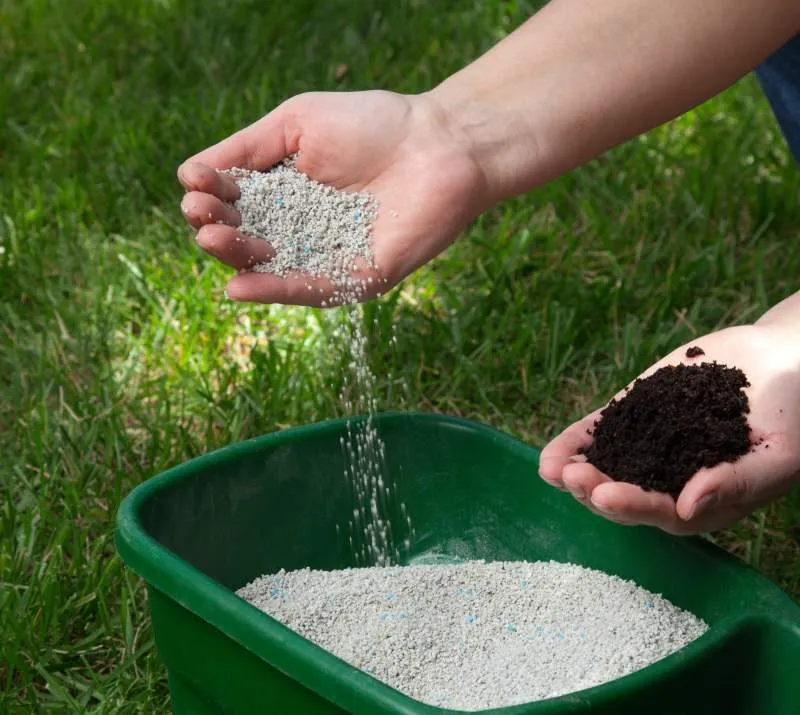
What Is Starter Fertilizer for Grass Seed — And Why It’s Different
Not all fertilizers are created equal. Using the wrong one at seeding time is one of the most common — and costly — mistakes homeowners make.
Starter Fertilizer vs. Regular Lawn Fertilizer
A standard maintenance fertilizer is built for established grass. It’s typically high in nitrogen, which drives leafy, green blade growth. That’s exactly what mature turf needs — but it’s completely the wrong formula for a seedling that’s still fighting to put down roots.
Starter fertilizer flips the script. It’s formulated with elevated phosphorus — the nutrient responsible for root development — to give new seedlings what they need most during those first critical weeks in the ground.
Here’s a quick side-by-side:
| Fertilizer Type | Typical NPK | Best Use |
|---|---|---|
| Starter Fertilizer | 18-24-12 or 12-18-8 | New seed, sod, overseeding |
| Maintenance Fertilizer | 32-0-4 or 27-3-3 | Established, mature lawns |
| All-Purpose (10-10-10) | 10-10-10 | General gardening — not ideal for seeding |
Why Phosphorus Is the Star Nutrient for New Grass
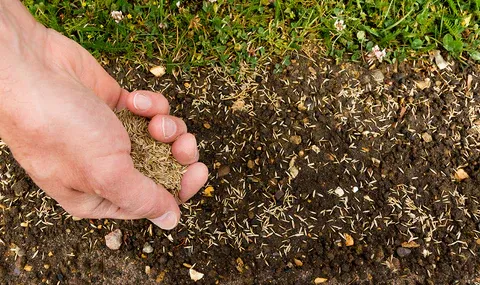
Think of phosphorus as the root builder. Nitrogen keeps blades green. Phosphorus powers the underground network your seedlings desperately need to survive.
Here’s why timing matters so much: unlike nitrogen, phosphorus doesn’t move freely through soil. It binds to soil particles and stays put. That means it needs to be applied directly in the root zone — which is exactly what applying it at seeding time accomplishes.
According to Penn State Extension’s Department of Plant Science, seedlings at the germination stage require significantly more nitrogen and phosphorus than mature grass plants, because they’re rapidly building new tissue from scratch. Without that phosphorus boost at planting, your seeds might still sprout — but they’ll develop weak, shallow roots that can’t handle summer heat, drought, or foot traffic.
How to Read NPK Ratios and Choose the Right Starter Fertilizer
Every fertilizer bag carries three numbers separated by dashes. This is the NPK ratio, and once you understand it, shopping for fertilizer becomes simple.
Understanding the Three Numbers on Every Bag
- N — Nitrogen: Fuels green blade growth. Good in moderate amounts at seeding — too much feeds your existing grass and crowds out new seedlings.
- P — Phosphorus: Root development and energy transfer. The most important nutrient for new grass. The middle number should always be at or above the first number in a starter fertilizer.
- K — Potassium: Stress tolerance, disease resistance, and drought recovery. Think of it as the immune system booster for your turf.
Quick Rule of Thumb: In a starter fertilizer, the middle number (P) should be as high as — or higher than — the first number (N). Example: 18-24-12 Avoid: 32-0-4 (zero phosphorus — useless for new seed)
Granular vs. Liquid Starter Fertilizer
For most homeowners seeding a full lawn, granular is the go-to choice. It applies evenly with a broadcast or drop spreader, releases consistently as it dissolves, and can be worked into the soil before seeding.
Liquid starter fertilizers have their place — mainly for spot repairs, small bare patches, or as a supplement to boost germination in targeted areas. But across a full yard, granular wins for ease and coverage.
Organic vs. Synthetic: What’s Right for You?
| Organic | Synthetic | |
|---|---|---|
| Nutrient Release Speed | Slow (weeks) | Fast (days) |
| Risk of Seedling Burn | Very low | Moderate if over-applied |
| Soil Health Benefit | Builds microbial life long-term | Minimal soil benefit |
| Typical Cost | Higher | More affordable |
| Best For | Eco-conscious homeowners, beginners worried about burn | Faster results, deadline-driven seeding projects |
Organic options — things like bone meal, worm castings, or compost-based blends — feed seedlings gradually as soil microbes break them down. You won’t get that immediate phosphorus surge, but you also won’t burn a single seedling even if you apply a touch too much.
State Phosphorus Restriction Notice: Several US states and municipalities restrict phosphorus applications due to runoff and water quality concerns. Most still allow it specifically for new lawn establishment — but verify your local rules through your county extension office before you buy.
When and How to Apply Starter Fertilizer for Grass Seed
Timing makes or breaks your starter fertilizer investment. Apply too early and nutrients wash away before roots can absorb them. Apply too late and you’ve missed the critical window entirely.
Before, During, or After Seeding?
The sweet spot is at the time of seeding — or within 24 hours. Here’s how to do it right:
If applying BEFORE seeding:
- Loosen the soil to 4–6 inches deep with a rake or tiller
- Spread granular starter fertilizer evenly with a broadcast spreader
- Work it into the top 2–3 inches of soil
- Spread your grass seed on top
- Lightly rake to improve seed-to-soil contact
- Water gently to activate
If applying AFTER seeding:
- Spread your seed first and rake lightly
- Apply starter fertilizer evenly over the seeded surface
- Water within a few hours — granules must dissolve to work
One thing to avoid: leaving granular fertilizer sitting on dry soil in direct contact with seeds for extended periods. Undissolved granules can pull moisture away from tender seedlings and cause burn at the seed level.
US Regional Seeding Timing Guide
Starter fertilizer only works when seeding happens at the right time for your grass type. Here’s the breakdown by US region:
| Grass Type | Common Varieties | Best Seeding Season | Primary US Region |
|---|---|---|---|
| Cool-Season Grasses | Kentucky Bluegrass, Tall Fescue, Perennial Ryegrass | Late Aug – Oct (fall preferred) or Mar – May (spring) | Northeast, Midwest, Pacific Northwest |
| Warm-Season Grasses | Bermuda, Zoysia, St. Augustine, Centipede | Late May – July (soil temp 65°F+) | Southeast, South, Southwest |
Fall is the gold standard for cool-season grasses. The soil is still warm from summer, air temperatures are dropping, and morning dew naturally keeps seedbeds moist. Spring seeding works, but you’ll be racing against weed seeds germinating at the same time — the same phosphorus that feeds your grass can feed weed roots too.
How Much Starter Fertilizer Do You Need?
Standard application rate: 0.5–1 lb. of actual nitrogen per 1,000 sq. ft.
For the widely recommended Andersons 18-24-12, that translates to roughly 4 lbs. of product per 1,000 sq. ft. Here’s a quick reference:
| Lawn Size | The Andersons 18-24-12 | Scotts Turf Builder Starter |
|---|---|---|
| 1,000 sq ft | ~4 lbs | ~3 lbs |
| 2,500 sq ft | ~10 lbs | ~7.5 lbs |
| 5,000 sq ft | ~20 lbs | ~15 lbs |
| 10,000 sq ft | ~40 lbs | ~30 lbs |
Always follow your specific product’s label — application rates vary by formula and nitrogen percentage.
Top Starter Fertilizers for Grass Seed in the US (Honest Picks)
These are the products consistently recommended by lawn care professionals and hands-on homeowners. No paid placements — just what works.
| Product | NPK | Coverage | Best For | Price Tier |
|---|---|---|---|---|
| The Andersons 18-24-12 | 18-24-12 | ~12,000 sq ft (50 lb bag) | Full renovation, overseeding, enthusiast-level results | $$ |
| Scotts Turf Builder Starter Food | 21-22-4 | 5,000 sq ft (15 lb bag) | Beginners, best retail availability | $ |
| Jonathan Green Veri-Green Starter | 12-18-8 | 1,500–5,000 sq ft | Cool-season grasses, widely available locally | $ |
| Ferti-Lome New Lawn Starter 9-13-7 | 9-13-7 | ~4,000 sq ft | Overseeding into existing lawn; lower N won’t surge established grass | $ |
| Yard Mastery 12-12-12 + Iron | 12-12-12 | Varies | Balanced nutrition, includes micronutrients, very low burn risk | $$ |
Quick Picks by Situation:
- Best overall: The Andersons 18-24-12 — professional-grade NPK with 50% slow-release nitrogen. The go-to for serious lawn renovation.
- Best for beginners: Scotts Turf Builder Starter — every garden center carries it, foolproof to apply, consistently strong results.
- Best for overseeding into existing turf: Ferti-Lome 9-13-7 — lower nitrogen won’t push your established grass into a growth surge that crowds out new seedlings.
- Best low-burn option: Yard Mastery 12-12-12 + Iron — balanced formula with micronutrients; excellent if you’re nervous about over-applying.
Critical Mistakes to Avoid When Using Starter Fertilizer
Even the best starter fertilizer can fail if you make one of these mistakes. These are the most common slip-ups — and how to sidestep each one.
Using weed-and-feed instead of starter fertilizer This is the #1 most damaging mistake homeowners make. Many all-in-one lawn fertilizers contain pre-emergent herbicides such as prodiamine, dithiopyr, or pendimethalin. These are specifically designed to stop seed germination — which means they’ll kill your grass seed right along with the weeds. The only herbicide considered safe during seeding is Mesotrione, sold as Tenacity, and only when the bag explicitly states it’s safe for new seeding.
Over-applying granular fertilizer More is not more. Excess fertilizer draws moisture away from seedlings and causes nitrogen burn — scorched-looking patches that take weeks to recover. Stick to label rates exactly.
Skipping the watering step immediately after Granules sitting on dry soil in contact with seeds are useless — and potentially harmful. Water within a few hours of application every time.
Using high-nitrogen maintenance fertilizer as a substitute A 32-0-4 or 27-3-3 has little to zero phosphorus. It will green up your existing lawn’s blades while your new seedlings quietly starve below ground.
Fertilizing several days before seeding Nutrients — especially nitrogen — leach through the soil profile quickly. Apply at seeding time, not a week ahead when much of the benefit will already be gone.
What to Do After Applying Starter Fertilizer
Most guides stop at “apply and water.” But what happens in the weeks after matters just as much as the application itself.
- Keep soil consistently moist — water lightly 2–3 times daily until seedlings reach 2 inches tall. Deep single watering at this stage can drown shallow roots; frequent light watering is what new seedlings need.
- Hold off on mowing — wait until new grass reaches at least 3–4 inches before the first cut. Mowing too early stresses seedlings whose root systems are still shallow and fragile.
- Wait 6–8 weeks before switching to maintenance fertilizer — let the starter do its job first. Applying a high-nitrogen lawn fertilizer too soon will push top growth at the direct expense of root development.
- No herbicides yet — wait until you’ve mowed the new lawn at least 3–4 times before introducing any weed control treatments. Broadleaf herbicides applied too early damage or kill young grass that doesn’t yet have a mature cuticle layer.
Frequently Asked Questions About Starter Fertilizer for Grass Seed
Can I use starter fertilizer on an established lawn?
You can — but it usually isn’t the best tool for the job. Starter fertilizer’s high phosphorus won’t harm established grass, but most mature lawns already have adequate phosphorus levels and don’t benefit from more. Before you apply anything, test your soil first. If phosphorus is already sufficient, a standard nitrogen-forward maintenance fertilizer will give you far better results on an established lawn.
Is starter fertilizer the same as all-purpose (10-10-10) fertilizer?
No — they’re different formulas serving different goals. A 10-10-10 fertilizer has equal parts N, P, and K. For new grass seed, you need phosphorus to lead (like 18-24-12 or 12-18-8). An all-purpose blend simply won’t deliver the concentrated phosphorus boost that seedlings need to push roots down quickly in those first critical weeks.
How long after applying starter fertilizer can I plant grass seed?
If you’re applying granular fertilizer, you can seed immediately — before or after the fertilizer is fine. If you’ve worked granular into the soil beforehand, seed within the same day. Don’t let several days pass between fertilizing and seeding, as nitrogen begins leaching out of the active root zone fairly quickly depending on rainfall and soil type.
What’s the best starter fertilizer for overseeding in fall?
For overseeding into an existing lawn, reach for a lower-nitrogen starter like Ferti-Lome 9-13-7 or Jonathan Green Veri-Green 12-18-8. The reason: too much nitrogen at overseeding time pushes your established grass into rapid top growth, which physically crowds out new seedlings before they can compete. Lower nitrogen keeps the existing turf calm while the new seed establishes.
Do I really need a soil test before buying starter fertilizer?
A soil test is always the smartest first step — especially if you’re investing in new seed and fertilizer at the same time. It tells you your existing phosphorus levels, soil pH, and which nutrients are actually deficient. Most county cooperative extension offices offer soil testing for $15–$30. That small investment prevents you from throwing money at the wrong fertilizer for your specific soil profile.
Conclusion: Give Your Grass Seed the Best Possible Start
Getting starter fertilizer right isn’t complicated — but the details absolutely matter.
Here’s what to take away from this guide:
- Choose phosphorus-rich formulas — the middle NPK number should be equal to or above the first number
- Apply at seeding time — not days before, and not more than 24 hours after
- Never use weed-and-feed during seeding — pre-emergent herbicides kill grass seed too
- Match your timing to your grass type and US region — cool-season lawns seed best in fall; warm-season in late spring
- Follow up at 6–8 weeks with a balanced maintenance fertilizer once roots are established
Do these things right and you’ll have noticeably thicker, greener grass germinating within weeks — not months of hoping something eventually takes hold.
Ready to plan out the full season? Check out Gen Lawn’s guides on overseeding your lawn in fall and building a lawn care fertilizer schedule for your next steps.
References & External Resources
| Source | Resource |
|---|---|
| Penn State Extension | Turfgrass Fertilization & Lawn Establishment |
| USDA NRCS | Soil Testing & Soil Health Basics |
| Purdue University Extension | Pre-Emergent Herbicides & Weed Control in Turf |
| Clemson University HGIC | Warm-Season Grass Establishment Guide |
| LawnStarter | Starter Fertilizer FAQs |
About Author
Khalid Fazal is a seasoned lawn care specialist and horticultural researcher with over 15 years of hands-on experience transforming challenging landscapes into lush, resilient green spaces. His journey didn’t start in a lab, but in a backyard full of stubborn, cracked clay that “experts” said would never grow a healthy blade of grass. Refusing to accept a yard full of dust, Khalid spent years experimenting with organic soil restoration and precise mulching—eventually turning that wasteland into a neighborhood showpiece on a shoestring budget.
From mastering core aeration techniques to optimizing soil pH for specialized turf varieties, Khalid’s approach combines old-school grit with modern agronomic science. He founded Gen Lawn to provide homeowners with honest, research-backed advice that prioritizes long-term soil health over quick-fix chemical solutions. When he isn’t analyzing soil profiles, he’s developing precision tools to help others achieve professional results without the professional price tag.

Lawn Winterizer: When to Apply by Grass & Region [2026]
Table of Contents Home / By Khalid Fazal | Updated:...
Read More
Spring Lawn Care: What to Do and When in Every US Region
Table of Contents Home / By Khalid Fazal | Updated:...
Read More
Lawn Maintenance Checklist by Season and Grass Type (2026)
Table of Contents Home / By Khalid Fazal | Updated:...
Read More
Liquid Fertilizer vs Granular Fertilizer: Which Wins?
Table of Contents Home / By Khalid Fazal | Updated:...
Read More