
Mold Spores in Mulch: How to Identify Them, What’s Actually Dangerous, and How to Fix It
You walk outside, crouch down to check on your flower bed, and spot it — white fuzzy patches across your mulch. Or maybe a bright yellow blob that wasn’t there yesterday. Your first instinct is to panic.
Here’s what most homeowners don’t realize: one specific type of mold in mulch can permanently stain your house siding and car. No scrubbing. No pressure washing. No undoing it. The rest? Completely harmless — and actually part of a healthy yard ecosystem.
Knowing which is which makes all the difference. This guide breaks down exactly what’s growing in your mulch, whether you actually need to worry, and the right steps to handle it — without wasting money on treatments you don’t need.
What Are Mold Spores in Mulch — And Why Does Mulch Attract Them?
Why Mulch Is a Mold Magnet (The Simple Science)
Here’s the thing: every piece of organic mulch you lay down is essentially a buffet for fungal decomposers. Fungi thrive on the carbon-rich compounds found in wood and bark — cellulose, lignin, and simple sugars — and they get to work the moment mulch hits the ground.
Add the right conditions — moisture, warmth (between 77–86°F), and shade — and you’ve created a perfect environment for mold to grow. Freshly shredded mulch is especially prone because it contains raw cellulose and sugars that microbes love. Composted or aged mulch is far more stable and less hospitable to mold spores.
The bottom line? Mold spores are everywhere in the outdoor air — much like pollen. Mulch just gives them a place to land and thrive.
The 5 Most Common Types of Mold Spores in Mulch
Not all mulch mold is the same — and treating them all the same way is where most homeowners go wrong. Use this quick-reference table to identify what you’re dealing with before you take action.
| Type | Appearance | Danger Level | What To Do |
|---|---|---|---|
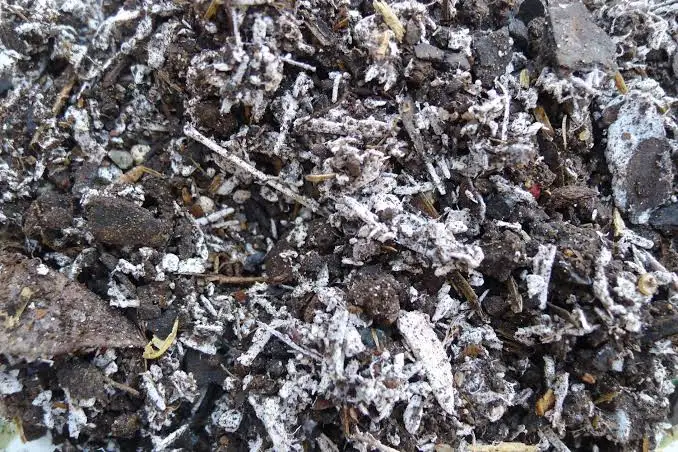
| White Mold | White fluffy threads or cotton-like film | Low — harmless mycelium mat | Rake and let dry |
| Slime Mold (“Dog Vomit”) | Bright yellow, orange, or pink foamy blob | None — harmless protist, not a true fungus | Ignore or rake to compost |
| Artillery Fungus | Tiny cream/orange-brown cups with black dots | HIGH — shoots spores that permanently stain surfaces | Remove mulch immediately |
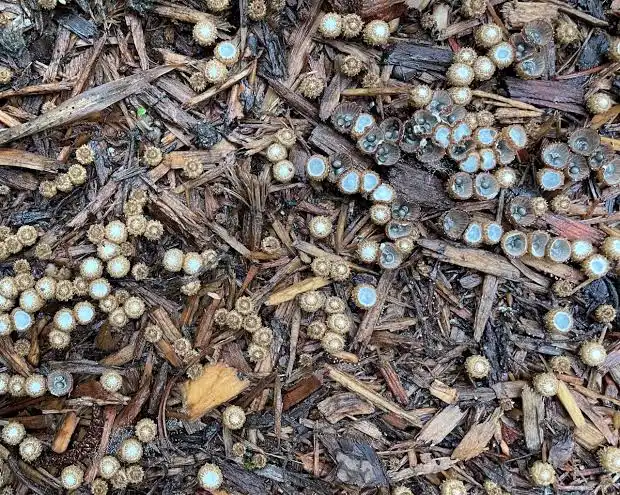
| Bird’s Nest Fungus | Tiny cup-shapes with “eggs” inside | None — completely harmless | Leave it or rake away |
| Toadstool Mushrooms | Classic fleshy mushroom shapes | Low (toxic if eaten) | Remove if kids or pets are nearby |
Are Mold Spores in Mulch Dangerous to Humans, Kids, and Pets?
The Honest Health Risk Assessment
The types of mold and fungi found in mulch are generally not dangerous to healthy adults. But a few situations call for extra caution.
If you have mold allergies or a compromised immune system, disturbing large patches of moldy mulch can trigger respiratory irritation or allergy symptoms. The fix is simple: wear gloves and an N95 dust mask when turning or removing heavily moldy mulch. The EPA recommends these basic protective measures for anyone working around mold-rich organic material.
One pro tip from Master Gardeners: moisten the moldy area lightly before raking. This significantly reduces the number of spores that become airborne during cleanup.
Is Mold in Mulch Dangerous to Dogs and Cats?
Most mulch mold is non-toxic to pets. However, if a dog or cat ingests a significant amount of moldy mulch, it can cause mild stomach upset — vomiting or lethargy. If you notice those symptoms after mulch exposure, contact your vet.
There’s one separate concern worth knowing: cocoa bean mulch contains theobromine — the same compound that makes chocolate toxic to dogs. This is distinct from mold, but if you have dogs, avoid cocoa mulch entirely.
The safest rule: remove any visible mold — especially mushrooms or black-spored varieties — before letting pets roam freely in mulched areas.
Are Kids Safe Playing Around Moldy Mulch?
For most mold types, yes. White fuzz or yellow slime is not a cause for alarm around children.
The exceptions are clear. Remove any mushrooms you find — some wild species are deadly toxic if eaten. Never let young children play near mulch beds where artillery fungus is active; the black spores stain clothing and skin. A practical rule of thumb: if the mulch smells sour or shows black specks on nearby surfaces, keep the area off-limits until resolved.
Will Mold Spores in Mulch Damage Your Plants or Your Property?
Mold and Your Plants — More Friend Than Foe
Here’s something most homeowners don’t realize: the vast majority of mold in mulch is actually doing your garden a favor. These are saprophytic fungi — decomposers that break down dead wood and return nutrients to the soil. They’re feeding on your mulch, not your plants.
The concern arises only with overwatered plants that already have weakened root systems. Excess moisture creates conditions for damping off — a fungal disease that can kill seedlings. The simple fix? Keep mulch 2–3 inches away from plant stems and tree bases at all times. That gap alone eliminates the vast majority of plant-related mold problems.
Artillery Fungus — The One Mold That Can Actually Wreck Your Home
This deserves its own section — because it is fundamentally different from every other mold you’ll find in mulch.
Artillery fungus (Sphaerobolus stellatus) produces tiny cream or orange-brown cups — barely 1/10 of an inch across — each containing a black spore mass. When conditions are right, each cup acts like a pressurized cannon, shooting its sticky spore mass up to 20 feet in any direction.
Here’s the part that matters most: the fungus orients itself toward light. That means it’s aiming directly at your white vinyl siding, light-painted trim, and car panels.
Once those spores land and dry, they are essentially permanent. Penn State Extension confirms that even pressure washing at high settings typically damages the surface before it removes the stain. Scraping, sanding, and repainting are often the only real options — and none are cheap.
Prevention is the only reliable fix. Across 27 mulch varieties tested in Penn State field trials, large pine bark nuggets were the most resistant option. Research also shows that mixing at least 40% mushroom compost into wood chip mulch significantly suppresses artillery fungus by introducing competing microorganisms that crowd it out.
How to Get Rid of Mold Spores in Mulch — Step by Step
Step 1 — Identify What You’re Dealing With
Before you do anything, use the Quick-ID table above. Treating white slime mold the same as artillery fungus wastes time and money. Identify first, then act.
Step 2 — Simple Fixes for White Mold, Slime Mold, and Bird’s Nest Fungus
These are the harmless ones — and they’re easy to handle:
- Rake and turn the mulch to break up colonies and expose them to sunlight and air
- Cut back overhanging branches to let more light into shaded beds
- Reduce watering frequency — aim for 1–2 inches per week, applied all at once. UConn Extension notes that short daily waterings stay in the top mulch layer, making mold worse, not better
- Baking soda solution: 2 tablespoons per gallon of water. Disrupts fungal conditions without altering soil pH
- Vinegar spray: 1 part white vinegar to 4 parts water. Mist lightly over surface mold patches — safe for soil microbes and nearby roots
Important: There are no registered fungicides for controlling mold in landscape mulch. Natural methods are your best — and really your only — practical option.
Step 3 — Dealing With Artillery Fungus
If you’ve confirmed artillery fungus, move quickly and methodically:
- Don’t rake it — raking spreads the spores further into the bed
- Remove the affected mulch entirely, bag it tightly, and dispose of it with yard waste
- Replace with pine bark nuggets or cedar mulch — both are lower-risk options backed by research
- Mix in mushroom compost at 40% or more of total volume — this is the most effective non-chemical suppression strategy available, per Penn State Extension
- Keep shredded hardwood mulch at least 10 feet from your home’s foundation and away from parked vehicles
If black spores have already landed on your siding, try soap and water with a soft-bristle brush immediately — before the material dries and hardens. Once hardened, your options narrow dramatically.
When to Replace All Your Mulch
Some warning signs tell you it’s time for a complete refresh rather than a spot treatment:
- The mulch has a sour or rotten smell beneath the surface
- There’s a thick, water-repellent crust that won’t break up when raked
- Heavy artillery fungus activity is visible near the house or on vehicles
- The mulch is more than one to two seasons old and heavily compacted
In most US climates, refreshing or top-dressing mulch once a year keeps fungal growth in check. Apply new mulch no deeper than 2–3 inches — thicker layers trap moisture and make conditions significantly worse.
How to Prevent Mold Spores in Mulch From Coming Back
This is where most homeowners skip ahead — and end up right back here next season.
- Choose the right mulch type for your yard (see comparison table below)
- Water at plant roots, not across the mulch surface — keep sprinkler heads pointed away from beds
- Fluff and turn mulch at least twice per growing season to disrupt spore formation
- Apply a ½-inch top-dressing of fresh mulch annually instead of adding thick new layers
- Avoid the “mulch volcano” — piling mulch against tree trunks is one of the most common landscaping mistakes and creates ideal fungal conditions
Mulch Mold Resistance Comparison:
| Mulch Type | Mold Risk | Notes |
|---|---|---|
| Shredded Hardwood | High | Avoid within 10 ft of foundations; prime artillery fungus habitat |
| Cedar / Hemlock | Low | Natural antifungal oils; slower to break down |
| Pine Bark Nuggets | Very Low | Best for near-foundation beds per Penn State field trials |
| Rubber Mulch | None | Zero mold — but provides no soil health benefit |
| Straw | Moderate | Better suited for vegetable gardens than landscape beds |
Frequently Asked Questions About Mold Spores in Mulch
Is white mold on mulch dangerous to humans?
No. White mold is typically composed of harmless fungal threads called mycelium that break down organic matter in the mulch. It poses no health risk to healthy adults. Those with mold allergies should wear a dust mask and gloves when disturbing it to avoid inhaling airborne spores.
What causes mold spores in mulch to appear overnight?
Warm temperatures (77–86°F), moisture from rain or irrigation, and poor airflow create the perfect recipe for rapid fungal growth. Freshly laid, unaged mulch is especially prone because it’s rich in raw sugars and cellulose. After a significant rain event, visible mold can appear within 12–24 hours.
Can mold spores in mulch spread to my house or garden?
Most mulch mold stays confined to the mulch itself. The critical exception is artillery fungus, which actively shoots spore masses toward light-colored nearby surfaces — siding, trim, fences, and vehicles. For your garden, mold in mulch rarely transfers to healthy plants, since it feeds on dead organic matter, not living roots.
How do I naturally stop mold from growing in mulch?
The most effective natural approaches are: raking regularly to improve airflow, reducing overwatering, choosing mold-resistant mulch types like cedar or pine bark, and applying a baking soda solution (2 tablespoons per gallon of water) to active patches. Avoid bleach and harsh chemical fungicides — they disrupt the soil microbiome and can damage plant roots.
Should I remove moldy mulch or just treat it?
It depends entirely on the type. White mold and slime mold can usually be raked and left to dry — no removal needed. Artillery fungus requires full removal of the affected mulch, since treating it in place is ineffective and risks permanent property damage. When in doubt, use the Quick-ID table above to guide your decision.
The Takeaway
Mold spores in mulch are one of the most common — and most misunderstood — yard issues across the US. Here’s what matters most:
- Most mulch mold is harmless and a natural part of organic decomposition
- Slime mold, white mold, and bird’s nest fungus require little to no action — rake and let them dry
- Artillery fungus is the real threat — it causes permanent, irreversible staining, and prevention is the only reliable fix
- Choose pine bark nuggets or cedar mulch near foundations; avoid shredded hardwood within 10 feet of siding or vehicles
- Simple maintenance habits — raking regularly, watering correctly, and keeping mulch at 2–3 inches — prevent most mold problems before they start
A healthy lawn doesn’t happen by accident. It happens with the right knowledge and the right habits.
References & Further Reading
- Penn State Extension — Artillery Fungus in Mulch
- Penn State Extension — What Is Growing in My Landscape Mulch
- UConn Extension — Mulch Molds: What Is Growing on My Mulch?
- Rutgers Cooperative Extension — Control of Nuisance Fungi in Landscape Mulch
- University of Delaware — Artillery Fungus and Other Things That Grow in Mulch
- EPA — Mold and Health
- ASPCA — Cocoa Mulch Toxicity in Pets
- University of Maryland Extension — Mulching Trees and Shrubs
About Author
Khalid Fazal is a seasoned lawn care specialist and horticultural researcher with over 15 years of hands-on experience transforming challenging landscapes into lush, resilient green spaces. His journey didn’t start in a lab, but in a backyard full of stubborn, cracked clay that “experts” said would never grow a healthy blade of grass. Refusing to accept a yard full of dust, Khalid spent years experimenting with organic soil restoration and precise mulching—eventually turning that wasteland into a neighborhood showpiece on a shoestring budget.
From mastering core aeration techniques to optimizing soil pH for specialized turf varieties, Khalid’s approach combines old-school grit with modern agronomic science. He founded Gen Lawn to provide homeowners with honest, research-backed advice that prioritizes long-term soil health over quick-fix chemical solutions. When he isn’t analyzing soil profiles, he’s developing precision tools to help others achieve professional results without the professional price tag.

Lawn Winterizer: When to Apply by Grass & Region [2026]
Table of Contents Home / By Khalid Fazal | Updated:...
Read More
Spring Lawn Care: What to Do and When in Every US Region
Table of Contents Home / By Khalid Fazal | Updated:...
Read More
Lawn Maintenance Checklist by Season and Grass Type (2026)
Table of Contents Home / By Khalid Fazal | Updated:...
Read More
Liquid Fertilizer vs Granular Fertilizer: Which Wins?
Table of Contents Home / By Khalid Fazal | Updated:...
Read More