
Best Mulch for Roses: Top Picks, Pro Tips & Mistakes to Avoid
Your roses get the right soil. The right sunlight. The right fertilizer. And yet — come mid-summer, they’re dropping leaves, fighting disease, or just looking tired.
Here’s the thing most gardeners miss: the ground around your roses is just as important as what’s in them. And the wrong mulch — or no mulch at all — is quietly working against you every single day.
The right mulch for roses retains moisture, regulates soil temperature, blocks weeds, and even helps prevent the dreaded black spot fungal disease. Get it wrong, and you’re looking at stressed roots, wasted water, and a rose bed that never quite hits its stride.
This guide covers the best mulch options for roses, how to apply them correctly, what to avoid, and which choices work best depending on where you live in the US.
Quick Answer: The best mulch for roses overall is organic compost or shredded hardwood bark — applied 2–3 inches deep with a 2–3 inch clear gap around the stem base.
Why Mulching Roses Isn’t Optional
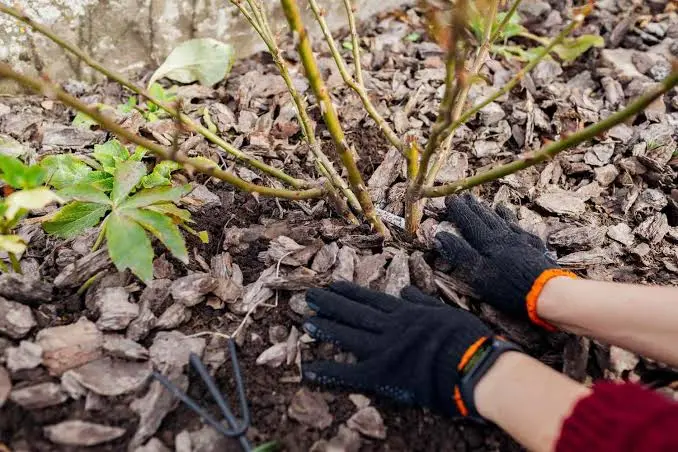
Roses are thirsty, temperature-sensitive plants with shallow feeder roots sitting in the top 12–18 inches of soil — exactly where heat, drought, and freeze-thaw cycles do the most damage. Mulch is what stands between those roots and the elements.
Here’s what the right mulch actually does for your roses:
It Slashes Water Loss by Up to 50%
Research from Heirloom Roses shows that a proper mulch layer can cut water evaporation from your rose beds by nearly 50%. It also lowers soil temperature by up to 20°F during summer heat peaks. That’s not a minor perk — that’s the difference between a thriving rose and a wilting one in July.
It Stops Black Spot Before It Starts
Black spot — one of the most common and frustrating rose diseases in the US — spreads through fungal spores that splash up from the soil onto leaves during watering or rain. A solid mulch layer acts as a physical barrier, stopping that splash-back before it reaches your foliage. According to Illinois Extension, this single benefit alone makes mulching one of the most effective disease-prevention strategies for roses.
It Regulates Soil Temperature Year-Round
Without mulch, bare soil in a rose bed can swing more than 21°F in a single midsummer day. That kind of temperature volatility stresses roots, slows nutrient uptake, and weakens the whole plant. Mulch smooths those swings out — keeping roots cooler in summer and warmer through winter freezes.
It Feeds the Soil Over Time
Organic mulches — unlike plastic sheeting or rubber — break down gradually and add valuable organic matter back into the soil. Worms and beneficial microorganisms work it deeper, improving drainage, aeration, and long-term soil structure. As David Austin Roses puts it: mulch doesn’t just protect your roses — it actively nourishes the soil ecosystem around them.
Best Mulch for Roses — Top Picks Ranked
Not all mulches are created equal. Here’s a research-backed ranking of the best mulch for roses, based on expert recommendations from the American Rose Society, university extension programs, and professional growers.
| Mulch Type | Nutrients Added | Moisture Retention | Best Climate | Avg. Cost |
|---|---|---|---|---|
| Compost |  High High | Excellent | All zones | Low–Med |
| Shredded Hardwood Bark | Medium | Excellent | All zones | Low |
| Cedar Mulch | Low | Good | Windy regions | Medium |
| Pine Needles (Straw) | Low | Good | Humid/SE US | Low |
| Aged Wood Chips | Medium | Good | Most zones | Low |
| Straw | Low | Good | Cold zones | Low |
| Cocoa Shell Mulch | Medium | Excellent | Mild zones | High |
Compost — The All-Around Winner
If you can only choose one, make it compost. Compost feeds soil microbes, improves structure, retains moisture, and delivers slow-release nutrients that fuel stronger blooms and healthier foliage. It works in every USDA hardiness zone and suits every rose variety.
Apply 2–3 inches in early spring, leaving a 2-inch gap around the stem. Many experienced rosarians layer 1 inch of compost under 2 inches of bark for a double-punch approach (more on that below).
Shredded Hardwood Bark — Best for Moisture and Longevity
Shredded hardwood bark is the workhorse of rose mulching. It’s widely available, breaks down slowly, and does an excellent job locking moisture in the root zone. Gardening Know How recommends it as one of the top choices because it can be easily raked aside during granular feedings and moved back without disrupting the roots.
Always choose natural, undyed bark. Colored mulches often use low-quality wood scraps and chemical dyes that add no value to your soil.
Cedar Mulch — Natural Pest Deterrent
Cedar mulch has a light, natural oil that deters certain insects and pests. It stays put better than some lighter mulches in windy conditions — a practical plus for gardeners in the Great Plains or open landscapes. According to the American Rose Society’s Rocky Mountain District via Ask Extension, shredded cedar is a top pick because it’s easy to fluff and manage around feeding schedules.
Pine Needles (Pine Straw) — Best for Humid Regions
Pine needles form a loose, airy mat that lets water filter through while limiting splash-back from the soil surface. This makes them particularly valuable in humid climates where airflow around the plant matters for disease prevention.
Despite the common myth, pine needles do not significantly acidify soil when used as a surface mulch — so roses in neutral soil shouldn’t be deterred. Lay 2–3 inches in spring and refresh midseason if the layer thins.
Aged Wood Chips — Budget-Friendly and Long-Lasting
Aged (not fresh) wood chips are a solid, cost-effective pick that lasts longer than finer mulches and gradually improves soil structure. The key word is aged — fresh chips can temporarily rob nitrogen from the soil as they break down. If you’re using chips, place a thin layer of compost underneath first to buffer against this.
Free options exist too — many local tree-trimming companies will drop off arborist chips at no charge.
Straw — The Cold-Climate Insulator
Straw is lightweight, inexpensive, and excellent for winter protection in cold zones. It insulates roots without compacting or retaining too much moisture against the canes. Illinois Extension recommends using straw alongside soil mounding for cold-zone rose protection. Just make sure it’s clean straw, not hay — hay carries weed seeds you don’t want anywhere near your rose beds.
Cocoa Shell Mulch — The Prettiest Pick ( Pet Caution)
Cocoa shell mulch looks stunning — rich, dark, and fine-textured. It retains moisture well and adds slow organic matter. But here’s the non-negotiable caveat: cocoa shells contain theobromine, the same compound in chocolate that’s toxic to dogs and cats. If you have pets with access to your garden, skip this one entirely.
How to Apply Mulch Around Roses the Right Way
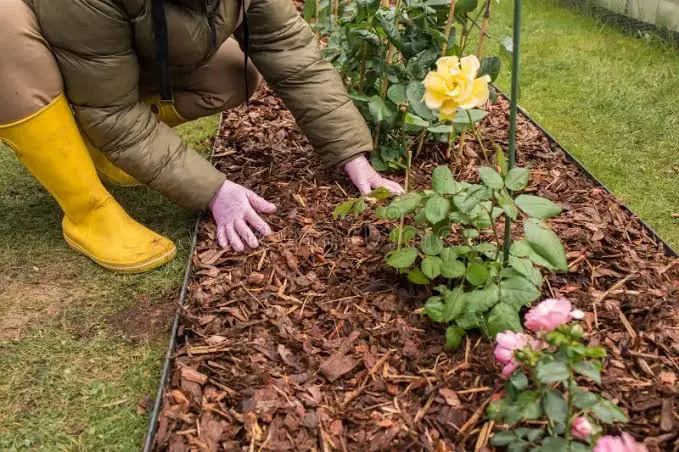
Good mulch choice is wasted with bad application. Here’s exactly how to do it right.
Step-by-Step Application
Follow this sequence every time for the best results:
- Water the bed thoroughly the day before you mulch — never mulch dry soil
- Remove all weeds and loosen the top inch of soil gently
- Clear any diseased leaves from around the base of the plant
- Spread your chosen mulch evenly to a depth of 2–3 inches
- Leave a clear ring of 2–3 inches around each stem — mulch should never touch the canes
- Water lightly after spreading to help the layer settle
For a photo-guided walkthrough, David Austin Roses has an excellent step-by-step guide worth bookmarking.
The Double-Layer Method: Compost + Bark
Here’s a pro move most gardeners don’t know about. Apply a thin layer (½–1 inch) of compost directly on the soil first, then top it with 2 inches of shredded bark. The compost feeds the soil and provides nitrogen, while the bark above controls weeds and retains moisture — and actually prevents the bark from robbing nitrogen as it decomposes. After one season, the bark layer gradually becomes the new compost. Add fresh bark on top each year.
How Deep Should Mulch Be Around Roses?
- Growing season: 2–3 inches for most organic mulches
- Winter protection (cold zones): 6–8 inches mounded around the base after first frost
- Humid climates: Lean toward 2 inches for better airflow and less mold risk
- Dry/hot climates: Push toward 3 inches to maximize moisture retention
Anything under 2 inches dries out too fast. Anything over 4 inches in the growing season can suffocate roots and invite pests.
When to Mulch Roses
Timing matters as much as choice. According to David Austin Roses, the ideal window is early spring — shortly after the first feed and pruning, once soil has begun to warm past 50°F. Mulching frozen soil traps cold in the root zone and delays growth.
For fall, apply fresh mulch 6–8 weeks before your average first frost date in cold climates. Not sure of your frost dates? The Old Farmer’s Almanac frost date tool makes it easy to look up by zip code.
The Volcano Mulching Mistake That’s Quietly Killing Roses
This is the single most common mulching error in home gardens — and it looks perfectly reasonable from a distance.
Volcano mulching is when mulch is piled high against the base of the plant, creating a cone or mound around the stem. Gardeners often do it with good intentions, thinking more coverage means more protection.
But wait — it actually does the opposite.
Mulch piled against rose canes traps constant moisture against the bark, creating the ideal conditions for crown rot, cane canker, and fungal disease. It also invites rodents to nest right at the base of your plant. Blooming Expert’s rose mulching research calls the clear stem ring “the single most important detail of rose mulching technique.”
The fix is simple: always maintain a 2–3 inch gap of bare soil between the mulch layer and the canes. The mulch should surround the plant, not hug it.
Mulch to Avoid Putting Around Roses
Some mulches are worse than no mulch at all. Here’s what to leave off your shopping list.
Rubber or Dyed Mulch
Rubber mulch — made from shredded tires — adds zero organic matter, contributes no nutrients, and can leach zinc and other compounds into the soil over time. It also retains heat instead of moderating it, which is the opposite of what rose roots need during a heat wave. Dyed wood mulch often uses low-grade wood scraps and chemical colorants with no soil benefit. Avoid both.
Fresh Wood Chips
Fresh wood chips pull nitrogen out of the upper soil layer as they break down — a process called nitrogen immobilization. For roses — which are heavy feeders — this can leave plants nutrient-starved at their most critical growth moments. If you use wood chips, always age them first or layer compost underneath.
Thick Fresh Grass Clippings
Fresh clippings mat together quickly into a dense, slimy layer that blocks water and oxygen from reaching the soil. That anaerobic layer against the canes is an invitation for crown rot. If you want to use grass clippings, let them dry out first and apply in thin layers no more than 1 inch thick.
Gravel or Rock in Hot Climates
In cool or mild zones, gravel can work for drainage. But in hot US climates — Texas, Arizona, the Deep South — gravel absorbs heat and radiates it back at your roots. It can push soil temperatures far beyond what roses tolerate comfortably. Gardening Know How advises that gardeners in warmer zones should think carefully before using gravel as mulch.
Best Mulch for Roses by US Region
Where you garden shapes which mulch works best. Here’s a practical regional breakdown.
Hot & Dry Climates — South, Southwest (Texas, Arizona, New Mexico)
In intense heat, moisture retention is the top priority. Go with a compost and shredded bark combination at a full 3-inch depth. Top up by 1 inch mid-season if the layer thins. Water deeply before applying, and consider mulching in the evening to trap overnight moisture. Check your USDA hardiness zone here to dial in your protection level.
Cold Winters — Midwest & Northeast (Zones 3–5)
Winter protection is critical in these zones. After the first hard frost, mound 10–12 inches of compost or soil around the cane base to protect the graft union. Cover with 4–6 inches of straw or shredded leaves. Remove the winter mound gradually in early spring — don’t pull it back all at once and expose roots to a late freeze.
Humid Southeast (Zones 7–9 — Georgia, the Carolinas, Tennessee)
In humid climates, the risk isn’t dryness — it’s trapped moisture and poor airflow feeding fungal disease. Keep mulch at 2 inches maximum and choose pine needles or coarse bark that allows air circulation. Avoid dense, heavy mulches that stay wet. Refresh more frequently rather than piling it thicker.
Frequently Asked Questions About Mulch for Roses
What is the best mulch to put around rose bushes?
The best mulch for roses is compost or shredded hardwood bark — or a combination of both. Compost feeds the soil and supports healthy blooms, while bark retains moisture and controls weeds. Apply 2–3 inches deep, keeping the mulch a few inches clear of the stems.
How deep should mulch be for roses?
During the growing season, 2–3 inches is the ideal depth for most organic mulches. In cold zones (USDA Zones 3–5), increase the depth to 6–8 inches around the base for winter insulation after the first frost. Anything deeper than 4 inches during the growing season can restrict airflow and invite disease.
Can I use wood chips as mulch for roses?
Yes — but only aged wood chips. Fresh wood chips can temporarily deplete nitrogen in the upper soil as they break down, which can starve your roses. If you’re using wood chips, lay a thin base of compost underneath first to counteract this effect. Aged arborist chips from a local tree service are often available for free and work well once they’ve been stored for a season.
Is cedar mulch good or bad for roses?
Cedar mulch is generally good for roses. Its natural oils offer mild pest-deterrent properties, it stays put in wind, and it decomposes at a manageable pace. Stick to natural, undyed cedar and apply at 2–3 inches. Avoid any product labeled as “colored” or “dyed” cedar.
How often should I replace mulch around roses?
Organic mulches like compost or shredded bark should be refreshed once a year — typically in early spring. Pine needles and bark can go 2–3 years before a full replacement, though a light top-up midseason keeps moisture levels consistent. Check depth monthly during the growing season and add to it whenever it drops below 2 inches.
Conclusion
Mulching your roses isn’t complicated — but it does matter. A lot.
Here’s a quick recap of what to remember:
- Best overall mulch: Compost or shredded hardwood bark (or layer both)
- Ideal depth: 2–3 inches in growing season; 6–8 inches for winter in cold zones
- Always leave a 2–3 inch gap between mulch and rose stems
- Avoid: rubber mulch, dyed mulch, fresh wood chips, thick grass clippings
- Match your mulch to your climate — humid zones need airflow; hot dry zones need moisture retention
Pick the right mulch for your region, apply it correctly this season, and let your roses do the rest. The blooms will speak for themselves.
Sources & Further Reading
- Illinois Extension — Rose Care
- David Austin Roses — How to Mulch a Rose
- Gardening Know How — Best Mulch for Roses
- Heirloom Roses — Mulch Benefits
- American Rose Society via Ask Extension
- UC ANR — Rose Cultural Practices
- Penn State Extension
- USDA Plant Hardiness Zone Map
- Old Farmer’s Almanac — Frost Dates by Zip Code
- EPA — Composting at Home
- University of Minnesota Extension — Wood Chip Mulch & Nitrogen
About Author
Khalid Fazal is a seasoned lawn care specialist and horticultural researcher with over 15 years of hands-on experience transforming challenging landscapes into lush, resilient green spaces. His journey didn’t start in a lab, but in a backyard full of stubborn, cracked clay that “experts” said would never grow a healthy blade of grass. Refusing to accept a yard full of dust, Khalid spent years experimenting with organic soil restoration and precise mulching—eventually turning that wasteland into a neighborhood showpiece on a shoestring budget.
From mastering core aeration techniques to optimizing soil pH for specialized turf varieties, Khalid’s approach combines old-school grit with modern agronomic science. He founded Gen Lawn to provide homeowners with honest, research-backed advice that prioritizes long-term soil health over quick-fix chemical solutions. When he isn’t analyzing soil profiles, he’s developing precision tools to help others achieve professional results without the professional price tag.

Lawn Winterizer: When to Apply by Grass & Region [2026]
Table of Contents Home / By Khalid Fazal | Updated:...
Read More
Spring Lawn Care: What to Do and When in Every US Region
Table of Contents Home / By Khalid Fazal | Updated:...
Read More
Lawn Maintenance Checklist by Season and Grass Type (2026)
Table of Contents Home / By Khalid Fazal | Updated:...
Read More
Liquid Fertilizer vs Granular Fertilizer: Which Wins?
Table of Contents Home / By Khalid Fazal | Updated:...
Read More