
Does Freezing Kill Grass Seed? Here’s What Actually Happens
Picture this: it’s late October, you seeded your lawn a few weeks ago, and now a cold front rolls through overnight. Or maybe you just found a leftover bag of grass seed that spent all winter in your unheated garage. Either way, the question burning in your mind is the same — is it ruined?
In most cases, no. But here’s where it gets important: whether freezing kills grass seed depends almost entirely on one thing — whether it has already started to germinate.
In this guide, you’ll learn exactly what happens to grass seed in freezing temperatures, how to test your seed’s viability after a cold winter, and how smart homeowners actually use winter to get a jump on a thick, lush spring lawn.
Does Freezing Kill Grass Seed? The Short Answer
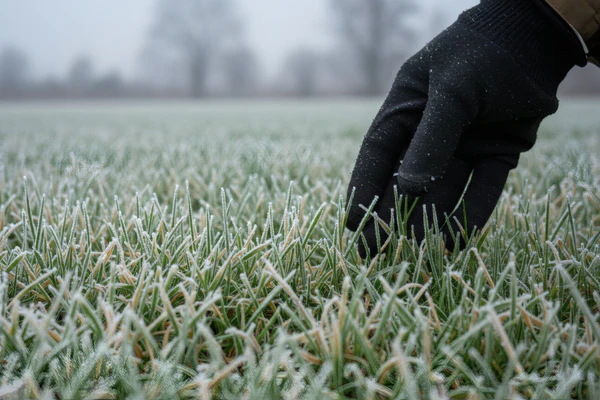
No — a freeze alone won’t kill ungerminated grass seed. When temperatures drop, dormant seeds essentially hit the “pause” button. They enter a state of suspended animation, waiting for warmer conditions to wake back up and sprout.
Think of it like a bear hibernating for winter. The seed isn’t dead — it’s just waiting.
But here’s the catch: once a seed has germinated and produced a sprout, all bets are off. Those fragile young seedlings don’t have the root depth or resilience to survive a frost. A single hard freeze can dehydrate and rupture their tender cells, killing them outright.
What Happens to Grass Seed When It Freezes
When temperatures drop below 32°F, the water in the soil begins to crystallize. For an ungerminated seed still in its hard outer shell, this isn’t immediately fatal — the seed simply pauses development until the soil warms again.
According to LawnSmart KC’s expert winter guide, grass seeds germinate in a soil temperature “sweet spot” of 50°F–70°F. Once soil temperatures fall below 45°F, germination slows dramatically. Below 32°F, it halts completely.
The One Thing That Changes Everything — Germination Stage
This is the key distinction every lawn owner needs to understand:
| Seed Stage | Effect of Freezing |
|---|---|
| Ungerminated (still in shell) | Survives — goes dormant  |
| Germinated seedling (sprouted) | High risk of death  |
| Established grass (mature roots) | Generally survives unless below 20°F |
If your seed has already started sprouting, even a brief temperature dip below freezing can rupture shallow roots and cut off water supply — killing the seedling within days.
Frozen Seed in a Bag — Is Your Stored Seed Still Good?
You left a bag of grass seed in the garage all winter. It froze. Maybe it thawed and froze again. Now you’re wondering if you should still bother planting it.
The honest answer: probably yes — but you need to test it first.
Why Moisture Is More Dangerous Than Cold
Cold alone isn’t the enemy — moisture combined with cold is. According to Bob Vila’s lawn storage guide, grass seed can survive freezing temperatures in dry environments. But if your bag got damp before it froze, ice crystals can form inside the seed’s embryo and rupture its cells, destroying viability.
Repeated freeze-thaw cycles make this worse. Each cycle draws more moisture around the seeds, eventually creating the perfect breeding ground for mold and rot.
How Long Grass Seed Stays Viable After Freezing
Grass seed doesn’t last forever. According to Jonathan Green’s seed viability guide, properly stored grass seed lasts 1 to 3 years, with germination rates dropping approximately 10% per year after the first.
Here’s what to expect:
| Storage Year | Expected Germination Rate |
|---|---|
| Year 1 (fresh) | 80–90% |
| Year 2 | 70–80% |
| Year 3 | 60–70% |
| Year 4+ | Below 50% — likely not worth planting |
A bag that spent one winter in a cold but dry garage? Often still usable. A bag that got wet, froze, and thawed multiple times across two winters? Time to replace it.
The Simple Paper Towel Germination Test
Before committing a Saturday to seeding, run this 5-minute test. It removes all the guesswork:
- Dampen a paper towel — moist, not soaking wet
- Place 10 seeds evenly on one half
- Fold the towel over and seal in a Ziploc bag (leave it slightly open for airflow)
- Keep in a warm spot — 70–80°F works best (top of the dryer or near a radiator)
- Check every 2–3 days for up to 14 days
How to read your results: Divide the number of sprouted seeds by 10.
- 7–10 sprout (70–100%) → Good seed — plant as normal, or sow slightly heavier
- 5–6 sprout (50–60%) → Borderline — sow 25–30% heavier than the label recommends
- Fewer than 5 sprout → Replace the bag before wasting your effort
Cool-Season vs. Warm-Season Grass — Does It Matter for Freezing?
Absolutely. Not all grass handles cold the same way, and knowing your grass type changes how you approach winter seeding and storage.
Cool-Season Grasses and Cold Tolerance
Cool-season grasses — including Kentucky bluegrass, perennial ryegrass, tall fescue, and fine fescue — are engineered for cold climates. They thrive in soil temperatures between 50°F and 65°F and naturally tolerate frost.
These are the grasses used across the northern US and are the most forgiving of a winter freeze. They’re also the only varieties suitable for dormant seeding (covered below).
Need help picking the right variety for your region? The Pennington Grass Seed Regional Guide and your local university extension office are your best starting points.
Warm-Season Grasses — A Different Story
Warm-season grasses — Bermuda, Zoysia, St. Augustine, and centipede — are built for heat. They naturally go dormant and turn brown once temperatures dip below 50°F, and their seeds are far more vulnerable to extended freezing.
If you’re in the southern US with warm-season turf, skip the winter seeding strategy. Your window is late spring when soil temperatures consistently stay above 65°F–70°F.
What If Your Grass Seed Is Already in the Ground?
This is where things get more nuanced — and where most homeowners get caught off guard.
Ungerminated Seeds in Frozen Soil — What to Expect
If your seeds haven’t sprouted yet when the ground freezes, they’ll simply remain dormant until temperatures rise in spring. This is completely natural — and is actually the basis of a smart lawn care technique called dormant seeding.
The seed isn’t damaged. It’s just waiting for the right moment.
Does Freezing Kill Grass Seedlings That Have Already Sprouted?
Yes — and this is serious. Here’s why:
Young seedlings have extremely shallow, underdeveloped root systems. When the soil freezes, those roots can’t absorb water — and the seedling dies of dehydration within days. As Hunker’s lawn experts explain, the young roots simply aren’t thick enough or deep enough to escape the freeze zone.
This is exactly why lawn pros recommend planting cool-season grass at least 45 days before your area’s first expected frost. Use the Old Farmer’s Almanac Frost Date Calculator to find your local frost window.
The Danger of Freeze-Thaw Cycles and Mold
One freeze typically isn’t the issue. It’s the repeated cycling of freezing and thawing that does real damage.
Each time the soil thaws, moisture collects around the seeds. Each time it refreezes, that moisture turns to ice. Over multiple cycles, mold and rot set in — silently killing seeds that might have otherwise survived a single cold snap just fine. Keeping seeds dry is the single best defense against this pattern.
Dormant Seeding — Using Winter to Your Advantage
Here’s a mindset shift: what if instead of worrying about freezing killing your grass seed, you used winter deliberately to set your lawn up for spring?
That’s exactly what dormant seeding is — and it works surprisingly well.
What Is Dormant Seeding and Does It Work?
Dormant seeding is the practice of spreading grass seed in late fall or early winter — after soil temperatures drop below 50°F — so the seed waits out winter and germinates naturally when spring arrives.
According to the University of Minnesota Extension, dormant seeding can be done any time soil temperatures stay below 40°F — typically from early November through mid-March in most northern states.
Here’s the bonus: the winter freeze-thaw cycle actually helps your seed. The repeated soil movement pulls seeds down into tiny cracks in the earth, giving them better soil contact than you’d get by hand-raking alone.
Research-backed result: A Kansas State University study found that February dormant seeding produced 73% grass cover by April — significantly better than December seeding (50%) and rivaling traditional fall overseeding.
Best Time to Dormant Seed by US Region
| Region | Ideal Dormant Seeding Window |
|---|---|
| Midwest (MN, WI, IA, IL) | Late November – Early December |
| Northeast (NY, MA, PA, CT) | After Thanksgiving – Until snow flies |
| Northwest (OR, WA) | November – March |
| Mid-Atlantic (VA, MD, DC) | Late November – January |
| Great Plains / Kansas City area | December – February (February = best) |
Sources: LawnStarter Dormant Seeding Guide + UMN Extension
Tips for Successful Dormant Seeding
- Use cool-season grass seed only — warm-season varieties won’t survive this method
- Seed after all leaves have fallen and been raked — debris blocks seed-to-soil contact
- Skip pre-emergent herbicides — they’ll block your grass seed from germinating in spring
- A light snowfall after seeding actually helps — it gently presses seeds into the soil
- Don’t panic if nothing looks different — results won’t appear until late March or April
How to Store Grass Seed Through Winter
If you’re holding leftover seed until spring, proper storage makes the difference between a bag worth planting and one headed for the trash.
Best Storage Conditions for Grass Seed
- Temperature: Cool and consistent — 40°F to 70°F is the sweet spot
- Humidity: Low — aim for below 50% relative humidity
- Container: Airtight sealed bag or a bucket with a screw-top lid
- Location: Climate-controlled basement, pantry, or interior closet — not a shed or garage
Should You Store Grass Seed in a Garage or Shed?
If you can avoid it, do. As Bob Vila’s lawn experts note, open or poorly sealed bags in a garage are vulnerable to temperature swings, moisture, and pests like mice and insects that will eat your seed before spring arrives.
If your only option is a garage, transfer the seed into an airtight container with a screw-top lid (food-safe buckets from a hardware store work great) and place it in the warmest, driest corner possible.
Frequently Asked Questions
Does freezing kill grass seed in a bag?
Not automatically. If the bag stayed dry and sealed, a single winter freeze is unlikely to cause serious damage. But if moisture got in — or if the seed went through repeated freeze-thaw cycles — viability can drop significantly. Always run the paper towel germination test before seeding with stored seed.
Can you plant grass seed after a freeze?
Yes — if you’re planting ungerminated cool-season seed. Dormant seeding intentionally places seed during cold weather for spring germination. However, avoid planting if the ground is frozen solid, or if warm spells could trigger early sprouting before winter fully ends. Check your local soil temperatures before deciding.
How cold is too cold for grass seed to germinate?
Germination slows dramatically below 45°F soil temperature and halts completely below 32°F. For reliable germination, you need soil temperatures consistently between 50°F and 70°F. Use a soil thermometer or check the Greencast Soil Temperature Map to monitor your area.
Does frost kill grass seed already in the ground?
If the seed hasn’t germinated yet, no — it will simply go dormant and wait. If it has already sprouted, yes — frost will very likely kill those young seedlings. This is why timing your planting 45 days before the first frost is one of the most important rules in fall seeding. Find your frost date at the Old Farmer’s Almanac.
What temperature kills grass seed?
Ungerminated seeds can survive well below 32°F in dry conditions. Young seedlings are most vulnerable — even a brief dip below 32°F can be fatal if their roots haven’t developed. Established, mature grass can typically handle temperatures down to 20°F before permanent damage occurs, according to cool-season grass research.
The Bottom Line
Does freezing kill grass seed? Here’s what you need to walk away knowing:
- Ungerminated grass seed survives freezing — it goes dormant and waits for spring
- Germinated seedlings will die in a hard frost — their roots are too shallow to withstand frozen soil
- Repeated freeze-thaw cycles are the real danger — moisture buildup leads to mold and rot
- Stored seed may still be viable after one winter — always run the paper towel germination test before planting
- Dormant seeding is a proven, legitimate strategy — plant in late fall and let winter do the prep work
Before you overseed this season, take 10 minutes to run that germination test. It could save you a wasted Saturday — and a wasted bag of seed.
Have questions about seeding timing, grass selection, or lawn recovery after a tough winter? Explore Gen Lawn’s full library of lawn care guides to get the answers your yard needs.
References & Sources
- UMN Extension — Dormant Seeding Your Lawn
- Jonathan Green — Can Grass Seed Survive Freezing?
- Jonathan Green — Does Grass Seed Go Bad?
- LawnSmart KC — Does Freezing Kill Grass Seed: Expert Winter Survival Guide
- LawnStarter — What Is Dormant Seeding?
- LawnStarter — Frost Seeding vs. Dormant Seeding
- Bob Vila — Does Grass Seed Go Bad?
- Hunker — Will Frost Kill Grass Seeds?
- Gardening Know How — Will Frost Kill Grass Seed?
- Old Farmer’s Almanac — Frost Date Calculator
- Greencast — Soil Temperature Maps
- Pennington — Regional Grass Seed Guide
About Author
Khalid Fazal is a seasoned lawn care specialist and horticultural researcher with over 15 years of hands-on experience transforming challenging landscapes into lush, resilient green spaces. His journey didn’t start in a lab, but in a backyard full of stubborn, cracked clay that “experts” said would never grow a healthy blade of grass. Refusing to accept a yard full of dust, Khalid spent years experimenting with organic soil restoration and precise mulching—eventually turning that wasteland into a neighborhood showpiece on a shoestring budget.
From mastering core aeration techniques to optimizing soil pH for specialized turf varieties, Khalid’s approach combines old-school grit with modern agronomic science. He founded Gen Lawn to provide homeowners with honest, research-backed advice that prioritizes long-term soil health over quick-fix chemical solutions. When he isn’t analyzing soil profiles, he’s developing precision tools to help others achieve professional results without the professional price tag.

Lawn Winterizer: When to Apply by Grass & Region [2026]
Table of Contents Home / By Khalid Fazal | Updated:...
Read More
Spring Lawn Care: What to Do and When in Every US Region
Table of Contents Home / By Khalid Fazal | Updated:...
Read More
Lawn Maintenance Checklist by Season and Grass Type (2026)
Table of Contents Home / By Khalid Fazal | Updated:...
Read More
Liquid Fertilizer vs Granular Fertilizer: Which Wins?
Table of Contents Home / By Khalid Fazal | Updated:...
Read More