
What Is the Right Temperature for Lawn Fertilizer? A Season-by-Season Guide
Every year, thousands of homeowners grab a bag of fertilizer on the first warm weekend of spring, spread it across their lawn with good intentions, and end up watching patches of grass turn brown and crispy within days. It is not the fertilizer that failed them. It is the timing.
The right temperature for lawn fertilizer sits between 55°F and 65°F for cool-season grasses and between 70°F and 85°F for warm-season grasses. Go too cold and the nutrients just sit there, unused. Go too hot and you risk burning the very lawn you are trying to feed.
In this guide, you will get the exact temperature ranges for every grass type, a practical season-by-season breakdown, how to actually measure soil temperature before you apply, and what to do if you already fertilized at the wrong time.
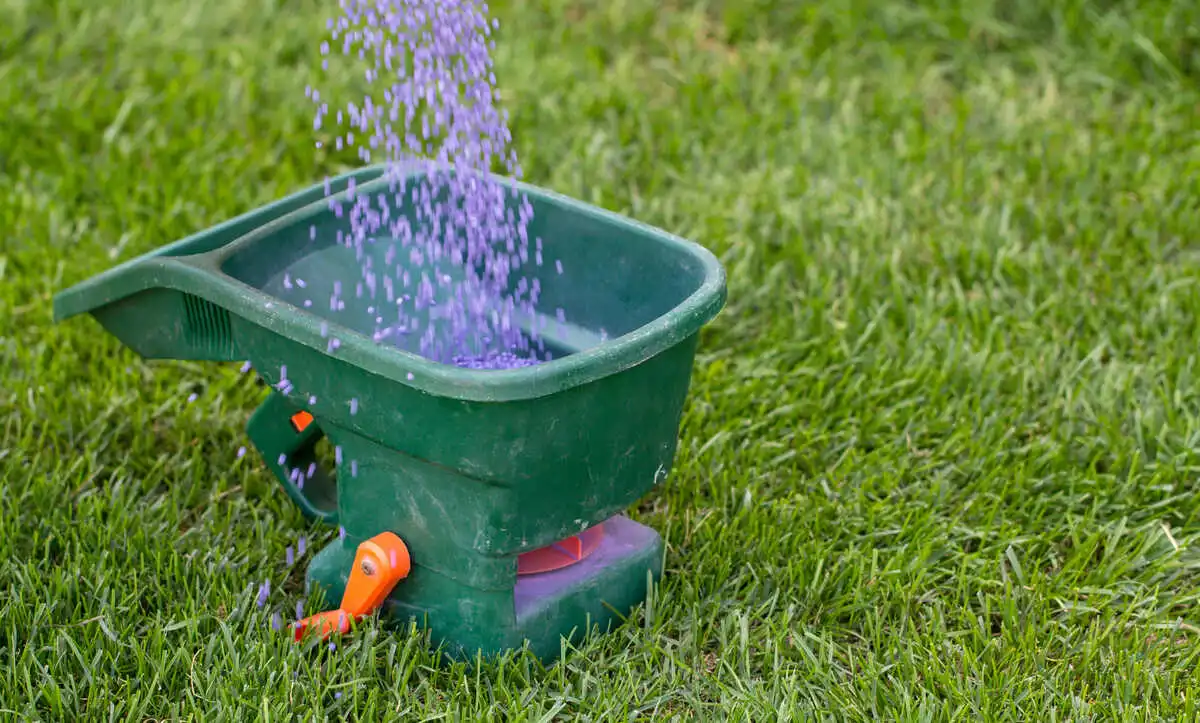
Why Temperature for Lawn Fertilizer Matters More Than the Calendar
Most people fertilize based on the month, not the actual conditions in their yard. The problem is that your lawn does not run on a calendar. It responds to temperature, specifically soil temperature, which often has nothing to do with what the weather app says.
Here is the thing: a warm weekend in early March might feel like spring, but your soil could still be sitting at 42°F. Fertilizer applied to cold soil cannot be absorbed efficiently, which means the nutrients either wash away with the next rainstorm or just sit on the surface doing nothing.
Soil Temperature vs. Air Temperature
This is the single most important distinction in all of lawn care. Air temperature and soil temperature are two completely different readings, and they can differ by 10 to 20 degrees, especially during early spring when air warms fast but the ground below is still thawing out.
Soil changes temperature slowly because of its mass and moisture content. One warm afternoon is not enough to bring your soil up to fertilizing range. You want your soil to hold consistently in the right window for at least three to five days before you apply anything.
How the Wrong Temperature Can Burn or Waste Your Fertilizer
When you apply fertilizer to cold soil, grass roots are not actively growing, so they cannot absorb the nutrients you are putting down. You are essentially wasting product and money. But fertilizing in excessive heat is even worse.
Above 85°F to 90°F, the salts in fertilizer pull moisture away from grass roots faster than the plant can recover. This is what causes fertilizer burn, those yellow and brown scorched patches that appear within a day or two of application. Quick-release nitrogen products are especially dangerous in high heat, and a stressed lawn in drought conditions can sustain permanent damage from even a standard application rate.
The Ideal Temperature Range for Lawn Fertilizer
Now for the numbers you actually came here for. The ideal temperature for lawn fertilizer depends on what type of grass you have, and getting this right is the difference between a thriving lawn and an expensive mistake.
Best Temperature for Fertilizing Cool-Season Grasses
Cool-season grasses like Kentucky bluegrass, tall fescue, and perennial ryegrass thrive when soil temperatures are between 55°F and 65°F. Air temperatures during this window typically run between 60°F and 75°F. This usually falls in early spring and early fall across most of the United States.
The best practice for cool-season lawns is to apply your first fertilizer just as soil temperatures are climbing toward 55°F, so the nutrients are ready and waiting when the grass kicks into active growth. Waiting until after the soil has been warm for weeks means your lawn already burned through its stored energy trying to green up without any help.
Best Temperature for Fertilizing Warm-Season Grasses
Warm-season grasses like Bermuda, Zoysia, St. Augustine, centipedegrass, and bahiagrass need warmer conditions before they are ready to feed. The ideal soil temperature for these grass types sits between 70°F and 85°F, which corresponds to late spring through early summer in most US regions.
A common mistake with warm-season lawns is fertilizing too early in spring just because the grass looks like it is starting to green up. Greening up and actively growing are not the same thing. Wait until your warm-season grass has fully transitioned out of dormancy and the soil has held consistently above 70°F before applying your first feeding of the season.
The Danger Zones: Temperatures You Should Never Fertilize In
Below 50°F is too cold for any type of grass to absorb nutrients effectively. The soil biology that processes fertilizer essentially shuts down, meaning your product is wasted and may leach into groundwater before your grass ever gets the benefit.
Above 85°F to 90°F is the other danger zone. At these temperatures, heat stress is already working against your lawn, and adding fertilizer compounds that stress significantly. Per guidance from Jonathan Green, you should never apply traditional fertilizer when temperatures exceed 85°F, especially if high humidity is also present. If your grass is wilting, going brown at the tips, or showing signs of drought stress, put the bag away and wait.
When to Fertilize by Season: A Practical US Guide
Knowing the numbers is one thing. Understanding how they map onto real seasons in your specific region is what makes you a confident, effective lawn keeper.
Spring Fertilizing: What Temperature Is Safe to Start?
Spring is when most homeowners reach for the fertilizer, and for good reason. It is the primary growth window for cool-season lawns and the awakening period for warm-season grasses. But early spring is tricky because air temperatures rise faster than soil temperatures.
For cool-season lawns across the Northeast, Midwest, and Pacific Northwest, soil temperatures typically hit 55°F somewhere between late March and mid-April. In the transition zone (the Mid-Atlantic and Central states), that window can come as early as early March. The Gulf Coast and Southeast warm up even sooner, sometimes by mid-February.
For warm-season lawns, hold off until the soil is consistently at 65°F to 70°F. This usually lands between April and May depending on your location. Fertilizing too early in spring with a warm-season grass only pushes weak top growth before the root system is ready to support it.
Summer Fertilizing: Is It Ever a Good Idea?
Summer fertilizing gets a bad reputation, and honestly, most of it is deserved when it comes to cool-season grasses. Once soil temperatures push above 75°F to 80°F, cool-season grasses slow their root growth significantly. Adding fertilizer at this stage pushes leafy top growth that the root system cannot support, which leads to a lawn that looks green in June but crashes hard in July.
For warm-season grasses, early summer is actually a prime feeding window. Bermuda, Zoysia, and St. Augustine are in their peak growth phase when the weather is hot. Space applications about six to eight weeks apart through summer, but always avoid fertilizing during any period when daytime highs are consistently above 90°F or when drought conditions have stressed the grass.
Fall Fertilizing: The Most Important Application of the Year
Here is something most homeowners get backwards. For cool-season lawns, fall is actually the most valuable time to fertilize, even more so than spring. As noted by lawn care professionals at Lawn Love, lawns that receive a fall fertilizer application come back approximately 40% thicker in spring compared to lawns that only received spring feeding.
The sweet spot for fall fertilization is when soil temperatures sit between 50°F and 65°F, usually from September through early November depending on your region. The grass is still actively growing roots even as the top slows down. Feeding during this window builds deep, strong roots and stores energy the lawn will use to green up faster next spring. Apply a winterizer type fertilizer, which is higher in potassium, to help roots harden before the cold sets in.
Winter: Why You Should Put the Fertilizer Bag Down
When soil temperatures drop below 45°F to 50°F, most grass goes dormant and nutrient absorption essentially stops. Fertilizing a dormant lawn is not just ineffective, it is actively harmful. Any nitrogen that does not get absorbed before a freeze can leach out of the soil entirely, contributing to runoff that pollutes local waterways.
There is one exception. If you are in a region where soil temperatures hover around 50°F into late fall (parts of the Pacific Northwest and the upper South), a light late-fall feeding can still benefit cool-season roots that are quietly storing energy underground. Anywhere that experiences regular frost and freezing ground temperatures, skip it.
How to Check Soil Temperature Before You Fertilize
This is where most guides leave you hanging. Knowing the ideal temperature for lawn fertilizer is useless if you cannot tell what your soil is actually doing. Here is how to get an accurate reading.
Using a Soil Thermometer the Right Way
A basic soil thermometer costs about ten to fifteen dollars at any garden center and is genuinely the most valuable tool in a homeowner’s lawn care kit. Insert the probe four inches into the soil in an open, sunny area that represents the majority of your yard. Take the reading in the morning between 7 and 9 AM before the surface warms up from the sun. For the most reliable picture, check the same spot at the same time for three consecutive days and average the numbers.
One reading on an unusually warm afternoon will mislead you. You want a trend, not a snapshot. Avoid measuring near your home’s foundation, under shade trees, or near pavement, as all of these spots will give you readings that differ from your open lawn by five to ten degrees.
Free Online Tools That Track Soil Temperature
If you do not have a thermometer yet, the GreenCast Soil Temperature Map from Syngenta provides daily soil temperature readings by zip code across the entire United States. It reads at both two-inch and four-inch depths, which is exactly what you need for lawn care decisions. Many state university extension services also publish weekly soil temperature updates during spring and fall, so a quick search for your state’s extension office is worth adding to your bookmarks.

Signs Your Lawn Is Already Too Stressed to Fertilize
Even if temperatures look right on paper, your lawn can still be in a condition where fertilizing will cause damage rather than benefit. If your grass is wilting in the morning (before heat has a chance to stress it), if tips are browning without any new growth, or if the lawn feels spongy and dry underfoot, hold off. A lawn that is already struggling cannot process nutrients efficiently, and pushing fertilizer into a stressed lawn accelerates the damage.
Choosing the Right Fertilizer for the Right Temperature
Not all fertilizers behave the same way in heat and cold, and picking the wrong type for the current conditions is one of the most common DIY mistakes.
Slow-Release vs. Fast-Release Fertilizers and Temperature
Slow-release fertilizers break down gradually over six to twelve weeks, releasing nutrients in steady amounts that match the natural pace of grass growth. They are far less likely to cause burn because there is no sudden surge of nitrogen hitting the soil at once. They are also more forgiving in summer heat because the gradual release prevents nutrient spikes that stress the grass.
Quick-release fertilizers work fast and deliver nitrogen almost immediately, which makes them ideal for rapid spring green-up when conditions are perfect. But in temperatures above 80°F, they become risky. The concentrated burst of nitrogen in combination with heat creates ideal conditions for fertilizer burn, especially if the lawn is not receiving consistent moisture. When in doubt, reach for slow-release, particularly during late spring and summer applications.
What to Do If You Already Fertilized at the Wrong Temperature
It happens to everyone. If you applied fertilizer when it was too hot or if you over-applied, your first move is to water deeply and immediately. Watering thoroughly after a bad application dilutes the fertilizer concentration and pushes excess salts deeper into the soil, away from surface roots where the damage happens.
Water the affected area deeply once a day for five to seven days. Do not apply any more fertilizer until you see new green growth emerging and the lawn has had at least three weeks to recover. For severely burned patches where the grass appears dead, you may need to reseed or lay sod once conditions cool down. A full recovery guide is available at Today’s Homeowner if you are dealing with significant damage.
Frequently Asked Questions About Temperature for Lawn Fertilizer
What soil temperature is too cold to fertilize?
Below 50°F is too cold for any fertilizer application to be effective. At this point, grass roots are barely active and cannot absorb the nutrients you are putting down. The fertilizer will either wash away with rain or sit unused on the surface until temperatures rise. For cool-season grasses, aim to have your fertilizer down before soil hits 55°F in spring so it is ready when active growth begins.
Can I fertilize my lawn when it is 90 degrees outside?
You should avoid it. When air temperatures are consistently at 90°F, soil temperatures are likely in the danger zone for fertilizer application. Even slow-release products carry increased burn risk at these temperatures, and any grass already stressed by heat cannot absorb nutrients the way it normally would. Wait for a cooler stretch of weather, ideally with a forecast that includes moderate temperatures and some chance of rain.
What happens if I fertilize when the temperature is too high?
The salts in the fertilizer pull moisture away from grass roots and blades faster than the plant can compensate, especially when the soil is already dry from heat. This causes the classic signs of fertilizer burn: yellow or brown patches appearing within one to three days, crispy grass blades, and streaky patterns that follow the path of your spreader. Watering deeply immediately after you notice these signs is the fastest way to limit the damage.
Is it okay to fertilize after a frost?
No. After a frost, the grass is dormant or in the process of going dormant, and the soil is too cold for nutrient absorption to happen. Fertilizing after a frost is essentially pouring money onto frozen ground. Wait until spring, when soil temperatures have climbed back above 50°F and held there consistently for several days.
What is the best time of day to apply fertilizer in warm weather?
Early morning is ideal, between 6 and 10 AM. Temperatures are cooler, dew on the grass helps with initial dissolution of granules, and you have the rest of the day for natural heat to slowly work the product into the soil. Avoid fertilizing in the middle of the day when sun and heat are at their peak, as this significantly raises the risk of burn even in moderate seasonal temperatures.
Conclusion
Getting the temperature for lawn fertilizer right is genuinely one of the highest-leverage decisions you can make as a lawn owner. It is not complicated once you shift your thinking from the calendar to the thermometer. Cool-season grasses need soil at 55°F to 65°F. Warm-season grasses need 70°F to 85°F. Everything below 50°F and above 90°F is territory where you are either wasting product or risking serious damage.
Before your next fertilizer application, pick up a soil thermometer, take three morning readings, and let the numbers guide you rather than the date on the bag. Your lawn will respond with the kind of thick, even, deep-green growth that makes the whole effort worth it.
If you are ever unsure about your grass type, your soil conditions, or the right product for your region, connecting with a local lawn care professional is always a smart move. They can take the guesswork out entirely and put together a schedule tailored to your specific yard.
References and Sources
Simple Lawn Solutions: When Is It Too Hot to Apply Fertilizer? — https://simplelawnsolutions.com/blogs/lawncare/when-is-it-too-hot-to-apply-fertilizer
Lawn Love: When to Fertilize Your Lawn — https://lawnlove.com/blog/when-to-fertilize-lawn/
LawnSmart KC: Best Temperature for Lawn Fertilizer — https://lawnsmartkc.com/best-temperature-for-lawn-fertilizer/
Plant For Success: Soil Temperature and Lawn Care — https://plantforsuccess.com/soil-temperature-lawn/
Milorganite: Slow-Release vs. Quick-Release Fertilizer — https://www.milorganite.com/blog/Lawn/slow-release-vs-quick-release-fertilizer
Jonathan Green: Fertilizer Burn FAQ — https://www.jonathangreen.com/faq/fertilizer-burn/
Scotts Miracle-Gro: How to Prevent Lawn Burn in Summer — https://www.scottsmiraclegro.com/en-us/learn/lawn-care/how-to-prevent-lawn-burn-in-the-summer.html
Today’s Homeowner: How to Fix Fertilizer Burn — https://todayshomeowner.com/lawn-garden/guides/how-to-fix-fertilizer-burn-on-lawn/
SunCo Lawns: Soil Temperature Guide — https://suncolawns.com/learn/soil/soil-temperature/
GreenCast Soil Temperature Map — https://www.greencastonline.com/tools/soil-temperature
Soil Temps (Live US Soil Temperature Map) — https://www.soiltemps.com/
About Author
Khalid Fazal is a seasoned lawn care specialist and horticultural researcher with over 15 years of hands-on experience transforming challenging landscapes into lush, resilient green spaces. His journey didn’t start in a lab, but in a backyard full of stubborn, cracked clay that “experts” said would never grow a healthy blade of grass. Refusing to accept a yard full of dust, Khalid spent years experimenting with organic soil restoration and precise mulching—eventually turning that wasteland into a neighborhood showpiece on a shoestring budget.
From mastering core aeration techniques to optimizing soil pH for specialized turf varieties, Khalid’s approach combines old-school grit with modern agronomic science. He founded Gen Lawn to provide homeowners with honest, research-backed advice that prioritizes long-term soil health over quick-fix chemical solutions. When he isn’t analyzing soil profiles, he’s developing precision tools to help others achieve professional results without the professional price tag.

Lawn Winterizer: When to Apply by Grass & Region [2026]
Table of Contents Home / By Khalid Fazal | Updated:...
Read More
Spring Lawn Care: What to Do and When in Every US Region
Table of Contents Home / By Khalid Fazal | Updated:...
Read More
Lawn Maintenance Checklist by Season and Grass Type (2026)
Table of Contents Home / By Khalid Fazal | Updated:...
Read More
Liquid Fertilizer vs Granular Fertilizer: Which Wins?
Table of Contents Home / By Khalid Fazal | Updated:...
Read More