
How Much to Water After Fertilizing Your Lawn: The Australian Guide
Here is the short answer: after fertilizing your lawn, water with approximately 5 to 10mm of water. That is roughly 15 to 25 minutes with a standard garden sprinkler. This small but precise amount is all you need to dissolve the fertilizer and carry nutrients down into the root zone where your grass can actually use them.
But here is the thing: get this step wrong and you are looking at burnt patches, wasted product, and nutrients that never even reach your grass roots. For Aussie lawns dealing with summer heat, clay soils, and state water restrictions, the how and when matter just as much as the how much.
This guide covers everything you need to know, including the right water amount, the best timing, what changes for different fertilizer types, how your grass variety affects things, and how to stay within your local water restrictions.

How Much Water Does Your Lawn Need After Fertilizing?
The Golden Rule: Aim for 5 to 10mm of Moisture
The sweet spot for watering after fertilizing is between 5 and 10mm of water. Lawn Solutions Australia recommends this range, and it aligns with international research pointing to roughly 6mm as the ideal activation amount.
Why this range? You need enough moisture to dissolve the fertilizer granules and push the nutrients through the soil surface to the root zone where your grass can absorb them. Too little and the fertilizer just sits on the grass blades. Too much and you risk washing those nutrients away before the roots ever get a chance.
A simple field test: push a screwdriver into the soil after watering. If it slides in easily to about 10cm deep, you have hit the right moisture depth.
How Long Should You Run Your Sprinkler or Hose?
The time it takes to deliver 5 to 10mm of water depends entirely on your watering setup. Here is a quick reference:
| Watering Method | Estimated Time for 5 to 10mm |
|---|---|
| Standard garden sprinkler | 15 to 25 minutes |
| High-pressure irrigation system | 10 to 12 minutes |
| Low-pressure or pop-up sprinkler | 30 to 40 minutes |
| Hand-held hose (medium flow) | 10 to 15 minutes |
Not sure how fast your system runs? Try the catch-can test. Place a few empty tuna cans around your lawn while the sprinkler is running. Once you see about 6mm of water sitting in the cans, you have hit your target. It takes the guesswork out completely and gives you a number you can repeat every single time.
Granular vs Liquid Fertilizer: Does It Change How Much You Water?
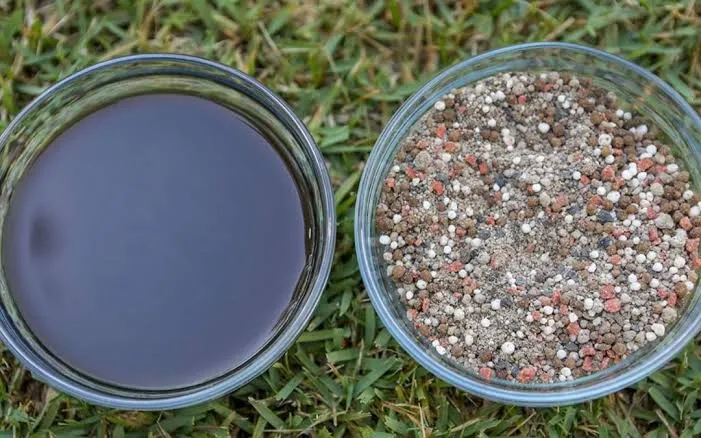
Yes, and this is where a lot of Aussie lawn owners get caught out.
Granular fertilizer needs water right away. The granules sit on the soil surface and can scorch grass blades if left dry. Water immediately after applying to dissolve the granules and activate the nutrients. This applies to both fast-release and slow-release granular fertilizers, though slow-release types are more forgiving if you are running a little late.
Liquid fertilizer works differently. The product is absorbed directly through the leaf, so you actually need to wait 2 to 4 hours before watering. Watering too soon rinses the liquid off before it has been absorbed into the plant tissue.
Weed and feed products need the longest wait. Give the herbicide component 24 to 48 hours of dry contact time on weed leaves before you water anything in.
When to Water After Fertilizing: Timing Is Everything
Should You Water Before or After Applying Fertilizer?
This one trips people up. The short answer: lightly water your lawn the day before you fertilize, then water again immediately after application for granular types.
Pre-moistening the soil stops dry, compacted ground from creating hot spots where concentrated fertilizer can sit and burn. It also opens up the soil slightly so nutrients travel downward more efficiently once you water in after applying.
Best Time of Day to Water in Australia
This is critical in the Australian climate. Early morning, between 4am and 9am, is the ideal watering window for two clear reasons.
First, water soaks into the soil before the heat arrives and causes evaporation. Second, the grass blades dry out naturally during the day, which reduces the risk of fungal disease taking hold in your lawn.
Midday watering in an Aussie summer can lose up to 30 to 50% of your water to evaporation before it even reaches the soil surface. Evening watering leaves moisture sitting on the grass blades overnight, which creates a perfect environment for dollar spot, brown patch, and other fungal problems.
What Happens If You Do Not Water Soon Enough?
Here is why timing matters so much. Fertilizer left on dry grass blades, especially in the Australian summer heat, acts like salt on your lawn. The concentrated nitrogen draws moisture out of the grass through a process called osmosis, essentially dehydrating your lawn from the outside in.
The result is yellowing, streaky burn patches that follow exactly where your spreader or hose went. Damage often shows up within 24 to 48 hours of application.
If you notice this happening, act fast. Gardening Hub Australia recommends applying 25 to 30mm of water immediately to dilute the concentrated nutrients, then maintaining consistent soil moisture for at least the following week.
Australian Lawn Types and How They Affect Watering After Fertilizing
Buffalo, Couch, Kikuyu and Zoysia: What Changes?
Australia’s most popular lawn types all respond slightly differently after fertilizing. Here is a practical breakdown:
| Grass Type | Watering Need Post-Fertilizing | Key Notes |
|---|---|---|
| Buffalo | 5 to 10mm, water promptly | Prone to burn if granules left sitting on blades |
| Couch (Bermuda) | 5 to 10mm, water immediately | Heavy nitrogen user; needs consistent moisture |
| Kikuyu | Water within 24 hours of granular application | Avoid fast-release nitrogen in summer heat |
| Zoysia | 5 to 10mm, gentle and even watering | Slower growing; needs less aggressive feeding |
For Kikuyu lawns especially, the LawnSuite Kikuyu care guide recommends watering granular fertilizer in within 24 hours of application to prevent burn. Kikuyu’s deep root system rewards deep, infrequent watering over light daily sprinkles, so focus on soaking the soil rather than frequent surface wetting.
For Buffalo lawns, Bunnings notes that established lawns generally need watering once every one to two weeks, so adjust your post-fertilizing water-in to fit that rhythm without disrupting your usual schedule.
How Australia’s Climate Zones Change the Rules
Australia is not one climate. What works in tropical Queensland is very different from temperate Victoria or the dry regions of South Australia and Western Australia.
Tropical and subtropical Queensland: High humidity combined with fertilizer can accelerate fungal growth. Water in during the early morning only, use slow-release products, and avoid fertilizing during the wet season when nutrient runoff risk is at its highest.
Temperate NSW and VIC: More forgiving conditions overall. Morning watering is still best practice but the risk of rapid burn is lower outside of peak summer months.
Arid WA and SA: Soil dries out extremely fast. Water in fertilizer promptly after application and consider liquid fertilizers in summer to reduce the burn risk. Perth’s address-based sprinkler roster also means you need to plan your fertilizing schedule around your assigned watering days.
Common Mistakes Aussies Make When Watering After Fertilizing
Overwatering and Nutrient Runoff
More water is not better here. Applying too much water after fertilizing does not help your lawn absorb more nutrients. It actually pushes them past the root zone into deeper soil layers where your grass cannot reach them at all.
There is also an environmental consideration worth knowing. Nitrogen and phosphorus runoff into stormwater drains and waterways is a real and documented issue across Australia. Stick to 5 to 10mm and stop before you see surface runoff or puddles forming on your lawn or driveway.
Underwatering and Fertilizer Burn
On the flip side, too little water is the number one cause of post-fertilizing damage in Australian lawns. Skipping the water-in step entirely, or assuming light morning dew is enough, will not activate granular fertilizer properly.
Burn patches from underwatering show up as yellow or brown areas, often in streaky patterns that mirror your spreader path. As TruGreen notes, prevention is always far easier than recovery, so build watering into your fertilizing routine every single time.
Fertilizing in the Heat Without Watering First
Fertilizing on a hot day without pre-moistening the soil is a fast way to stress your lawn. AllTurf Solutions advises avoiding fertilizer application altogether when daytime temperatures are above 30 degrees Celsius. If a heatwave arrives after you have already applied, water earlier and deeper than usual to give your lawn the best chance of recovery.
Always check your state’s current water restrictions before scheduling your watering session. Most Australian states prohibit sprinkler use between 10am and 4pm year-round. You can check current rules by state at bom.gov.au/water/restrictions or through your local council’s website.
Step-by-Step: How to Water Your Lawn After Fertilizing the Right Way
Follow this process every time you fertilize and you will rarely run into problems:
- Water lightly the day before to pre-moisten the soil and open up the root zone for better nutrient absorption
- Check your local weather forecast at Bureau of Meteorology and avoid fertilizing if temperatures will exceed 30 degrees or heavy rain above 20mm is expected
- Apply your fertilizer using a calibrated broadcast spreader for granular types or a sprayer for liquid products
- Clear excess granules off paths, driveways, and hard surfaces immediately before watering begins
- Water within 30 minutes for granular fertilizer (or wait 2 to 4 hours if you used a liquid product)
- Run your sprinkler for 15 to 25 minutes or until you reach 5 to 10mm using the catch-can test
- Confirm you are within your water restriction window before turning anything on, typically before 10am or after 4pm in most Australian states
- Resume your normal watering schedule in the following days, targeting around 25mm per week for established Australian lawns
Frequently Asked Questions About Watering After Fertilizing Your Lawn
How long should I water my lawn after fertilizing?
For most Australian lawns, running a standard sprinkler for 15 to 25 minutes after applying granular fertilizer delivers the 5 to 10mm of water needed to activate the product. Faster irrigation systems can reach that target in 10 to 12 minutes. Use the catch-can test to find your own system’s exact delivery rate so you are not guessing.
Can I water too much after applying fertilizer?
Yes. Overwatering pushes nutrients below the root zone before your grass has a chance to absorb them. It also creates nutrient runoff risk, particularly on sloped lawns or properties near driveways and gutters. Aim for 5 to 10mm and stop as soon as the soil feels moist but not waterlogged or puddle-forming.
How much to water after fertilizing my lawn in summer in Australia?
The target amount is the same in summer, 5 to 10mm, but the stakes are higher. Water in immediately after applying granular fertilizer, use the early morning window to reduce evaporation, and avoid fertilizing on days where temperatures will reach above 30 degrees. If you are using a liquid fertilizer, the cooler morning application window reduces the risk of burn significantly compared to midday or afternoon application.
Should I water my lawn every day after fertilizing?
Not necessarily. After the initial water-in session, resume your normal watering schedule. Most established Australian lawns need around 25mm of water per week according to The Garden Superstore’s Australian watering guide. In summer that might mean watering 2 to 3 times per week. Daily watering is generally only needed for newly laid turf or during extreme and prolonged heat periods.
What if it rains after I fertilize? Do I still need to water?
Light rain of 5 to 10mm is actually perfect and does the job for you. However, if heavy rain above 20 to 25mm is forecast, it is worth delaying your fertilizer application. A heavy downpour can wash loose granules off the lawn surface entirely before they have a chance to dissolve and break down into the soil. Always check the BOM rainfall forecast before you start spreading.
Key Takeaways
Getting the post-fertilizing watering step right is what separates a lawn that genuinely thrives from one that burns, patches, or wastes your money. Here is the quick version:
- Water with 5 to 10mm immediately after applying granular fertilizer
- For liquid fertilizer, wait 2 to 4 hours before watering in
- Run your sprinkler for 15 to 25 minutes or use the catch-can test to measure accurately
- Always water in the early morning to reduce evaporation and prevent fungal disease
- Never fertilize when temperatures are above 30 degrees Celsius
- Check your state’s water restrictions before every single watering session
The right amount of water does not just activate your fertilizer. It protects your lawn, your investment, and all the effort you put into keeping your grass looking its best.
Ready to get more from your lawn care routine? Browse the Gen Lawn blog for seasonal fertilizing guides, grass-specific care tips, and expert advice matched to your Australian climate and lawn type.
References and Further Reading
External Sources:
- Lawn Solutions Australia: The Right Way to Fertilise Your Lawn
- Gardening Hub Australia: Fertiliser Burn Prevention and Recovery
- AllTurf Solutions: When to Fertilise Your Lawn
- LawnSuite: The Complete Kikuyu Grass Care Guide for Australia
- LawnBySeasonAU: Water Restrictions in Australia 2026
- Garden Superstore AU: How Often to Water Your Lawn in Australia
- Bureau of Meteorology: Water Restrictions by State
- TruGreen: Lawn Fertilizer Burn
- Bunnings: How to Care for Kikuyu Grass
About Author
Khalid Fazal is a seasoned lawn care specialist and horticultural researcher with over 15 years of hands-on experience transforming challenging landscapes into lush, resilient green spaces. His journey didn’t start in a lab, but in a backyard full of stubborn, cracked clay that “experts” said would never grow a healthy blade of grass. Refusing to accept a yard full of dust, Khalid spent years experimenting with organic soil restoration and precise mulching—eventually turning that wasteland into a neighborhood showpiece on a shoestring budget.
From mastering core aeration techniques to optimizing soil pH for specialized turf varieties, Khalid’s approach combines old-school grit with modern agronomic science. He founded Gen Lawn to provide homeowners with honest, research-backed advice that prioritizes long-term soil health over quick-fix chemical solutions. When he isn’t analyzing soil profiles, he’s developing precision tools to help others achieve professional results without the professional price tag.

Lawn Winterizer: When to Apply by Grass & Region [2026]
Table of Contents Home / By Khalid Fazal | Updated:...
Read More
Spring Lawn Care: What to Do and When in Every US Region
Table of Contents Home / By Khalid Fazal | Updated:...
Read More
Lawn Maintenance Checklist by Season and Grass Type (2026)
Table of Contents Home / By Khalid Fazal | Updated:...
Read More
Liquid Fertilizer vs Granular Fertilizer: Which Wins?
Table of Contents Home / By Khalid Fazal | Updated:...
Read More