
Black Mulch Mold: How to Identify It, Remove It, and Stop It Coming Back
You walked outside, looked at your flower beds, and spotted something dark and fuzzy spreading across the mulch. Your first instinct was probably panic.
Is this toxic? Is it killing my plants? Do I need to rip everything out?
Here is the thing: black mulch mold looks a lot scarier than it usually is. In most cases, what you are seeing is a harmless group of fungi doing exactly what nature designed them to do. But knowing what type of mold you are dealing with, whether it is dangerous, and how to handle it makes all the difference.
This guide covers everything you need, from quick identification to step-by-step removal and long-term prevention tips you can start using today.
What Is Black Mulch Mold? (And Why Black Mulch Gets It More)
Black mulch mold is a broad term homeowners use to describe dark fungal growth appearing on the surface of mulched garden beds. It is not one single organism. It is actually several different types of fungi that thrive in damp, organic environments.
Here is what they all have in common: they feed on dead wood fibers, not living plants. They are part of the natural decomposition cycle, the same process that turns fallen leaves into rich garden soil. According to the University of Kentucky Cooperative Extension, mulch molds are classified as nuisance organisms, not plant pathogens. That is an important distinction.
The Fungi You Are Most Likely Seeing
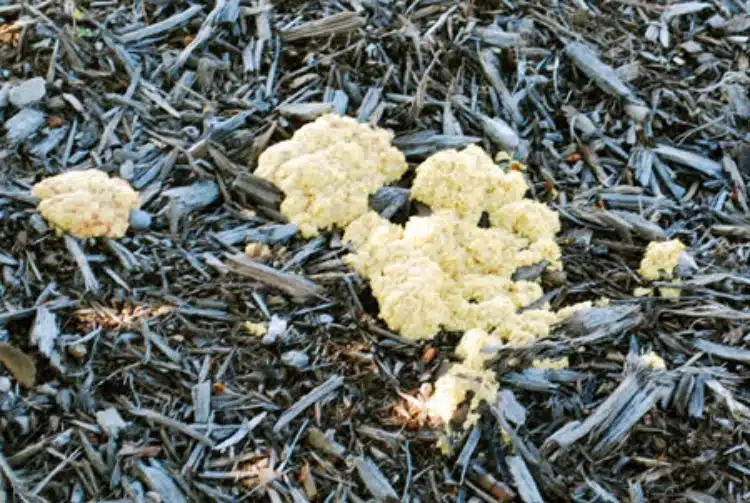
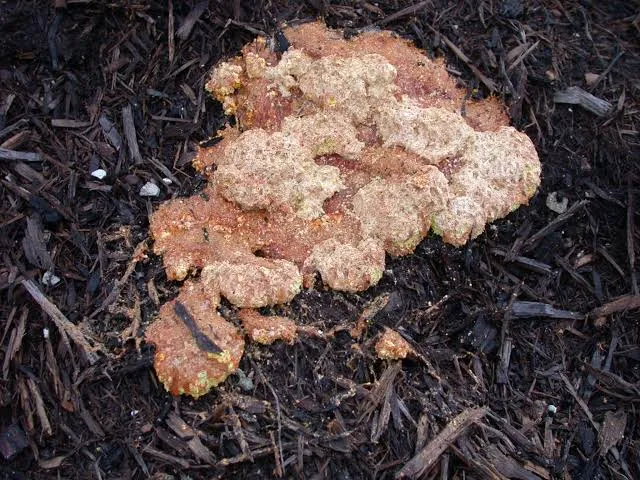
Slime mold (Fuligo septica): This one starts as a bright yellow foam-like blob, which is why people nickname it “dog vomit fungus.” As it dries out, it turns tan, then brown, then a chalky black crust. It looks alarming but it is completely harmless and usually disappears on its own within 48 to 72 hours.
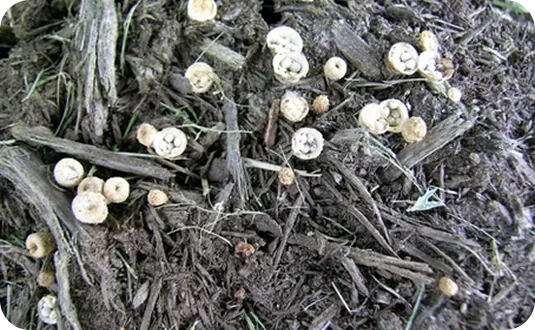
Artillery fungus (Sphaerobolus stellatus): This one shows up as tiny black tar-like specks on your car, siding, or fence posts. It literally shoots spores toward bright surfaces from distances of up to 15 to 20 feet. It causes no harm to plants or soil, but those spore spots are incredibly sticky and difficult to remove from surfaces.
Mycelium: This is the white or grayish thread-like growth you sometimes find just beneath the mulch surface. It is not harmful at all. In fact, mycelium actively improves soil structure and helps move moisture efficiently through the root zone. Many gardeners pay for soil products that do what mycelium does naturally and for free.
Saprophytic fungi: These appear as dark crusty patches on the surface of wood chips. They are decomposers, breaking down mulch and converting it into nutrients that feed back into the soil beneath.
Quick Identification Guide
Use this table to figure out exactly what you are looking at before you do anything:
| What You See | What It Likely Is | Harmful? |
|---|---|---|
| Tiny black dots on car, siding, or fencing | Artillery fungus | No (very sticky and annoying) |
| Black dusty or crusty patches on mulch | Saprophytic fungi | No |
| Yellow or orange blob that dries to a black crust | Slime mold (Fuligo septica) | No |
| White cobweb-like threads beneath mulch | Mycelium | No (actively beneficial) |
| Black slimy mass with a foul vinegar or ammonia smell | Sour/anaerobic mulch | Yes (can damage plants) |
Why Black Mulch Gets Mold More Than Other Colors
Black-dyed mulch absorbs significantly more heat than natural or light-colored mulch. That warm, moist environment sitting right at the surface is exactly what fungi love to colonize.
On top of that, black mulch is most commonly made from finely shredded hardwood. Finely shredded material breaks down faster, giving fungi more organic food to feed on. Combine that with shaded areas or heavy watering habits, and you have conditions that almost guarantee black mulch mold will show up at some point during the season.
Is Black Mulch Mold Dangerous?
This is the question on every homeowner’s mind when they first spot it. The short answer is: usually not. But let’s break it down the right way.
For Your Plants and Soil
Mulch fungi do not attack living plants. They feed only on dead organic material, which is the mulch itself. According to NC State Extension, slime molds and similar fungi are completely harmless to the plants and flowers in your garden beds.
As fungi break down mulch, they convert it into nutrients that go back into the soil. This benefits root development and soil structure over time. In other words, seeing some mold in your mulch is not always a sign something is wrong. It is often a sign your soil ecosystem is functioning correctly.
The one exception to watch closely is sour mulch. This happens when mulch becomes anaerobic (oxygen-deprived) and starts producing toxic by-products like acetic acid and methanol. If your mulch smells strongly of vinegar, alcohol, or ammonia, that is sour mulch, and it can genuinely damage plant roots. Air it out completely before spreading it anywhere near your garden beds.
For Humans and Pets
Here is something most people do not realize: outdoor mulch mold is not the same as toxic indoor black mold (Stachybotrys chartarum). Stachybotrys is the dangerous mold that grows inside water-damaged buildings under very specific moisture and temperature conditions. It is simply not what you are finding in your flower beds.
For most healthy adults and children, black mulch mold poses no real health risk. That said, people with mold allergies or asthma may notice irritation like sneezing, itchy eyes, or nasal congestion when working around disturbed mulch. Wearing a basic dust mask and gloves is all the protection most sensitive individuals need.
As for pets, they are rarely affected unless they are chewing or eating large amounts of moldy mulch. If you have a dog that digs and chews everything in the yard, it is worth keeping an eye on them around heavily moldy garden beds.
How to Get Rid of Black Mulch Mold
Good news: most cases of black mulch mold do not require special products or a professional. Here is how to handle it depending on how bad the situation is.
Quick Fixes for Small Patches (Start Here)
If you are dealing with a small area of surface mold, keep it simple:
- Let the mulch dry out a bit before you disturb it. Wet mold spreads spores more easily when handled or raked aggressively.
- Use a garden rake to break up the fungal growth and expose it to direct sunlight and fresh air. This single step usually stops the spread on its own.
- If the appearance bothers you, scoop the top inch of affected mulch into a trash bag and seal it immediately. Avoid shaking or tossing it, as this sends spores airborne.
- Top up the cleared area with a thin layer of fresh mulch once the bed has dried out completely.
Slime mold in particular requires almost zero effort. It typically dries out and disappears entirely within two to three days on its own.
Natural Treatments for Stubborn Black Mulch Mold
If raking alone is not cutting it, these natural options work well without putting your plants at risk:
Vinegar solution: Mix one part white vinegar with two parts water in a spray bottle. Spray directly onto the affected mulch on a dry, calm day and let it sit for about 30 minutes, then rinse lightly with water. Important note: vinegar can burn nearby plant leaves, so aim carefully and avoid spraying foliage directly.
Baking soda: A light dusting of baking soda over surface mold raises the local pH slightly and creates conditions fungi dislike. Use it sparingly as a thin layer. Too much baking soda can affect soil pH over time.
Neem oil: Diluted neem oil (typically 1 to 2 tablespoons per gallon of water) sprayed over the affected area acts as a natural broad-spectrum fungicide. It works best when applied early, before the mold has spread widely across the bed.
When to Use a Commercial Fungicide
Fungicides are rarely necessary for black mulch mold. Most mulch fungi are harmless and clear up on their own once moisture levels drop. However, a fungicide labeled for ornamental beds may be worth considering if artillery fungus keeps staining your siding repeatedly, or if someone in your household has a documented mold sensitivity.
Always follow the product label directions exactly. Keep in mind that fungicides can also disrupt the beneficial fungi already working in your mulch, so treat them as a last resort rather than a first response.
When to Replace the Mulch Entirely
Sometimes the mulch is simply past its useful life. Consider full replacement if:
- The mulch smells strongly of vinegar, ammonia, or sulfur (clear signs of sour mulch).
- It has been in place for two or more years and is heavily broken down.
- It stays wet even during dry, sunny weather, which points to a deeper drainage problem beneath.
- Mold covers more than half the bed and keeps returning within days of treatment.
Removing the mold handles today’s problem. Prevention keeps it from showing up again next season.
Choose the Right Mulch
Research from Penn State Extension found that pine bark nuggets are the least hospitable mulch type for artillery fungus, while finely shredded fresh hardwood is the most vulnerable. Cedar and cypress mulch also tend to dry out faster between waterings and contain natural compounds that reduce fungal activity.
If you use tree service chips or fresh wood mulch, let it sit in a loose, open pile for four to six weeks before spreading it. Rutgers Plant and Pest Advisory recommends this pre-composting step to let the initial fungal surge run its course before the mulch touches your garden beds.
Apply It at the Right Depth
More mulch is not always better. A layer of two to three inches is the standard recommendation for most garden beds. At four inches or more, the lower layers stay permanently moist and oxygen-poor, which is the ideal condition for fungal overgrowth.
Keep mulch two to three inches away from the base of plants, shrubs, and tree trunks. Piling mulch directly against stems traps moisture right where your plants are most vulnerable to rot.
Build Smarter Watering Habits
Overwatering is the second most common cause of black mulch mold, right after excessive mulch depth. Here is how to fix it:
- Water in the early morning so the mulch surface can dry out naturally throughout the day.
- Switch to drip irrigation rather than overhead sprinklers. Drip systems deliver water directly to the root zone without soaking the mulch surface.
- Water deeply but less frequently. Daily light watering keeps the entire mulch profile wet and creates ideal conditions for fungi to thrive.
Also check your bed’s drainage situation. If water consistently pools after rain, consider regrading the area with a slight slope or amending the soil with compost to improve runoff and reduce surface moisture.
Keep Up with Simple Monthly Maintenance
This is the step most homeowners skip, and it makes the biggest difference over time:
- Rake and fluff the mulch surface every four to six weeks, especially after heavy rain.
- After storms, always rake to break up compaction and allow trapped moisture to escape.
- Replace mulch once a year, typically in spring or early fall, to maintain a fresh and healthy layer.
Frequently Asked Questions About Black Mulch Mold
Is the black stuff in my mulch toxic?
In most cases, no. What you are seeing in mulch is almost always a harmless saprophytic fungus or the dried stage of slime mold. Toxic indoor black mold (Stachybotrys chartarum) does not grow in outdoor mulch environments. If you have allergy concerns, wearing gloves and a basic dust mask while raking the area is a simple and effective precaution.
What kills black mulch mold naturally?
The most effective natural approach is sunlight, airflow, and drying. Raking the mulch to expose the affected area is usually all it takes. For more stubborn patches, a diluted vinegar spray (one part vinegar to two parts water) or a neem oil solution can suppress surface fungi quickly. Avoid spraying vinegar near plant foliage since it can cause leaf burn.
Why does my black mulch keep getting moldy?
Recurring black mulch mold almost always points to one of three root causes: too much moisture, mulch applied too thick, or a drainage problem in the bed itself. Start by reducing how often you water, thinning the mulch to two to three inches, and raking regularly to improve airflow through the bed. If the area stays wet after rain regardless of what you do, improving drainage is the real fix needed.
How long does black mulch mold last if I ignore it?
Most surface fungi dry out and disappear within a few days to a few weeks once weather conditions change. Slime mold typically completes its entire life cycle within one to three weeks. Artillery fungus spores remain in the mulch but stop actively spreading once moisture levels drop. Ignoring it is generally harmless, though artillery fungus can stain siding and cars if left unchecked near structures.
Do I have to throw all my mulch away if it gets moldy?
No. In most cases, removing the top one to two inches of affected mulch and improving airflow is all that is needed. Full replacement is only necessary when the mulch smells sour, is several years old and fully broken down, or stays permanently wet due to an underlying drainage issue.
Conclusion: A Simple Action Plan for Black Mulch Mold
Black mulch mold is one of those yard issues that looks far worse than it actually is. Here is what to take away from everything above:
- Most black mulch mold is harmless fungi doing their natural job as decomposers.
- It is not toxic indoor black mold, and in almost all cases it will not damage your plants.
- Small patches can be cleared in minutes by raking and letting the area dry out.
- Stubborn cases respond well to a vinegar solution, baking soda, or diluted neem oil.
- Long-term prevention comes down to choosing the right mulch type, applying it at the correct depth, and building smarter watering habits.
References and Further Reading
- University of Kentucky Cooperative Extension: Mulch, Mold and Fungi
- Penn State Extension: Artillery Fungus in Mulch
- Rutgers Plant and Pest Advisory: Controlling Nuisance Fungi in Landscape Mulch
- NC State Extension: Slime Molds
- Oregon State University: Slime Mold Looks Ugly But Does No Harm
- Iowa State University Extension: Managing Strange-Looking Fungi in Landscape Mulch
- Asthma and Allergy Foundation of America: Mold Allergy
- Cleveland Clinic: Black Mold and Health
- Britannica: Mycelium
- EPA WaterSense: Watering Your Landscape
- The Old Farmer’s Almanac: Neem Oil Uses and Safety Tips
About Author
Khalid Fazal is a seasoned lawn care specialist and horticultural researcher with over 15 years of hands-on experience transforming challenging landscapes into lush, resilient green spaces. His journey didn’t start in a lab, but in a backyard full of stubborn, cracked clay that “experts” said would never grow a healthy blade of grass. Refusing to accept a yard full of dust, Khalid spent years experimenting with organic soil restoration and precise mulching, eventually turning that wasteland into a neighborhood showpiece on a shoestring budget.
From mastering core aeration techniques to optimizing soil pH for specialized turf varieties, Khalid’s approach combines old-school grit with modern agronomic science. He founded Gen Lawn to provide homeowners with honest, research-backed advice that prioritizes long-term soil health over quick-fix chemical solutions. When he isn’t analyzing soil profiles, he’s developing precision tools to help others achieve professional results without the professional price tag.

Lawn Winterizer: When to Apply by Grass & Region [2026]
Table of Contents Home / By Khalid Fazal | Updated:...
Read More
Spring Lawn Care: What to Do and When in Every US Region
Table of Contents Home / By Khalid Fazal | Updated:...
Read More
Lawn Maintenance Checklist by Season and Grass Type (2026)
Table of Contents Home / By Khalid Fazal | Updated:...
Read More
Liquid Fertilizer vs Granular Fertilizer: Which Wins?
Table of Contents Home / By Khalid Fazal | Updated:...
Read More