
What Is the Best Fertilizer for New Grass Seed? A Complete 2025 Guide
The best fertilizer for new grass seed is a starter fertilizer with a high phosphorus content. Look for an NPK ratio where the middle number is the highest, such as 24-25-4 or 18-24-12. That phosphorus is what powers root development in young seedlings, and without it, even the best grass seed will struggle to take hold.
Here is the thing: most homeowners grab whatever fertilizer is sitting in the garage and wonder why their lawn comes in patchy or thin. The truth is, new grass has completely different nutritional needs than established turf.
In this guide, you will learn exactly what makes a fertilizer right for new grass seed, which products are worth buying, how to apply them step by step, and the costly mistakes you need to avoid before you ever put seed in the ground.
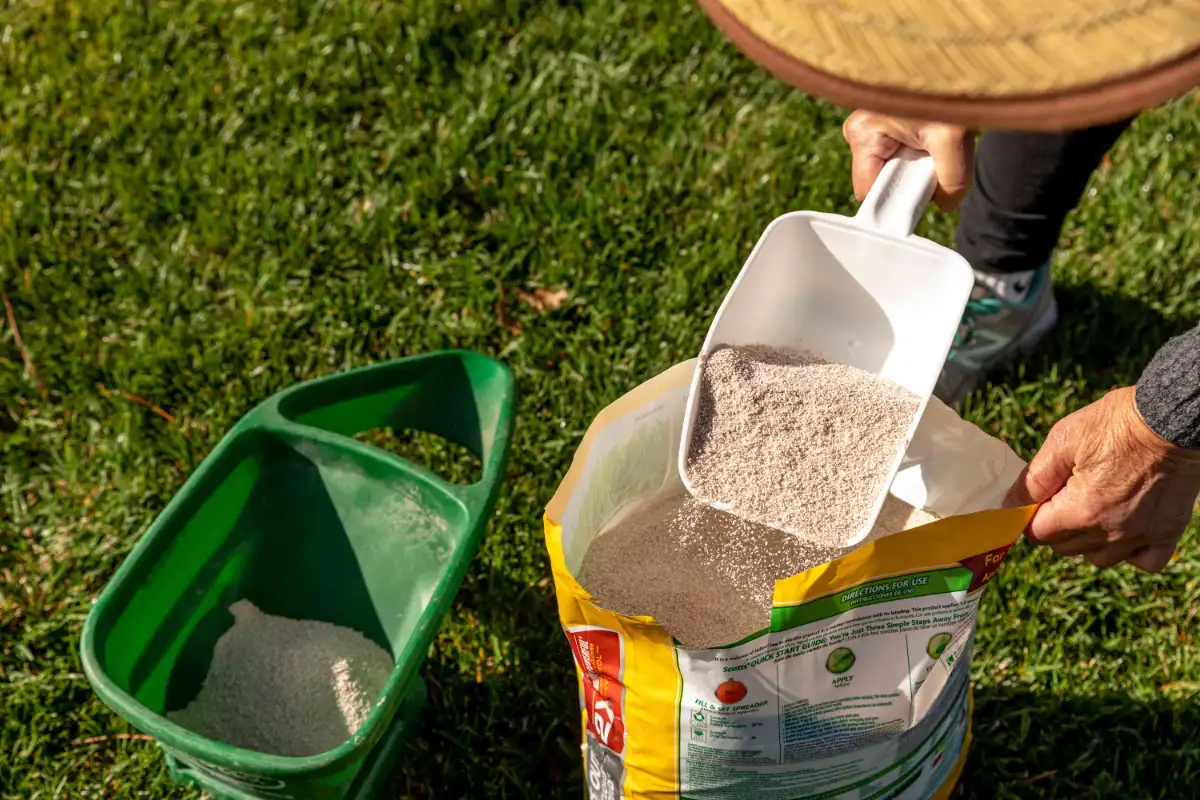
What Is the Best Fertilizer for New Grass Seed and Why Phosphorus Is Everything
Before you buy anything, you need to understand one thing. New grass is not like established grass. A seedling’s first job is building roots, not blades. The nutrient that makes root development happen is phosphorus, and most standard lawn fertilizers have almost none of it.
Breaking Down NPK: The Numbers That Actually Matter for New Grass Seed
Every fertilizer bag shows three bold numbers on the label. These are called the NPK ratio, and each one represents a different nutrient:
- N (Nitrogen): Drives leaf and blade growth, gives grass its green color
- P (Phosphorus): Promotes root development and is critical for germination
- K (Potassium): Supports overall plant health, drought resistance, and disease tolerance
For new grass seed, the middle number (phosphorus) needs to be the highest. A solid starter fertilizer will show something like 24-25-4, 18-24-12, or 12-18-8. According to Penn State Extension, analyses such as 15-10-10 or 10-6-4 are also acceptable for early grass establishment and promote strong root and shoot development in young seedlings.
Now compare that to a standard maintenance fertilizer like 32-0-4. Notice the zero in the middle? That means zero phosphorus. Using that on new grass seed is one of the most common and damaging mistakes US homeowners make.
Starter Fertilizer vs. Regular Fertilizer: What Is the Difference?
Here is a quick side-by-side comparison so you can see exactly why starter fertilizer is a different product entirely:
| Feature | Starter Fertilizer | Regular Lawn Fertilizer |
|---|---|---|
| Phosphorus Level | High (middle number is highest) | Low or zero |
| Primary Goal | Root development and germination | Blade growth and color |
| Safe for New Seed | Yes | Often no |
| Nitrogen Type | Balanced quick and slow release | Usually high quick-release nitrogen |
| Best Used | At seeding or just before | On established turf only |
The biggest risk with regular fertilizer on new grass is what lawn care professionals call surge growth. Your seedlings push out soft, fast blade growth before the roots have any real depth. The grass looks promising for a week and then thins out, wilts, or dies when temperatures change or foot traffic hits.
Best Fertilizer for New Grass Seed: Top Picks for US Lawns
You do not need to guess at the store. Here are the top research-validated picks for every budget and situation.
Best Overall: Scotts Turf Builder Starter Food for New Grass (24-25-4)
Scotts Turf Builder Starter Food is the most widely recommended starter fertilizer for US homeowners, and for good reason. Its 24-25-4 NPK ratio delivers a substantial phosphorus boost right where new seedlings need it most during germination.
According to Scotts, this product helps new grass grow 35 percent faster and 70 percent thicker compared to unfed seedlings. It works on all grass types, whether you are planting cool-season varieties like tall fescue or warm-season grasses like Bermuda or centipede. One 15 lb bag covers up to 5,000 square feet.
Best for: First-time seeders, full lawn renovations, and anyone who wants a reliable and widely available option.
Best for Performance: The Andersons 18-24-12
The Andersons 18-24-12 is the top choice among lawn care professionals and enthusiast homeowners. Its NPK hits the ideal balance for new seed, and 50 percent of its nitrogen is slow-release, which is a key detail.
Here is why that matters. Slow-release nitrogen prevents a sudden flush of top growth in your existing grass during overseeding. That gives your new seed a window to germinate and catch up without competing against established grass racing ahead of it. It also contains iron, which promotes a deeper green color as your lawn fills in.
Best for: Overseeding projects, lawn renovations, and homeowners who want professional-grade results.
Best for Overseeding: Jonathan Green Green-Up Seeding Fertilizer (12-18-8)
Jonathan Green Green-Up Seeding Fertilizer with a 12-18-8 NPK ratio is built specifically for overseeding existing lawns. The more moderate nitrogen level means your established grass will not suddenly surge in growth while new seed is still trying to germinate.
This is a critical distinction most homeowners overlook. When you overseed, you want nutrient balance, not a nitrogen blast that sends your old grass racing ahead of your new seed.
Best for: Overseeding thin or patchy lawns where existing grass is still present.
Best Organic Option: Milorganite (6-4-0)
Milorganite is the most popular organic fertilizer in lawn care, and it comes up constantly in conversations about new grass seed. Its 6-4-0 NPK ratio is gentle, slow-release, and virtually impossible to cause burn with.
But here is the honest truth. Milorganite is not a true starter fertilizer. Its phosphorus level is lower than dedicated starters. If you want the safest possible option with near-zero risk of burning tender seedlings, especially in households with kids or pets, Milorganite is a solid choice. Just understand it works more gradually than a purpose-built starter.
Best for: Eco-conscious homeowners, households with pets or children, or anyone applying to very sensitive seedlings.
Product Comparison Table
| Product | NPK | Best For | Coverage | Organic |
|---|---|---|---|---|
| Scotts Turf Builder Starter Food | 24-25-4 | Best overall, new lawns | 5,000 sq ft | No |
| The Andersons 18-24-12 | 18-24-12 | Pro-level performance, overseeding | Varies | No |
| Jonathan Green Green-Up | 12-18-8 | Overseeding thin lawns | Varies | No |
| Milorganite | 6-4-0 | Burn-free organic option | 2,500 sq ft | Yes |
When and How to Apply Fertilizer to New Grass Seed
Having the right fertilizer is only half the equation. Timing and application technique matter just as much.
Should You Fertilize Before or After Seeding?
This is one of the most debated questions in lawn care, and the honest answer is: both approaches work. But applying before or at the time of seeding is slightly preferred by most experts.
Here is why. Phosphorus is a nutrient that barely moves through soil on its own once it is applied. If you spread it on the surface after seeding, it takes time to work its way down to where young roots are growing. Applying it before seeding means it is already in position when the seed germinates and the first roots begin pushing down.
According to LawnLove, applying starter fertilizer before you sow your grass seed is generally the best approach, though applying immediately after seeding also delivers strong results. If you choose to apply after seeding, do it right away rather than days later.
Step-by-Step Application Guide for New Grass Seed
Follow this sequence for the best germination results:
- Run a soil test to check existing nutrient levels and pH. Some US states restrict phosphorus application near waterways, so knowing your soil’s baseline matters before you buy anything.
- Clear the area of debris, dead grass, rocks, and weeds.
- Loosen the top 2 to 3 inches of soil using a rake or rototiller to improve seed-to-soil contact and allow nutrients to penetrate.
- Apply your starter fertilizer evenly using a broadcast or drop spreader. Avoid hand-spreading, as it creates uneven application and patchy growth.
- Sow your grass seed at the recommended rate for your specific grass type.
- Water lightly twice a day for the first week to keep the soil surface moist without soaking it. Once seedlings reach 2 inches tall, reduce watering frequency gradually.
- Wait 4 to 6 weeks before applying any follow-up fertilizer. New grass needs time to establish before receiving another nutrient dose.
Pro tip from The Grounds Guys: fertilize in the early morning or late evening when temperatures are cooler, and lightly rake the fertilizer into the top few inches of soil after spreading. Never fertilize in peak afternoon heat.
How Much Fertilizer Does New Grass Seed Actually Need?
The general rule is 0.5 to 1 pound of nitrogen per 1,000 square feet. Always check the product label for the specific coverage rate and spreader settings for your product.
For Scotts Turf Builder Starter Food, the recommended setting is 3.25 on a broadcast spreader or 6 on a drop spreader. One 15 lb bag covers 5,000 square feet.
More fertilizer is not better here. Applying more than the label recommends is one of the fastest ways to burn or kill tender new seedlings before they ever get a chance.
5 Fertilizer Mistakes That Kill New Grass Seed
Even with the best product in hand, these mistakes will sabotage your lawn before it gets going. Avoid every single one of them.
1. Using Weed and Feed on New Seed
This is the single most damaging mistake homeowners make. Products labeled “weed and feed” contain pre-emergent or post-emergent herbicides that prevent cell division in germinating seeds, including your grass seed. Using them at seeding time guarantees a failed lawn. Always use a pure starter fertilizer with no herbicide ingredients when seeding.
2. Over-Applying Fertilizer
Fertilizers are essentially concentrated salts. When too much accumulates in the soil, it causes fertilizer burn through a process called osmosis: the salts draw moisture out of the roots instead of allowing roots to absorb water from the soil. Young seedlings are far more vulnerable to this than established grass. Always stick to the label rate.
3. Using High-Nitrogen Regular Fertilizer
A bag of standard lawn food with a ratio like 32-0-4 contains almost no phosphorus and a heavy nitrogen load. That nitrogen triggers fast, soft blade growth in your new seedlings before the roots have time to develop properly. The lawn looks promising for a week and then collapses when heat, drought, or stress arrives.
4. Fertilizing on Dry Soil
Applying fertilizer to dry soil concentrates nutrients near the surface, right where tender roots are most exposed. Always water your soil lightly before application, and water again immediately after to carry nutrients down into the root zone where they are actually useful.
5. Skipping the Soil Test
Not all soil is the same, and not all US states allow unrestricted phosphorus use. A soil test from your local Cooperative Extension office tells you exactly what your soil is missing and keeps you in line with local regulations. Most test kits cost between $15 and $30 and take the guesswork out of every fertilizer decision you make.
Frequently Asked Questions About the Best Fertilizer for New Grass Seed
What NPK ratio is best for new grass seed?
Look for a starter fertilizer where the middle number (phosphorus) is the highest. Ratios like 24-25-4, 18-24-12, or 12-18-8 are all strong choices for new grass. According to Penn State Extension, analyses of 15-10-10 or 10-6-4 are also acceptable starting points for establishing new turf.
Can I use regular fertilizer on new grass seed?
It is not recommended. Regular maintenance fertilizers are high in nitrogen and contain little to no phosphorus. New seedlings need phosphorus to develop roots, not a nitrogen boost that pushes weak blade growth before the root system is ready to support it. Using regular fertilizer on new seed often leads to patchy, fragile growth.
Should I fertilize before or after seeding?
Both approaches work effectively. Applying starter fertilizer 1 to 2 days before seeding ensures phosphorus is already in the soil when germination begins. Applying immediately after seeding also delivers solid results. What you want to avoid is waiting several days after seeding, when seedlings are already trying to establish themselves on nutrient-poor soil.
How long after seeding should I fertilize again?
Wait 4 to 6 weeks after germination before applying a second round of fertilizer. By that point, the new grass should have been mowed at least once and be actively growing. Your follow-up feeding should shift toward a more balanced or nitrogen-forward fertilizer to support blade growth and color development.
Will fertilizer kill new grass seed if I use too much?
Yes. Applying too much starter fertilizer creates a high salt concentration in the soil that draws moisture away from seedling roots through the process of osmosis. Signs of fertilizer burn include yellow or brown streaks, dried-out patches, and stunted germination. Always follow the label rate exactly and water thoroughly after every application.
Conclusion: Give Your New Grass the Foundation It Deserves
Choosing the best fertilizer for new grass seed does not need to be complicated. Here is a quick summary of everything you need to know:
- Always use a starter fertilizer with a high phosphorus content where the middle NPK number is the highest
- The top pick for most US homeowners is Scotts Turf Builder Starter Food (24-25-4)
- For pro-level performance, go with The Andersons 18-24-12
- Apply before seeding or immediately at seeding, then wait 4 to 6 weeks before your follow-up feeding
- Never use weed and feed products, never over-apply, and always start with a soil test
Your lawn starts below the surface. Get the roots right, and everything above the soil takes care of itself.
Ready to dig deeper into lawn care? Explore more expert guides on Gen Lawn and grow the yard you have always wanted.
References and Sources
- Penn State Extension: Fertilizing Lawns
- Penn State Extension: Understanding Plant Nutrients
- Penn State Extension: Slow Release Fertilizers
- LawnStarter: 9 FAQs About Applying Starter Fertilizer
- LawnStarter: Common Fertilizer Mistakes to Avoid
- LawnStarter: What Is Fertilizer Burn?
- LawnLove: A Complete Guide to Fertilizing New Grass
- The Grounds Guys: New Grass Fertilizer Guide
- Scotts Turf Builder Starter Food Product Page
- Cooperative Extension: Find Your Local Office
- Britannica: Osmosis
About Author
Khalid Fazal is a seasoned lawn care specialist and horticultural researcher with over 15 years of hands-on experience transforming challenging landscapes into lush, resilient green spaces. His journey didn’t start in a lab, but in a backyard full of stubborn, cracked clay that “experts” said would never grow a healthy blade of grass. Refusing to accept a yard full of dust, Khalid spent years experimenting with organic soil restoration and precise mulching, eventually turning that wasteland into a neighborhood showpiece on a shoestring budget.
From mastering core aeration techniques to optimizing soil pH for specialized turf varieties, Khalid’s approach combines old-school grit with modern agronomic science. He founded Gen Lawn to provide homeowners with honest, research-backed advice that prioritizes long-term soil health over quick-fix chemical solutions. When he isn’t analyzing soil profiles, he’s developing precision tools to help others achieve professional results without the professional price tag.

Lawn Winterizer: When to Apply by Grass & Region [2026]
Table of Contents Home / By Khalid Fazal | Updated:...
Read More
Spring Lawn Care: What to Do and When in Every US Region
Table of Contents Home / By Khalid Fazal | Updated:...
Read More
Lawn Maintenance Checklist by Season and Grass Type (2026)
Table of Contents Home / By Khalid Fazal | Updated:...
Read More
Liquid Fertilizer vs Granular Fertilizer: Which Wins?
Table of Contents Home / By Khalid Fazal | Updated:...
Read More