
Does Mulch Attract Termites? Here’s What the Science Actually Says
You just finished laying fresh mulch around your flower beds. It looks great, your plants are thriving, and the yard finally feels put together.
Then a neighbor mentions termites. Suddenly you are second-guessing every bag you spread.
Here is the short answer: mulch does not directly attract termites. But it can create the exact conditions that encourage them to stick around if you are not careful. According to the National Pest Management Association (NPMA), termites cause an estimated $6.8 billion in property damage every year in the US, and most homeowners do not know there is a problem until the damage is already done.
In this guide, you will learn exactly what the research says, which mulch types carry higher risk, the mistakes that genuinely invite termites closer to your home, and how to spot the early warning signs before things get serious.

Does Mulch Actually Attract Termites? (The Science-Backed Answer)
Let’s clear this up right away.
Mulch does not lure termites from across the neighborhood the way a food source draws an animal. Termites do not sniff out a fresh bag of wood chips and come running. The truth is far more nuanced than that.
What “Attracting” Termites Actually Means
The real concern is not attraction. It is retention.
When subterranean termites are already foraging underground and stumble across a moist, sheltered area beneath a thick layer of mulch, they are more likely to stay and keep feeding. Mulch does not send out an invitation. It just creates a very comfortable living situation for termites that are already in the area.
Think of it like this: if you leave a plate of food on the counter, you did not invite ants into your house, but you did give them a reason to stay once they found it.
What the Research Actually Shows
Donald Lewis of Iowa State University put it plainly: there is no evidence that moist mulch conditions attract termite foragers from the surrounding landscape. Iowa State University Extension confirms that termites already wandering the soil are simply more likely to remain when they encounter favorable conditions.
The University of Florida IFAS Extension adds that mulch laid over 4 to 6 inches deep is far more likely to produce the damp, stable temperatures that termites prefer for tunneling and foraging.
So the issue is not the mulch. It is the moisture the mulch traps and the cover it provides.
Which Types of Mulch Are Riskier Than Others?
Not all mulch carries the same level of risk. This is where most articles fall short, because the details here actually matter a great deal.
High-Risk Wood Mulches
Pine bark, shredded hardwood, and standard wood chips are the most common types sold at garden centers across the US. They retain moisture well, which is exactly why gardeners love them. But that moisture retention, combined with their high cellulose content, makes them the most termite-friendly option.
When laid too thick or placed too close to your foundation, these mulches create the perfect storm: moisture, shelter, and a food source all in one place.
Lower-Risk Options (But With a Catch)
Cedar mulch contains a natural compound called thujone that is known to deter insects, including termites. Cypress heartwood contains a compound called cypressene that termites tend to avoid.
But here is the catch.
Most cedar and cypress mulch sold in stores comes from sapwood, not heartwood. Research from Terminix shows that 77% of termites survived on cypress sapwood. A University of Hawaii study found cedar’s termite resistance results were “highly variable.” The protective oils also fade over time, especially when the mulch gets wet repeatedly.
Cedar and cypress offer some benefit, but do not treat them as a complete solution.
The Safest Mulch Picks
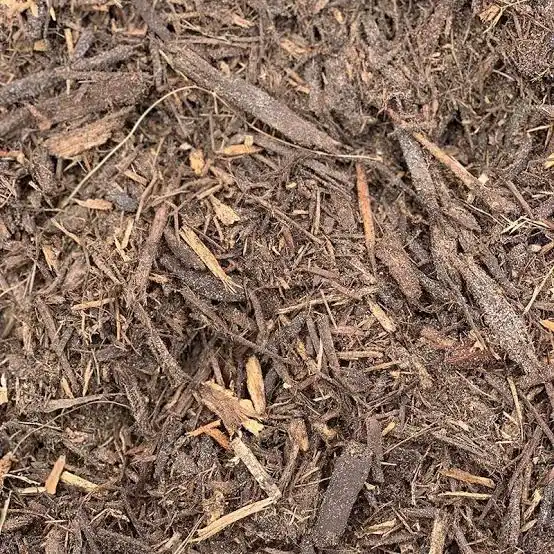
If termite risk is your primary concern, here are your lowest-exposure options:
- Melaleuca mulch: Termites actively avoid this wood. It is also environmentally friendly since melaleuca is an invasive species that is being responsibly harvested in Florida.
- Rubber mulch: Contains zero cellulose, so termites cannot use it as a food source. It still retains some soil moisture, so correct placement still matters.
- Gravel and stone: No food source at all. Interestingly, research shared by Bob Vila found that termite activity can be just as high beneath gravel as beneath wood mulch, purely because of the moisture it traps beneath it.
Here is a quick breakdown to make your decision easier:
| Mulch Type | Termite Risk Level | Key Notes |
|---|---|---|
| Pine bark / Hardwood chips | High | High cellulose content, retains moisture |
| Pine straw | High | Loose structure but supports large colonies |
| Cypress sapwood (most store bags) | Medium | Limited protection, oils fade quickly |
| Cedar (store-bought) | Medium | Variable results, sapwood not heartwood |
| Cypress heartwood | Low | Hard to find in stores |
| Melaleuca | Very Low | Termites actively avoid it |
| Rubber mulch | Very Low | No cellulose, still traps moisture |
| Gravel / Stone | Very Low | No food source, moisture is still a factor |
The Biggest Mulching Mistakes That Invite Termites
Here is something most people do not realize: the majority of termite problems linked to mulch are not caused by the mulch itself. They are caused by how it gets applied.
Mulching Directly Over Tree Stumps
This is the number one mistake that landscaping professionals see again and again.
When you mulch over an underground tree stump, you are creating a massive hidden food source directly beneath your garden bed. Decaying root systems act as underground transit lines, pulling termites straight from your yard toward your foundation. If you have old stumps in your property, have them removed before laying mulch in that area.
Placing Mulch Too Close to Your Foundation
This is the big one. Mulch that touches your home’s siding, door frames, or foundation gives termites a direct, hidden path inside. They use the moist, covered layer as a bridge.
Pest experts consistently recommend keeping all mulch at least 6 to 12 inches away from your foundation. In high-risk regions like the Southeast and Gulf Coast, the recommended clearance jumps to 12 to 18 inches.
Going Deeper Than 3 Inches
More is not better when it comes to mulch depth. Anything over 3 inches creates a bottom layer that never fully dries out. That persistent moisture is exactly what subterranean termites need to tunnel comfortably toward your home.
Stick to a 2 to 3 inch layer and refresh it once a year rather than piling new mulch on top of old decomposing layers.
How to Use Mulch Safely Without Inviting Termites
Good news: you do not have to give up mulch entirely. You just need to apply it smarter.
Follow the Foundation Clearance Rule
Keep a clear gap of at least 6 to 12 inches of bare soil or gravel between your mulch beds and your home’s siding or foundation. This gap does two important things: it removes the covered highway termites would use to access your home, and it gives you a clear visual zone to spot mud tubes or other activity early.
Watch Your Depth
Apply mulch in a 2 to 3 inch layer maximum. If you are refreshing existing mulch, rake out the old decomposing layer first rather than adding on top. Old, breaking-down wood at the bottom of a mulch bed is far more attractive to termites than fresh material on top.
Choose the Right Mulch for Your Region
In high-termite-risk states like Florida, Texas, Louisiana, and parts of California, go for inorganic options near your foundation and save organic mulch for garden beds farther from the structure. In lower-risk northern states, cedar or cypress works reasonably well when placed and maintained correctly.
Not sure what termite risk looks like in your area? The NPMA’s pest finder tool can help you gauge regional activity levels.
Replace Organic Mulch Every Year
Organic mulch breaks down over time, and decomposing wood is considerably more attractive to termites than fresh mulch. Plan to replace it once a year and inspect the soil below before relaying. If you chose cedar or cypress for its deterrent properties, replace it every 2 to 3 years before the natural oils fully wear off.
Warning Signs There Are Already Termites in Your Mulch
Even if you do everything right, knowing what to look for is still critical. Termites earned the nickname “silent destroyers” for a reason. By the time obvious structural damage appears, a colony may have been active for years inside your home.
Here is what to check in and around your mulch beds, at least twice a year.
Mud Tubes Along Your Foundation
These are the clearest sign of subterranean termite activity and the most reliable early indicator you will find. Mud tubes are pencil-thin tunnels made of soil and saliva, running from the ground up the side of your foundation. They are roughly a quarter inch wide and look like narrow streaks of dried mud clinging to the concrete.
If you find one, do not break it and spray over-the-counter pesticide into it. That scatters the colony and makes professional treatment more difficult. Leave it intact and call a licensed pest control specialist. For a detailed visual guide on identifying mud tubes, Better Termite’s mud tube guide is one of the most thorough available.
Hollow-Sounding Wood Near Garden Beds
Take a screwdriver and tap on wooden landscape timbers, fence posts, or wooden edging near your mulch beds. If it sounds hollow when tapped or the screwdriver sinks in easily, termites may have eaten through the interior while leaving the outside surface looking untouched.
Discarded Wings and Frass
After a mating flight, reproductive termites called swarmers shed their wings. Finding small piles of identical pale wings near your mulch beds, especially in spring, is a strong warning sign of a colony nearby.
Frass is termite dropping material that looks like tiny wood-colored pellets. Spotting frass near your mulch or foundation is another indicator of active termite feeding in the area.
When to Stop DIYing and Call a Professional
If you spot any of the signs above, do not reach for a store-bought spray. Research cited by the Journal of Economic Entomology found that 42% of homeowners who attempted self-treatment failed to eliminate active termite colonies, ultimately requiring more expensive professional help later.
A licensed pest control professional can do a full inspection, locate the extent of the colony, and recommend the right treatment plan for your specific situation and region. For a full checklist of what to look for beyond mulch beds, Bug Busters USA’s early warning signs guide is worth bookmarking.
Frequently Asked Questions About Mulch and Termites
Does rubber mulch attract termites?
Rubber mulch does not contain cellulose, so termites cannot use it as a food source. However, it still retains soil moisture beneath it, which is a condition termites thrive in. Rubber mulch is a significantly safer choice near foundations, but correct placement still matters. Keep it 6 to 12 inches from your home’s structure.
Is cedar mulch termite-proof?
No. Cedar mulch has natural oils that can deter termites, but it is not termite-proof. Most store-bought cedar mulch is sapwood rather than heartwood, and the deterrent oils fade relatively quickly, especially in areas with regular rain or irrigation. Cedar is a lower-risk option compared to pine or hardwood, but it is not a guaranteed long-term solution.
How far should mulch be from my house?
Keep mulch at least 6 to 12 inches from your foundation, siding, and door frames as a baseline. In high-risk termite zones like the Southeast, Gulf Coast, and Southern California, extend that clearance to 12 to 18 inches and use inorganic options like gravel in the closest zone.
Can mulch cause a termite infestation?
Mulch alone does not cause termite infestations. Termites need to already be present in the surrounding soil. What mulch can do is create moist, sheltered conditions that encourage termites already in your yard to remain longer and forage closer to your home’s structure.
Does mulch attract other pests besides termites?
Yes. Organic mulch can also attract carpenter ants, sowbugs, millipedes, earwigs, and in some cases even rodents that burrow beneath it. Keeping mulch at the correct depth and away from your foundation reduces your risk from all of these pests, not just termites.
The Bottom Line
Mulch is not the villain here. Used correctly, it is one of the best things you can do for your lawn and garden beds.
Here is what matters most:
- Mulch does not attract termites from a distance. It retains moisture and shelter that encourages termites already in the soil to linger nearby.
- Mulch type matters. Melaleuca and rubber mulch carry the lowest risk. Pine bark and hardwood chips carry the highest.
- Application matters even more. Keep mulch 6 to 12 inches from your foundation and no deeper than 3 inches.
- Inspection is your best prevention tool. Mud tubes, hollow wood, discarded wings, and frass are your early alerts. If you see them, call a professional right away.
A yard that looks great and stays pest-free is absolutely achievable. It just takes a little more intention in how you lay things out. Start with your mulch depth and foundation clearance today, those two changes alone make a significant difference.
Have questions about your specific yard setup or want to know more about pest-resistant landscaping options? Explore our other lawn care guides to build an outdoor space that works for you, not against you.
Sources and Further Reading
- National Pest Management Association: Termite Damage 2026 Report
- Iowa State University Extension: Mulch and Termites
- University of Florida IFAS Extension: Termites and Mulch
- Bob Vila: Does Mulch Attract Termites
- Terminix: Termites in Mulch Explained
- Orkin: Termite Statistics and Facts
- Better Termite: Termite Mud Tube Guide
- Western Pest Services: Termites and Mulch Facts
- Bug Busters USA: Early Warning Signs of Termite Infestation
- EPA: Termites, How to Identify and Control Them
About Author
Khalid Fazal is a seasoned lawn care specialist and horticultural researcher with over 15 years of hands-on experience transforming challenging landscapes into lush, resilient green spaces. His journey didn’t start in a lab, but in a backyard full of stubborn, cracked clay that “experts” said would never grow a healthy blade of grass. Refusing to accept a yard full of dust, Khalid spent years experimenting with organic soil restoration and precise mulching, eventually turning that wasteland into a neighborhood showpiece on a shoestring budget.
From mastering core aeration techniques to optimizing soil pH for specialized turf varieties, Khalid’s approach combines old-school grit with modern agronomic science. He founded Gen Lawn to provide homeowners with honest, research-backed advice that prioritizes long-term soil health over quick-fix chemical solutions. When he isn’t analyzing soil profiles, he’s developing precision tools to help others achieve professional results without the professional price tag.

Lawn Winterizer: When to Apply by Grass & Region [2026]
Table of Contents Home / By Khalid Fazal | Updated:...
Read More
Spring Lawn Care: What to Do and When in Every US Region
Table of Contents Home / By Khalid Fazal | Updated:...
Read More
Lawn Maintenance Checklist by Season and Grass Type (2026)
Table of Contents Home / By Khalid Fazal | Updated:...
Read More
Liquid Fertilizer vs Granular Fertilizer: Which Wins?
Table of Contents Home / By Khalid Fazal | Updated:...
Read More