
Backyard Landscaping Ideas for Sloped Yards: Turn That Hill Into Your Best Feature
You walk out your back door, look at the slope, and feel that familiar sinking feeling. Every beautiful backyard you see online is perfectly flat. Every landscaping idea seems to assume you have a level canvas. But yours? It just keeps rolling downhill.
Here is the thing: that slope is not a flaw. It is actually an untapped design opportunity that most flat-yard homeowners would love to have. With the right approach, a sloped backyard can have layered gardens, beautiful stone steps, cascading water features, and multi-level living spaces that a flat yard simply cannot replicate.
This guide covers five proven backyard landscaping ideas for sloped yards, a simple way to measure your slope, a side-by-side budget comparison, and the most common mistakes to avoid. Whether you are planning to DIY or hiring a pro, you will walk away knowing exactly what to do with your hill.
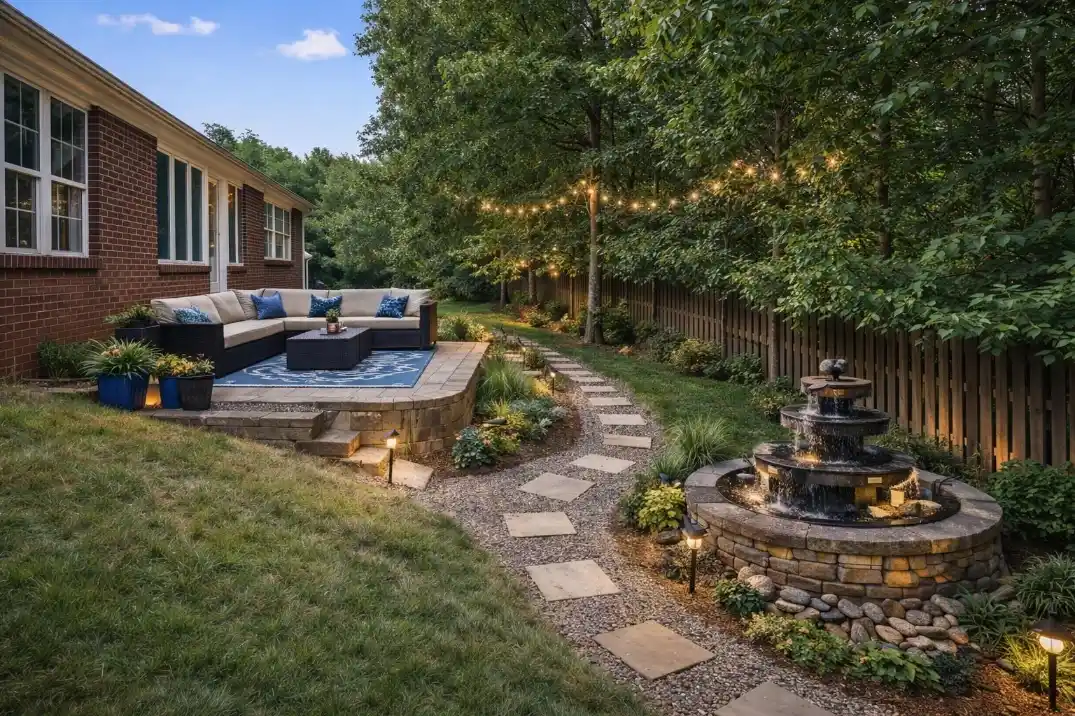
Why Your Sloped Backyard Is More Valuable Than You Think
Before jumping into ideas, it helps to shift how you see the space. Most homeowners view a slope as a problem to fix. Smart landscapers see it as a design feature to work with.
The Real Problems a Slope Creates
Yes, slopes come with real challenges. Knowing what you are dealing with is the first step to fixing it.
Soil erosion is the biggest issue. When it rains, water flows downhill and carries topsoil with it. Over time, this strips your yard bare and can damage your lawn, garden beds, and even your home’s foundation.
Mowing is dangerous on steep slopes. A standard lawn mower was not designed for angles above 15 degrees. Riding mowers can tip, and push mowers require serious effort just to stay on course.
Drainage problems pile up fast. Water that cannot soak in evenly tends to pool at the base of the slope, creating soggy patches, mosquito breeding grounds, and potential flooding near your foundation.
Usable space shrinks. You cannot put a patio, a garden bed, or a play area on a steep incline without some kind of engineering behind it.
What Slopes Can Do That Flat Yards Simply Cannot
Here is the flip side that most people miss completely.
A slope gives your backyard natural elevation change. That means built-in visual drama, layered planting opportunities, and the ability to create distinct “zones” for different activities, without any artificial structure needed.
Water features like dry creek beds and cascading fountains work beautifully on slopes because gravity does the work for you. And when designed correctly, a sloped yard actually drains better than a flat one, because water has somewhere to go.
The key is working with the land instead of against it.
5 Backyard Landscaping Ideas for Sloped Yards That Actually Work
These are not generic suggestions. Each one is backed by real design logic, plant science, and current US cost data.
1. Retaining Wall Terraces: Create Flat, Usable Levels
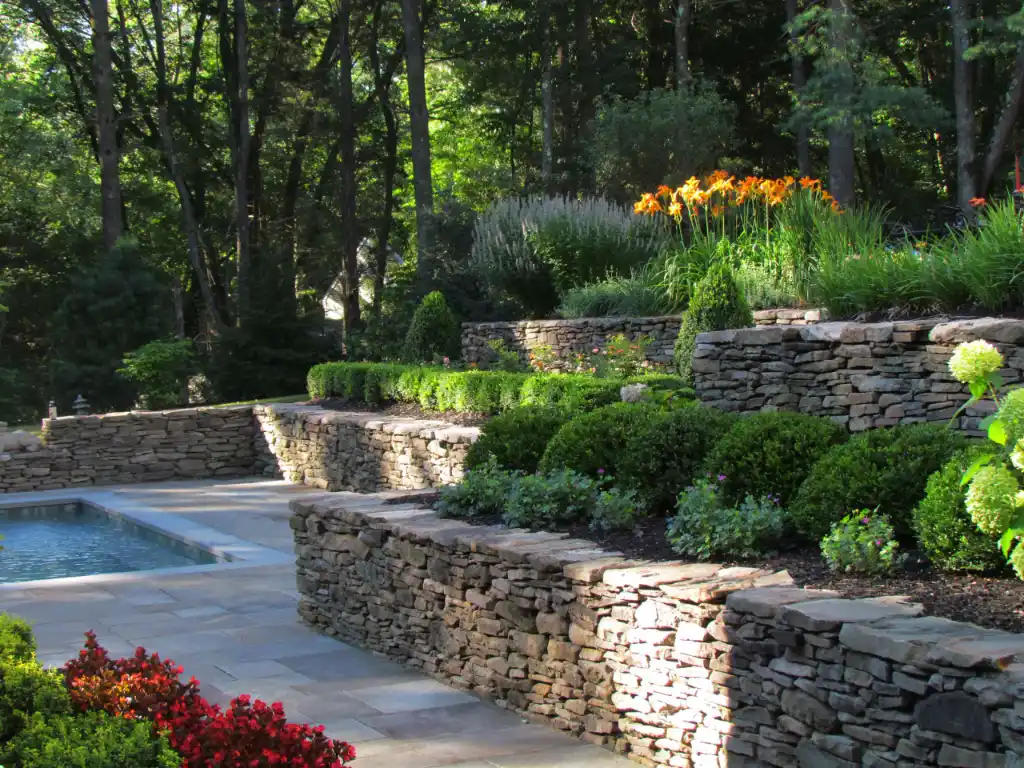
If you want to add living space to a sloped yard, retaining walls are the most effective structural solution available.
A retaining wall holds back soil on one side to create a flat, level area. Stack several of them at different heights and you get a tiered “terrace” effect that transforms an unusable hillside into distinct zones, one for a patio, one for a garden bed, one for lawn play space.
Material options include:
- Natural stone: Highest-end look, blends naturally with the landscape, very durable
- Concrete block (segmental): Most popular choice in the US, handles freeze-thaw cycles well, wide range of colors
- Timber or railroad ties: Budget-friendly, warm look, but shorter lifespan (10 to 15 years)
- Brick: Classic, traditional look, best for formal garden styles
What does it cost?
According to Angi’s 2026 cost data, the average retaining wall project runs between $3,190 and $9,203, with most homeowners spending around $6,078. Per linear foot, expect to pay $40 to $360 depending on wall height and materials.
Do you need a permit?
In most US cities and counties, retaining walls over 4 feet tall require a building permit. And here is something many homeowners miss: if your wall is supporting a sloped yard (which it almost always is), you may need a permit even for shorter walls because of what engineers call “surcharge” loading. Always check with your local building department before you break ground.
DIY or hire a pro?
For walls under 2 feet, confident DIYers can handle the project with the right materials and a weekend of work. For anything taller, or if your yard has drainage issues, hire a licensed landscaping contractor. A poorly built retaining wall can fail within a few seasons, leading to collapsed soil, flooding, and costly repairs.
2. Cascading Water Feature or Dry Creek Bed
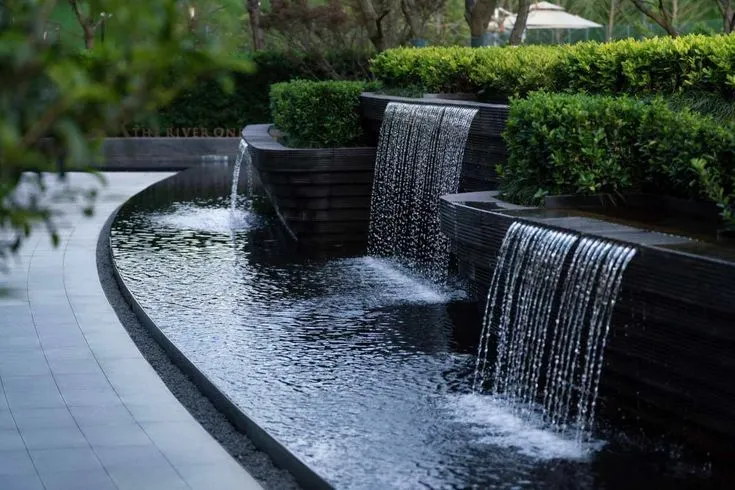
This is one of the most rewarding backyard landscaping ideas for sloped yards because it solves two problems at once: drainage and aesthetics.
A dry creek bed is a channel of decorative rocks and gravel that follows the natural path water would take down your slope. During heavy rain, it channels runoff safely away from your foundation. During dry weather, it looks like a beautiful natural stream winding through your yard.
A cascading water feature takes this one step further by adding a pump and circulating actual water down the slope in a series of small falls or pools. Because the slope already exists, the installation is simpler and more natural-looking than forcing a water feature into a flat yard.
Best for: Yards in the Pacific Northwest, Southeast, or Midwest US where heavy rainfall is a regular issue.
Budget range: A DIY dry creek bed can run $500 to $2,000 in materials. A professionally installed water feature starts around $3,000 and can go much higher depending on complexity.
Pro tip: Use native river rocks and local gravel for the most natural look and to keep costs down. Your local landscape supply yard is a better source than big box stores.
3. Slope-Hugging Ground Cover Instead of Grass
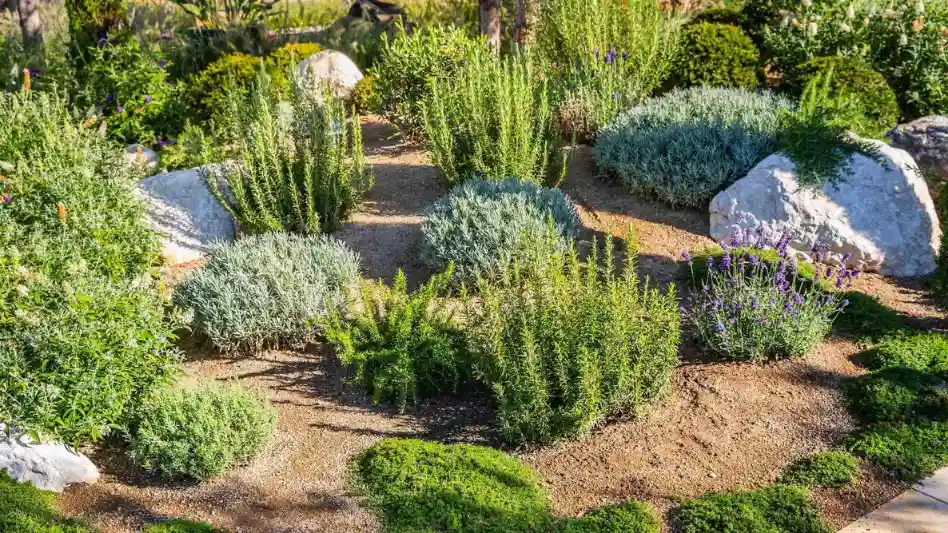
Here is a truth most lawn care guides skip: grass is terrible on steep slopes. It has shallow roots, it erodes easily, and mowing it is a genuine safety risk above 15 to 20 degrees of incline.
Ground cover plants are the smarter, lower-maintenance alternative. The right species spread horizontally to form a dense mat that locks soil in place, requires no mowing, and comes back year after year.
Best ground cover plants for sloped US yards:
- Creeping Phlox (Phlox subulata): Gorgeous spring blooms in pink, purple, and white. Spreads quickly. Hardy in USDA zones 3 to 9. Excellent on sunny slopes.
- Creeping Juniper (Juniperus horizontalis): Native across North America. Dense root system stabilizes dry, sunny slopes. Hardy to zone 4.
- Switchgrass (Panicum virgatum): A native prairie grass with deep roots that reach 3 to 6 feet underground, far deeper than turf grass. Stunning fall color. Zones 5 to 9.
- Buffalo Grass (Bouteloua dactyloides): Native to the Great Plains. Extremely drought-tolerant once established. Roots go 3 to 6 feet deep. Zones 3 to 9.
- Wild Strawberry (Fragaria virginiana): Forms a dense protective mat. Produces edible berries. Tolerates partial shade. Great for gentle to moderate slopes.
One important note: Avoid English ivy and vinca minor (periwinkle) despite their popularity. Both are considered invasive species in many US states and can cause long-term ecological problems.
Budget friendly fact: Seeding native grasses and ground covers costs between $10 and $40 per area on average, making this the most affordable erosion control option on this entire list.
4. Native Hillside Garden
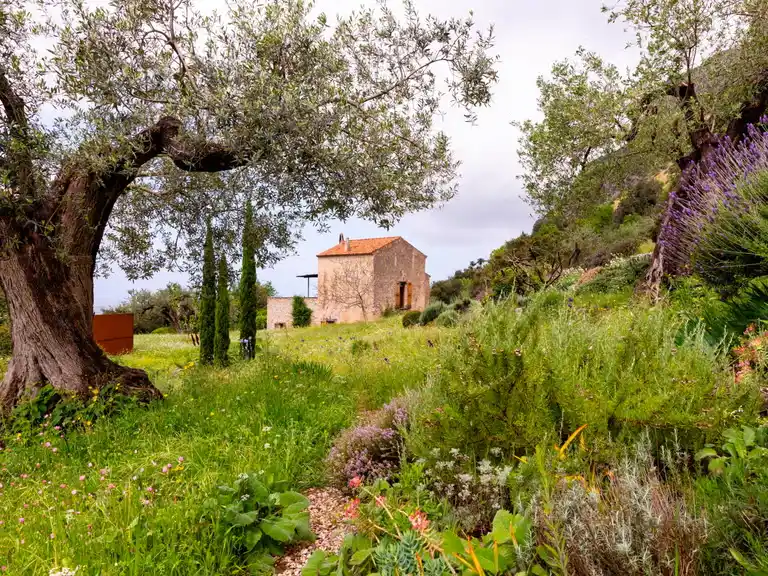
A native hillside garden is exactly what it sounds like: a planted garden bed that follows the natural contour of your slope, filled with plants that are native to your specific US region.
Why native plants? Their root systems evolved over thousands of years to match your local soil type, rainfall pattern, and climate. That means they anchor slopes naturally, require far less watering and fertilizing than non-native species, and support local pollinators like bees and butterflies.
USDA Hardiness Zone picks by region:
- Midwest and Great Plains (Zones 3 to 6): Little bluestem grass, purple coneflower, black-eyed Susan
- Southeast (Zones 7 to 9): River oats, purple lovegrass, wild blue indigo, Virginia sweetspire
- Pacific Northwest (Zones 7 to 9): Red-osier dogwood, serviceberry, kinnikinnick (bearberry)
- Southwest and California (Zones 8 to 11): Deer grass, California fescue, sage species, penstemon
Plant in early fall or early spring when rainfall is naturally higher. This gives roots the best chance to establish before summer heat or winter cold sets in.
Budget range: $300 to $1,500 depending on the size of the slope and plant density. Native plant nurseries are often more affordable than big box garden centers and have far better regional selections.
5. Stone Steps or Winding Pathways
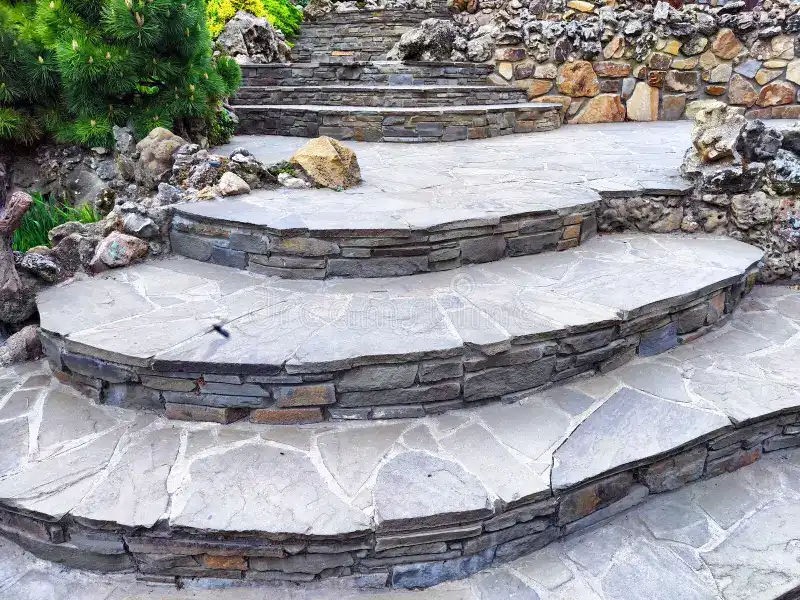
No matter which landscaping idea you choose for your slope, steps or pathways are almost always part of the plan. They solve a practical problem (getting from one level to another safely) while adding serious architectural character to the space.
A winding stone pathway that follows the contour of your slope looks far more natural than a straight staircase cutting directly down the hill. It also encourages slower movement, which gives visitors a chance to actually take in the plants and features around them.
Popular materials for sloped yard steps:
- Flagstone: Natural, irregular edges that look beautiful in cottage or naturalistic garden styles
- Natural fieldstone: Rustic, sturdy, blends into hillside gardens perfectly
- Concrete pavers: Clean, modern look with consistent sizing, very durable
- Gravel paths with timber edging: Budget-friendly and great for gentle slopes
- Railroad ties: Affordable and bold, best for casual backyard styles
Add solar pathway lighting. This is a simple upgrade with a big impact. Solar stake lights along a stone path look stunning at night and improve safety on an uneven surface. No wiring required.
Budget range: $1,000 to $4,000 depending on materials and the length of the path or staircase.
How to Pick the Right Landscaping Idea for Your Slope
The best landscaping idea for your yard depends on three things: your slope grade, your budget, and your US climate zone. Here is how to figure all three out.
Step 1: Measure Your Slope Grade (Takes About 10 Minutes)
You do not need a surveyor or any special equipment. All you need is two wooden stakes, a piece of string, a line level (costs about $3), and a tape measure.
Here is the method, as used by landscapers and soil scientists:
- Push one stake into the ground at the top of the slope.
- Walk to the bottom of the slope and push in the second stake.
- Tie the string from the top stake down to the bottom stake.
- Attach your line level to the string and adjust the string until the bubble sits perfectly centered (meaning the string is level).
- Measure the vertical distance (in inches) from the string down to the ground at the bottom stake. This is your “rise.”
- Measure the horizontal distance (in inches) between the two stakes along the string. This is your “run.”
- Divide rise by run, then multiply by 100. That gives you your slope percentage.
Example: If the string is 18 inches above the ground and the stakes are 120 inches apart: 18 divided by 120 equals 0.15, multiplied by 100 equals a 15% slope.
What your slope percentage means:
| Slope % | What It Means | Best Landscaping Options |
|---|---|---|
| Under 10% | Gentle slope | Most ideas work. Ground cover or native garden is easy. |
| 10% to 25% | Moderate slope | Retaining walls, steps, and ground cover all recommended |
| 25% and above | Steep slope | Professional design strongly recommended before any work |
Step 2: Match Your Budget to the Right Solution
| Landscaping Idea | Approx. US Cost | DIY Friendly? | Best Slope Grade |
|---|---|---|---|
| Native ground cover planting | $200 to $800 | Yes | Gentle to moderate |
| Dry creek bed | $500 to $2,000 | Yes | Moderate |
| Native hillside garden | $300 to $1,500 | Yes | Any grade |
| Stone steps or pathway | $1,000 to $4,000 | Moderate | Any grade |
| Retaining wall terraces | $3,200 to $9,200+ | Hire a pro | Moderate to steep |
Step 3: Factor In Your US Climate Zone
Plant survival depends heavily on your USDA Plant Hardiness Zone. Before purchasing any plants, confirm what zone you are in and match your selections accordingly.
Drainage needs also differ by region:
- Pacific Northwest: Heavy rainfall means drainage engineering is critical. Dry creek beds and French drains are almost always worth investing in.
- Southeast: High humidity and clay-heavy soils mean you need deep-rooted natives and excellent drainage behind any retaining walls.
- Midwest and Plains: Freeze-thaw cycles affect retaining wall material choices. Concrete block outperforms timber in cold winters.
- Southwest and California: Drought-tolerant native plants are essential. Water-wise ground covers like deer grass and California fescue thrive here.
5 Mistakes to Avoid When Landscaping a Sloped Yard
This section alone could save you thousands of dollars and months of frustration.
Mistake 1: Planting turf grass on a steep slope. Standard lawn grass has shallow roots that do almost nothing to hold soil. On slopes above 15 to 20 degrees, grass is also a safety hazard to mow. Switch to deep-rooted ground cover or native plants on any significant incline.
Mistake 2: Skipping drainage planning. Drainage should be the very first thing you think about on a sloped yard, not an afterthought. A beautiful retaining wall built without proper drainage behind it can bow, crack, or collapse within a few seasons. Always plan how water will move through and around your landscaping before you install anything.
Mistake 3: Ignoring permit requirements. Retaining walls over 4 feet, and sometimes shorter walls on slopes, require permits in most US jurisdictions. Building without one can result in fines, forced demolition, and problems when you sell your home. Always check with your local building department before starting.
Mistake 4: Over-engineering a gentle slope. If your slope is under 10%, you probably do not need retaining walls or major earthwork. A well-planted native garden or ground cover planting is enough, and far less expensive. Match the solution to the actual problem.
Mistake 5: Choosing looks over erosion control. A visually stunning planting that does not hold the soil will look like a mudslide after the first heavy rain. Always start with soil stabilization as your first priority, then layer in the beauty around it.
Frequently Asked Questions About Backyard Landscaping Ideas for Sloped Yards
What is the cheapest way to landscape a sloped backyard?
The most budget-friendly option is planting deep-rooted ground cover plants or native grasses. Seeding options like switchgrass or creeping phlox can cover a slope for as little as $200 to $800 in materials, and most are DIY-friendly. A dry creek bed made from local river rocks is another affordable option that also solves drainage problems.
What plants work best on a steep sloped yard?
For steep slopes above 25%, focus on deep-rooted species that anchor soil quickly. Top picks include switchgrass, creeping juniper, little bluestem, red-osier dogwood, and serviceberry. Avoid shallow-rooted plants and standard turfgrass. For very steep slopes, using erosion control blankets as a temporary cover while plants establish is a smart move.
Do I need a permit to build a retaining wall in my backyard?
In most US cities and counties, yes. Retaining walls over 4 feet tall typically require a building permit. If your wall is supporting a slope, a driveway, or a structure, you may need a permit even for shorter walls. Contact your local building department before starting any wall project to avoid fines or forced removal.
How do I stop erosion on a sloped yard fast?
The fastest way to stop erosion is to cover bare soil immediately. In the short term, lay an erosion control blanket or apply a 2 to 3 inch layer of shredded bark mulch to protect the surface from rain impact. Long term, plant deep-rooted native grasses and ground covers that will lock the soil in place permanently.
Can I DIY a sloped backyard landscaping project?
It depends on the slope and the project. Native planting, ground cover installation, dry creek beds, and stone pathways on moderate slopes are all very manageable DIY projects. Retaining walls over 2 feet tall, major regrading, and steep-slope drainage systems are best left to a licensed landscaping professional. Getting professional input upfront, even just a consultation, can save you from expensive DIY mistakes down the line.
Your Slope Is an Asset. Start Treating It Like One.
Here is a quick recap before you head outside and start measuring:
- Assess your slope grade first using the simple stakes-and-string method. This one step shapes every decision that follows.
- Match your solution to your grade and budget. Ground cover and native plants for gentle slopes, retaining walls and professional drainage for steep ones.
- Always plan drainage before anything else. It is the unglamorous step that makes every other investment last.
- Use native plants wherever possible. They stabilize slopes faster, require less maintenance, and support your local ecosystem.
- Check permit requirements before building any retaining wall. It takes one phone call and can save you a very expensive headache.
You do not need a perfectly flat yard to have a beautiful, functional backyard. You just need the right plan for the slope you have.
Ready to get started? Reach out to a local lawn and landscaping professional for a site assessment and take the first step toward a backyard you actually enjoy spending time in.
External Resources Referenced:
- USDA Plant Hardiness Zone Map
- Angi: Retaining Wall Cost Guide 2026
- The Almanac: Best Erosion Control Plants for Slopes
- Nature Hills: Erosion Control Plant Guide
- MySitePlan: Retaining Wall Permit Requirements
- Hunker: How to Measure and Grade Your Yard
- Bright Lane Gardens: Best Plants for Erosion Control
- Garden Design: Hillside Landscaping Ideas
About Author
Khalid Fazal is a seasoned lawn care specialist and horticultural researcher with over 15 years of hands-on experience transforming challenging landscapes into lush, resilient green spaces. His journey didn’t start in a lab, but in a backyard full of stubborn, cracked clay that “experts” said would never grow a healthy blade of grass. Refusing to accept a yard full of dust, Khalid spent years experimenting with organic soil restoration and precise mulching, eventually turning that wasteland into a neighborhood showpiece on a shoestring budget.
From mastering core aeration techniques to optimizing soil pH for specialized turf varieties, Khalid’s approach combines old-school grit with modern agronomic science. He founded Gen Lawn to provide homeowners with honest, research-backed advice that prioritizes long-term soil health over quick-fix chemical solutions. When he isn’t analyzing soil profiles, he’s developing precision tools to help others achieve professional results without the professional price tag.

Lawn Winterizer: When to Apply by Grass & Region [2026]
Table of Contents Home / By Khalid Fazal | Updated:...
Read More
Spring Lawn Care: What to Do and When in Every US Region
Table of Contents Home / By Khalid Fazal | Updated:...
Read More
Lawn Maintenance Checklist by Season and Grass Type (2026)
Table of Contents Home / By Khalid Fazal | Updated:...
Read More
Liquid Fertilizer vs Granular Fertilizer: Which Wins?
Table of Contents Home / By Khalid Fazal | Updated:...
Read More