
Riding Lawn Mower vs Push Mower: Which One Is Actually Right for Your Yard?
You walk into the hardware store and see two price tags that couldn’t be more different. One mower is $350. The other is $2,800. Both cut grass. Both get the job done. But choosing the wrong one means years of unnecessary sweat or thousands of dollars sitting in a garage for a machine that was always too much.
Here is the good news: the right answer is not complicated. It comes down to four things. Your yard size, your terrain, your budget, and how much of your Saturday you want to spend pushing or riding.
By the end of this guide, you will know exactly which mower fits your situation, with real numbers to back it up.
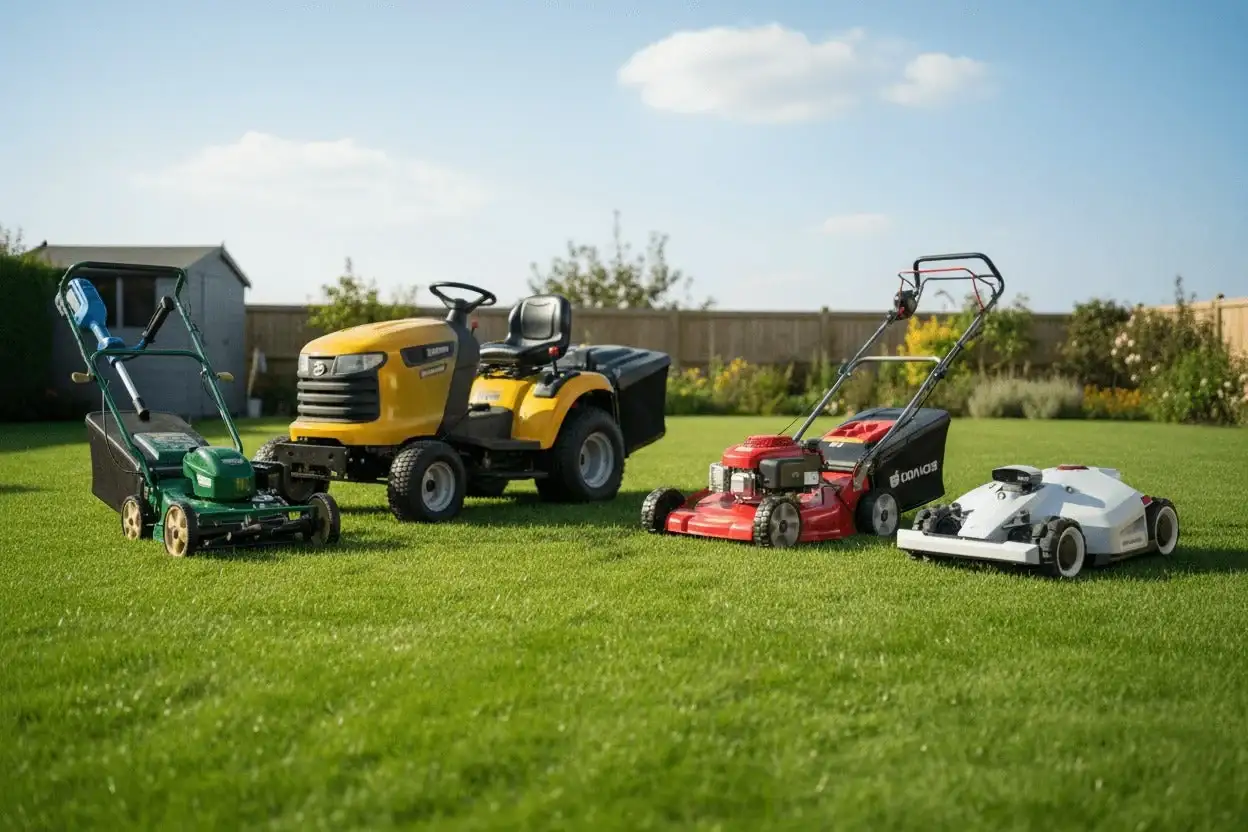
Quick Verdict at a Glance
| Your Yard | Best Option |
|---|---|
| Under 1/4 acre | Push mower |
| 1/4 to 1/2 acre | Self-propelled mower |
| Over 1/2 acre, flat terrain | Riding mower |
| Hilly or obstacle-heavy yard | Push or self-propelled, regardless of size |
Riding Lawn Mower vs Push Mower: What Is Actually Different?
Before picking a side, it helps to understand what each machine actually is and who it was built for.
What a Push Mower Does (and Who It Is For)
A push mower is exactly what the name says. You walk behind it and push it forward. Most gas and battery models have a cutting deck width of around 21 inches, which means you will make more passes across your lawn to cover the same ground as a wider machine.
Push mowers are lightweight, easy to store, and simple to maintain. They are ideal for smaller lawns, yards with tight corners, and properties with obstacles like trees, raised garden beds, and fence lines where precision matters more than raw speed. They also happen to give you a decent workout, which some homeowners genuinely appreciate.
What a Riding Mower Does (and Who It Is For)
A riding mower is a sit-down machine. You drive it across your lawn while the blade deck underneath does the cutting. Most residential riding mowers have cutting decks between 42 and 54 inches wide, which lets them cover significantly more ground per pass.
They come in three main types: lawn tractors with front-mounted engines, zero-turn mowers that pivot in place for tighter turns on large lawns, and rear-engine riders that are more compact and budget-friendly. Riding mowers make large lawns manageable, but they cost more, need more storage space, and require more regular upkeep.
The Option Most Comparison Articles Skip Entirely
Here is something worth knowing before you spend a dollar. The choice between a riding mower and a push mower is not always a binary one. For a large portion of American homeowners, the real answer is neither.
Self-propelled mowers drive themselves forward so you only need to steer. They cover more ground than a basic push mower, handle moderate slopes better, and cost a fraction of a riding mower. If your yard sits between a quarter and half an acre, a self-propelled mower is almost always the smarter buy. Keep that in mind as you read on.
Riding Mower vs Push Mower: Side-by-Side Numbers
| Feature | Push Mower | Self-Propelled | Riding Mower |
|---|---|---|---|
| Average Cost (2026) | $250 to $550 | $400 to $1,000 | $1,800 to $5,000+ |
| Cutting Deck Width | ~21 inches | 21 to 30 inches | 42 to 54 inches |
| Best Yard Size | Under 1/4 acre | 1/4 to 1/2 acre | 1/2 acre and up |
| Time to Mow 1 Acre | 2.5 to 3+ hours | 1.5 to 2 hours | 35 to 45 minutes |
| Annual Maintenance Cost | $45 to $105 | $60 to $150 | $150 to $350 |
| Storage Footprint | Minimal | Minimal | Large (requires garage or shed) |
Yard Size: The Real Dividing Line in the Riding vs Push Mower Decision
Yard size is the single most important factor in this decision. Everything else is secondary.
Under 1/4 Acre: Push Mower Wins, No Contest
If your lawn is under a quarter of an acre (roughly 10,000 square feet), a push mower handles the job easily. You do not need speed when the yard is small. You need control and simplicity.
A battery-powered push mower in the $300 to $500 range is more than enough for a lawn this size. Depending on the shape of your yard and how many obstacles you are working around, it will take somewhere between 20 and 45 minutes to mow. Spending $2,500 on a riding mower for a small suburban lot is genuinely unnecessary. Save the money.
1/4 to 1/2 Acre: The Self-Propelled Sweet Spot
This is where the real decision gets made for most US homeowners. At this yard size, a basic push mower starts to feel like a workout. But a riding mower still feels like more machine than you actually need.
A self-propelled gas or battery mower in the $500 to $900 range covers this ground efficiently, without the storage headache or maintenance cost of a rider. It gives you the control of a walk-behind with far less physical effort. This is the range where most buyers either overspend by jumping straight to a riding mower, or underbuy by sticking with a basic push mower and dreading mowing day every week.
Over 1/2 Acre: Where a Riding Mower Starts Paying for Itself
Once your lawn crosses the half-acre mark, the math shifts in favor of a riding mower in a real and meaningful way. Mowing a full acre with a 19-inch push mower takes upward of two and a half to three hours. A 42-inch riding mower covers that same acre in about 35 to 40 minutes.
That is roughly two hours of your weekend back, every single session throughout mowing season. For properties between half an acre and one acre, an entry-level riding mower in the $1,800 to $2,500 range is a smart investment. For properties larger than one acre, it stops being a luxury and starts being a necessity. If you are in this size range and need model-specific recommendations, GenLawn’s guide to the best lawn mowers for 1-acre properties breaks it down.
Cost Breakdown: What You Will Actually Spend
The sticker price is just the beginning. Here is where most buyers get caught off guard.
Upfront Price Comparison
Based on 2026 pricing data from HomeGuide:
- Basic gas push mower: $250 to $450
- Battery-powered push mower: $250 to $550
- Self-propelled mower: $400 to $1,000
- Entry-level riding mower: $1,800 to $3,000
- Zero-turn mower: $3,000 to $5,000+
Battery push mowers have become the dominant pick for suburban lawns under half an acre in 2026. They are quieter than gas models, require no oil changes, and are far easier to maintain on a day-to-day basis.
The Hidden Costs Most Buyers Never Think About
Here is where riding mower ownership starts to quietly add up. Beyond the purchase price, a riding mower needs:
- Oil changes every 50 hours of use
- Drive belt replacements as they stretch or snap over time
- Blade sharpening one to two times per season
- Fuel or charging costs across every mowing session
- A garage or dedicated shed large enough to store it year-round
- Occasional tire inflation and repair
Push mowers are dramatically simpler. A battery model needs essentially nothing beyond a seasonal blade sharpen. Even a gas push mower keeps maintenance straightforward. For a quick reference on engine oil compatibility, GenLawn’s article on whether car oil works in a lawn mower is worth a look before your first oil change.
Which Mower Is Cheaper to Maintain Over Time?
Annual maintenance for a push mower typically runs between $45 and $105. For a riding mower, expect $150 to $350 per year in maintenance, and that figure does not account for unexpected repairs like carburetor cleaning or deck belt replacements.
Over a 10-year ownership period, that gap can exceed $2,000 in maintenance costs alone. Factor in the purchase price difference and the total cost of owning a riding mower is substantially higher. That does not make riding mowers a bad buy for large lawns. But it is a cost most buyers significantly underestimate going in.
Terrain, Slopes, and Yard Layout
Your yard’s shape and incline matter more than most people realize before they make a purchase.
Hilly Yards: Where Push Mowers Are Safer
This is one of the most underappreciated factors in the entire riding vs push mower debate. Riding mowers carry real physical risk on slopes.
The Occupational Safety and Health Administration (OSHA) recommends against using riding mowers on slopes steeper than 15 degrees. The U.S. Consumer Product Safety Commission (CPSC) estimates that riding mowers cause roughly 35,000 consumer injuries annually in the US, with loss of stability being among the most common causes. On hilly terrain, a walk-behind or self-propelled mower is not just more practical. It is meaningfully safer.
Flat, Open Yards: Where Riding Mowers Deliver Maximum Value
If your property is relatively flat with open stretches and minimal obstacles, a riding mower is at its best. You cover ground quickly, you are comfortable while doing it, and the wider cutting deck means fewer passes from one side of the yard to the other.
Zero-turn mowers take efficiency a step further by pivoting in place at the end of each row, which reduces the time lost to turning. For flat lawns over an acre, they are worth serious consideration.
Tight Spaces, Trees, and Obstacles: The Maneuverability Factor
Push mowers win outright when it comes to tight spots. You can guide them around tree trunks, raised garden beds, fence posts, water spigots, and anything else the yard throws at them.
Riding mowers need more clearance and more space to turn. If your yard has a lot going on, a riding mower will leave uncut patches that require trimming afterward. That extra cleanup time often cancels out a portion of the time savings you expected when you bought the machine.
Time and Physical Effort: The Honest Numbers
Let’s look at actual mowing times, based on real performance data.
How Long Does It Take to Mow With Each Type?
For one full acre of flat, open lawn with minimal obstacles:
- 19-inch push mower: 2.5 to 3+ hours
- Self-propelled mower (21 to 30-inch deck): 1.5 to 2 hours
- 42-inch riding mower: 35 to 40 minutes
- 60-inch zero-turn mower: approximately 20 minutes
For a typical residential lawn between a quarter and half an acre, the gap between push and riding is smaller but still meaningful. If you are mowing a half-acre with a push mower, you are looking at roughly 45 to 90 minutes per session. A riding mower cuts that down to 20 to 35 minutes. Across a full mowing season of 20 to 30 cuts, that adds up to a significant amount of time.
Physical Fitness, Age, and Mobility: When It Goes Beyond Time
Here is something the cost and size comparisons often miss entirely. For older homeowners, those managing joint pain, or anyone dealing with limited mobility, the physical effort of a push mower is not a minor inconvenience. It is a genuine barrier.
For the right person, a riding mower can make the difference between maintaining your own yard comfortably and having to hire it out completely. That is a value that does not appear in any price chart. On the flip side, if you are a younger homeowner on a smaller lot who appreciates a bit of light exercise, mowing with a push mower is a perfectly legitimate way to spend 30 minutes a week outdoors.
Frequently Asked Questions About Riding Lawn Mower vs Push
Is a riding lawn mower worth it for a half-acre yard?
It depends on your yard’s specific layout and how much your time is worth to you. For a flat, open half-acre, a riding mower significantly cuts mowing time and may be worth the investment. For a half-acre with slopes, trees, and tight spots, a high-quality self-propelled mower will often serve you better and cost considerably less upfront.
What is the minimum yard size where a riding mower actually makes sense?
Most lawn care professionals use half an acre as the practical threshold. Below that, the upfront cost, storage requirements, and ongoing maintenance of a riding mower usually outweigh the time savings. Between a quarter and half an acre, a self-propelled mower tends to hit the sweet spot for value and convenience.
Which is cheaper to maintain: a riding or push mower?
Push mowers are significantly cheaper to maintain over time. Annual maintenance for a push mower runs $45 to $105. For a riding mower, expect $150 to $350 per year in scheduled maintenance alone, before factoring in any unexpected repairs. Over ten years, that difference can exceed $2,000.
Can a riding mower handle slopes?
Only on gentle slopes. OSHA recommends against using riding mowers on slopes steeper than 15 degrees due to the risk of tip-over accidents. On steeper terrain, a walk-behind or self-propelled mower is the safer choice. With a walk-behind on a slope, always mow across the incline rather than straight up and down. With a riding mower on a mild slope, mow up and down instead.
How much faster is a riding mower compared to a push mower?
For one acre of open, flat lawn, a 19-inch push mower takes around two and a half to three hours. A 42-inch riding mower covers that same ground in about 35 to 40 minutes. That is a time savings of close to two hours per session, which compounds significantly across an entire mowing season.
About Author
Khalid Fazal is a seasoned lawn care specialist and horticultural researcher with over 15 years of hands-on experience transforming challenging landscapes into lush, resilient green spaces. His journey didn’t start in a lab, but in a backyard full of stubborn, cracked clay that “experts” said would never grow a healthy blade of grass. Refusing to accept a yard full of dust, Khalid spent years experimenting with organic soil restoration and precise mulching, eventually turning that wasteland into a neighborhood showpiece on a shoestring budget.
From mastering core aeration techniques to optimizing soil pH for specialized turf varieties, Khalid’s approach combines old-school grit with modern agronomic science. He founded Gen Lawn to provide homeowners with honest, research-backed advice that prioritizes long-term soil health over quick-fix chemical solutions. When he isn’t analyzing soil profiles, he’s developing precision tools to help others achieve professional results without the professional price tag.

Lawn Winterizer: When to Apply by Grass & Region [2026]
Table of Contents Home / By Khalid Fazal | Updated:...
Read More
Spring Lawn Care: What to Do and When in Every US Region
Table of Contents Home / By Khalid Fazal | Updated:...
Read More
Lawn Maintenance Checklist by Season and Grass Type (2026)
Table of Contents Home / By Khalid Fazal | Updated:...
Read More
Liquid Fertilizer vs Granular Fertilizer: Which Wins?
Table of Contents Home / By Khalid Fazal | Updated:...
Read More