
How Much Does Hydroseeding Cost? (2026 Pricing Guide)
If you’re planning a new lawn, here’s the short answer: hydroseeding costs between $0.07 and $0.26 per square foot, or roughly $650 to $2,200 for a typical residential yard. That’s the number most homeowners are searching for, and it’s a solid starting point for your budget.
Here’s the thing though: your final price depends far more on your yard’s condition, slope, and seed choice than on your zip code. This guide breaks down exactly what pushes your hydroseeding cost up or down, so you can plan a real budget instead of guessing.
Average Hydroseeding Cost in 2026
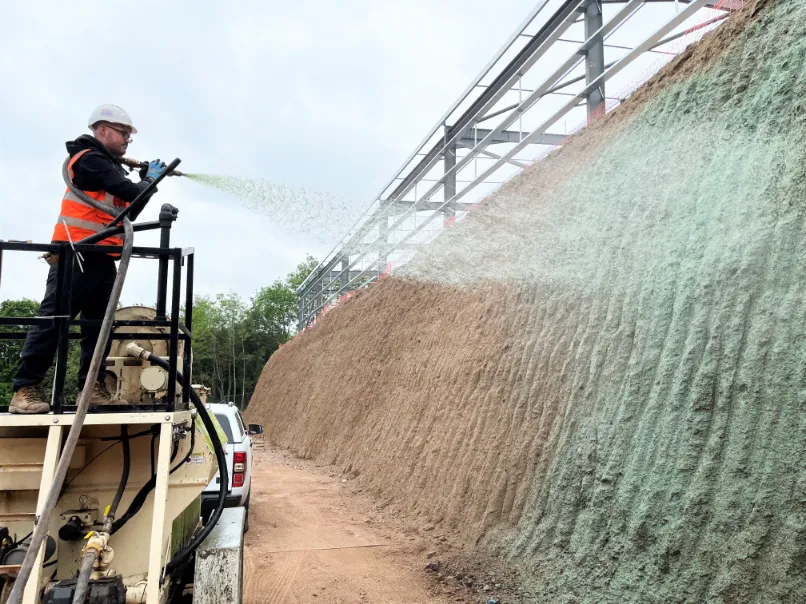
Hydroseeding involves spraying a mixture of grass seed, mulch, fertilizer, and water onto prepared soil to establish a new lawn quickly. According to Angi’s 2026 cost data, the national average hydroseeding cost is $1,500, with most projects landing between $300 and $26,100 depending on size and scope. HomeAdvisor puts the “normal range” at $650 to $2,200 for most homeowners.
| Cost Metric | Typical Range |
|---|---|
| Per square foot | $0.07 to $0.26 |
| Per acre | $2,136 to $8,700 |
| National average total | $1,000 to $1,500 |
| Small job minimum fee | $300 to $500 |
| Labor (if billed hourly) | $37 to $65 per hour |
Here’s why the range is so wide: a small, flat, well-prepped yard sits at the low end. A sloped, poorly graded acreage lot with a premium seed blend sits at the high end. The good news is that your location matters less than you’d think. Most of what drives your hydroseeding cost up or down happens on your own property.
Factors That Affect Hydroseeding Cost
Lawn Size and Square Footage
Bigger jobs generally cost less per square foot because of economies of scale. But very small lawns often run into a minimum service fee, which can make a 1,000 square foot patch cost more per square foot than a full acre. Measure your yard accurately before requesting quotes so you’re comparing apples to apples.
Soil Condition and Prep Work
Poor soil is the single biggest hidden cost in any hydroseeding project. If your soil is compacted, rocky, or nutrient-deficient, seed simply won’t take, no matter how good the seed mix is. A basic soil test costs $10 to $40 and tells you exactly what your soil needs before you spend a dime on seed.
For accurate results, follow a proper sampling method like the one outlined by University of Missouri Extension’s soil testing guide, which explains how to collect samples and interpret pH results. If your soil test comes back with a pH outside the 6.0 to 7.0 range most turfgrasses prefer, you’ll need lime or sulfur amendments before hydroseeding, which adds to your total cost.
Slope and Erosion Control Needs
Yards with a slope above 20 degrees typically need double the seed, fertilizer, and water compared to flat ground, since runoff washes away material before it can take root. This can add $0.05 to $0.10 per square foot, or more, to your hydroseeding cost.
You generally have two options here: reslope the yard first (a service that itself runs $700 to $2,500 according to HomeAdvisor’s resloping cost guide), or accept the higher hydroseeding cost that comes with erosion-control additives. For a deeper look at why slopes erode and how to manage them, University of Delaware Extension’s erosion prevention guide is a genuinely useful read.
Grass Seed Type and Quality
Standard seed blends keep your hydroseeding cost low. Premium, drought-resistant, or shade-tolerant blends cost more per pound but can pay off if your yard has tricky growing conditions. Cool-season grasses like fescue suit northern climates, while warm-season grasses like Bermuda thrive in the South, so picking the wrong type for your region wastes money regardless of price.
DIY vs. Professional Labor
Hiring a pro means the price covers materials, equipment, site prep, application, and often a short warranty. Going the DIY route means renting a hydroseeder yourself, which runs $220 to $500 per day, plus buying seed, mulch, and tackifier separately. If you’re seriously considering the DIY route, LawnStarter’s step-by-step DIY hydroseeding guide walks through the entire process, including the mistakes that turn a cheap DIY job into an expensive redo.
Hydroseeding Cost by Yard Size
Here’s how hydroseeding cost breaks down as your project scales up:
| Yard Size | Square Footage | Average Cost |
|---|---|---|
| Small lawn | Under 5,000 sq ft | $400 to $1,000 |
| Medium lawn | 5,000 to 10,000 sq ft | $800 to $2,000 |
| Half acre | ~21,780 sq ft | $1,300 to $4,400 |
| Large property | 1+ acre | $2,600 to $8,700 |
Is DIY Hydroseeding Actually Cheaper?
On paper, yes. DIY materials and rentals typically run $0.04 to $0.10 per square foot, well below the $0.07 to $0.26 professional rate. But that math only holds up if you get it right the first time.
Uneven application, wrong watering schedules, or poor seed-to-soil contact can turn a $500 DIY job into a $1,500 redo once you factor in wasted materials and a second round of hydroseeding. If your yard is small, flat, and in decent shape, DIY can genuinely save money. If it’s sloped, large, or has compacted soil, the pro’s flat rate is usually the safer bet.
Hydroseeding Cost vs. Sod and Traditional Seeding
This is the comparison almost everyone researching hydroseeding cost eventually runs into. Here’s how the three main lawn-establishment methods stack up:
| Method | Cost Per Sq Ft | Time to Establish | Durability |
|---|---|---|---|
| Traditional seeding | $0.05 to $0.30 (materials) | 6 to 12 weeks | Moderate, uneven coverage risk |
| Hydroseeding | $0.07 to $0.26 | 5 to 8 weeks | Good, more even coverage |
| Sod | $0.35 to $0.85 | Immediate | Excellent, but pricier upfront |
Which Option Saves You More Money Long-Term?
Hydroseeding sits in the middle deliberately. It’s typically about half the cost of sod while establishing faster and more evenly than broadcast seeding. If you’ve already compared these options for your yard, our full breakdown of sod vs. seed walks through the seasonal timing and climate factors that matter most.
If sod is still on your radar despite the higher price tag, our sod installation cost guide covers what you’d actually pay per square foot for a same-day lawn.
How to Lower Your Hydroseeding Cost
A few practical ways to keep your hydroseeding cost down without cutting corners on results:
- Time it right. Fall and spring offer the best natural moisture and mild temperatures, which means less supplemental watering and a higher success rate the first time around.
- Prep the site yourself. Mowing existing growth short, clearing debris, and rough-grading before the crew arrives can shave labor hours off your quote.
- Get three quotes minimum. Pricing varies by contractor even within the same city, so comparing quotes is the fastest way to catch an inflated bid.
- Choose a standard seed blend unless your yard genuinely needs a specialty mix for shade, drought, or heavy traffic.
- Bundle with a neighbor. Some hydroseeding companies offer discounts for servicing multiple adjacent properties in one visit.
- Fix soil problems before you seed, not after. A $30 soil test now beats a second hydroseeding application later.
Frequently Asked Questions About Hydroseeding Cost
How much does hydroseeding cost per acre?
Hydroseeding typically costs $2,136 to $8,700 per acre, with larger properties benefiting from lower per-square-foot rates due to economies of scale. Complex terrain or steep slopes push costs toward the higher end.
Is hydroseeding cheaper than sod?
Yes. Hydroseeding generally runs $0.07 to $0.26 per square foot compared to $0.35 to $0.85 per square foot for sod. Hydroseeding is roughly half the cost of sod, though it takes several weeks longer to fully establish.
How much does hydroseeding cost for a half-acre lawn?
A half-acre lawn (about 21,780 square feet) typically costs $1,300 to $4,400 to hydroseed, depending on soil condition, slope, and seed blend.
Does hydroseeding cost include fertilizer and soil prep?
Basic hydroseeding pricing usually includes seed, mulch, fertilizer, and application labor. Major soil prep work like grading, tilling, or old lawn removal is often billed separately, so confirm this with your contractor before signing anything.
Is DIY hydroseeding actually cheaper than hiring a pro?
DIY materials run $0.04 to $0.10 per square foot, which is cheaper on paper than professional rates of $0.07 to $0.26. However, mistakes in application or watering can require a costly redo, which often erases the savings for anyone without hands-on experience.
Final Thoughts on Hydroseeding Cost
Here’s what to remember before you get quotes:
- Expect to pay $0.07 to $0.26 per square foot, or $650 to $2,200 for a typical yard.
- Soil condition and slope affect your price more than your location does.
- Hydroseeding costs roughly half of sod while establishing faster than traditional seeding.
- A $10 to $40 soil test upfront can prevent a much costlier redo later.
- DIY can save money on small, flat lawns, but pros are usually worth it for larger or sloped properties.
If you’re ready to move forward, get quotes from at least three local hydroseeding contractors and ask each one exactly what’s included in the price, prep work, seed type, and any follow-up care. That’s the single best way to avoid surprise costs once the job starts.
About Author
Khalid Fazal is a seasoned lawn care specialist and horticultural researcher with over 15 years of hands-on experience transforming challenging landscapes into lush, resilient green spaces. His journey didn’t start in a lab, but in a backyard full of stubborn, cracked clay that “experts” said would never grow a healthy blade of grass. Refusing to accept a yard full of dust, Khalid spent years experimenting with organic soil restoration and precise mulching, eventually turning that wasteland into a neighborhood showpiece on a shoestring budget.
From mastering core aeration techniques to optimizing soil pH for specialized turf varieties, Khalid’s approach combines old-school grit with modern agronomic science. He founded Gen Lawn to provide homeowners with honest, research-backed advice that prioritizes long-term soil health over quick-fix chemical solutions. When he isn’t analyzing soil profiles, he’s developing precision tools to help others achieve professional results without the professional price tag.

Lawn Winterizer: When to Apply by Grass & Region [2026]
Table of Contents Home / By Khalid Fazal | Updated:...
Read More
Spring Lawn Care: What to Do and When in Every US Region
Table of Contents Home / By Khalid Fazal | Updated:...
Read More
Lawn Maintenance Checklist by Season and Grass Type (2026)
Table of Contents Home / By Khalid Fazal | Updated:...
Read More
Liquid Fertilizer vs Granular Fertilizer: Which Wins?
Table of Contents Home / By Khalid Fazal | Updated:...
Read More