
Army Worms Grass Damage: How to Identify It, Treat It Fast, and Save Your Lawn
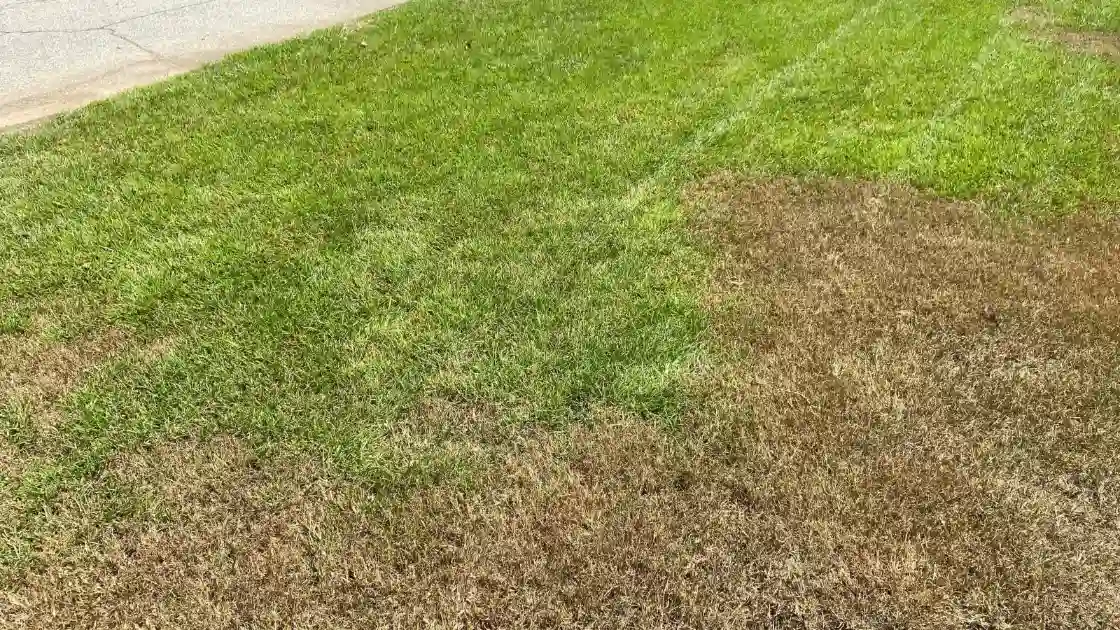
You walk outside on a Tuesday morning to a perfectly green lawn. By Thursday, a third of it is brown, bare, and looks like it hasn’t been watered in weeks.
You check the sprinklers. Fine. You blame the heat. Reasonable. You give it another day.
That day costs you.
What you’re looking at likely isn’t drought. It’s army worms grass damage — and according to Texas A&M AgriLife Extension, a severe infestation can strip your lawn down to bare soil in just two to three days. By the time most homeowners realize what’s happening, the most destructive phase is already underway.
Here’s the good news: army worms grass damage is completely manageable — but only if you move fast. This guide walks you through exactly how to identify it, confirm it in 10 minutes, treat it correctly, and bring your lawn back stronger than before.
Let’s get into it.
What Is Army Worm Grass Damage — And Why Does It Happen So Fast?
They’re Not Worms — Here’s What They Actually Are
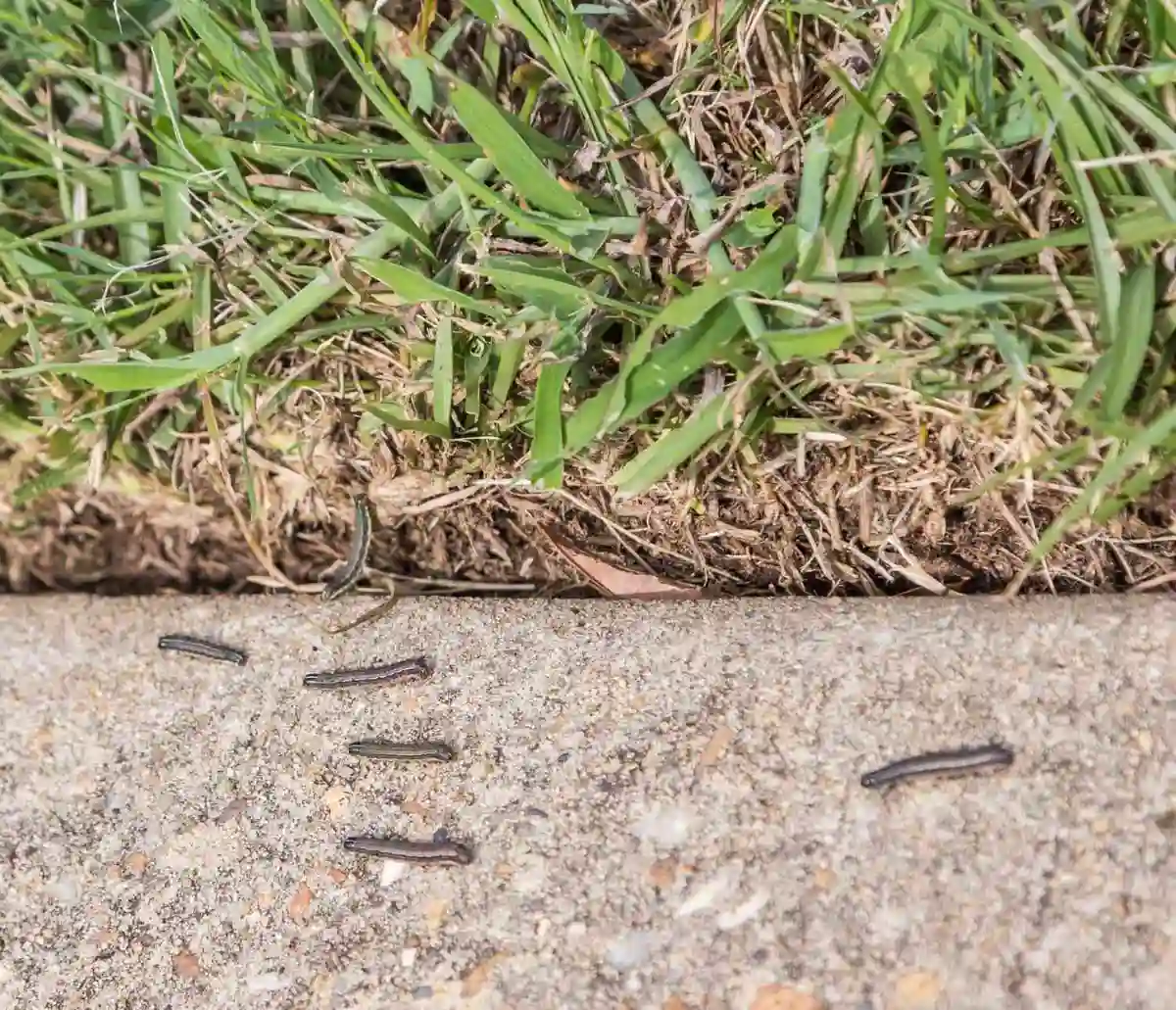
Despite the name, army worms aren’t worms at all. They’re the caterpillar larvae of the moth Spodoptera frugiperda — commonly called the fall armyworm. They get their name from the way they move — marching side by side in large groups, like a battalion sweeping your lawn and consuming everything in their path.
In their larval stage, they grow up to 1.5 inches long. The clearest ID marker is a distinctive upside-down “Y” shape on their head, with green-to-dark-brown striped bodies running down each side.
The Alarming Life Cycle Behind the Rapid Grass Destruction
Here’s why army worm grass damage spreads so fast — and why waiting even 24 hours is a mistake.
A single female moth can lay up to 1,000–2,000 eggs in a single night. Those eggs hatch in just 2–4 days. The larvae then go through a series of growth stages called instars (developmental stages) — and here’s the critical part: over 93% of all foliage consumption happens after the 4th instar, according to Clemson Extension. By the time you see visible damage, you’re already in the final — and most destructive — feeding phase.
There’s one more alarming stat worth knowing: armyworm caterpillars consume more vegetation in their last four days of the larval stage than in their entire prior life combined. That’s how a few patches become half a bare lawn seemingly overnight.
Which Grasses and US Regions Are Most Vulnerable?
Army worm grass damage hits hardest in the Southeast US — from South Carolina down through Florida and across to Texas. But according to Davey Tree, their range has been expanding northward, now reaching as far as Michigan — likely linked to warming climates and storm fronts carrying adult moths north on air currents.
Bermudagrass is the #1 preferred host. They’ll also heavily target:
- Tall fescue and ryegrass (cool-season grasses — at higher risk of permanent damage)
- Bluegrass and buffalograss
- Zoysiagrass and St. Augustine (warm-season — typically recover well)
How to Identify Army Worm Grass Damage on Your Lawn
The 5 Visual Signs of Army Worm Grass Damage
Catching army worm grass damage early is the difference between a quick insecticide treatment and a full lawn reseed. Watch closely for these signs:
- Brown patches that expand daily — drought spreads over weeks; army worm damage can double in size overnight
- “Windowpane” grass blades — blades look transparent or papery where the green layer has been scraped off, leaving only the fibrous skeleton
- Ragged, jagged grass edges — clean cuts mean your mower; torn, chewed edges mean feeding caterpillars
- Green frass near the soil — frass is caterpillar excrement; small green pellets sitting in the turf are a near-certain giveaway
- Sudden spike in bird and wasp activity — flocks of birds or paper wasps hovering over your turf aren’t there by accident — they’re actively hunting the caterpillars below
Army Worm Damage vs. Drought vs. Grubs vs. Brown Patch Fungus
This is exactly where most homeowners waste critical days — misdiagnosis. Here’s how to tell them apart at a glance:
| Problem | Spread Speed | Blade Appearance | Root/Crown Damage? | Best Way to Confirm |
|---|---|---|---|---|
| Army Worm Grass Damage | Days | Ragged, chewed, transparent “windowpane” | No | Soap flush test |
| Drought Stress | Weeks | Folded lengthwise, wilted, tips browning | No | Check soil moisture depth |
| Grub Damage | Weeks | Thinning turf; lawn peels back like a carpet | Yes — roots eaten | Pull back a section of turf |
| Brown Patch Fungus | Days–weeks | Circular rings, matted/sunken center | No | Look for ring or halo pattern |
The 10-Minute Soap Flush Test to Confirm an Infestation
Don’t guess. Confirm first — it takes 10 minutes and costs you nothing.
Mix 2 tablespoons of lemon-scented dish soap into 1 gallon of water and slowly pour it over a 1-square-yard section of the affected turf. Wait 5–10 minutes. If army worms are present, they’ll crawl to the surface to escape the irritant. Per Clemson Extension, look for the inverted “Y” marking on the tops of their heads.
Here’s your action guide based on what you find:
- 0–2 worms per sq ft — monitor closely; treatment may not yet be needed
- 3–4 worms per sq ft — treat now; damage will accelerate
- 6+ worms per sq ft — extreme infestation; act immediately, consider professional help
How to Treat Army Worm Grass Damage — Act Before Day 4
Why Timing Is Everything (The “Day 4 Rule”)
Here’s what most treatment guides skip over: when you treat matters almost as much as what you use.
Because caterpillars consume the bulk of their food in their final four days, catching them during early instars — while they’re still small and haven’t yet hit their explosive feeding phase — gives you the best results with the least product. Older larvae are tougher to kill and have already done the worst of the damage. Alabama Cooperative Extension is clear: treat as soon as you identify an infestation. Do not wait to see if it gets worse.
Best Chemical Treatments (What Actually Works)
Liquid insecticides are strongly preferred over granular for army worms — they coat the blades directly where the caterpillars feed and work significantly faster.
Look for products containing these EPA-registered active ingredients:
- Bifenthrin — fast contact knockdown; widely available at hardware stores
- Permethrin — effective broad-spectrum contact killer
- Lambda-cyhalothrin — powerful pyrethroid; good for larger infestations
- Spinosad — organic-approved biological insecticide; excellent for early instars
- Chlorantraniliprole (Acelepryn) — preventative option applied April–May for season-long protection on high-value turf
Application rules that make or break your treatment:
- Apply in late afternoon or early evening when caterpillars are most actively feeding
- No irrigation or rainfall within 24 hours of application — water washes product off blades before it can work
- Scout again in 7–10 days and reapply if needed; generations can overlap and a second wave is common
Organic & Biological Options
Keeping it chemical-free is completely viable, especially if you catch the infestation early:
- Spinosad — a naturally derived biological insecticide that targets caterpillars with minimal impact on bees and beneficial insects. Most effective on young, early-stage larvae
- Bacillus thuringiensis (Bt) — a naturally occurring soil bacterium that produces proteins toxic to caterpillars when ingested. Best applied at or shortly after hatching
- Soap flush + manual removal — practical and zero-chemical for small or isolated infestations
How to Know If You Need a Professional
DIY works for most homeowners facing light-to-moderate infestations. But call in a professional if:
- You’re consistently finding 6+ worms per square foot across a large lawn area
- Damage is still spreading 48 hours after treatment
- You have newly installed sod — new sod is the army worm’s preferred target and is far more vulnerable than established turf, with less root structure to fuel recovery
Will Your Grass Recover? What Happens After Army Worm Grass Damage
The Good News for Warm-Season Grass Owners
If you have Bermuda, Zoysia, or St. Augustine, take a breath.
Army worms are surface feeders. They chew blades but don’t touch the stolons (above-ground runners) or rhizomes (below-ground runners) — the true regeneration engines of warm-season grass. Per Clemson Extension, established warm-season lawns almost always recover without reseeding. With proper watering and fertilizing, expect noticeable green-up within 2–4 weeks.
Cool-Season Grasses Need More Attention
Fescue, ryegrass, and bluegrass owners need to act with more urgency.
These are tillering grasses — they spread and regenerate through vertical shoots rather than underground runners. When army worms damage the growing tips of these grasses, the recovery path is less straightforward. Virginia Cooperative Extension recommends reseeding severely damaged cool-season areas at 5–6 pounds of seed per 1,000 square feet in mid-September, followed by a slow-release nitrogen fertilizer once new grass reaches about 2 inches tall.
Recovery Steps: Water, Fertilize, and Mow Correctly
Once the infestation is treated, shift your focus entirely to recovery:
- Day 1 after treatment: Apply a starter fertilizer to kick-start new blade growth
- Daily for 2 weeks: Water every morning — never in the evening (evening watering promotes fungal lawn disease)
- Mowing: Follow the one-third rule — never remove more than one-third of the blade at a single cut; this is essential for maintaining photosynthesis during recovery
- Monitor: Scout your lawn every 7–10 days through the end of October; overlapping armyworm generations mean a second wave in the same season is a real risk
How to Prevent Army Worm Grass Damage from Coming Back
Catching an outbreak before it starts is always easier than dealing with the aftermath. Here’s your prevention checklist:
- Scout proactively from July through October — check weekly, especially after heavy rain or tropical storms, which trigger moth egg-laying activity
- Watch for egg masses at night — adult moths lay small, white, fuzzy-looking egg clusters on fences, siding, patio furniture, and outdoor lighting; remove them immediately when spotted
- Reduce thatch buildup — a thick thatch layer above ½ inch gives larvae shelter from both predators and insecticides; dethatch annually if needed
- Aerate every year — core aeration improves water penetration and root depth, directly supporting faster recovery from any turf damage
- Consider a preventative insecticide — Acelepryn (chlorantraniliprole), applied in April or May, offers season-long armyworm protection for high-value turf; consult your lawn care provider for a targeted application plan
One counterintuitive fact worth knowing: army worms actually prefer well-fertilized, lush, maintained grass — it’s their ideal food source. The goal isn’t to stop fertilizing, but to maintain the kind of dense, deep-rooted turf that bounces back fast when they do arrive.
Frequently Asked Questions About Army Worms Grass Damage
How fast does army worm grass damage spread?
Extremely fast. According to Texas A&M AgriLife Extension, a severe infestation of 6 or more worms per square foot can cause significant turf damage in just two to three days. Brown patches that visibly expand on a daily basis — not over weeks — are your clearest warning sign that you’re dealing with army worms, not drought.
What does army worm grass damage look like compared to drought?
Both start as brown patches, but the differences are clear once you know what to look for. Drought damage develops over weeks; army worm damage spreads over days. Drought-stressed grass blades fold inward and wilt; army worm-damaged blades are ragged, torn, and often show a transparent “windowpane” appearance where the green surface has been chewed away. Run the soap flush test to confirm within minutes.
Can army worms kill your lawn permanently?
In most cases, no — especially for warm-season grasses like Bermuda, Zoysia, and St. Augustine. Since army worms only feed on blades and don’t damage roots, stolons, or rhizomes, recovery is very likely with proper watering and fertilizing. Cool-season grasses like tall fescue carry a higher risk and may require reseeding if damage is severe. Newly installed sod is the most vulnerable and can suffer more lasting damage without immediate treatment.
When is army worm season in the US?
Peak army worm season in the US runs from July through October, with August typically being the worst month for outbreaks. In South Florida and South Texas, they can remain active nearly year-round due to mild winters. Outbreak severity is closely tied to rainfall — heavy rain and tropical storm events create the moist, lush conditions moths seek out for egg-laying.
Should I treat army worms myself or call a lawn care professional?
DIY treatment is very effective for light to moderate infestations (3–5 worms per square foot). A liquid insecticide with bifenthrin or spinosad, applied in the late afternoon or evening, handles most cases cleanly. For heavier infestations (6+ per sq ft), large properties, or newly laid sod, a professional lawn care service offers faster coverage, more precise application, and the ability to follow up across overlapping generations.
The Bottom Line
Army worms grass damage is one of the fastest-moving threats your lawn can face — but it’s also one of the most manageable when you catch it early.
Here’s what to take away from this guide:
- Identify fast: Look for daily-expanding brown patches, ragged chewed blades, windowpane grass, and unusual bird activity
- Confirm before you treat: Use the soap flush test — 2 tbsp lemon dish soap per gallon of water over 1 square yard
- Treat at the right time: Evening applications of liquid bifenthrin or spinosad; no irrigation for 24 hours after
- Know your grass type: Warm-season lawns almost always bounce back; cool-season grasses may need reseeding
- Stay ahead next year: Scout weekly July–October, reduce thatch, and consider a spring preventative application
The treatment window is short. Acting on day one beats scrambling on day four every single time.
If your lawn is already showing significant damage, or you’re unsure what you’re dealing with, don’t wait — get an expert on-site before it progresses further. Early intervention is almost always the most cost-effective path.
References & Sources
- Texas A&M AgriLife Extension — Armyworm Management in Lawns
- Clemson HGIC — Armyworms: Identification, Damage & Control in Turfgrass
- Clemson HGIC — Have Armyworms Decimated Your Lawn?
- Virginia Cooperative Extension (Virginia Tech) — Managing Fall Armyworms on Lawns
- Alabama Cooperative Extension — Controlling Fall Armyworms on Lawns and Turf
- Davey Tree — What’s Destroying My Lawn: Fall Armyworm Damage & Control
- EPA — Active Ingredients Used in Pesticide Products
- University of Minnesota Extension — Lawn Thatch
About Author
Khalid Fazal is a seasoned lawn care specialist and horticultural researcher with over 15 years of hands-on experience transforming challenging landscapes into lush, resilient green spaces. His journey didn’t start in a lab, but in a backyard full of stubborn, cracked clay that “experts” said would never grow a healthy blade of grass. Refusing to accept a yard full of dust, Khalid spent years experimenting with organic soil restoration and precise mulching—eventually turning that wasteland into a neighborhood showpiece on a shoestring budget.
From mastering core aeration techniques to optimizing soil pH for specialized turf varieties, Khalid’s approach combines old-school grit with modern agronomic science. He founded Gen Lawn to provide homeowners with honest, research-backed advice that prioritizes long-term soil health over quick-fix chemical solutions. When he isn’t analyzing soil profiles, he’s developing precision tools to help others achieve professional results without the professional price tag.

Lawn Winterizer: When to Apply by Grass & Region [2026]
Table of Contents Home / By Khalid Fazal | Updated:...
Read More
Spring Lawn Care: What to Do and When in Every US Region
Table of Contents Home / By Khalid Fazal | Updated:...
Read More
Lawn Maintenance Checklist by Season and Grass Type (2026)
Table of Contents Home / By Khalid Fazal | Updated:...
Read More
Liquid Fertilizer vs Granular Fertilizer: Which Wins?
Table of Contents Home / By Khalid Fazal | Updated:...
Read More