Best Bagged Mulch for Flower Beds in 2025: Tested Picks + What to Avoid
Most gardeners grab whatever bag is on sale at Home Depot and call it done. That works — until it doesn’t. The wrong mulch can quietly rob your flower bed of nitrogen, turn your siding into a spotted mess from artillery fungus, or create a soggy root rot situation before summer even starts.
Here’s the short answer: the best bagged mulch for flower beds is shredded hardwood or cedar mulch — but the right choice depends on what you’re growing. Annuals, perennials, and raised beds each have a slightly different sweet spot. This guide covers five tested picks, a coverage calculator, what to avoid, and the four mistakes that ruin even the best mulch.
Disclaimer: Gen Lawn is not affiliated with any of the brands or products mentioned in this article, nor do we earn any commission from the links provided. All picks are based on independent research and real user data — nothing else.
What Makes Bagged Mulch Good (or Bad) for Flower Beds?
Not all mulch is created equal, and flower beds have specific needs that a general-purpose mulch might not meet.
The 4 Things That Matter Most
When you’re evaluating bagged mulch for flower beds, run it through these four filters:
- Moisture retention — Mulch should slow evaporation and keep roots consistently hydrated, especially in summer.
- Weed suppression — A proper 2–3 inch layer blocks sunlight from reaching weed seeds in the soil below.
- Soil enrichment — Organic mulches break down over time and feed the soil. Inorganic ones (rubber, gravel) don’t.
- Aesthetic appeal — Mulch color and texture frame your flowers. The wrong choice visually flattens everything you planted.
Organic vs. Inorganic: Which Belongs in a Flower Bed?
| Type | Examples | Soil Benefit | Longevity | Cost |
|---|---|---|---|---|
| Organic | Shredded hardwood, cedar, pine straw |  Improves soil over time Improves soil over time | 1–5 years (varies) | Moderate |
| Inorganic | Rubber mulch, gravel, stone |  No soil benefit No soil benefit | 5–10+ years | Higher upfront |
For flower beds, organic mulch wins every time. Flowers — especially annuals — depend on soil nutrients that organic mulches slowly release as they break down. Inorganic options are better suited for pathways and low-maintenance shrub borders.
The Thing Nobody Tells You About Wood Mulch
Here’s a fact most bag labels skip: wood-based mulch can draw nitrogen from your soil during decomposition. This happens because wood has a high carbon-to-nitrogen ratio. Soil microbes need nitrogen to break down that carbon, so they temporarily pull it from the soil — away from your plants.
For established perennials, it’s barely noticeable. For newly planted annuals or seedlings, it can stunt growth. The fix is simple: apply a light nitrogen fertilizer at planting time, or choose a composted mulch that’s already well-decomposed.
The 5 Best Bagged Mulch Options for Flower Beds
These picks are based on product specs, real verified customer reviews, and testing data from reputable gardening sources.
1. Miracle-Gro Organic All Natural Mulch — Best Overall
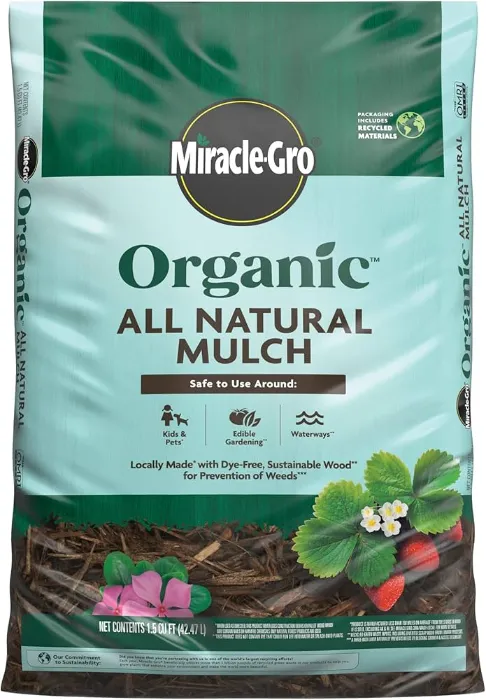
Miracle-Gro’s OMRI-listed organic mulch earns the top spot because it solves most flower bed problems in one bag. It’s certified by the Organic Materials Review Institute (OMRI), meaning it contains no synthetic dyes, no construction wood waste, and no materials that can harm your plants or pets.
Verified buyers on Home Depot consistently highlight that it holds moisture well, suppresses spring weeds, and decomposes into the soil by the following season — improving structure and drainage over time.
Pros:
- OMRI certified — no toxic dyes or synthetic additives
- Natural brown color complements nearly any flower palette
- Safe for pets and children
- Improves soil quality as it breaks down
Cons:
- Smaller bag size (1.5 cu ft) means more bags for larger beds
- Natural color fades over the season (no dye locking)
Best For: Annual and perennial flower beds where soil health matters most. Ideal for organic gardens. Coverage: ~6 sq ft at 3″ depth per bag | Price Range: $6–$8/bag
2. Scotts Nature Scapes Color Enhanced Mulch — Best for Curb Appeal
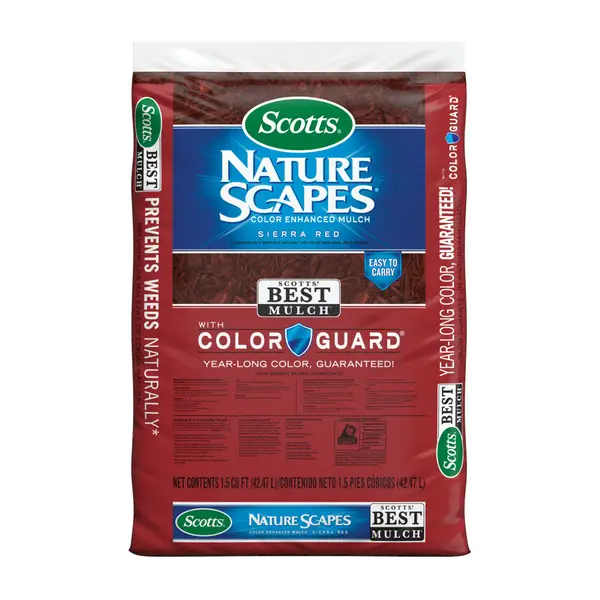
If color longevity is your priority, Scotts Nature Scapes is the pick. It uses proprietary ColorGuard Technology that locks dye into the wood fibers, keeping the color vibrant for significantly longer than standard dyed mulches. It comes in three colors: Forest Brown, Sierra Red, and Classic Black.
Made from reclaimed forest materials (not construction wood or pallets), it’s a cleaner product than many budget brands at this price range.
Pros:
- ColorGuard keeps color rich for seasons, not weeks
- Made from natural forest material — no pallet wood
- Available at most major retailers including Amazon and Lowe’s
- 3-inch layer prevents weed growth effectively
Cons:
- Covers only ~6 sq ft per bag (less than Vigoro)
- More expensive per bag than budget options
Best For: Front yard flower beds and high-visibility landscaping where appearance matters year-round. Coverage: ~6 sq ft at 3″ depth per bag | Price Range: $8–$10/bag
3. Vigoro Premium Brown Wood Mulch — Best Budget Pick
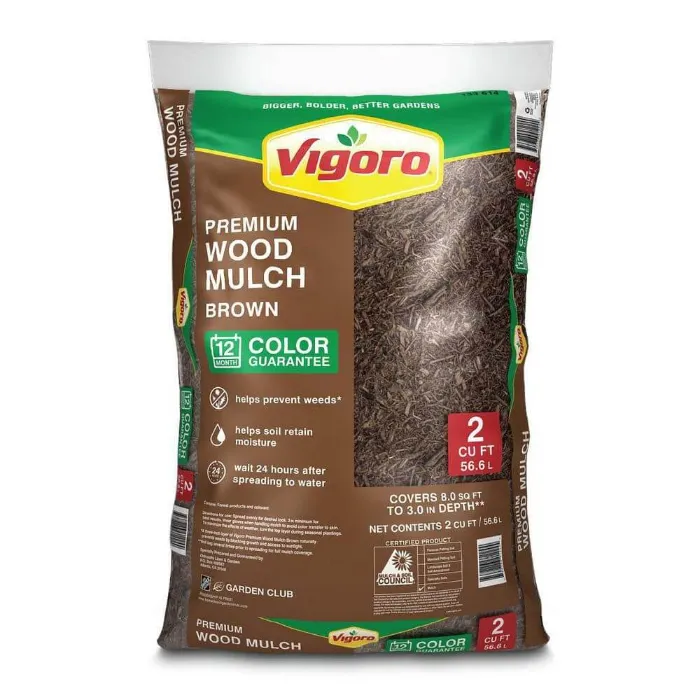
Vigoro’s bagged wood mulch is the Home Depot staple that covers more ground per dollar than most competitors. At 2 cu ft per bag with coverage of roughly 8 sq ft at 3″, it’s the go-to for large flower beds on a budget.
Here’s the honest take: Vigoro delivers solid results when you get a good batch, but real verified reviews flag inconsistency — some bags contain rocks, oversized wood chunks, or occasional mold growth from sitting in humid storage. The fix is to buy mid-season when stock has turned over, not from pallets that have been sitting since winter.
Pros:
- Best coverage per dollar — 8 sq ft per bag at 3″
- Rich brown color works in most landscapes
- Widely available at all Home Depot locations
- Available in brown, black, and red
Cons:
- Quality inconsistency reported in reviews (rocks, mold, large chunks)
- Dyed product — not ideal for certified organic gardens
- Less color longevity than Scotts
Best For: Large flower beds where coverage and value matter more than premium quality. Coverage: ~8 sq ft at 3″ depth per bag | Price Range: $4–$6/bag
4. Cedar Mulch (Shredded) — Best for Perennial Flower Beds
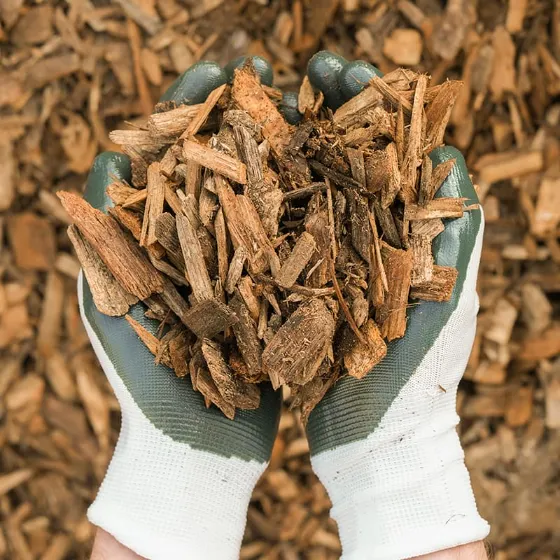
Cedar is the longest-lasting organic mulch you can buy in a bag, and the science backs it up. Cedar wood contains a natural compound called thujaplicin — a bactericidal and fungicidal agent that slows decomposition. Some gardeners go 5+ years without replacing it, compared to the 1–2 year refresh cycle most hardwood mulches need.
Cedar also acts as a natural insect repellent. Its aromatic oils deter ants, termites, and moths without chemical sprays. For perennial beds that you don’t disturb season to season, it’s a standout.
One thing to keep in mind: cedar is slightly acidic, making it best suited for acid-loving perennials like azaleas, hydrangeas, and hostas. Use finely shredded cedar (not wood chips) in flower beds — the lighter texture sits better around delicate stems and spreads more evenly.
Pros:
- Lasts 5+ years due to thujaplicin compound
- Natural insect repellent — no chemical sprays needed
- Excellent moisture retention
- Beautiful reddish-brown color that fades gracefully
Cons:
- Higher price than standard hardwood mulch
- Slight acidity — not ideal for pH-sensitive plants
- Can draw nitrogen during decomposition (less so when finely shredded and aged)
Best For: Established perennial beds with acid-loving plants. Not recommended for annual-heavy or vegetable beds. Coverage: Varies by brand (~6–8 sq ft at 3″) | Price Range: $8–$14/bag
5. CleanStraw Long Leaf Bagged Pine Straw — Best Value for Large Beds
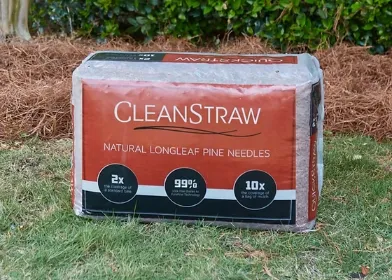
CleanStraw’s pine straw bales offer the best square footage per dollar of anything on this list. One bale covers up to 80 square feet at a 3–4 inch depth — making it ideal for gardeners with large beds who are refreshing mulch annually.
Pine straw also decomposes cleanly into the soil, adding organic matter without the nitrogen-rob issue that wood-based mulches can cause. It’s lightweight, easy to spread, and looks naturally tidy in informal garden beds.
The downside: pine straw can be hard to find outside the Southeast and parts of the Midwest. Check your local Lowe’s or Ace Hardware for stock before planning around it.
Pros:
- Exceptional coverage — 80 sq ft per bale at 3–4″
- No nitrogen-rob issue — decomposes cleaner than wood chips
- Lightweight and easy to spread
- Enriches soil as it breaks down
Cons:
- Availability varies by region — not stocked everywhere
- Can look informal — not ideal for formal, polished garden designs
- Blows around in wind if applied too thin
Best For: Large informal flower beds, budget refreshes, and organic gardens in areas where it’s available. Coverage: ~80 sq ft at 3–4″ per bale | Price Range: $8–$12/bale
How to Choose the Right Mulch for YOUR Flower Bed
The “best overall” pick only matters if it matches what you’re actually growing.
Annual Flower Beds
Annuals like petunias, marigolds, and impatiens are replanted every season, so you’ll be digging into the mulch layer regularly. Use a lighter, faster-decomposing mulch — pine straw or a composted blend — that incorporates into the soil easily without creating a dense mat. Avoid heavy cedar in annual beds; its longevity becomes a drawback when you’re turning soil every spring.
Perennial Flower Beds
Perennials stay put year after year, making them the perfect match for shredded hardwood or cedar. These mulches last without being disturbed, build soil structure over multiple seasons, and their weight keeps them in place through heavy rain and wind. Apply in late spring once soil temperature reaches around 60°F — too early and you’ll trap cold soil and delay emergence.
Raised Flower Beds
Raised beds drain faster, which means moisture retention is more critical. Shredded hardwood or a composted mulch works best. Avoid dense, compacting mulches that can create a crust over the soil surface and block water from penetrating to the roots.
By Climate
- Hot, dry regions (Southwest, Southeast summers): Hardwood mulch with high moisture retention — look for finely shredded material that compacts slightly and holds moisture longer.
- Wet, humid regions (Pacific Northwest, Gulf Coast): Use coarser textures that allow drainage and airflow. Avoid thick applications that hold moisture against stems.
How Much Bagged Mulch Do You Actually Need?
This is where most gardeners either overbuy or run out mid-job. Here’s how to calculate it right.
The 2–3 Inch Rule (And Why Going Deeper Causes Problems)
A 2–3 inch layer is the proven sweet spot for flower beds. It’s deep enough to suppress weeds and retain moisture, but not so deep that it smothers roots, restricts airflow, or creates a habitat for rodents.
Going deeper than 4 inches is counterproductive — it can actually repel water rather than retain it, and creates perfect nesting conditions for voles.
Simple Coverage Formula
Use this to calculate how many bags you need before you head to the store:
(Bed Length ft × Bed Width ft × Depth in inches) ÷ 324 = Cubic yards needed
Then convert to bags using this table:
| Bag Size | At 2″ Depth | At 3″ Depth |
|---|---|---|
| 1.5 cu ft | ~9 sq ft | ~6 sq ft |
| 2 cu ft | ~12 sq ft | ~8 sq ft |
| 3 cu ft | ~18 sq ft | ~12 sq ft |
Example: A 15 ft × 6 ft flower bed = 90 sq ft. At 3″ depth using 2 cu ft bags: 90 ÷ 8 = 12 bags. Always round up by 1–2 bags for edge coverage and uneven depth. You can also use a free mulch calculator for oddly shaped beds.
How Often to Refresh
- Standard hardwood mulch: Top up annually in spring; full replacement every 2–3 years
- Cedar mulch: Can go 3–5 years before replacement is needed
- Pine straw: Annual refresh, but it breaks down into the soil so there’s less to remove
4 Mistakes That Ruin Even the Best Bagged Mulch
1. Volcano Mulching Around Stems and Trunks
Piling mulch against plant stems creates a moist, dark environment that encourages crown rot, fungal disease, and pest activity. Keep mulch 2–3 inches away from plant stems and at least 6 inches from tree trunks. This practice — called volcano mulching — is one of the most common and damaging landscaping mistakes in residential gardens.
2. Applying Mulch Too Early in Spring
A thick layer of mulch applied in early spring insulates cold soil and delays warming — which delays plant emergence. Wait until soil temperature reaches approximately 60°F before mulching. In most US zones, that’s late April to early June. Use a cheap soil thermometer to confirm before spreading.
3. Ignoring the Artillery Fungus Risk
This one gets overlooked until it ruins your siding or car. Artillery fungus (Sphaerobolus stellatus) is a common organism in wood-based mulches that shoots sticky, tar-like spores up to 20 feet — onto walls, windows, and vehicles. It’s notoriously difficult to remove. To minimize the risk: keep wood mulch away from house foundations, avoid placing it near white or light-colored siding, and consider composted or cedar mulch alternatives near structures.
4. Using Rubber Mulch in Flower Beds
Rubber mulch is marketed as low-maintenance and durable — and for playgrounds, it has its place. In flower beds, it’s the wrong call. It adds no nutrients to the soil, may leach chemicals into the soil over time, and creates a heat island around roots in summer. Stick to organic mulch for any bed where you’re growing live plants.
Frequently Asked Questions About the Best Bagged Mulch for Flower Beds
What is the best type of bagged mulch for flower beds?
Shredded hardwood or cedar mulch are the best all-around choices for most flower beds. They retain moisture, suppress weeds, decompose into soil-enriching organic matter, and hold up well through weather. Cedar is the better long-term choice for perennial beds; shredded hardwood is more versatile for mixed annuals and perennials.
How deep should mulch be in a flower bed?
The standard recommendation is 2–3 inches deep. This is enough to suppress weeds and retain moisture without restricting root airflow or repelling water. Don’t go beyond 4 inches, especially near plant stems.
What color mulch looks best in flower beds?
Black mulch creates the strongest contrast and makes any flower color pop — ideal for beds with bright reds, yellows, and whites. Brown mulch gives a natural, organic look. Red mulch pairs well with green foliage-heavy beds. Choose based on what frames your plants rather than what’s trending.
Is dyed bagged mulch safe for plants?
Most commercially dyed mulches use iron oxide (for red/black) or carbon-based dyes (for black) that are generally considered safe for plants. The bigger concern is the base material — dyed mulches sometimes use ground construction wood or pallets, which can contain preservatives harmful to soil. Look for brands that state their material source (natural forest wood, not recycled pallet wood) and avoid bags with ingredients lists you can’t read.
How often should you replace mulch in flower beds?
Plan on a light top-up annually in spring for most organic mulches. Full replacement is typically needed every 2–3 years for standard hardwood mulch as it fully decomposes into the soil. Cedar mulch can last 3–5 years before needing replacement.
The Right Mulch Pays for Itself All Season
Mulching isn’t glamorous, but it’s one of the highest-leverage things you can do for a flower bed. The right bagged mulch cuts down your watering by 25–50%, reduces weeding to almost nothing, and builds better soil every season it breaks down.
Quick recap:
- Best overall: Miracle-Gro Organic All Natural Mulch — clean, certified, safe for everything
- Best for curb appeal: Scotts Nature Scapes — stays vibrant season after season
- Best budget: Vigoro Premium Brown — buy mid-season for better quality batches
- Best for perennials: Cedar Mulch (shredded) — lasts 5+ years, repels insects naturally
- Best value for large beds: CleanStraw Pine Straw — 80 sq ft per bale
Measure your beds, use the coverage table, and add one bag to whatever you calculate. The one season you run short mid-job is the one you’ll remember. Get your mulch down before the heat arrives, keep it off the stems, and your flower beds will handle the rest.
References & Further Reading
- Penn State Extension — Artillery Fungus in Landscape Mulch
- OMRI (Organic Materials Review Institute) — Product Certification
- University of Minnesota Extension — Using Mulch to Suppress Weeds
- Michigan State University Extension — Stop Volcano Mulching Trees
- Penn State Extension — Carbon to Nitrogen Ratio in Mulch
- Epic Gardening — Cedar Mulch: Science and Uses
- BobVila.com — Best Mulch for Landscaping Beds
- Royal Horticultural Society — Mulches and Mulching
- Mulch Calculator — Calculator.net
About Author
Khalid Fazal is a seasoned lawn care specialist and horticultural researcher with over 15 years of hands-on experience transforming challenging landscapes into lush, resilient green spaces. His journey didn’t start in a lab, but in a backyard full of stubborn, cracked clay that “experts” said would never grow a healthy blade of grass. Refusing to accept a yard full of dust, Khalid spent years experimenting with organic soil restoration and precise mulching—eventually turning that wasteland into a neighborhood showpiece on a shoestring budget.
From mastering core aeration techniques to optimizing soil pH for specialized turf varieties, Khalid’s approach combines old-school grit with modern agronomic science. He founded Gen Lawn to provide homeowners with honest, research-backed advice that prioritizes long-term soil health over quick-fix chemical solutions. When he isn’t analyzing soil profiles, he’s developing precision tools to help others achieve professional results without the professional price tag.

Lawn Winterizer: When to Apply by Grass & Region [2026]
Table of Contents Home / By Khalid Fazal | Updated:...
Read More
Spring Lawn Care: What to Do and When in Every US Region
Table of Contents Home / By Khalid Fazal | Updated:...
Read More
Lawn Maintenance Checklist by Season and Grass Type (2026)
Table of Contents Home / By Khalid Fazal | Updated:...
Read More
Liquid Fertilizer vs Granular Fertilizer: Which Wins?
Table of Contents Home / By Khalid Fazal | Updated:...
Read More