
Best Grass Seed for Georgia Shade: The One Decision That Changes Everything
You’ve seeded twice. Maybe three times. You bought the bag that said “shade tolerant,” followed the instructions on the back, and waited. By July, you were staring at bare dirt again.
Here’s the thing — the grass probably wasn’t the problem. You just picked the wrong one for Georgia.
Shade grass in Georgia is not a one-size-fits-all situation. The same variety that thrives under oaks in Alpharetta will die under pines in Valdosta. And before any seed you choose even has a chance, there’s a soil problem that almost no one talks about — one that kills more Georgia lawns than shade ever will.
This guide covers everything: the right grass for your shade level, your region of the state, and your willingness to maintain it. We’re pulling directly from UGA Cooperative Extension research and turfgrass data — not generic seed-bag marketing.
Why Most Shade Grass Fails in Georgia (It’s Not Just the Shade)
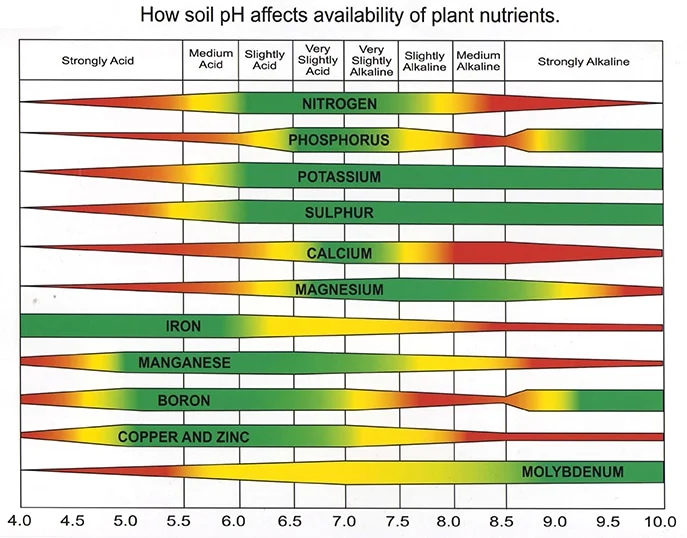
The Soil pH Problem Nobody Warns You About
Before you buy a single bag of seed, pull a soil sample.
Most Georgia soils test between pH 4.0 and 5.0. Grass needs a pH of 6.0 to 7.0 to absorb nutrients properly. That gap is the reason fertilized, watered, well-seeded Georgia lawns still die — the grass literally cannot feed itself.
UGA Lincoln County Extension puts it plainly: “Fertilizing without correct pH is a waste of your money.” Fix the pH first, then seed. Not the other way around.
A soil test through your county UGA Extension office costs $10. It tells you your exact pH, nutrient levels, and how much lime to apply. After applying lime, wait 4–6 weeks before seeding to let the soil chemistry stabilise.
This single step separates successful Georgia lawns from expensive, repeated failures.
How Much Sun Does Your Shaded Spot Actually Get?
Walk outside at 9 AM and check the spot again at noon and 3 PM. Count how many hours direct sunlight actually touches the ground — not the canopy, the ground.
According to UGA Extension’s Lawns in Georgia guide (Bulletin B1533-1), the minimum thresholds are:
- Cool-season grasses (tall fescue, fine fescue): minimum 4 hours of direct or filtered sunlight
- Warm-season grasses (Zoysia, St. Augustine, Centipede): minimum 6–8 hours of direct sunlight
Under 4 hours? No grass will consistently thrive. We’ll cover the honest alternatives at the end of this guide.
Georgia’s Humidity Plus Shade Equals Disease Pressure
Here’s something most shade grass articles skip entirely.
Shade traps moisture inside the grass canopy. In Georgia’s humid subtropical climate, that combination is a perfect breeding ground for fungal diseases like brown patch, dollar spot, and large patch. UGA Extension’s Ten Steps to a Healthier Home Lawn specifically recommends reducing fertiliser by 20 to 50 percent in shaded areas compared to full-sun applications.
Mow slightly higher in shade too. More leaf surface means more photosynthesis for a grass already starved of light — and better air circulation reduces disease risk.
Best Grass Seed for Georgia Shade — Ranked by What Actually Works
The picks below are divided by region. Georgia’s climate changes significantly from the mountains to the coast — what works in Marietta does not automatically work in Macon.
1. Tall Fescue — Best Overall Shade Grass for North and Central Georgia
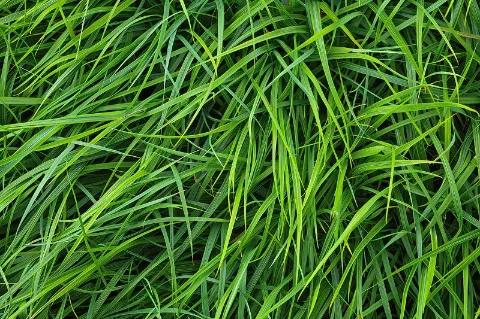
Sunlight needed: 4 hours minimum | Best region: North Georgia, Piedmont | Available as seed: Yes
Tall fescue is the go-to shade grass for most of Georgia — and for good reason. It has the lowest minimum sunlight requirement of any commonly available grass, stays green through Georgia’s mild winters when warm-season grasses go brown and dormant, and establishes reliably from seed.
According to UGA Extension, tall fescue is best adapted to Georgia’s Piedmont region. Its practical southern boundary is around Griffin, Georgia, though it can survive further south in protected, shaded microclimates.
One critical thing: skip Kentucky 31 (KY-31). It was originally bred as a forage and erosion-control grass, not a home lawn. UGA explicitly recommends turf-type tall fescue cultivars for residential use — they have finer leaf blades, darker color, denser canopy, and better shade tolerance than KY-31. Look for blends containing varieties like Titan RX, Rebel Supreme, or Pennington’s The Rebels.
UGA’s own breeding program has also produced Georgia-adapted cultivars — ‘Southeast’, ‘Tenacity’, and ‘Bulldog 51’ — developed specifically for Georgia’s acidic clay soils and built for better drought and heat persistence.
The honest downside: tall fescue is a bunch-type grass, meaning it does not spread and fill in bare spots on its own. Plan to overseed every 2–3 years. October is the confirmed optimal seeding window according to UGA Fulton County Extension.
2. Fine Fescue — Best for Deep Shade in North Georgia
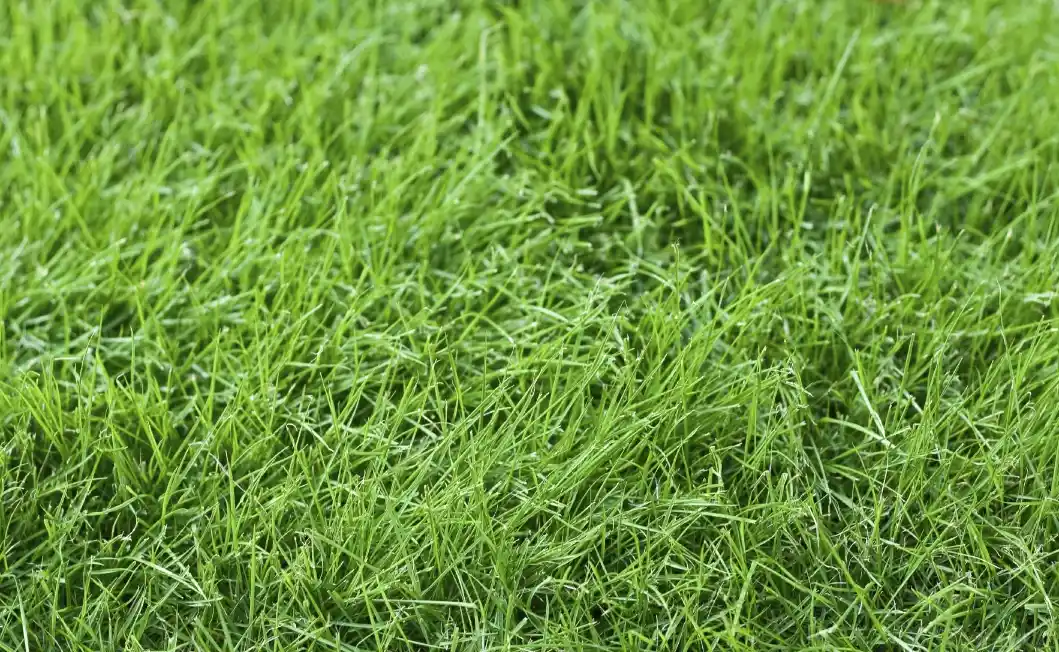
Sunlight needed: 3–4 hours | Best region: North Georgia | Available as seed: Yes (usually blended)
If your shaded area gets less than 4 hours of direct sun and tall fescue is still struggling, fine fescue is the next step down in light requirement. Creeping red fescue, hard fescue, and sheep’s fescue are the three most common types — each slightly different in texture, spread habit, and heat tolerance.
Fine fescues are rarely sold as standalone products in Georgia because of the state’s summer heat. You will typically find them blended into shade mixes alongside tall fescue. That blend approach works well — the fine fescue handles the darkest corners while the tall fescue covers the transitional areas.
Low fertiliser needs, low mowing frequency, and solid disease tolerance make fine fescue the lowest-maintenance cool-season option. Just understand it is not suited for South Georgia summers.
3. Zeon Zoysia — Best Warm-Season Shade Grass for Central and South Georgia
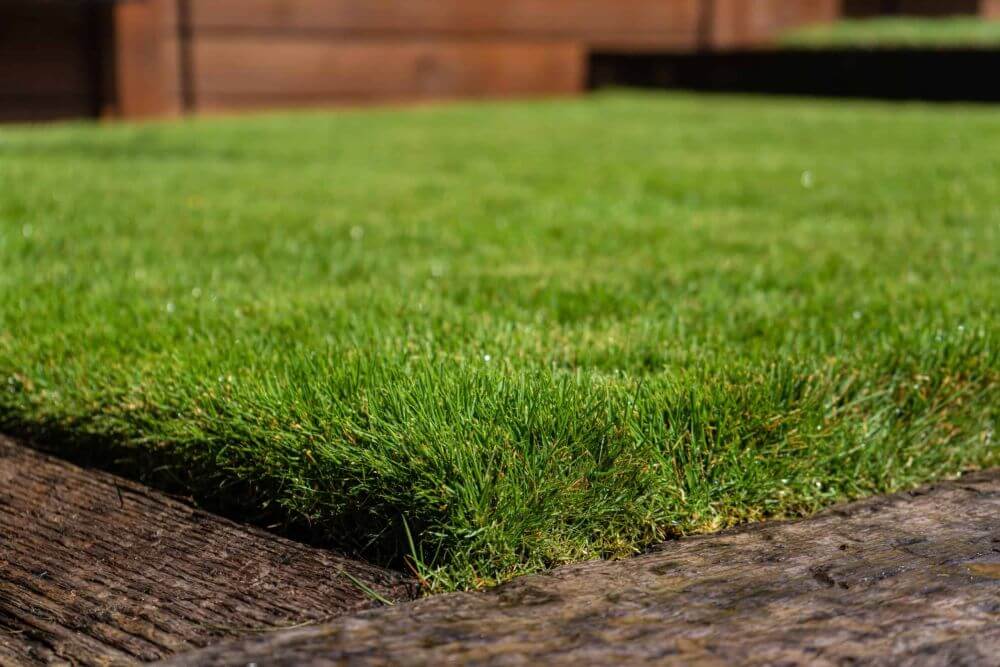
Sunlight needed: 4–5 hours | Best region: Central to South Georgia | Available as seed: No — sod or plugs only
Zoysiagrass is the most shade-tolerant warm-season grass you can establish in Georgia, and Zeon Zoysia leads that category. According to Super-Sod’s Georgia shade guide, Zeon requires only 4–5 hours of direct daily sunlight — the lowest threshold of any warm-season variety.
It forms a dense, carpet-like turf that naturally crowds out weeds, handles Georgia’s heat without flinching, and requires significantly less fertiliser than Bermuda grass. It also stays green later into fall and greens up earlier in spring than most Zoysia varieties.
The trade-off is establishment time and cost. Zeon is not available as seed — you will need sod or plugs. Installation windows are late spring through fall when the grass is actively growing. Expect 1–2 full seasons before it fully fills in.
Emerald Zoysia is another excellent shade option, though UGA notes it carries higher winter injury risk north of Atlanta. Palisades Zoysia offers slightly wider geographic range and good shade performance — a solid alternative for the Metro Atlanta area and surrounding counties.
4. St. Augustine — Best for Moderate Shade in Coastal and South Georgia
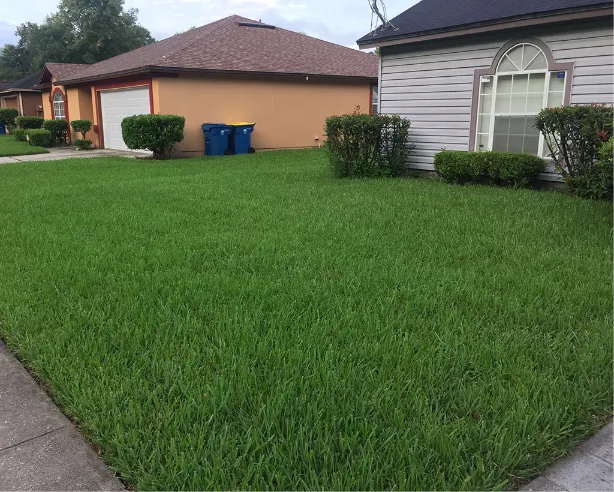
Sunlight needed: 5–6 hours (indirect) | Best region: Coastal and South Georgia | Available as seed: No — plugs or sod only
St. Augustine grass holds the title of most shade-tolerant warm-season grass overall. It thrives in the heat and humidity of coastal and South Georgia and recovers quickly once established.
In Georgia, two cultivars are your best bet. Palmetto and Raleigh are both adapted to the Coastal Plain and Piedmont regions and can survive on five to six hours of indirect sunlight daily. St. Augustine spreads aggressively through above-ground runners called stolons, which means it fills in bare areas faster than Zoysia.
The caveats: St. Augustine is only available as plugs or sod — not seed. It is also sensitive to unusually cold Georgia winters, which can slow spring recovery significantly north of Macon. And it requires more water than most warm-season options during Georgia’s dry spells.
For homeowners in Savannah, Brunswick, or anywhere along the Georgia coast dealing with shade under live oaks or mixed canopy — St. Augustine is the strongest warm-season choice available.
5. Centipede — Moderate Shade Only, South Georgia and Coastal Plain
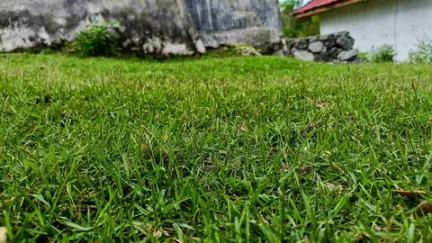
Sunlight needed: 6–7 hours | Best region: South Georgia, Coastal Plain | Available as seed: Yes
Centipede grass is often marketed as shade-tolerant, and in Georgia’s warm-season grass world, it does better in partial shade than Bermuda. But “partial shade” here means 6–7 hours of direct sun — not what most people picture when they think of a shaded yard.
Centipede earns its nickname “lazy man’s grass” through genuinely low input requirements. It thrives in the acidic, sandy soils common across South Georgia and the Coastal Plain, needs far less nitrogen than Bermuda or Zoysia, and grows slowly enough that mowing is infrequent.
What it is not: a deep shade solution. If your shaded area is under heavy tree cover with under 5 hours of sun, centipede will thin and struggle. It is best reserved for lightly dappled conditions — the edge of a tree’s shadow, not the centre of it.
Side-by-Side Comparison: Best Grass Seed for Georgia Shade
| Grass Type | Min. Sunlight | Best Georgia Region | Available as Seed? | Maintenance |
|---|---|---|---|---|
| Tall Fescue (turf-type) | 4 hrs | North / Piedmont | Yes | Medium |
| Fine Fescue (blended) | 3–4 hrs | North Georgia | Yes (blend) | Low |
| Zeon Zoysia | 4–5 hrs | Central to South |  Sod/Plugs Sod/Plugs | Low–Medium |
| St. Augustine (Palmetto) | 5–6 hrs indirect | Coastal / South | Sod/Plugs | Medium |
| Centipede | 6–7 hrs | South Georgia | Yes | Very Low |
| Bermuda | 8+ hrs | Statewide (full sun) | Yes | High |
Note: Bermuda grass is included for reference only — it performs poorly in shade and is not recommended for shaded areas.
When to Plant and How to Set Up for Success
Planting Windows by Grass Type
Timing is more critical in shade than in full sun. Seedlings need maximum establishment time before facing summer heat stress or winter dormancy.
- Tall fescue and fine fescue: Plant in October. This is the UGA-confirmed optimal window. Fall planting gives cool-season grass a full season of mild temperatures to develop a root system before Georgia’s summer hits.
- Zoysia and St. Augustine (sod/plugs): Install between May and August when warm-season grasses are in active growth. Warm soil accelerates root establishment.
- Centipede (seed): Late spring — April to June — once soil temperatures consistently reach 70°F.
The Soil Prep Steps That Actually Matter in Shade
Skipping these steps is why most Georgia shade lawns fail within the first season.
- Get a soil test. Order one from UGA’s Soil Testing Laboratory for $10. You will get exact pH, nutrient levels, and lime recommendations for your specific soil.
- Apply lime if pH is below 6.0. Wait 4–6 weeks before seeding to allow pH to stabilise. Dolomitic lime is the most common recommendation for Georgia soils.
- Aerate compacted soil. Georgia clay is notoriously compacted, especially in shaded areas with heavy root competition from trees. Core aeration opens channels for seed-to-soil contact and root penetration.
- Seed at the correct rate. Do not over-seed — crowding reduces germination rates. Follow the rate on the bag for the square footage of your area.
- Water daily for 30 days. UGA confirms this establishment window. Keep the top inch of soil consistently moist without waterlogging. In shade, evaporation is slower — be careful not to overwater, which invites fungal disease.
Shade Grass Maintenance Is Different — Here Is What Changes
Once established, shade grass needs a different management approach than full-sun turf.
Mow higher. Raise your mowing height by half an inch above the standard recommendation for your grass type. More leaf surface area means more photosynthesis — critical for grass competing with tree roots for resources. UGA recommends tall fescue be mowed to 2–3 inches; in shade, push toward the higher end.
Cut fertiliser significantly. UGA’s official guidance: reduce fertiliser applications by 20 to 50 percent in shaded areas compared to full-sun lawn sections. Over-fertilising in shade produces soft, lush growth that is highly vulnerable to fungal disease.
Watch for disease early. Learn to recognise brown patch, large patch, and dollar spot — all are common in Georgia shade. Early signs include circular browning patches and a water-soaked appearance in the morning. Treat with a fungicide labelled for your grass type at first sign.
Thin tree canopies where possible. Hiring an ISA-certified arborist to remove lower branches — a technique called crown raising — can increase light reaching the ground significantly without harming the tree. Even one to two more hours of filtered light can be the difference between a thriving shade lawn and a permanent bare patch.
When No Grass Will Work — And What to Do Instead
Under 4 hours of direct sunlight per day, even the most shade-tolerant grasses will struggle to maintain density. UGA Extension is direct on this: some areas are better served by alternatives than by repeated failed grass attempts.
Consider these options for truly dense shade:
- Mondo grass (Ophiopogon japonicus) — a low, grass-like groundcover that handles deep shade well and needs almost no maintenance
- Liriope (monkey grass) — tough, adaptable, and available in a range of sizes; one of the most reliable shade groundcovers in the Southeast
- Native ferns — Georgia has several native fern species that thrive under tree canopies with minimal care
- Hardscape: For high-traffic shade zones, consider decomposed granite paths, flagstone, or pine straw mulch — far more cost-effective than repeated failed seeding
Frequently Asked Questions About Grass Seed for Georgia Shade
What is the most shade-tolerant grass seed available for Georgia?
Fine fescue blends have the highest shade tolerance of any seed option available in Georgia — performing in as little as 3–4 hours of filtered sunlight. Among warm-season grasses, Zeon Zoysia requires the least light at 4–5 hours, though it is only available as sod or plugs, not seed.
Can Bermuda grass grow in shade in Georgia?
No — not effectively. Bermuda requires a minimum of 8 hours of direct sunlight to maintain density and perform well. In shaded conditions, it thins rapidly, becomes weed-prone, and dies back under tree canopies. If your yard has shade, Bermuda is the wrong grass to choose, regardless of how popular it is statewide.
Is tall fescue a good choice for shady lawns in South Georgia?
Only in very limited situations. UGA Extension places tall fescue’s southern adaptation boundary around Griffin, Georgia. In South Georgia’s heat, it tends to struggle badly through summer — even in shade. South Georgia homeowners are better served by Zeon Zoysia or St. Augustine for shaded areas.
What grass grows best under pine trees in Georgia?
Pine trees create dense shade and drop acidic needles that further lower soil pH. Tall fescue or fine fescue blends are the best seed options under pines in North Georgia — but you must test and correct soil pH first, as pine needle accumulation accelerates acidification. Under dense pine canopy in South Georgia, consider groundcovers rather than grass.
When is the best time to plant shade grass seed in Georgia?
October is the optimal window for all cool-season grass seed — tall fescue and fine fescue blends. This allows maximum establishment time before summer heat. For warm-season sod (Zoysia, St. Augustine), target May through August. Planting outside these windows significantly reduces germination success and first-season survival.
Before You Buy That Bag of Seed
Here is the short version of everything above:
- North Georgia shade (4+ hours of sun): Turf-type tall fescue, seeded in October
- North Georgia deep shade (3–4 hours): Fine fescue blend, seeded in October
- Central to South Georgia shade (4–5 hours): Zeon Zoysia, installed as sod May–August
- Coastal and South Georgia moderate shade (5–6 hours): St. Augustine (Palmetto or Raleigh), plugs or sod
- South Georgia lightly dappled shade (6–7 hours): Centipede grass
- Under 4 hours of sun, anywhere in Georgia: Skip grass — use mondo grass, liriope, or mulch
The single most important $10 you’ll spend on your lawn is a UGA soil test before you seed anything. If the pH is wrong, it does not matter which grass you choose — it will fail.
For additional Georgia-specific lawn guidance, visit GeorgiaTurf.com — the University of Georgia’s official turfgrass resource — or contact your local UGA County Extension office for a free site visit.
References and Sources
- UGA Extension: Lawns in Georgia — Selection and Species, Bulletin B1533-1
- UGA Extension: Ten Steps to a Healthier Home Lawn, Circular C1009
- UGA Lincoln County Extension: Options for When Your Lawn Won’t Grow
- UGA Fulton County Extension: Monthly Lawn Care Updates
- GeorgiaTurf.com — UGA Turfgrass Science
- Super-Sod: Best Shade-Tolerant Grasses for Georgia
- LawnStarter: Best Grass for Shade in Georgia
- UGA Soil Testing Laboratory
About Author
Khalid Fazal is a seasoned lawn care specialist and horticultural researcher with over 15 years of hands-on experience transforming challenging landscapes into lush, resilient green spaces. His journey didn’t start in a lab, but in a backyard full of stubborn, cracked clay that “experts” said would never grow a healthy blade of grass. Refusing to accept a yard full of dust, Khalid spent years experimenting with organic soil restoration and precise mulching—eventually turning that wasteland into a neighborhood showpiece on a shoestring budget.
From mastering core aeration techniques to optimizing soil pH for specialized turf varieties, Khalid’s approach combines old-school grit with modern agronomic science. He founded Gen Lawn to provide homeowners with honest, research-backed advice that prioritizes long-term soil health over quick-fix chemical solutions. When he isn’t analyzing soil profiles, he’s developing precision tools to help others achieve professional results without the professional price tag.

Lawn Winterizer: When to Apply by Grass & Region [2026]
Table of Contents Home / By Khalid Fazal | Updated:...
Read More
Spring Lawn Care: What to Do and When in Every US Region
Table of Contents Home / By Khalid Fazal | Updated:...
Read More
Lawn Maintenance Checklist by Season and Grass Type (2026)
Table of Contents Home / By Khalid Fazal | Updated:...
Read More
Liquid Fertilizer vs Granular Fertilizer: Which Wins?
Table of Contents Home / By Khalid Fazal | Updated:...
Read More