Best Mulch for Gardens: 8 Types Ranked by Garden Experts (2025)
Published: May 8, 2025 | Author: [Author Name], Horticulture & Gardening Specialist
Pick the wrong mulch and you’ll either waste money, invite weeds, or accidentally poison your vegetable beds. Pick the right one and your garden practically takes care of itself — less watering, fewer weeds, healthier soil, season after season.
Here’s the short answer: shredded hardwood bark is the best mulch for most landscape and flower beds, while straw wins for vegetable gardens. But “best” depends on what you’re growing. This guide ranks 8 types of mulch, matches each to your specific garden, busts a few myths that are costing American gardeners real money, and tells you exactly where to get it — including for free.
Why Mulch Is the Single Most Impactful Thing You Can Add to a Garden
Most gardeners focus on fertilizer, soil, and watering schedules. Mulch rarely gets the credit it deserves. That’s a mistake.
A proper 2–4 inch layer of the right mulch does five things simultaneously that no single fertilizer or tool can match.
The 5 Core Benefits of Mulching
- Moisture retention — Mulch dramatically reduces evaporation from soil, meaning you water less and plants stay hydrated longer. According to Rutgers University’s Extension service, mulch helps maintain even soil moisture — which directly prevents drought-induced problems like blossom end rot in tomatoes.
- Weed suppression — A thick mulch layer blocks sunlight from reaching the soil surface, preventing most weed seeds from germinating. Not all of them — but easily 80% or more.
- Temperature regulation — Mulch acts as insulation. It keeps soil cooler during summer heat and warmer on cold spring nights, giving plant roots a stable environment.
- Erosion and compaction prevention — Heavy rain compacts bare soil and causes runoff. Mulch absorbs the impact and allows water to infiltrate slowly, protecting your soil structure.
- Soil fertility — Organic mulches break down over time and feed the soil microbiome, improving texture, drainage, and long-term nutrient availability. This is something no inorganic mulch can do.
How Much Mulch Do You Actually Need?
The standard rule across university extension services is 2–3 inches for most garden beds and 4–6 inches for vegetable patches and pathways.
Here’s a quick calculation: multiply your bed’s length by width to get square footage, then divide by 100 to get the cubic yards needed at a 3-inch depth. A 10×20 foot bed needs roughly 2 cubic yards of mulch.
One rule that never changes: never let mulch touch plant stems or tree trunks. That creates rot, disease, and pest entry points. Keep a 2–3 inch gap around every stem and a clear “donut” shape around tree bases.
The 8 Best Mulch Types for Gardens — Ranked
1. Shredded Hardwood Bark — Best Overall for Landscape Beds
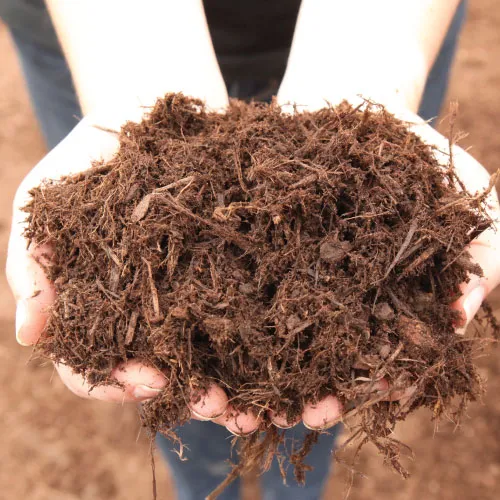
Shredded hardwood bark is the most widely recommended mulch for flower beds, perennial borders, and foundation plantings across the US. It stays in place, breaks down slowly (lasting 1–2 years before needing a top-up), and gives beds a clean, polished look.
Best for: Flower beds, perennial borders, shrubs, foundation plantings
| Pros | Cons |
|---|---|
| Stays put in wind and rain | Not ideal for annual veggie gardens |
| Decomposes slowly — less frequent replacement | Can cost more than straw or leaves |
| Neat, professional appearance | Fresh chips can mat if applied too thick |
| Widely available at US garden centers |
 US Cost: $3–$6 per bag (1.5 cu. ft.) or $25–$45 per cubic yard in bulk
 Myth Busted: You’ve probably heard that wood mulch “robs nitrogen” from soil. This is only true when wood material is tilled or mixed into the soil. Used as a surface mulch — which is how it should always be applied — it does not cause nitrogen deficiency in your plants. Don’t let this myth scare you off the best all-around mulch available.
2. Straw — Best for Vegetable Gardens
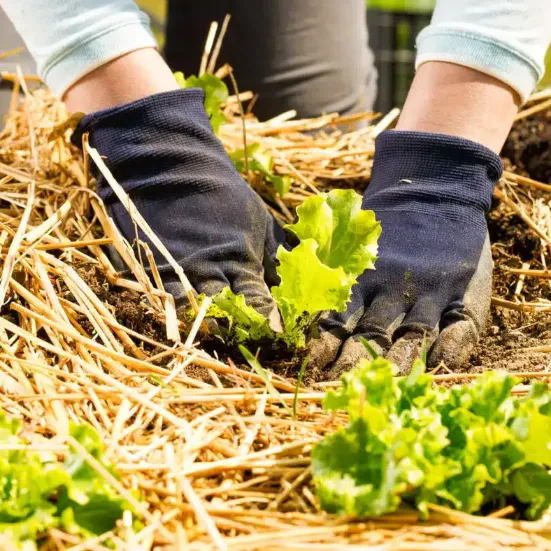
Straw is the go-to mulch for vegetable gardeners for good reason. It’s lightweight, easy to spread, inexpensive, and creates excellent coverage around tomatoes, peppers, cucumbers, and potatoes. It also keeps soil from splashing onto lower leaves during heavy rain — reducing the spread of soil-borne fungal diseases.
Best for: Tomato beds, raised vegetable gardens, potato rows, strawberry patches
| Pros | Cons |
|---|---|
| Very affordable (sold in bales) | Decomposes faster than bark (seasonal replacement) |
| Lightweight and easy to spread | Can look rough in ornamental beds |
| Reduces soil splash on crops | Must be sourced carefully (see warning below) |
| Great insulation for winter beds |
Critical Warning — Straw vs. Hay: These are not the same thing. Hay is dried grass cut for animal feed — it’s full of weed seeds and will turn your garden into a weeding nightmare. Straw is the dry stem left after grain harvest, with seed heads removed. Always buy straw labeled “weed-free.” And here’s a danger most guides skip: some commercially grown straw has been treated with persistent herbicides (aminopyralid and clopyralid) that survive composting and can damage or kill your garden plants. Always ask suppliers if the straw is herbicide-free — or buy certified clean bales from reputable farm supply stores.
3. Wood Chips (Arborist Chips) — Best for Trees, Shrubs and Paths
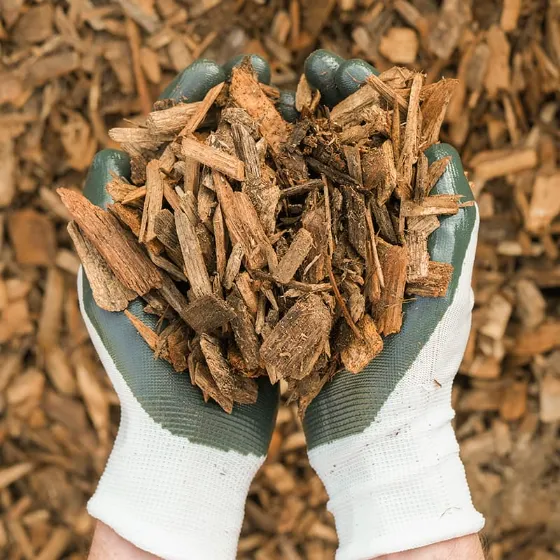
Arborist wood chips are chunky, unprocessed chips from tree removal and trimming operations. Research from Washington State University Extension has shown they are among the best mulches for improving long-term soil health around trees and established perennials.
Best for: Tree rings, garden pathways, established perennial beds, shrub borders
| Pros | Cons |
|---|---|
| Often available FREE (see sources below) | Too heavy for seed germination areas |
| Dramatically improves soil structure over time | Fresh chips can temporarily tie up nitrogen (on soil surface near seedlings) |
| Long-lasting — breaks down over 2–4 years | Not suitable for annual vegetable beds |
| Excellent for suppressing weeds |
Pro tip: Use ChipDrop.com to get free arborist chips delivered to your address. It saves tree services disposal costs and saves you money — though minimum loads are large, so it’s best for bigger properties.
4. Shredded Leaves — Best Free Mulch for Any Garden
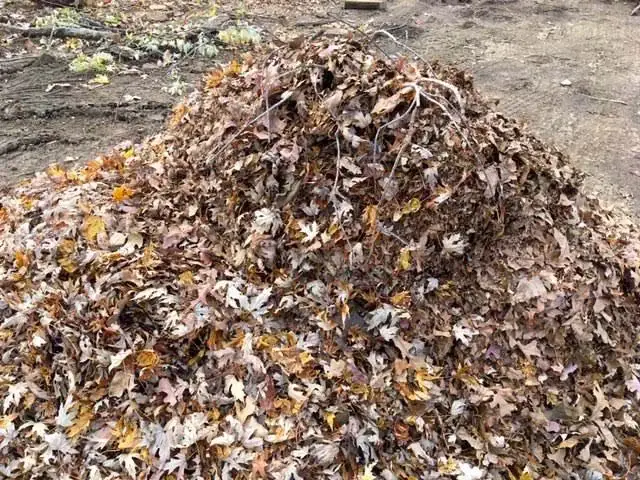
Every autumn, millions of American gardeners bag their leaves and put them on the curb. That’s throwing away some of the best free garden mulch available. Shredded leaves add tremendous organic matter to soil as they decompose, improving structure in both clay and sandy soils.
Best for: Perennial beds, vegetable gardens, winter bed protection, woodland gardens
| Pros | Cons |
|---|---|
| Completely free | Must be shredded first (whole leaves mat and block air/water) |
| Excellent organic matter source | Breaks down faster — may need seasonal reapplication |
| Available every fall in most US regions | Can blow around if applied dry and thin |
| Improves soil structure in all soil types |
One Important Caution: Never use leaves from black walnut trees as mulch near vegetable gardens. They contain juglone, a natural chemical that is toxic to nightshade family plants — including tomatoes, peppers, and eggplant.
To shred leaves, simply run a lawn mower over them, use a leaf blower on reverse, or buy an inexpensive electric leaf mulcher.
5. Compost — Best for Soil Health and Fertility
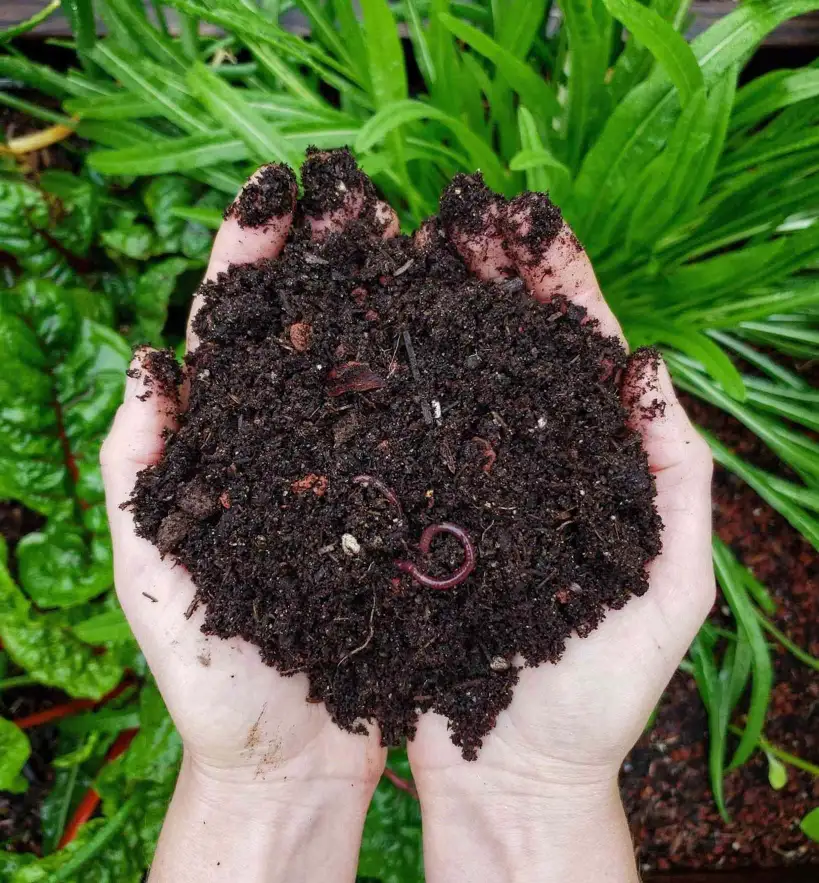
Compost works double duty: it mulches the soil surface and feeds your plants at the same time. It’s the top recommendation from the USDA Natural Resources Conservation Service for gardeners trying to rebuild depleted soil.
Best for: Vegetable gardens, raised beds, poor or sandy soils, new garden beds
| Pros | Cons |
|---|---|
| Feeds soil and plants simultaneously | Weaker at weed suppression than bark or straw |
| Improves clay and sandy soil structure | Lower-quality compost may carry weed seeds |
| Pairs well with any other mulch as a base layer | Needs to be refreshed seasonally |
| Can be made at home for free |
Buying tip: Look for compost tested against pyridine carboxylic acid herbicides — a growing contamination problem in commercial compost. Certified organic compost from landscape supply yards is your safest option.
6. Pine Straw (Pine Needles) — Best for Acid-Loving Plants
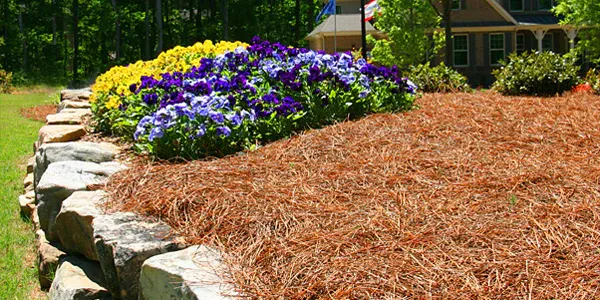
Pine straw is widely used across the southeastern US, where pine trees are abundant and the mulch is either free or sold cheaply in bales. It’s lightweight, slow to compact, and gives beds a tidy, natural look.
Best for: Blueberries, azaleas, rhododendrons, strawberries, camellias
| Pros | Cons |
|---|---|
| Stays in place well — interlocks as it settles | Not widely available in all US regions |
| Breaks down slowly | Not suitable for plants that prefer neutral or alkaline soil |
| Naturally repels some pests | |
| Abundant and cheap in southern states |
Myth Busted: Despite the persistent belief that pine straw “acidifies” garden soil significantly, research consensus shows the effect is minimal. Pine needles are acidic before decomposition, but they don’t lower soil pH in any meaningful way once applied as mulch. If you need to lower soil pH for blueberries, use elemental sulfur — not pine straw.
7. Grass Clippings — Best Budget Mulch for Vegetable Beds
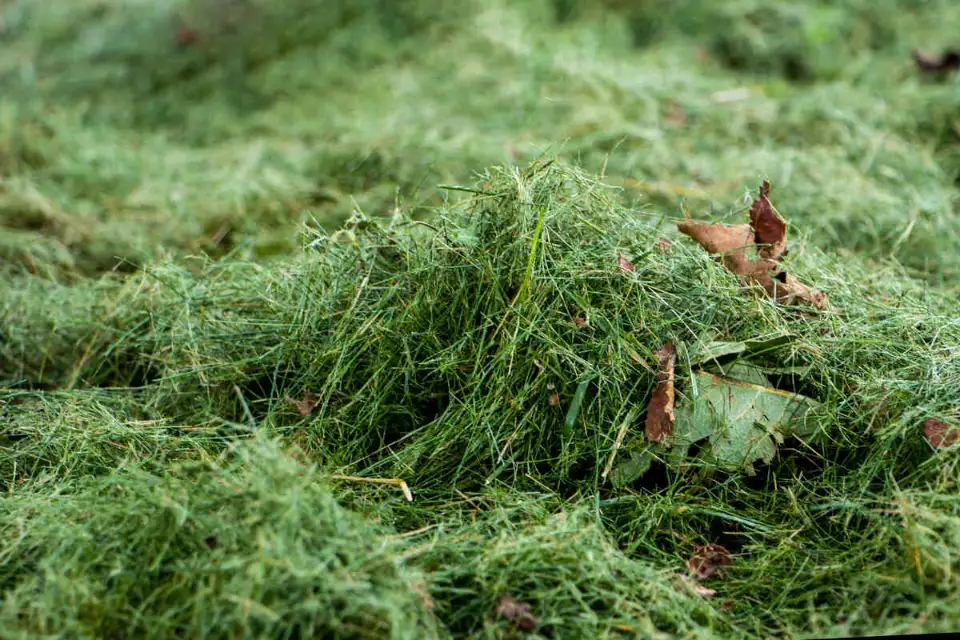
If you mow a lawn, you have free mulch. Grass clippings are nitrogen-rich and break down quickly, adding a useful nutrient boost to vegetable beds.
Best for: Vegetable gardens, seasonal coverage around annuals
| Pros | Cons |
|---|---|
| Completely free | Mats into an airtight layer if applied too thick |
| High in nitrogen — feeds soil as it breaks down | Must be pesticide and herbicide-free |
| Easy to gather and apply | Breaks down quickly — needs frequent reapplication |
Apply in thin layers — no more than 1–2 inches at a time. Thick layers of grass mat into a solid, airless crust that blocks water and invites fungal disease. Never use clippings from a lawn treated with broadleaf herbicides or weed-and-feed products.
8. Rubber Mulch — Avoid in Garden Beds
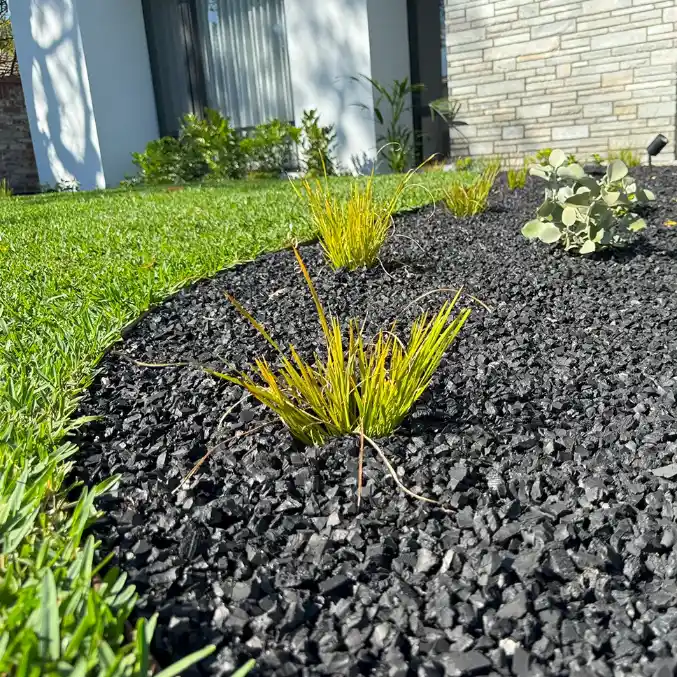
Rubber mulch is aggressively marketed as a low-maintenance, long-lasting garden mulch. The reality is far less appealing — especially for any bed where you grow food or care about soil health.
Best for: Playground safety surfaces, non-planting hardscape areas only
| Why to Avoid in Gardens |
|---|
| Leaches chemicals and dyes into soil over time |
| Does not prevent weeds as well as marketed |
| Nearly impossible to remove once spread (cited repeatedly by professional landscapers) |
| Does not improve soil — ever |
| Emits unpleasant odors in heat |
| More flammable than organic mulches |
If you already have rubber mulch in a planting bed, plan to remove it before adding any edibles or new perennials. The cleanup effort is significant, but the long-term soil damage is worse.
Best Mulch by Garden Type — Quick Reference Guide
| Garden Type | Best Mulch | Runner-Up | Avoid |
|---|---|---|---|
| Vegetable Garden | Straw | Grass Clippings | Wood Chips, Rubber |
| Flower Beds | Shredded Hardwood Bark | Compost | Rubber Mulch |
| Raised Beds | Compost | Shredded Leaves | Fresh Wood Chips |
| Trees & Shrubs | Wood Chips | Shredded Hardwood | Rubber |
| Acid-Loving Plants | Pine Straw | Shredded Leaves | Lime-heavy Compost |
| Garden Pathways | Wood Chips | Cedar Chips | Landscape Fabric |
| Poor / Sandy Soil | Compost | Shredded Leaves | Inorganic Mulches |
| Winter Protection | Straw | Shredded Leaves | Thin layers of anything |
The Mulching Mistakes That Are Quietly Harming Your Garden
Volcano Mulching Around Trees
This is the single most common mulching mistake in America — and it kills trees slowly. “Volcano mulching” means piling mulch up against a tree trunk in a cone shape. It looks tidy, but it traps moisture against the bark, encourages crown rot, and creates a perfect environment for pests and pathogens.
The correct method: a flat “donut” shape, with mulch extending out to the drip line of the tree but keeping a 2–3 inch gap clear around the actual trunk.
Mulching Too Early in Spring
Applying mulch before the soil has warmed traps cold temperatures in the ground. This delays seed germination and slows early-season plant growth. Wait until soil temperatures consistently reach 50°F or higher — use a cheap soil thermometer to be certain.
Applying Mulch Too Close to Plant Stems
Mulch piled against stems traps moisture, which invites fungal rot and gives insects a bridge to climb up into your plants. Keep a clear 2–3 inch gap around every stem in every bed.
Using Fresh Wood Chips Directly on Vegetable Seedlings
Fresh chips near small, tender seedlings can temporarily suppress germination due to their bulk and weight. Age them for 6 months first, or use them only in established perennial beds and pathways.
Where to Get the Best Mulch in the US (Including Free Options)
Buy in Bulk from Local Landscape Supply Yards
Bulk mulch — sold by the cubic yard — is significantly cheaper than bagged products from big box stores. A cubic yard of shredded hardwood from a landscape supplier typically costs $25–$45, compared to $60–$80 worth of bags for the same volume. Search “bulk mulch near me” to find local suppliers.
Home Depot, Lowe’s, and Walmart
For smaller gardens or raised beds, bagged mulch from major retailers is convenient and consistent. Top-rated US products include Miracle-Gro Organic All Natural Mulch and Vigoro Premium Brown Wood Mulch (available at Home Depot). Both are widely reviewed, organic-certified, and safe for ornamental and edible garden areas.
Free Mulch Sources Most Gardeners Don’t Know About
- ChipDrop.com — Register your address and local arborists will drop free wood chips when they’re working nearby. Loads are large, but the cost is zero.
- Municipal composting programs — Many US cities and counties offer free or heavily subsidized compost and wood chip mulch at drop-off sites. Search “[free mulch + your city name]” or check your local parks and recreation department.
- Local tree services — Call arborists in your area directly. Many will deliver chips for free to avoid paying tipping fees at disposal sites.
Frequently Asked Questions About the Best Mulch for Gardens
What is the best mulch for a vegetable garden?
Straw is the top recommendation for most vegetable gardens — it’s lightweight, affordable, and easy to spread around delicate plants. Make sure it’s weed-free straw, not hay. Grass clippings (pesticide-free) and compost are strong runners-up for gardeners focused on soil improvement.
What mulch prevents weeds the best?
A 2–4 inch layer of shredded hardwood bark or wood chips is the most effective at blocking weed germination long-term. The key is thickness — a thin layer won’t stop much. Cardboard or newspaper as a base layer before adding organic mulch gives even stronger weed suppression.
How thick should mulch be to stop weeds?
A minimum of 2 inches for most situations, with 3–4 inches being the effective target for heavy weed pressure. Going beyond 4 inches can restrict airflow and water penetration to plant roots, so more is not always better.
How often should I replace mulch in my garden?
Organic mulches break down at different rates. Straw and grass clippings may need refreshing every season. Shredded hardwood bark typically lasts 1–2 years before needing a top-up. Wood chips can go 2–4 years. Check depth each spring — if you’re below 2 inches, it’s time to add more.
Is rubber mulch safe for vegetable gardens?
No. Rubber mulch is made from shredded tires and can leach chemicals and heavy metals into soil over time. It has no place in any edible garden. Keep it away from flower beds too — once it’s in the ground, it is extraordinarily difficult to remove.
What is the difference between straw and hay for mulching?
Straw is the dry stalks left after grain harvest — the seed heads are removed. Hay is dried grass cut for animal feed and contains abundant seeds. Using hay as mulch is like scattering weed seeds across your garden. Always use straw, never hay. And always verify it’s herbicide-free — aminopyralid herbicide residue in contaminated straw can damage crops for multiple seasons.
The Bottom Line
The best mulch for your garden isn’t one size fits all — but the right choice for each bed type is actually very clear once you know what to look for.
- Flower beds and landscape plantings: Shredded hardwood bark
- Vegetable and raised beds: Certified herbicide-free straw
- Trees, shrubs, and paths: Arborist wood chips (often free)
- Soil improvement: Compost as a base layer
- Acid-loving plants: Pine straw in the South, shredded leaves everywhere else
The biggest upgrades most US gardeners can make today: switch from rubber mulch to organic, stop using hay in vegetable beds, and sign up on ChipDrop for free wood chips. Your soil will show the difference within one growing season.
Have a question about which mulch is right for your specific garden setup? Drop it in the comments — we read every one.
References & Sources
- Rutgers NJAES — Mulches for Vegetable Gardens
- SDSU Extension — Organic Garden Mulches to Conserve Moisture and Prevent Weeds
- Old Farmer’s Almanac — Types of Mulch: Advantages and Disadvantages
- JoeGardener — Best Mulch for a Vegetable Garden
- Garden Project Academy — Best Mulch for a New Garden Bed: Material Comparison Guide
- Oregon State University Extension — Herbicide Carryover in Compost, Manure, Straw and Hay
- Washington State University Extension — Wood Chip Mulch: Landscape Boon or Bane
About Author
Khalid Fazal is a seasoned lawn care specialist and horticultural researcher with over 15 years of hands-on experience transforming challenging landscapes into lush, resilient green spaces. His journey didn’t start in a lab, but in a backyard full of stubborn, cracked clay that “experts” said would never grow a healthy blade of grass. Refusing to accept a yard full of dust, Khalid spent years experimenting with organic soil restoration and precise mulching—eventually turning that wasteland into a neighborhood showpiece on a shoestring budget.
From mastering core aeration techniques to optimizing soil pH for specialized turf varieties, Khalid’s approach combines old-school grit with modern agronomic science. He founded Gen Lawn to provide homeowners with honest, research-backed advice that prioritizes long-term soil health over quick-fix chemical solutions. When he isn’t analyzing soil profiles, he’s developing precision tools to help others achieve professional results without the professional price tag.

Lawn Winterizer: When to Apply by Grass & Region [2026]
Table of Contents Home / By Khalid Fazal | Updated:...
Read More
Spring Lawn Care: What to Do and When in Every US Region
Table of Contents Home / By Khalid Fazal | Updated:...
Read More
Lawn Maintenance Checklist by Season and Grass Type (2026)
Table of Contents Home / By Khalid Fazal | Updated:...
Read More
Liquid Fertilizer vs Granular Fertilizer: Which Wins?
Table of Contents Home / By Khalid Fazal | Updated:...
Read More