
Black Lawn Fungus Identification: Pictures, Types, Danger Levels & What to Do
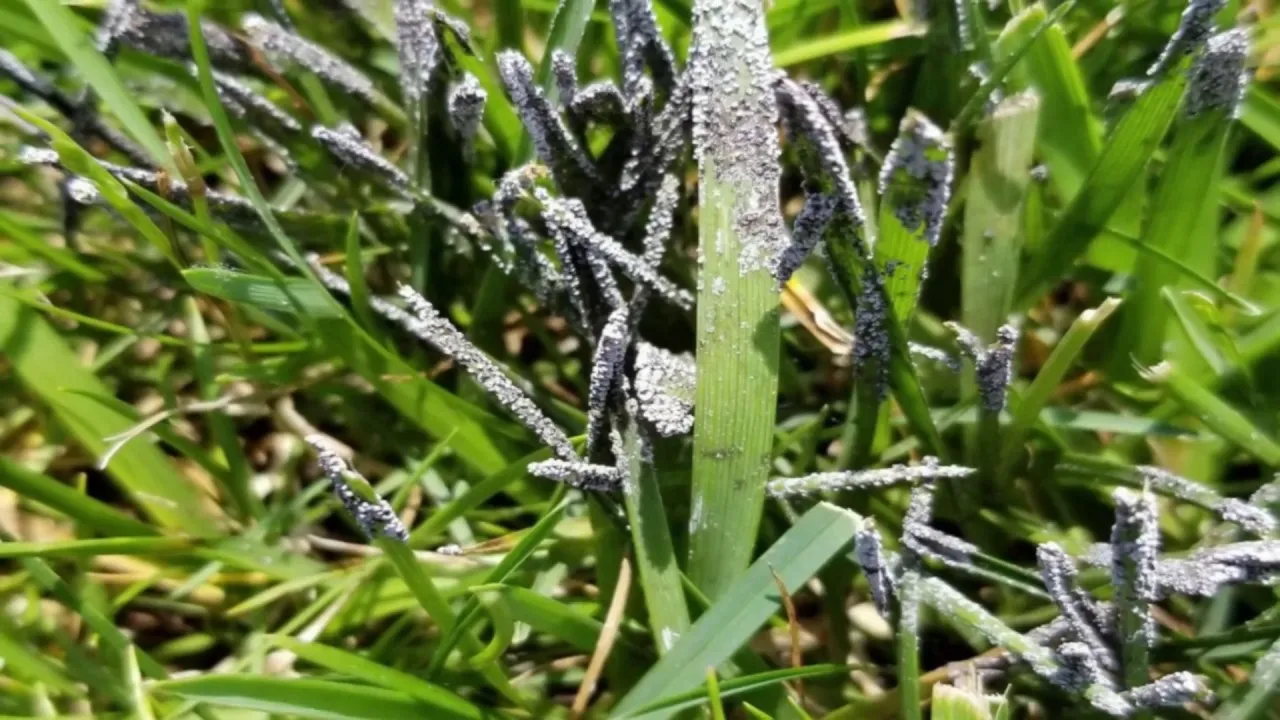
You spot something black spreading across your lawn — slimy in one spot, powdery in another, maybe forming a ring near the fence line. Before you panic or reach for a fungicide, here’s what you need to know: not all black lawn fungus is the same, and the wrong treatment can make things significantly worse.
Here’s the thing — black fungal growth is one of the most searched lawn problems in the US every spring and summer. You’re not alone in staring at your yard wondering what you’re dealing with.
This guide shows you exactly how to identify each type of black lawn fungus with descriptions and pictures — plus what’s safe for your kids and pets, which types go away on their own, and what to do next.
What Causes Black Fungus to Grow in Your Lawn?
Before diving into types, it helps to understand why black fungal growth appears in the first place. Most of it comes down to environment — your lawn is simply giving these organisms the conditions they love.
The Environmental Triggers Behind Black Lawn Fungus
The most common culprits are moisture and poor airflow. When water sits on grass blades too long — whether from overwatering, poor drainage, or heavy dew — fungal spores have everything they need to take hold.
Other conditions that invite black lawn fungus include:
- Thick thatch buildup that traps moisture at the soil surface
- Shaded areas with limited airflow and slow drying
- Warm, humid nights paired with daytime heat (especially in summer)
- Over-fertilization, particularly excess nitrogen, which drives soft, disease-prone growth
- Compacted soil that blocks drainage and suffocates grass roots
The good news? Understanding these triggers makes prevention straightforward once you’ve handled the current problem.
Is It Actually Fungus? (And Why It Matters)
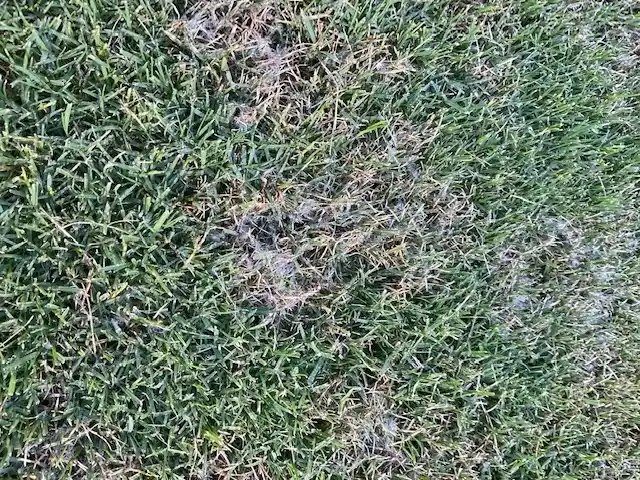
Not everything black on your lawn is a true fungus — and that distinction matters for treatment. You might be looking at black slime mold (not a fungus at all), sooty mold (a secondary effect of insect infestation), or an actual fungal disease attacking the grass tissue itself.
Getting this wrong wastes money and can cause more damage. A fungicide sprayed on slime mold does nothing — and may harm your lawn. An insecticide applied to smut disease misses the mark entirely.
That’s why visual identification is the critical first step.
Black Lawn Fungus Identification with Pictures — 6 Types Explained
Here’s your quick visual reference before we go deeper on each one.
| Type | What It Looks Like | Where It Appears | Danger Level | Goes Away on Its Own? |
|---|---|---|---|---|
| Black Slime Mold | Glossy, slimy blobs or black powder when dry | On grass blades and surface |  Cosmetic only Cosmetic only | Yes — usually within weeks |
| Sooty Mold | Fine black powdery coating | On blade surfaces |  Moderate Moderate | No — must treat insects first |
| Black Smut Disease | Dark streaks turning to black powder | Blade and stem tissue |  High — kills grass High — kills grass | No — needs treatment |
| Dark Leaf Spot | Black/dark brown spots on blade tips | Leaf blades | Moderate | Rarely — spreads if ignored |
| Black Thread Fungi | Thin, web-like black filaments | Across blade surfaces | Low | Often — with drier conditions |
| Dark Fairy Rings | Circular dead patches with dark edges | Turf surface and soil | Moderate | Very slowly |
Now let’s break each one down so you can make a confident identification.
Black Slime Mold (Physarum, Fuligo, Mucilago)
What it looks like: Black slime mold appears as irregular, slimy, glossy patches that seem to creep across the grass surface. When fresh and wet, it has a shiny, almost oily look. As it dries out, it transitions to a crusty, powdery dark gray or black coating that can look like soot sprinkled over your grass blades.
Where it appears: On the surface of grass blades, not in the soil or crown. It uses your grass like scaffolding — it’s not feeding on it.
What causes it: Slime mold thrives after heavy rain or prolonged humid periods, especially in lawns with thick thatch or slow drainage. It feeds on bacteria and decaying organic matter, not living grass tissue.
Danger level: Cosmetic only. Slime mold is not a plant pathogen and does not infect or damage your grass. A very heavy growth can shade grass blades and slow photosynthesis temporarily, but it moves on quickly.
Treatment: Rake it off, hose it down, or simply let it dry out and disperse. No fungicide needed — and fungicide won’t stop it anyway. Improving drainage and reducing thatch prevents recurrence.
Pro tip: If the black mass reappears repeatedly in the same spot, check for poor drainage or excessive shade in that area.
Sooty Mold
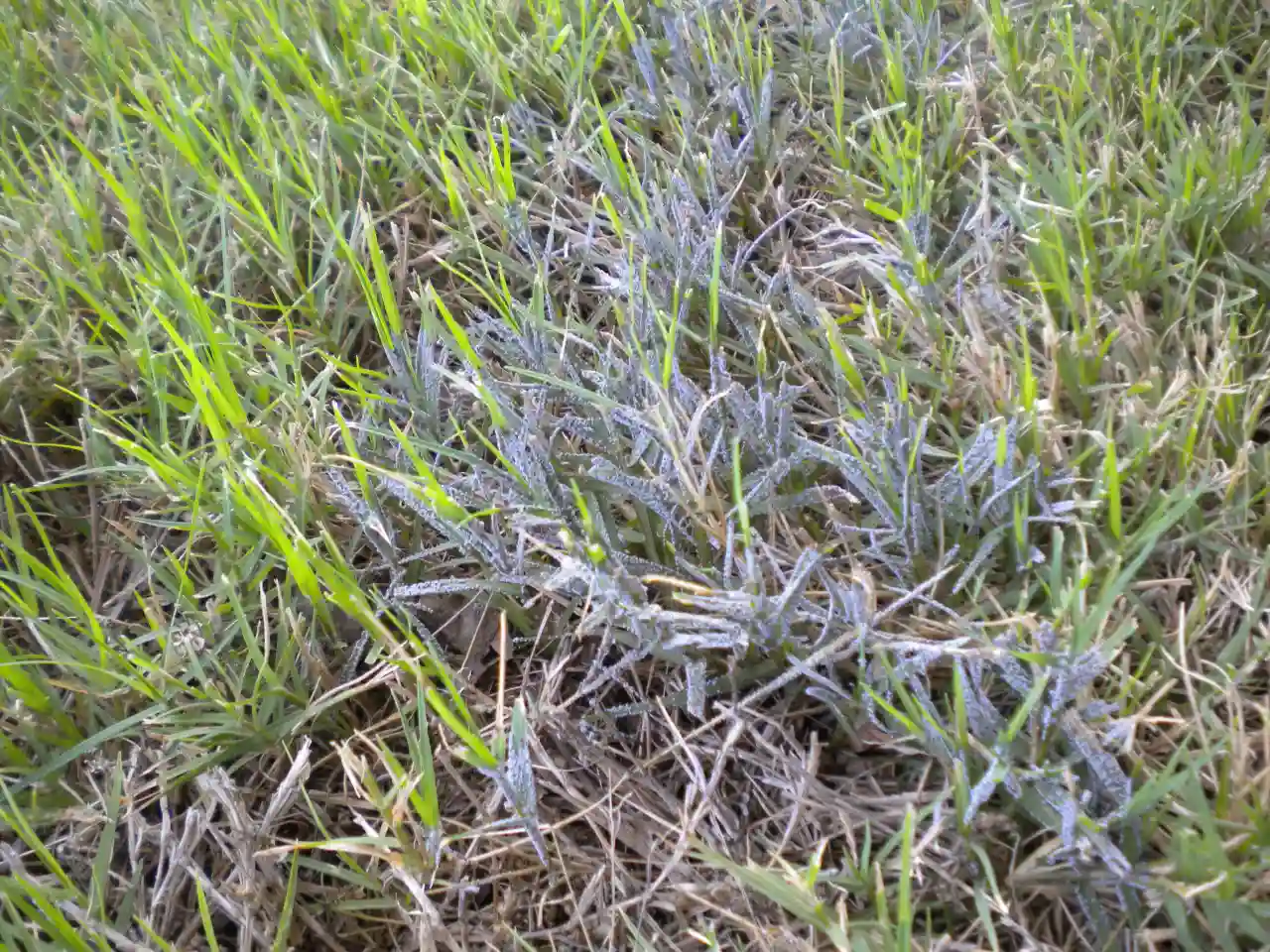
What it looks like: A fine, powdery black coating on the surface of grass blades — almost like someone dusted the blades with black powder. It doesn’t penetrate the tissue; it sits on top.
Where it appears: Primarily on blade surfaces, often in patches that coincide with insect activity nearby.
What causes it: Sooty mold grows on the sticky “honeydew” secreted by sap-sucking insects like aphids, whiteflies, and scale insects. The fungus isn’t attacking your grass — it’s feeding on insect waste. But it does block light and can stress the turf if severe.
Danger level: Moderate. Left untreated, sooty mold can weaken your grass by reducing photosynthesis. More importantly, the insect infestation causing it will cause its own damage if not addressed.
Treatment: Treat the insect problem first. Apply neem oil or insecticidal soap to reduce the pest population. Once the honeydew source is gone, the sooty mold will stop spreading. Washing or raking affected blades removes the cosmetic residue.
Black Smut Disease (Flag Smut / Leaf Smut)
What it looks like: Dark streaks running lengthwise along grass blades — initially gray-green, turning to deep black as the disease progresses. The streaks eventually rupture and release a sooty black powder when touched. Affected blades curl, shred, and eventually die.
Where it appears: Within the leaf and stem tissue of the grass — this is a true pathogen that invades from inside.
What causes it: Black smut is caused by fungal pathogens in the Ustilago genus (flag smut) or Urocystis genus (leaf smut). It favors warm-season grasses like bermudagrass and zoysiagrass, as well as cool-season types like Kentucky bluegrass and tall fescue. Hot, humid weather combined with poor lawn maintenance creates ideal conditions.
Danger level: High. This is a genuine disease that weakens and eventually kills infected grass. It spreads through spores released when you mow, walk, or water, infecting nearby healthy turf.
Treatment: Remove and dispose of heavily infected clippings — never compost them. Apply a systemic fungicide containing propiconazole or azoxystrobin per label directions. Improve lawn maintenance practices: proper mowing height, balanced fertilization, and aeration reduce future risk. Severely infected areas may need reseeding with smut-resistant grass varieties.
Dark Leaf Spot
What it looks like: Small, distinct black or dark brown spots appearing on individual grass blades, often with a tan center and dark border. Spots may expand and merge as the disease progresses, killing the blade from tip downward. Affected areas can look like scorched patches across the lawn.
Where it appears: On the leaf blade itself, starting at the tips or edges.
What causes it: Dark leaf spot is caused by Bipolaris and Drechslera fungi and thrives in cool, wet spring weather. Fine fescues and Kentucky bluegrass are especially susceptible. Mowing too short, excess nitrogen, and overwatering all increase risk.
Danger level: Moderate. If caught early, leaf spot is manageable. Left unchecked, it can advance into the “melting out” phase — destroying the crown and roots and killing large sections of turf.
Treatment: Raise your mowing height immediately (never remove more than ⅓ of the blade). Reduce nitrogen fertilizer and avoid evening watering. For persistent or spreading infections, apply a fungicide containing iprodione or propiconazole according to label instructions.
Black Thread Fungi
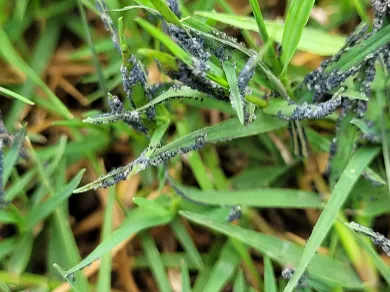
What it looks like: Thin, dark thread-like or web-like filaments spreading across the surface of grass blades. It can look like delicate dark spider webs woven between blades, often most visible in early morning when dew is present.
Where it appears: Across the surface of grass blades in cool, moist areas of the lawn.
What causes it: These organisms thrive in prolonged leaf wetness, heavy dew, and shaded areas with poor air circulation. They’re most common in cool-season lawns during fall and spring.
Danger level: Low. Black thread fungi are mostly cosmetic and rarely cause significant turf damage unless conditions allow them to spread extensively.
Treatment: Improve air circulation by trimming nearby shrubs or trees. Reduce watering frequency and avoid evening irrigation. Increase sunlight exposure to the affected area where possible. Fungicides are rarely warranted unless infestation is severe and spreading.
Dark Fairy Rings
What it looks like: Circular or arc-shaped patterns of dead, dark, or discolored grass — sometimes with a ring of unusually dark green grass just inside or outside the dead zone. The ring can range from a few feet to many feet in diameter. Mushrooms may appear along the ring, especially after rain.
Where it appears: Both on the turf surface and underground — the fungus breaks down organic matter in the soil, which creates a water-repellent layer that starves grass roots of moisture.
What causes it: A variety of soil-dwelling fungi cause fairy rings by decomposing buried organic matter (old tree roots, buried wood, decaying thatch). The process releases nitrogen — which explains the dark green grass — but also creates conditions that kill turf in the ring itself.
Danger level: Moderate to High, depending on severity. Fairy rings can persist for years and gradually expand if not addressed.
Treatment: Aerate the ring area aggressively to break up the water-repellent soil layer. Apply a wetting agent to improve water penetration. For persistent rings, soil fumigation or complete soil replacement in the ring zone may be necessary. Fungicides alone have limited effectiveness against fairy rings.
Is Black Lawn Fungus Dangerous to Pets, Kids & Humans?
This is one of the most searched questions around lawn fungus — and the answer depends on which type you’re dealing with.
Which Types Are Safe Around Pets and Children?
Black slime mold is confirmed non-toxic. It does not cause harmful effects in humans or animals, and is not toxic if accidentally ingested, according to multiple extension service resources. Passing contact with slime mold poses no health risk.
Most surface-growing black fungus types — including sooty mold and thread fungi — are not considered harmful to healthy humans or pets through normal lawn contact. The spores are present in the environment at low levels regardless.
As one resource from Bob Vila puts it, even though fungi can survive for years in soil, it is extremely unlikely that yard fungus will harm humans or pets through normal exposure.
When Black Lawn Fungus Becomes a Safety Concern
Here’s what does pose a real risk: the fungicides used to treat black lawn fungus.
Mancozeb, for example — a common treatment for severe slime mold cases — is harmful if inhaled, absorbed through skin, or ingested, according to the North Carolina State Extension. Keep children and pets off treated areas until the product has fully dried. Always wear protective gloves, eyewear, and long sleeves when applying fungicides.
Bottom line: The fungus itself is rarely dangerous. The treatment chemicals can be — so always read labels, follow application instructions, and respect re-entry intervals.
If your pet has ingested lawn chemicals or shows unusual symptoms after lawn treatment, contact your veterinarian promptly.
How to Confirm Which Black Lawn Fungus You Have (3-Step Method)
Still not sure? Walk through this process before purchasing any treatment.
Step 1 — Check the Texture
Touch it carefully (gloves on). Ask yourself:
- Slimy or glossy? → Likely slime mold
- Powdery, like soot? → Sooty mold or dry-stage slime mold
- Streaky, inside the blade? → Black smut or leaf spot
- Thread-like or web-like? → Black thread fungi
- Ring-shaped pattern? → Fairy ring
Step 2 — Check the Location
- Sitting on top of blades? → Slime mold, sooty mold, or thread fungi (surface organisms)
- Inside the leaf tissue? → Black smut or dark leaf spot (true pathogens)
- Ring pattern affecting large area? → Fairy ring (soil-based)
Step 3 — Factor in Recent Weather and Conditions
- Heavy rain in the last week? → Slime mold
- Warm, humid nights + insect activity? → Sooty mold
- Hot summer + warm-season grass? → Black smut
- Cool, wet spring? → Leaf spot
- Old tree stumps or buried wood nearby? → Fairy ring
When to Send a Sample to a Lab
If you’ve walked through all three steps and you’re still not confident — or if the affected area is large and spreading fast — send a grass sample to your state’s Cooperative Extension office for professional diagnosis. Penn State Extension, the University of Maryland Extension, and most land-grant university programs offer low-cost turfgrass disease diagnostics. This is especially worth it before spending money on professional fungicide treatments.
How to Treat Black Lawn Fungus (By Type)
Now that you’ve identified what you’re dealing with, here’s what actually works.
What You Can Fix Yourself
Slime mold: Rake or hose it off. That’s genuinely all you need for most cases. Let the area dry out and improve drainage if it keeps coming back. Do not apply fungicide — it won’t help and may harm beneficial organisms.
Black thread fungi: Trim back nearby trees or shrubs to increase sunlight and airflow. Switch to morning watering only and reduce irrigation frequency. These organisms retreat naturally when conditions dry out.
Sooty mold: Treat the insect infestation causing the honeydew. Apply neem oil or insecticidal soap according to label directions to knock back aphids or whiteflies. Once the pest population is controlled, the mold stops spreading.
When Fungicide Is Needed — and Which to Use
For black smut, severe leaf spot, or persistent fairy rings, a targeted fungicide application may be necessary. Here’s a quick reference:
| Fungus Type | Recommended Active Ingredient |
|---|---|
| Black Smut / Leaf Smut | Propiconazole, Azoxystrobin |
| Dark Leaf Spot | Iprodione, Propiconazole |
| Sooty Mold (severe) | Treat insects first; mancozeb as last resort |
| Slime Mold (severe) | Mancozeb (NC State Extension recommendation) |
| Fairy Ring | Wetting agents + aeration; azoxystrobin for active disease |
Important: Rotate fungicide active ingredients between applications to prevent resistance buildup. Turf disease specialists recommend rotating FRAC Group 3 (propiconazole) with Group 11 (azoxystrobin) products for best results.
When to Call a Lawn Care Professional
Some situations are beyond a DIY fix. Call a professional if:
- The black fungus is spreading rapidly despite treatment
- Circular dead patches are expanding week over week
- You suspect root or crown damage (grass won’t pull back to health)
- The affected area is over 500 square feet
- Multiple fungal issues appear to be occurring simultaneously
When you call, bring photos — multiple angles, close-ups of the texture on the blades, and a wide shot of the pattern. Visual documentation dramatically speeds up diagnosis and gets you to the right treatment faster.
Preventing Black Lawn Fungus From Coming Back
Treating the current problem is only half the job. Here’s how to make your lawn genuinely resistant to future outbreaks.
Water smart: Water deeply but infrequently — and always in the morning. This allows grass blades to dry completely before nightfall, removing the prolonged leaf wetness that most fungal organisms depend on.
Mow at the right height: Never remove more than one-third of the grass blade in a single mow. Cutting too short stresses the turf and opens it up to infection. Keep blades sharp — torn grass edges are more vulnerable than clean cuts.
Aerate and dethatch annually: Compacted soil and thick thatch are the two biggest contributors to fungal problems. Annual aeration improves drainage and oxygen penetration. Dethatching removes the layer of dead organic matter that traps moisture at the surface.
Balance your fertilization: Excess nitrogen drives rapid, soft blade growth that’s highly susceptible to disease. Use a balanced fertilizer appropriate for your specific grass type and follow seasonal timing guidelines.
Choose resistant grass varieties: If you’re overseeding or renovating, look for varieties labeled as having improved disease resistance. Your local Cooperative Extension office can recommend the best options for your region and climate.
Frequently Asked Questions About Black Lawn Fungus Identification
What does black lawn fungus look like in pictures?
Black lawn fungus has several distinct appearances depending on the type. Slime mold looks like glossy, slimy black blobs or crusty dark patches on the grass surface. Sooty mold appears as a fine black powder coating the blades. Black smut shows as dark streaks running along the length of grass blades that eventually turn powdery. Dark leaf spot creates defined black or dark brown spots with distinct borders on individual blades. Thread fungi look like thin, dark web-like filaments. Fairy rings appear as circular patterns of dead or dark-edged grass.
Is black lawn fungus dangerous to pets or humans?
Most black lawn fungus types — especially slime mold — are non-toxic to pets and humans. Slime mold does not cause harmful effects even if incidentally ingested. True fungal pathogens like black smut or leaf spot are plant diseases and pose no documented risk to pets or people through normal lawn contact. However, the fungicides used to treat lawn fungus (such as mancozeb) can be harmful — always keep pets and children off treated areas until completely dry.
Will black lawn fungus go away on its own?
It depends on the type. Black slime mold almost always disappears on its own once conditions dry out — usually within one to two weeks. Black thread fungi also often retreat when the weather changes. Sooty mold, black smut, and dark leaf spot generally do not resolve without intervention, and fairy rings can persist for years and slowly expand. If the black growth is slimy and surface-level, wait it out. If it’s inside the grass tissue or forming rings, act promptly.
What causes black mold on grass?
The most common cause of black mold-like growth on grass is slime mold — triggered by warm, wet conditions and a thick thatch layer that retains moisture. True black fungal diseases like sooty mold are caused by insect infestations producing sticky honeydew on which the mold grows. Black smut and leaf spot are caused by fungal pathogens that thrive in specific temperature and moisture conditions. All of them share one common trigger: excessive moisture on grass blades for extended periods.
What’s the best fungicide for black lawn fungus?
There is no single “best” fungicide — the right product depends entirely on which fungus you have. For black smut and leaf spot, propiconazole and azoxystrobin are the most widely recommended active ingredients by turfgrass extension services. For slime mold in severe cases, mancozeb is the most cited option (North Carolina State Extension). For sooty mold, fungicide is not the answer — treat the insect problem with neem oil or insecticidal soap first. Always confirm your identification before purchasing any fungicide.
Conclusion: Identify First, Then Act
Black lawn fungus is alarming to look at — but most of the time, it’s more manageable than it appears. Here’s what to take away:
- Six types of black lawn fungus have distinct visual signatures — texture, location, and pattern tell you which one you’re dealing with
- Slime mold is the most common and the least concerning — non-toxic, surface-level, and usually self-resolving
- Black smut and leaf spot are the types that demand quick action — they’re true pathogens that damage grass tissue
- Fungicides treat specific diseases — applying the wrong product wastes money and can harm beneficial organisms
- Pet and child safety depends more on the treatment chemicals than the fungus itself
Catch it early, identify it correctly, and you’ll spend far less time — and money — getting your lawn back to health.
Not sure what you’re looking at? Send us a photo and our team at Gen Lawn will point you in the right direction. We work with homeowners across the US and can help you identify the issue and recommend the right next step — no guesswork required.
References & Sources
- NC State Extension — Slime Mold Management on Turf
- Penn State Extension — Leaf Spot and Melting-Out Diseases in Turfgrass
- Lawn Doctor — Slime Mold on Grass
- LawnStarter — Slime Mold on Grass: What Is It and How to Get Rid of It
- Bob Vila — Lawn Fungus Identification, Treatment & Prevention
- University of Minnesota Extension — Common Lawn Fungi
- North Carolina State Extension — Black Slime Mold Fungicide Guidance
About Author
Khalid Fazal is a seasoned lawn care specialist and horticultural researcher with over 15 years of hands-on experience transforming challenging landscapes into lush, resilient green spaces. His journey didn’t start in a lab, but in a backyard full of stubborn, cracked clay that “experts” said would never grow a healthy blade of grass. Refusing to accept a yard full of dust, Khalid spent years experimenting with organic soil restoration and precise mulching—eventually turning that wasteland into a neighborhood showpiece on a shoestring budget.
From mastering core aeration techniques to optimizing soil pH for specialized turf varieties, Khalid’s approach combines old-school grit with modern agronomic science. He founded Gen Lawn to provide homeowners with honest, research-backed advice that prioritizes long-term soil health over quick-fix chemical solutions. When he isn’t analyzing soil profiles, he’s developing precision tools to help others achieve professional results without the professional price tag.

Lawn Winterizer: When to Apply by Grass & Region [2026]
Table of Contents Home / By Khalid Fazal | Updated:...
Read More
Spring Lawn Care: What to Do and When in Every US Region
Table of Contents Home / By Khalid Fazal | Updated:...
Read More
Lawn Maintenance Checklist by Season and Grass Type (2026)
Table of Contents Home / By Khalid Fazal | Updated:...
Read More
Liquid Fertilizer vs Granular Fertilizer: Which Wins?
Table of Contents Home / By Khalid Fazal | Updated:...
Read More