
Blue Rubber Mulch: Safety, Cost, and Where to Buy It in the US
Picture this. Your backyard playground is covered in wood chips. After one heavy rain, there are puddles sitting under the swings. After a dry summer, those chips have faded, splintered, and half of them have blown into your flower beds.
Sound familiar?
Thousands of US homeowners deal with this every single season. They spend money on mulch that barely lasts a year, rake it constantly, and still watch it look worse with every passing month.
Here is the better solution: blue rubber mulch. It is bold, vibrant, certified safe for kids, and cuts your yard maintenance down to almost nothing.
In this guide, you will learn exactly what blue rubber mulch is, whether it is safe for your family and pets, how much it costs, and where to buy it near you in the US.
What Is Blue Rubber Mulch and How Is It Made?
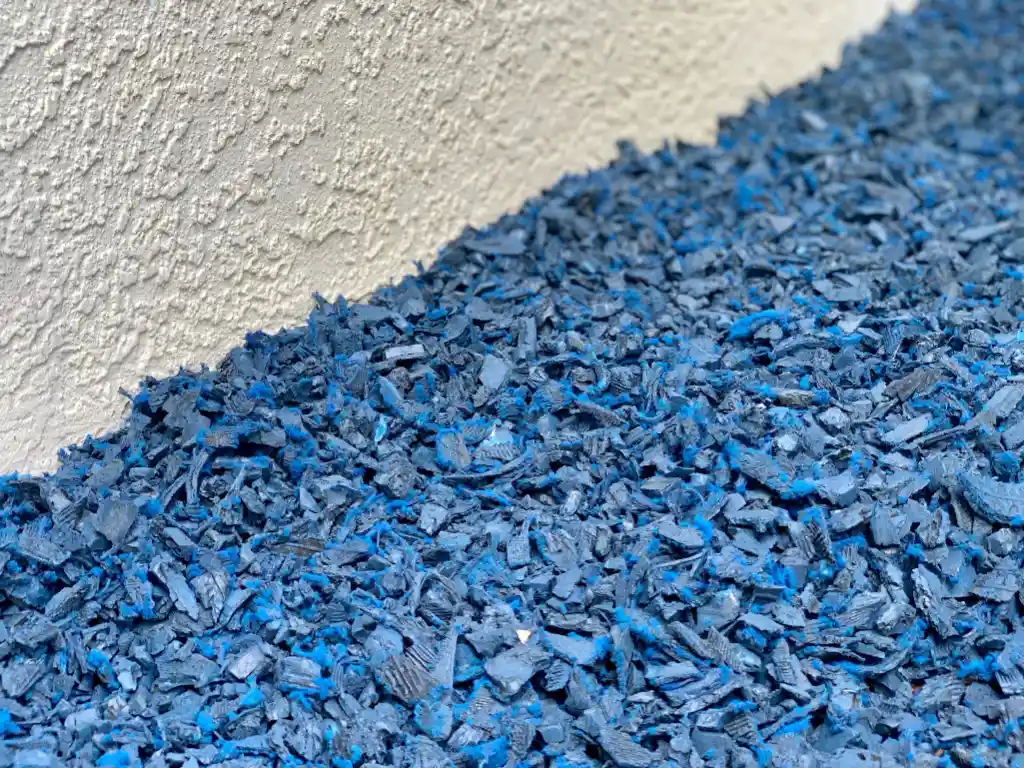
Blue rubber mulch is not your standard wood chip alternative. It is an engineered ground cover made from recycled rubber, colored blue with UV-resistant dye, and built to last up to a decade without needing replacement.
From Recycled Tires to Your Backyard
The process starts with old rubber tires. According to the US Environmental Protection Agency (EPA), over 290 million scrap tires are discarded across the US every single year. Rubber mulch manufacturers give those tires a second life.
Here is how it works:
- Tires are cleaned and washed to remove surface debris
- Industrial shredders break them into small rubber nuggets
- Powerful magnets strip out the steel wire belts inside the rubber
- The pieces are coated in a non-toxic, UV-resistant blue dye and packaged for sale
The result is a product that is durable, colorful, and completely free of the organic breakdown that makes wood mulch such a headache.
What Makes Blue the Most Popular Playground Color
Walk through any school, daycare, or community park in the US and you will notice a pattern. Blue rubber mulch shows up everywhere.
Why? Blue is one of the few truly gender-neutral colors. It appeals equally to boys and girls, works perfectly for ocean and water-themed play spaces, and pairs beautifully with white vinyl swing set frames. It is vibrant without being overwhelming, which makes it one of the best-selling rubber mulch colors available.
Blue Rubber Mulch Nugget Sizes Explained
Most blue rubber mulch comes in nugget sizes ranging from 3/8 inch to 3/4 inch for playground use, and 5/8 inch to 1 inch for landscape beds. Not sure which to choose? Playground-grade nuggets are the standard for safety surfaces. Landscape-grade nuggets tend to be slightly larger for a more natural, organic look in garden beds.
Is Blue Rubber Mulch Safe for Kids and Pets?
This is the question every parent and pet owner has before buying. It deserves a straight, honest answer backed by real data.
What the ASTM and IPEMA Certifications Actually Mean
When shopping for blue rubber mulch, two certifications are the ones that matter most.
ASTM F3012 is the standard that certifies loose-fill rubber as a safe playground surface material. ASTM F1292 measures fall attenuation, which is a technical way of saying how well the surface absorbs impact energy when a child falls. At a depth of 6 inches, certified rubber mulch can protect falls from playground equipment as high as 12 feet.
IPEMA (International Play Equipment Manufacturers Association) is an independent, third-party certification body that verifies these claims. If your rubber mulch carries an IPEMA stamp, it has passed some of the strictest playground safety testing in the country.
These are not marketing labels. They are real, audited safety standards that protect your kids.
What 2026 Government Studies Say About Toxicity
Here is the good news, and it is backed by science.
Two independent government studies in 2026, one by the California Office of Environmental Health Hazard Assessment (OEHHA) and one at the federal level, concluded that rubber crumb materials are non-toxic under normal exposure conditions. The OEHHA study reviewed over 100 chemical compounds, including polycyclic aromatic hydrocarbons or PAHs, which are naturally occurring chemicals found in processed rubber, and found that none of them reached levels that would pose a meaningful health risk.
Worth noting: these studies actually focused on synthetic turf athletic fields, where children have far more direct contact with rubber crumb than they do on a backyard playground. That makes the safety case for rubber mulch in residential and school settings even stronger.
Is Blue Rubber Mulch Safe for Pets and Dog Runs?
For pet owners, here is the short answer: yes, blue rubber mulch is considered safe for pets under normal conditions. The EPA has stated that the chemical compounds in recycled rubber mulch are non-hazardous to animals.
The one thing worth watching is this. If your dog has a habit of chewing non-food objects, monitor how they interact with the mulch. Ingesting rubber pieces can cause digestive blockage, not chemical harm. That is a separate issue, and an easy one to manage with basic supervision.
One Thing to Know If You Live Near a Waterway
Most blog posts skip this, but it is worth being upfront about.
A compound called 6PPD-quinone, which is a byproduct of a tire preservative chemical, has been identified in stormwater runoff from rubber installations near waterways. Research has shown it can be toxic to coho salmon and other aquatic life at very low concentrations.
For most US homeowners with standard residential properties, this is not a concern. But if your property sits directly next to a stream, drainage channel, or pond that flows into a natural waterway, it is a factor worth discussing with a local landscaping professional before you install.
The Real Benefits of Blue Rubber Mulch
Beyond safety, blue rubber mulch delivers a set of practical advantages that are hard to match with any other ground cover on the market.
Color That Stays Bold for Up to 12 Years
Here is one of the biggest selling points. Leading rubber mulch brands back their blue color with 12-year warranties using formulas like ColorLock and Powerlock-ColorGuard. The blue dye is UV-resistant from the start, meaning direct sun exposure will not bleach it the way it fades wood mulch within a single summer season.
What does that mean for you? One installation. Zero annual restaining. No replacing mulch that has turned a muddy, washed-out gray.
Zero Decomposition, Zero Pests
Wood mulch breaks down over time. That is exactly what organic material is designed to do. But decomposition means you are replacing it every one to two years, and the moist, rotting wood creates a perfect environment for termites, carpenter ants, fungi, and mold.
Blue rubber mulch does not decompose. It does not absorb moisture. Termites have no interest in rubber. Neither do ants. You get a clean, low-maintenance yard surface without any of the hidden pest activity underneath.
Better Drainage and Weed Suppression
Unlike wood mulch, rubber does not soak up water. Rain passes straight through the mulch layer and into the soil where your plants and roots actually need it. That means less standing water and more consistent soil hydration.
Pair blue rubber mulch with a quality landscape weed barrier fabric installed underneath, and you have one of the most effective weed suppression setups available for residential garden beds.
The 10-Year Cost Math
This is where blue rubber mulch makes a very convincing economic case.
| Feature | Blue Rubber Mulch | Wood Mulch |
|---|---|---|
| Upfront cost per cubic yard | $120 to $200 | $30 to $45 |
| Lifespan | 10 to 15 years | 1 to 2 years |
| Annual maintenance | Minimal | Annual replacement needed |
| 10-year total cost estimate | $460 to $920 | $1,000 to $2,400 |
| Pest attraction | None | High |
| Color longevity | 12-year warranty | Fades within months |
Yes, the upfront cost is higher. That is true and worth being honest about. But by year 3 to 5, rubber mulch typically reaches cost parity with wood mulch. After that, it is simply the cheaper option for the remaining years of its life.
How to Install Blue Rubber Mulch (Step by Step)
Good news: this is a totally manageable DIY weekend project for most homeowners.
How Much Blue Rubber Mulch Do You Need?
Use this simple formula to calculate your order:
Length (ft) x Width (ft) x Depth (ft), divided by 27 = Cubic yards needed
For example: a 10 x 10 playground area at 6-inch depth works out to 10 x 10 x 0.5, divided by 27, which equals roughly 1.85 cubic yards. Most suppliers also offer free coverage calculators on their product pages to make this step even easier.
Right Depth for Playgrounds vs. Garden Beds
The correct depth depends entirely on what you are covering.
- Garden and landscape beds: 1 to 2 inches is sufficient
- Residential playground: 3 to 4 inches minimum
- Commercial or school playground: 6 inches is required by the US Consumer Product Safety Commission (CPSC) for loose-fill playground surfacing under equipment up to 12 feet high
Also worth knowing: blue rubber mulch installed at 6 inches meets ADA accessibility standards under ASTM F1951, which covers wheelchair and mobility device access on playground surfaces. That matters for schools, parks, and any public-use installation.
Step-by-Step Installation Guide
Follow these steps and your install will go smoothly from start to finish.
Step 1: Clear and level the area. Remove all grass, weeds, rocks, and roots. Grade the surface so water drains away from the center of the play area. A slope of roughly 1 inch for every 10 feet is ideal for drainage.
Step 2: Install borders. Use rubber, timber, or plastic edging around the entire perimeter to contain the mulch. Without borders, rubber mulch drifts into thin spots under high-traffic areas like swings and slide exits, which reduces safety.
Step 3: Lay your weed barrier. Stretch a quality landscape fabric across the entire surface, overlapping sections by at least 12 to 18 inches to block weeds from pushing through the seams.
Step 4: Pour and spread the mulch. Open bags and pour mulch into piles distributed across the area. Use a landscaping rake to spread it evenly and check depth with a tape measure as you go.
Step 5: Mark your baseline depth. Once installed, mark the mulch level against the nearest equipment post or a fixed stake. This makes it easy to spot areas that need topping up after heavy use or storms.
Where to Buy Blue Rubber Mulch in the US
You have several solid options depending on your project size and your budget.
Top Online Retailers for Blue Rubber Mulch
- RubberMulch.com carries the Playsafer brand, one of the most established IPEMA-certified options in the US with a 12-year color warranty and multiple blue shades available.
- RubberMulchWarehouse.com offers both playground and landscape-grade blue mulch with free shipping to many US states, plus a built-in coverage calculator.
- RubberMulchOutlet.com stocks playground blue mulch made in the USA, backed by a 12-year ColorLock warranty, with typical shipping in 1 to 3 weeks.
- Home Depot carries the Viagrow brand of blue rubber mini-nuggets both in-store and online, which is a practical option for smaller residential projects where you want to pick up locally.
What to Look For Before You Buy
Run through this quick checklist before placing any order:
- Is it ASTM F3012 and IPEMA certified for playground use?
- Does it carry a 12-year color warranty?
- Is the dye listed as non-toxic and UV-resistant?
- Has the manufacturer confirmed magnetic steel wire removal during production?
- Are there verified US customer reviews and a clear return or satisfaction policy?
If a supplier cannot clearly answer those questions, keep shopping.
Average Price Ranges: Bags vs. Bulk
For small residential projects, bagged blue rubber mulch typically runs $20 to $24 per 40-pound bag. One 40-pound bag covers approximately 4.66 square feet at 4-inch depth.
For larger installs, bulk orders by the pallet or cubic yard bring the per-unit cost down significantly. Expect to pay $120 to $180 per cubic yard when ordering in bulk, compared to $200 to $250 per cubic yard when buying individual bags. If you are covering more than 300 square feet, bulk is almost always the smarter financial move.
Frequently Asked Questions About Blue Rubber Mulch
How long does blue rubber mulch last?
Blue rubber mulch typically lasts 10 to 15 years under normal conditions. Most top US brands back this up with a 12-year color warranty. Unlike wood mulch that decomposes within 1 to 2 years, rubber does not break down, making it effectively a one-time installation for most residential projects.
Does blue rubber mulch fade over time?
High-quality blue rubber mulch is coated with UV-resistant dyes specifically formulated to resist fading for years. Reputable brands guarantee color performance for up to 12 years. Cheaper, unbranded products may fade noticeably faster, which is exactly why checking for a written color warranty before you buy is so important.
Is blue rubber mulch safe for kids on playgrounds?
Yes, when purchased from a certified supplier. Look for products that carry ASTM F3012 and IPEMA certifications. At a depth of 6 inches, certified blue rubber mulch provides fall protection for equipment up to 12 feet high. It does not splinter, does not harbor insects, and does not create muddy puddles after rain, making it one of the safest loose-fill playground surfaces available in the US today.
Can I mix blue rubber mulch with other colors?
Absolutely. Many homeowners blend blue with green for a nature-inspired palette, or use blue as an accent color around a water feature or sandbox border. Just make sure all the colors you mix are from the same grade (playground-grade or landscape-grade) so your safety ratings and nugget sizes stay consistent throughout the surface.
How do I clean and maintain blue rubber mulch?
Maintenance is genuinely simple. A leaf blower on a low setting handles leaves and light debris without displacing the mulch. For a deeper clean, rinse the surface with a garden hose. For commercial playgrounds, occasional power washing under 2,000 PSI with a mild, non-petroleum-based detergent keeps it looking great year after year. One important note: avoid oil-based cleaners like Pine-Sol or Murphy’s Oil Soap, as they can degrade the rubber surface over time.
The Bottom Line on Blue Rubber Mulch
Blue rubber mulch is one of the smartest ground cover decisions you can make for a US playground or landscape bed. Here is what to take with you:
- It is made from recycled tires, certified safe under ASTM and IPEMA standards, and backed by 2026 government safety research
- The blue color is bold, gender-neutral, and protected by up to 12-year color warranties
- It outlasts wood mulch by a full decade and costs significantly less over the long run
- Depth matters: 1 to 2 inches for landscaping, 6 inches for commercial playground safety compliance
- Bulk orders offer real savings for larger projects; bagged mulch works well for standard residential installs
Ready to give your yard or playground a surface that actually holds up? Browse our selection of top-rated rubber mulch options and find the right fit for your space today.
References and Resources
- EPA: Scrap Tires Overview
- ASTM F3012: Standard Specification for Loose-Fill Rubber
- ASTM F1292: Impact Attenuation Standard
- IPEMA Certification Program
- CPSC: Playground Safety Guidelines
- OEHHA: Polycyclic Aromatic Hydrocarbons
- ACS Research: 6PPD-quinone in Stormwater Runoff
- ADA: Playground Surface Accessibility
- Bob Vila: Best Landscape Fabric Guide
About Author
Khalid Fazal is a seasoned lawn care specialist and horticultural researcher with over 15 years of hands-on experience transforming challenging landscapes into lush, resilient green spaces. His journey didn’t start in a lab, but in a backyard full of stubborn, cracked clay that “experts” said would never grow a healthy blade of grass. Refusing to accept a yard full of dust, Khalid spent years experimenting with organic soil restoration and precise mulching, eventually turning that wasteland into a neighborhood showpiece on a shoestring budget.
From mastering core aeration techniques to optimizing soil pH for specialized turf varieties, Khalid’s approach combines old-school grit with modern agronomic science. He founded Gen Lawn to provide homeowners with honest, research-backed advice that prioritizes long-term soil health over quick-fix chemical solutions. When he isn’t analyzing soil profiles, he’s developing precision tools to help others achieve professional results without the professional price tag.

Lawn Winterizer: When to Apply by Grass & Region [2026]
Table of Contents Home / By Khalid Fazal | Updated:...
Read More
Spring Lawn Care: What to Do and When in Every US Region
Table of Contents Home / By Khalid Fazal | Updated:...
Read More
Lawn Maintenance Checklist by Season and Grass Type (2026)
Table of Contents Home / By Khalid Fazal | Updated:...
Read More
Liquid Fertilizer vs Granular Fertilizer: Which Wins?
Table of Contents Home / By Khalid Fazal | Updated:...
Read More