
Brown Patches on Lawn in Summer: Causes, Diagnosis & Fixes That Actually Work
You walked outside on a July morning, coffee in hand, ready to enjoy your yard — and there it was. An ugly brown patch spreading across what used to be a lush green lawn.
Now you’re staring at it wondering: Is it dead? Is it a disease? Did I do something wrong?
Here’s the thing — you’re not alone. Brown patches on lawn in summer are one of the most common (and most misdiagnosed) lawn problems in the US. The good news? Once you know what’s causing it, fixing it is almost always doable.
In this guide, you’ll learn exactly why brown patches appear, how to tell them apart, and what to do about each one — step by step.
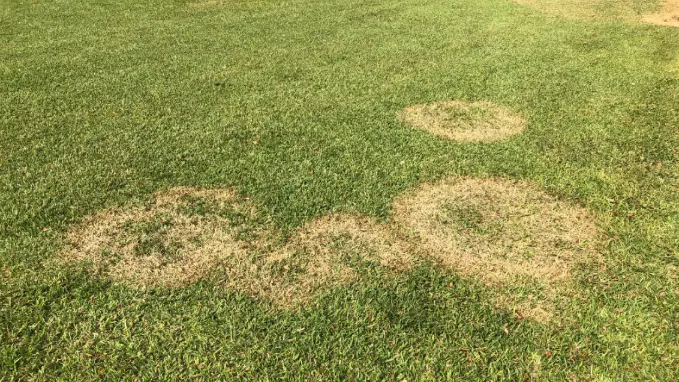
What’s Actually Causing Brown Patches on Your Lawn in Summer?
Before you grab a bag of fungicide or flood your lawn with water, you need to know why those patches showed up. Treating the wrong cause is the #1 mistake homeowners make — and it can make things worse.
Here are the seven most common culprits.
Brown Patch Fungal Disease (Rhizoctonia solani)
This is the leading cause of summer lawn damage in the US. Brown patch disease, caused by the fungus Rhizoctonia solani, thrives when nighttime temperatures stay above 65°F and humidity is high.
You’ll see irregular, roughly circular patches anywhere from a few inches to several feet wide. The telltale sign? A thin, smoky-gray border ring around the outside of the patch, sometimes called a “smoke ring” — visible in the early morning before the dew dries.
Brown patch attacks the grass blades, not the roots. That’s actually good news: in most established lawns, the grass can recover on its own once temperatures cool down in fall.
Summer Patch Disease (Root-Destroying Fungus)
Summer patch, caused by Magnaporthe poae, is more aggressive than brown patch — because it attacks the roots and crowns, not just the blades.
It’s most common in Kentucky bluegrass, fine fescue, and annual bluegrass. Look for a distinctive “frog-eye” pattern: a brown ring with a tuft of healthy green grass in the center. Patches develop when soil temperatures exceed 65°F for extended periods and tend to get worse in compacted, poorly drained soil.
Drought Stress and Summer Dormancy
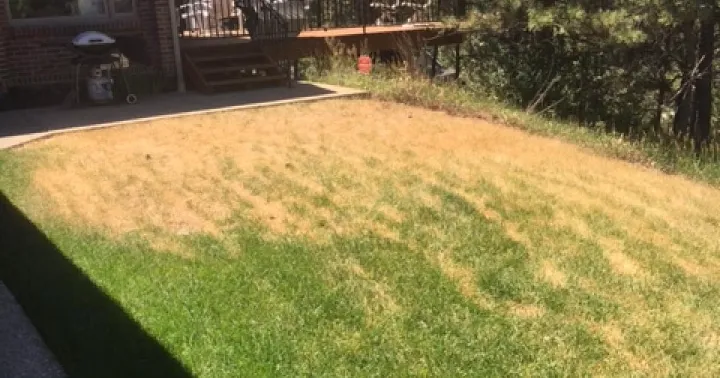
Here’s something most homeowners don’t know: brown doesn’t always mean dead.
When soil dries out and temperatures spike, cool-season grasses like fescue and bluegrass protect themselves by going dormant. They stop growing, turn straw-colored, and essentially hit pause until conditions improve.
Dormant grass is alive. As long as the crown (the growth point at the soil surface) survives, your lawn can bounce back once temperatures drop and moisture returns.
The patches look irregular and randomly placed — not in perfect circles. And if you walk on the grass, your footprints will linger.
Overwatering and Poor Drainage
This one surprises people. Too much water can cause brown patches just as easily as too little.
When soil stays consistently waterlogged, grass roots are deprived of oxygen. The grass weakens, the soil becomes a breeding ground for fungal disease, and you end up with brown patches that actually get worse the more you water.
Signs of overwatering include soggy soil, standing water after irrigation, thatch buildup, and an uptick in weeds — particularly crabgrass.
Grub and Insect Damage
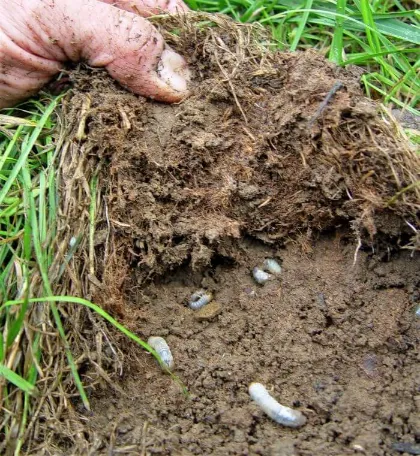
White grubs — the larvae of beetles like Japanese beetles and June bugs — feed on grass roots below the surface. With roots severed, the turf can’t take up water, and patches turn brown fast.
Other insects that damage summer lawns include chinch bugs, sod webworms, and armyworms. Chinch bugs suck moisture from grass blades and inject a toxin that causes yellowing and browning — most common in sunny areas and hot, dry conditions.
Dog Urine Burns
If you have a dog, those small, round, brown spots with a suspiciously bright green ring around the outside? That’s urine burn.
Dog urine contains high concentrations of nitrogen and salts. In small doses, nitrogen actually fertilizes the grass — hence the green ring. But in the concentrated center, the levels are toxic and burn the grass down to the roots.
These spots are highly localized, don’t spread, and follow your dog’s bathroom habits closely.
Thatch Buildup and Soil Compaction
Thatch is the layer of dead and decaying organic material that builds up between the soil surface and the grass blades. A thin layer (under ½ inch) is fine — but when it exceeds ½ inch, it blocks water, air, and nutrients from reaching the roots.
Similarly, compacted soil — common in high-traffic areas — prevents roots from growing deep, making grass more susceptible to heat, drought, and disease.
How to Diagnose Brown Patches on Your Lawn — Step by Step
Now for the part most articles skip entirely: actually figuring out which problem you have.
Don’t guess. Run these quick field tests first.
The 3 Quick Field Tests Every Homeowner Should Know
1. The Screwdriver Soil Test (for drought stress) Push a standard screwdriver at least 6 inches into the soil. If it goes in easily, your lawn has adequate moisture. If it resists or comes out bone dry — drought stress is likely the culprit. Water deeply: 1 inch per session, twice a week, always in the early morning.
2. The Pull Test (for grub damage vs. drought) Grab a handful of brown grass and pull firmly. If the grass is firmly rooted and won’t budge — it’s alive and likely dormant or drought-stressed. If it pulls out of the soil easily with little to no root attached, you’ve got grub damage below the surface.
3. The Smoke Ring Check (for fungal disease) Go outside early in the morning before the dew burns off. Get close to the edge of the brown patch. If you can see a thin, dark, smoky-gray border ring — that’s the classic signature of Rhizoctonia brown patch disease.
Visual Identification Table
Use this table to quickly match what you’re seeing to the likely cause:
| What It Looks Like | Likely Cause | Quick Field Test | What To Do |
|---|---|---|---|
| Circular patches with smoky-gray border ring | Brown patch fungus | Smoke ring visible at dawn | Reduce moisture, improve airflow, apply preventive fungicide |
| Frog-eye pattern (brown ring, green center) | Summer patch fungus | Roots appear dark and rotted | Fungicide + improve drainage + aerate |
| Straw-colored, irregular, footprints linger | Drought dormancy | Screwdriver resists soil | Water deeply 1″ twice/week in early morning |
| Soggy soil + brown patches + weeds spreading | Overwatering | Soil wet 2–3″ down after no rain | Reduce watering, aerate, check drainage |
| Patches lift like a carpet, no roots attached | Grub damage | Pull test: roots absent | Apply grub control product, water it in well |
| Small round spots, bright green ring outside | Dog urine burn | Localized, matches pet areas | Flush with water, reseed, restrict pet access |
| Thin, patchy areas in high-traffic zones | Thatch/compaction | Soil hard, water pools | Aerate + dethatch in fall |
Dormant Grass vs. Dead Grass — How to Tell the Difference
This is the question that keeps homeowners up at night. Here’s a simple way to check:
Find a brown patch and tug on a handful of grass. If the blades break off at the top but the base holds firm, the crown is intact — your grass is dormant, not dead, and it will recover.
If the entire plant pulls out easily — roots and all — and the crown at the soil surface looks dark, mushy, or completely absent, the grass is dead and will need reseeding.
According to Utah State University Extension, as long as the crown remains alive, grass has the capability to recover when temperature and moisture conditions improve.
How to Fix Brown Patches on Lawn in Summer
Once you’ve diagnosed the cause, here’s exactly what to do.
Treating Brown Patch and Summer Patch Fungal Disease
For brown patch, start by adjusting your habits:
- Water only in the early morning (before 10 AM) so blades dry fully before nightfall
- Mow at the correct height — never remove more than one-third of the blade at a time
- Avoid high-nitrogen fertilizer in summer, which creates lush, disease-prone growth
- Rake the affected area lightly to improve airflow and speed up drying
If the disease is severe, apply a fungicide labeled for Rhizoctonia brown patch. Important: fungicides prevent the disease from spreading — they don’t cure existing damage. According to the University of Maryland Extension, homeowner-grade fungicides must be applied before the disease progresses to be effective.
For summer patch, fungicide alone isn’t enough. You also need to:
- Aerate the lawn to relieve compaction and improve drainage
- Lower your mowing height slightly for affected grass types
- Avoid overwatering — summer patch thrives in waterlogged soil
Fixing Drought Stress and Heat Dormancy
If your lawn is dormant, the fix is simple — but the timing matters.
If you’ve already let the lawn go dormant, commit to that. Don’t start and stop watering. According to BioAdvanced, intermittent watering of a dormant lawn depletes root food reserves and makes the grass more vulnerable.
Either water consistently (1–1.5 inches per week) to pull it out of dormancy, or wait for fall temperatures to drop below 55°F and let nature do the work. Dormant cool-season grass that’s been drought-stressed can take 3–4 weeks to fully green up once regular watering resumes.
Getting Rid of Grubs
Grub control products containing imidacloprid or chlorantranilip role are most effective when applied in late spring to early summer, before grubs hatch and while they’re still small.
If you’re treating an active infestation mid-summer, products containing trichlorfon work faster on mature grubs. Always water the product in thoroughly — it needs to reach the root zone to work.
For a natural approach, beneficial nematodes — microscopic organisms that parasitize grubs — can be effective when applied to moist soil in early evening.
After treating, repair dead patches by raking out dead grass, loosening the top 1–2 inches of soil, and overseeding with a grass type suited to your region.
Repairing Dog Urine Spots
Right after your dog urinates in a spot, flush the area thoroughly with water. This dilutes the nitrogen concentration before it burns.
For existing spots:
- Rake out the dead grass
- Flush the soil deeply with water several times over a few days
- Reseed with a suitable grass variety
- Consider training your dog to use a designated gravel or mulch area
When to DIY — and When to Call a Pro
DIY is the right call when:
- The affected area is small (under 10% of the lawn)
- You’ve clearly identified the cause
- The damage hasn’t spread to the roots
Call a professional when:
- Patches are expanding rapidly despite treatment
- You can’t identify the cause after field testing
- More than 30% of your lawn is affected
- You suspect multiple overlapping issues
Pro tip: before the visit, write down your recent watering schedule, any fertilizers or chemicals applied, and when the patches first appeared. This speeds up the diagnosis significantly.
How to Prevent Brown Patches From Coming Back
The best time to prevent summer brown patches is before summer starts. Here’s what actually works.
Watering Schedule That Prevents Brown Patches
Water deeply and infrequently — 1 to 1.5 inches per week in two sessions. Deep watering encourages roots to grow downward, making grass far more resilient to heat and drought.
Always water before sunrise. Grass that stays wet overnight is a fungus magnet. Watering between 7 PM and 3 AM is one of the fastest ways to invite brown patch disease, according to Scotts.
Mowing Height and Blade Tips for Summer
Never scalp your lawn in summer. Taller grass shades the soil, retains moisture, and keeps roots cooler.
For cool-season grasses (fescue, bluegrass, ryegrass): mow at 3.5 to 4 inches in summer. For warm-season grasses (Bermuda, Zoysia, St. Augustine): follow the recommended height for your specific variety — typically 1.5 to 2.5 inches.
And always use a sharp mower blade. A dull blade tears grass rather than cutting it cleanly, creating jagged edges that are easy entry points for fungal disease. Davey Tree experts recommend sharpening blades at least once per season.
Fertilizing Dos and Don’ts During Summer
Avoid high-nitrogen fertilizers during peak summer heat. Nitrogen pushes lush, fast growth — which is exactly the type of tissue that brown patch fungus loves.
If you fertilize in summer, use a slow-release, low-nitrogen formula. Wait until fall for heavy feeding on cool-season grasses. For warm-season grasses, a light summer feeding is fine as long as temperatures aren’t extreme.
Aeration and Thatch Management
Core aeration — pulling small plugs of soil from the lawn — relieves compaction, improves drainage, and allows water, air, and nutrients to reach roots more effectively.
For cool-season grasses, aerate in fall. For warm-season grasses, late spring is ideal.
If thatch exceeds ½ inch, dethatch before aerating. You can rent a dethatching rake or power dethatcher from most hardware stores.
Frequently Asked Questions About Brown Patches on Lawn in Summer
Why does my lawn have brown patches even when I water it?
Overwatering is often the hidden cause. When soil stays saturated, grass roots lack oxygen and weaken — creating ideal conditions for fungal diseases like brown patch. Check your soil: if it’s consistently wet 2–3 inches down, reduce watering frequency and check drainage. Also consider that brown patch disease thrives in high humidity even on well-watered lawns, especially when nighttime temperatures stay above 65°F.
Will brown patches on my lawn go away on their own?
It depends on the cause. Drought dormancy will resolve naturally once temperatures drop and rainfall returns in fall — typically within 3–4 weeks of consistent watering. Brown patch fungal damage in established lawns often recovers without fungicide once hot, humid conditions ease. However, grub damage and dead grass from urine burns won’t recover without intervention — those areas will need reseeding.
How do I know if brown patches are caused by a fungus?
Look for a thin, dark smoke ring border around the patch, visible in the early morning when dew is still on the grass. Fungal patches also tend to be roughly circular and appear or expand rapidly during hot, humid weather. To confirm, check individual grass blades — brown patch causes tan lesions with dark margins on the blade itself. If unsure, send a sample to your local Cooperative Extension office for accurate diagnosis.
How long does it take for brown patches to recover?
Mildly affected areas can start greening up within 7–14 days once the underlying cause is addressed. Severely damaged areas that require overseeding may take 4–8 weeks for the new seed to fully establish. Drought-dormant grass can take 3–4 weeks to recover once consistent deep watering resumes, according to BioAdvanced lawn research.
What’s the difference between dormant grass and dead grass?
Dormant grass has a living crown at the soil surface and will recover when conditions improve. Dead grass pulls out easily with no roots attached and has a dark, mushy, or absent crown. The simplest test: tug firmly on a handful of brown grass. Dormant grass resists; dead grass releases from the soil with no resistance.
Conclusion: Your Lawn Isn’t Dead — Here’s What to Do Today
Brown patches on lawn in summer are frustrating — but they’re almost never a death sentence for your yard.
Here’s what to take away:
- Identify before you treat — use the screwdriver test, pull test, and smoke ring check to nail down the cause
- Brown doesn’t always mean dead — dormant grass can fully recover once conditions improve
- Fungal diseases are common but manageable — adjust watering habits, mow correctly, and use fungicide preventively if needed
- Prevention beats treatment — deep, infrequent watering + proper mowing height + fall aeration will dramatically reduce summer brown patches year after year
Start with the diagnosis table above. Once you know what you’re dealing with, you’ve already done the hardest part.
Need help diagnosing your lawn or don’t want to tackle it solo? The team at Gen Lawn is here to help — reach out for a free lawn assessment and get expert eyes on your yard before summer damage gets worse.
References & Sources
- University of Maryland Extension — Brown Patch in Lawns
- Utah State University Extension — Brown Grass Is Dormant, Not Dead
- Purdue University Extension — Soil Compaction and Aeration
- Scotts MiracleGro — How to Identify and Control Brown Patch
- Scotts MiracleGro — Summer Patch Disease
- Davey Tree — Brown Patch Disease: Identify, Control & Repair
- BioAdvanced — Brown Spots & Signs of Summer Lawn Stress
- This Old House — Brown Spots in Grass: Identification and Prevention
- USDA NIFA — Find Your Local Extension Office
- University of Maryland Extension — White Grubs in Lawns
About Author
Khalid Fazal is a seasoned lawn care specialist and horticultural researcher with over 15 years of hands-on experience transforming challenging landscapes into lush, resilient green spaces. His journey didn’t start in a lab, but in a backyard full of stubborn, cracked clay that “experts” said would never grow a healthy blade of grass. Refusing to accept a yard full of dust, Khalid spent years experimenting with organic soil restoration and precise mulching—eventually turning that wasteland into a neighborhood showpiece on a shoestring budget.
From mastering core aeration techniques to optimizing soil pH for specialized turf varieties, Khalid’s approach combines old-school grit with modern agronomic science. He founded Gen Lawn to provide homeowners with honest, research-backed advice that prioritizes long-term soil health over quick-fix chemical solutions. When he isn’t analyzing soil profiles, he’s developing precision tools to help others achieve professional results without the professional price tag.

Lawn Winterizer: When to Apply by Grass & Region [2026]
Table of Contents Home / By Khalid Fazal | Updated:...
Read More
Spring Lawn Care: What to Do and When in Every US Region
Table of Contents Home / By Khalid Fazal | Updated:...
Read More
Lawn Maintenance Checklist by Season and Grass Type (2026)
Table of Contents Home / By Khalid Fazal | Updated:...
Read More
Liquid Fertilizer vs Granular Fertilizer: Which Wins?
Table of Contents Home / By Khalid Fazal | Updated:...
Read More