
Picture this: clean-edged beds, rich earthy tones, and plants that look like they’ve been professionally cared for — all without a single one of those harsh, overpowering colors that scream “I just went to the hardware store.” That’s what dark brown mulch landscaping does for a yard.
Here’s the thing most homeowners don’t realize: mulch isn’t just cosmetic. Research from Penn State Extension shows that a proper mulch layer can reduce soil moisture evaporation by up to 70%. That means less watering, healthier roots, and a lower water bill — all while your yard looks sharper than your neighbors’.
In this guide, you’ll learn exactly what dark brown mulch is, how it compares to other mulch colors, which plants to pair it with, what it costs in 2025–2026, and how to apply it the right way. Whether you’re DIYing this weekend or hiring a pro, you’ll leave with everything you need.
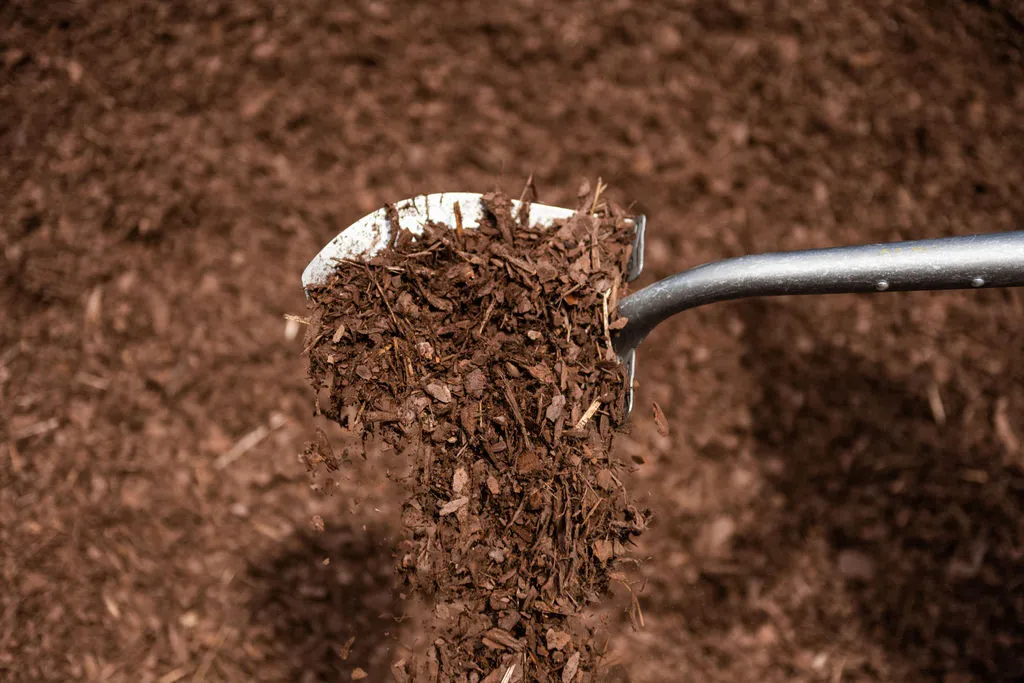
What Is Dark Brown Mulch — and Why It Works in Any Yard
Dark brown mulch is made from shredded hardwood, bark, or recycled wood. Some versions are left in their natural state; others are treated with water-based, non-toxic colorants to create that deep, rich tone. Both are safe for plants, but they behave differently over time.
Natural vs. Dyed Dark Brown Mulch — What’s the Difference?
Natural dark brown mulch is undyed and gets its color from the wood itself. It breaks down over time, improving soil structure and adding organic matter. The downside? The color fades to gray-brown within one season.
Dyed dark brown mulch uses iron oxide or organic, soy-based dyes to lock in that deep tone. According to the University of Massachusetts Extension, these dyes are non-toxic to plants, pets, and children when sourced from reputable suppliers. Color typically holds for 1–2 years.
Quick rule of thumb: If aesthetics matter most, go dyed. If soil enrichment is the priority, go natural — or use a double-shredded hardwood blend that delivers both.
Dark Brown vs. Black vs. Red Mulch — Which Should You Choose?
Here’s what the research actually shows:
| Mulch Color | Visual Impact | Fade Rate | Best Home Exterior | Heat Absorption |
|---|---|---|---|---|
| Dark Brown | Natural, warm | Slow (1–2 years) | Brick, beige, earth tones | Low to moderate |
| Black | Bold, dramatic | Fast (1 season) | Gray, white, modern homes | High |
| Red | Vibrant, intense | Moderate | Yellow, tan, stucco | High |
Brown mulch is the most versatile. It works with virtually any landscape style without competing with your plants or home exterior. That’s why it remains the top-selling mulch color in the US — and why dark brown in particular has become the go-to choice for professional landscapers.
For a deeper breakdown of how each color behaves across different climates and home styles, Home Depot’s mulch color guide is worth bookmarking.
The Real Benefits of Dark Brown Mulch Landscaping
Beyond the look, dark brown mulch is doing serious functional work in your yard year-round. Here’s what it’s actually delivering.
Moisture Retention That Saves You Money
A 2–4 inch layer of mulch forms a physical barrier between your soil and the sun, dramatically slowing water evaporation. For homeowners in drier US climates — the Southwest, the Southeast, or anywhere that sees extended summer heat — this single benefit alone can justify the investment.
Fewer waterings. Stronger roots. Lower water bill. That’s the math.
Weed Suppression Without Chemicals
Weeds need light to germinate. Mulch blocks it. A layer under 2 inches gives weeds a fighting chance; 2–4 inches cuts germination significantly. Always pull existing weeds before laying mulch — covering mature ones won’t stop them. For a deeper understanding of how this works at a soil biology level, the USDA Natural Resources Conservation Service has solid background on mulch and soil health.
Soil Temperature Regulation — Year Round
Organic mulches act as insulation — keeping soil cooler in summer and warmer in early spring and fall. That extended growing window matters, especially in northern US states where the growing season is short.
Curb Appeal That Outlasts the Competition
Here’s the edge dark brown mulch has over black that most people miss: it holds its color longer. Black mulch can fade to an ashy gray within a single season. Dark brown — especially dyed hardwood — stays rich for 1–2 years. Your landscaping looks fresh, longer, with less effort and fewer refreshes.
Dark Brown Mulch Landscaping Ideas That Actually Work
This is where dark brown mulch goes from functional to transformative. Let’s get specific.
Front Yard Dark Brown Mulch Landscaping — Matching to Your Home Exterior
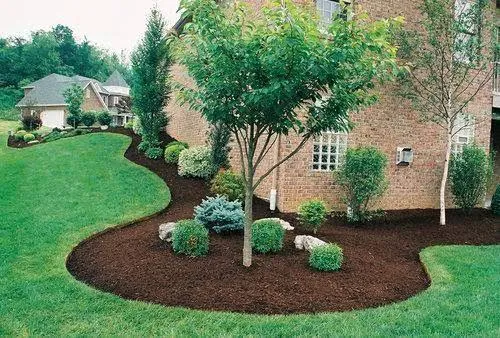
The biggest mistake homeowners make is choosing mulch in isolation. Dark brown mulch looks best against:
- Red brick homes — the warm earth tones complement each other without clashing
- Beige or tan siding — creates a cohesive, intentional look from the street
- Stone or stucco exteriors — adds depth and contrast without competing with texture
Add a defined steel or brick edging border, and your beds instantly look professionally landscaped. It’s one of the highest-ROI upgrades for curb appeal — period.
Flower Bed and Garden Border Ideas
The secret to a stunning bed? Contrast through color and height layering.
Dark brown mulch makes bright blooms pop. Purple, pink, and white flowers create the strongest visual contrast against that deep earthy background. Place your tallest plants at the back, mid-height shrubs in the middle, and low-growers up front. The dark mulch ties everything together into a cohesive design that looks like it took a professional to plan.
Best Plants to Pair with Dark Brown Mulch Landscaping
These are the plants that consistently deliver the best contrast and visual impact against dark brown mulch — all widely available across the US:
- Ornamental grasses (feather reed, blue oat grass) — wispy texture against a dense, dark background
- Boxwood hedges — structured, deep green that glows against dark brown
- Hostas — especially variegated varieties; the white-green contrast is striking
- Purple coneflower (echinacea) — one of the best native perennials for brown mulch contrast
- Knockout roses — low-maintenance, high-color-impact in pink or red
- Arborvitae / juniper — evergreen structure and dark-green contrast year-round
- Lavender — purple + dark brown is a classic, timeless combination
Backyard and Tree Ring Ideas
Around trees: Create rings 2–3 feet in diameter, 2–3 inches deep — and never let the mulch touch the trunk. This prevents rot and the well-documented mulch volcano problem, where mulch piled against a trunk slowly suffocates it and invites disease.
Garden pathways: Lay dark brown mulch between stepping stones for a grounded, natural look that also reduces mud tracking and soil erosion around high-traffic areas.
How to Apply Dark Brown Mulch Like a Pro
Good mulch applied wrong is wasted money. Here’s how to do it right the first time.
How Much Dark Brown Mulch Do You Actually Need?
Use this formula: (Length ft × Width ft × Depth inches) ÷ 324 = Cubic Yards needed
Not a fan of math? Use this quick-reference table:
| Bed Size | Depth | Cubic Yards Needed |
|---|---|---|
| 100 sq ft | 2 inches | 0.6 yd³ |
| 100 sq ft | 3 inches | 1.0 yd³ |
| 200 sq ft | 3 inches | 2.0 yd³ |
| 500 sq ft | 3 inches | 5.0 yd³ |
| 1,000 sq ft | 3 inches | 9.3 yd³ |
For larger or irregular-shaped projects, this free mulch calculator does the math instantly — just enter your bed dimensions and desired depth.
What is a cubic yard? One cubic yard equals 27 cubic feet — roughly the size of a large washing machine. For reference, one cubic yard of mulch covers about 100 square feet at 3 inches deep.
Step-by-Step Dark Brown Mulch Application
- Pull all existing weeds — don’t skip this. Mature weeds push through mulch.
- Edge the bed cleanly — steel or spade edging gives that crisp, professional finish.
- Spread mulch 2–4 inches deep — use a garden rake to level it evenly.
- Keep mulch 2–3 inches away from plant stems and tree trunks — direct contact causes crown rot.
- Water lightly — settles the mulch and activates moisture retention.
The whole job for a standard front yard with 500 sq ft of beds takes 2–3 hours with a wheelbarrow and rake.
Mistakes That Kill the Look — and the Plants
- Mulch volcanos — piling against tree trunks traps moisture and invites fungal disease and pests
- Under-applying — less than 2 inches and weeds break through within weeks
- Over-applying — more than 4 inches suffocates roots and blocks water from reaching the soil
- Skipping edging — mulch spreads across your lawn and kills the clean look fast
- Applying to wet soil — mulch traps excess moisture that leads to root rot
Dark Brown Mulch and Pests — What You Actually Need to Know
This is one of the most-searched questions in this topic — and also the most misunderstood. Let’s clear it up.
Does Dark Brown Mulch Attract Termites?
Short answer: No — but improper use creates conditions that termites thrive in.
Here’s the nuance: mulch doesn’t lure termites. According to Iowa State University research, cited by Lawn Love, there is no direct evidence that moist mulch draws subterranean termites from the surrounding landscape. What mulch does do is retain moisture — and if it’s piled against your foundation, that creates a moist, sheltered environment that termites already in the soil will happily settle into.
The fix is simple and non-negotiable:
- Keep mulch 12–18 inches away from your home’s foundation
- Cap depth at 3 inches near the house structure
- Replace mulch annually to prevent decomposing buildup
- If you’re in a high-risk termite zone (Southeast, Gulf Coast, or Texas), Terminix’s guide on mulch and termites breaks down exactly what to watch for
What About Slugs, Gnats, and Fungus?
Moist mulch can occasionally attract slugs or fungus gnats. The solution is consistent: don’t over-water, don’t apply too thick, and rake the mulch occasionally to break up compacted areas. If mushrooms sprout in your mulch — they’re harmless. They’re part of the natural decomposition process. Rake them away if they bother you aesthetically.
Cost of Dark Brown Mulch Landscaping in 2025–2026
Let’s talk real numbers — because this varies more than most people expect.
How Much Does Dark Brown Mulch Cost?
According to HomeGuide’s 2025–2026 mulch cost data and LawnLove’s cost guide:
| Purchase Type | Cost Range |
|---|---|
| Bagged mulch | $2–$8 per bag (~10 sq ft at 2 inches) |
| Bulk material only | $30–$65 per cubic yard |
| Dyed dark brown (bulk) | ~$33–$45 per cubic yard |
| Professional installation | $72–$87 per cubic yard (national average) |
Real-world example: A standard front yard with 500 sq ft of beds at 3 inches deep needs about 5 cubic yards:
- DIY bulk: ~$165–$225 in materials
- Pro-installed: ~$360–$435 all-in (delivery + spreading + cleanup)
Bulk vs. Bagged — Which Should You Choose?
Go bulk if you need 2 or more cubic yards. It’s significantly cheaper, typically fresher, and local landscape supply companies usually offer better-quality mulch than pre-bagged products from big-box stores. Many suppliers offer delivery for orders of 3+ yards.
Go bagged for small jobs — one or two beds, under 2 cubic yards. Convenient, no truck needed, no minimum order. Just check the label and confirm the dye is non-toxic and water-based.
Frequently Asked Questions About Dark Brown Mulch Landscaping
How deep should I apply dark brown mulch in my landscaping beds?
Apply 2–4 inches for most landscaping areas. Under 2 inches won’t suppress weeds effectively. Over 4 inches can compact, retain too much moisture, and suffocate plant roots. Aim for 3 inches as your standard depth — it hits the sweet spot between performance and safety. Learn more in Penn State Extension’s complete mulching guide.
How long does dark brown mulch hold its color before fading?
Natural dark brown mulch fades to gray-brown within one season. Dyed dark brown mulch holds its color for 1–2 years, depending on sun exposure and rainfall. A 1-inch annual top-up is usually all you need to maintain the look — no full replacement required.
Is dark brown mulch safe for vegetable gardens?
Yes — with one caveat. For vegetable beds, stick with natural, undyed dark brown mulch to eliminate any uncertainty around food safety. Dyed mulch is considered safe by the University of Massachusetts Extension, but for edible gardens, natural hardwood or bark is the conservative call. Keep all mulch 2–3 inches away from plant stems regardless.
Does dark brown mulch attract termites or pests?
Mulch itself does not attract termites. What it can do is create moist conditions near your foundation that termites already in the soil find favorable. Maintain a 12–18 inch gap between mulch and any wooden structure, keep depth at 3 inches or less near the house, and replace annually. Read Terminix’s full breakdown if you’re in a high-risk area.
How much does dark brown mulch cost, and where can I find it near me?
Bulk dark brown mulch runs $30–$65 per cubic yard for materials. With professional installation, expect $72–$87 per cubic yard nationally (2025–2026 pricing). For the best quality and pricing, search for local landscape supply companies or garden nurseries — they often beat big-box store prices for bulk orders. HomeGuide’s mulch cost tool lets you get free estimates from local pros instantly.
Conclusion: Is Dark Brown Mulch Right for Your Yard?
In almost every case — yes. Here’s the short version of everything you need to take away:
- Dark brown mulch is the most versatile color choice, working with virtually any home exterior and garden style
- 3 inches deep is the sweet spot — enough for weed control and moisture retention without suffocating roots
- Best plant pairings: hostas, ornamental grasses, knockout roses, purple coneflower, lavender, and boxwood
- It won’t attract termites if you maintain the 12–18 inch foundation gap rule
- Costs $30–$65 per cubic yard in bulk; $72–$87 installed professionally (national average, 2025–2026)
- Top up annually with 1 inch of fresh mulch to keep color and function going strong
Dark brown mulch landscaping is one of the highest-impact, lowest-effort upgrades you can make to your yard. Whether you’re refreshing existing beds or starting from scratch, it delivers curb appeal, plant health, and water savings all in one layer.
Ready to get started? Contact a Gen Lawn landscaping professional near you for a free custom quote — or grab your measurements, plug them into the mulch calculator, and get it done yourself this weekend.
References and External Resources
- Penn State Extension — Mulching Landscape Plants
- University of Massachusetts Extension — Colored Bark Mulch Safety
- USDA NRCS — Soil Health and Mulching Guidelines
- Iowa State University — Termites and Mulch (via Lawn Love)
- HomeGuide — Mulch Cost Guide 2025–2026
- LawnLove — How Much Does Mulch Cost?
- Terminix — Does Mulch Attract Termites?
- Home Depot — How to Pick the Right Color Mulch
- University of Minnesota Extension — Crown and Root Rot
- Free Mulch Calculator
- Free Cubic Yard Calculator
About Author
Khalid Fazal is a seasoned lawn care specialist and horticultural researcher with over 15 years of hands-on experience transforming challenging landscapes into lush, resilient green spaces. His journey didn’t start in a lab, but in a backyard full of stubborn, cracked clay that “experts” said would never grow a healthy blade of grass. Refusing to accept a yard full of dust, Khalid spent years experimenting with organic soil restoration and precise mulching—eventually turning that wasteland into a neighborhood showpiece on a shoestring budget.
From mastering core aeration techniques to optimizing soil pH for specialized turf varieties, Khalid’s approach combines old-school grit with modern agronomic science. He founded Gen Lawn to provide homeowners with honest, research-backed advice that prioritizes long-term soil health over quick-fix chemical solutions. When he isn’t analyzing soil profiles, he’s developing precision tools to help others achieve professional results without the professional price tag.

Lawn Winterizer: When to Apply by Grass & Region [2026]
Table of Contents Home / By Khalid Fazal | Updated:...
Read More
Spring Lawn Care: What to Do and When in Every US Region
Table of Contents Home / By Khalid Fazal | Updated:...
Read More
Lawn Maintenance Checklist by Season and Grass Type (2026)
Table of Contents Home / By Khalid Fazal | Updated:...
Read More
Liquid Fertilizer vs Granular Fertilizer: Which Wins?
Table of Contents Home / By Khalid Fazal | Updated:...
Read More