
Forestry Mulching: What It Is, How It Works, and What It Costs in 2026
You look out at your property and all you see is a wall of overgrown brush, tangled vines, and trees that have taken over land you actually want to use. Hiring a chainsaw crew sounds expensive. Burning is a permit nightmare. Bulldozing tears up your soil and leaves you with bare dirt and an erosion problem.
Here is the thing: there is a smarter way to clear land, and it does everything in a single pass.
Forestry mulching is the method that homeowners, hunters, developers, and land managers across the US are turning to. One machine. No debris hauling. No burn piles. Just clean, usable land with a healthy ground cover left behind.
In this guide, you will learn exactly what forestry mulching is, how the process works step by step, what it realistically costs in 2026, and how to find and vet a reliable local service near you.
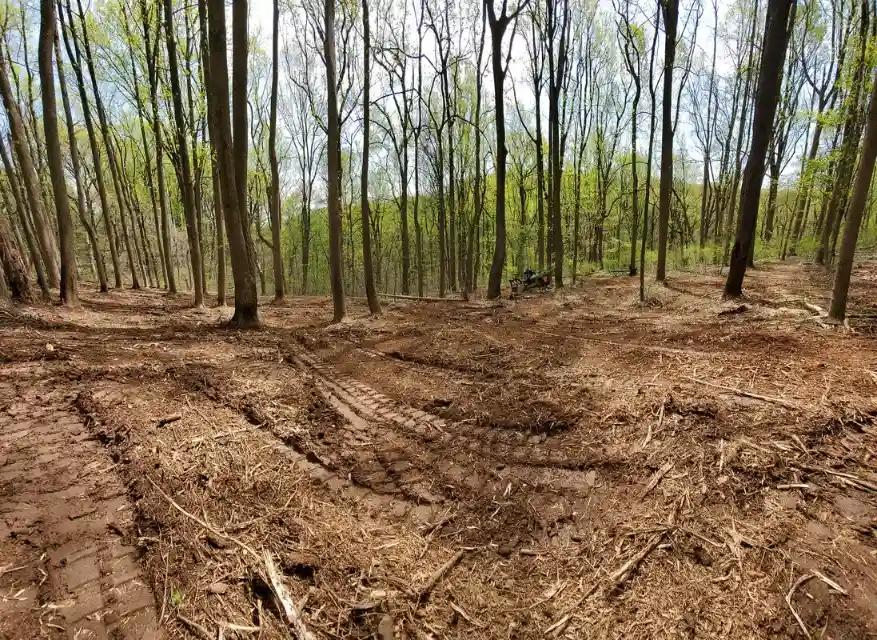
What Is Forestry Mulching?
The Simple Definition
Forestry mulching is a land clearing method that uses a single piece of specialized machinery to cut, grind, and spread vegetation all in one pass. Instead of cutting trees and hauling the debris away, the machine grinds everything on the spot and leaves the shredded material behind as a natural layer of mulch on the ground.
That layer of mulch is not waste. It acts as an erosion barrier, retains soil moisture, and gradually decomposes to return nutrients back into the earth. Your land gets cleared and fed at the same time.
How the Machine Actually Works
The heart of the operation is a mulching head fitted with a spinning drum that rotates at over 2,000 RPM. The drum is lined with carbide steel teeth or blades that shred standing trees, brush, saplings, and stumps into small chips the moment they make contact.
There are two main head types:
- Horizontal shaft mulchers: The most common type. The drum sits parallel to the ground and spins forward as the machine moves. Best for most land clearing jobs.
- Vertical shaft mulchers: Less common in forestry work. They use a different cutting pattern and are better suited to specific terrain types.
The mulching head gets mounted onto a carrier machine. Professionals strongly prefer tracked carriers over wheeled machines because they distribute the machine’s weight more evenly, cause less soil compaction, and handle slopes and wet ground better without tearing up the terrain.
Most professional forestry mulchers efficiently handle trees up to 6 to 12 inches in diameter. Anything larger may need to be felled by chainsaw first before the mulcher processes the remaining material.
Step by Step: What Happens on Your Property
Here is what a typical forestry mulching job looks like from start to finish:
- Site walk: The contractor walks the property with you. You point out what stays and what goes. Desirable trees get flagged with tape so they are not accidentally cleared.
- Hazard check: The operator looks for buried utilities, old fence wire, large rocks, or anything the machine cannot safely process.
- Clearing begins: The machine works through the property systematically. You will see the land open up quickly, usually faster than most people expect.
- Mulch is spread on site: As the machine moves, shredded vegetation is deposited directly onto the ground. There is no separate cleanup phase because clearing and disposal happen at the same time.
- Final inspection: The contractor walks the cleared area with you to confirm the job matches what was agreed.
No trucks. No burn piles. No second visit to haul anything away.
Forestry Mulching vs. Traditional Land Clearing
This is one of the most common questions landowners have before hiring. And the answer actually matters for your budget, your timeline, and the long-term health of your land.
Side by Side Comparison
| Factor | Forestry Mulching | Bulldozing / Traditional Clearing |
|---|---|---|
| Soil Disturbance | Minimal. Roots stay in place. | Major. Bare soil exposed to erosion. |
| Speed | 1 to 4 acres per day | Multiple stages, multiple crews |
| Debris Removal | Not needed. Mulch stays on site. | Required. Hauling adds significant cost. |
| Burn Permits | Not needed | Often required in many US states |
| Erosion Risk | Low. Mulch layer protects soil. | High. Bare ground washes easily. |
| Topsoil Health | Preserved and improved over time | Disrupted and often stripped |
| Best For | Brush, small trees, selective clearing | Full site grading, large commercial prep |
| Cost Profile | More predictable, often lower overall | Can escalate with hauling and labor |
When Forestry Mulching Is the Right Call
Forestry mulching wins when you want to reclaim overgrown land without wrecking the soil underneath. It is the go-to choice for:
- Overgrown residential lots and rural acreage
- Hunting land improvement and wildlife habitat restoration
- Fence line and property line clearing
- Creating fire breaks on wooded properties
- Trail and access road creation
- Right-of-way clearing for utilities and pipelines
- Invasive species control and removal
- Storm debris cleanup
When Traditional Clearing Makes More Sense
Forestry mulching is not the right tool for every job. Traditional methods like bulldozing or excavating are the better choice when:
- You need the ground completely stripped and graded for a building foundation
- You are dealing with dense mature hardwood timber that can be sold for value
- The project requires full root removal below grade level for construction
The smartest contractors will tell you this honestly during an estimate. If someone claims forestry mulching is right for every situation, that is a red flag.
The Real Benefits of Forestry Mulching for Your Property
Here is why forestry mulching has taken over as the preferred land clearing method for residential and rural properties across the US.
It Is Faster and More Efficient
One machine replaces what used to take multiple crews and multiple phases. No chainsaw crew. No haul trucks. No burn day. A skilled operator can clear one to four acres in a single day depending on vegetation density and terrain. That speed directly reduces your labor costs and gets your land usable faster.
It Is Better for Your Soil and the Environment
Traditional clearing methods expose bare soil to rain and wind, which triggers soil erosion almost immediately. Forestry mulching avoids this by leaving roots intact underground, which holds the soil in place, and by depositing a mulch layer on the surface that absorbs rainfall impact and slows runoff.
As the mulch decomposes over 12 to 24 months, it returns carbon and nutrients to the soil. Your land ends up healthier after mulching than it was before. That is something no bulldozer can claim.
It Works on Challenging Terrain
Most land clearing methods struggle on slopes, tight spaces, or properties with trees you want to keep. Forestry mulching equipment is compact enough to work around structures, navigate fence lines, and selectively clear specific areas without disturbing the rest. Tracked machines handle slopes well and distribute their weight to avoid tearing up the ground.
It Serves Almost Every Property Type
Whether you own a half-acre suburban lot or 100 acres of rural land, forestry mulching adapts to the job. Common property types include:
- Residential backyards and overgrown lots
- Rural acreage and farm properties
- Hunting land and wildlife corridors
- Right-of-way corridors for utilities and roads
- Properties needing wildfire prevention measures like fuel load reduction and firebreaks
How Much Does Forestry Mulching Cost in 2026?
This is the section most people come here for. So let us get straight to the numbers.
Cost Per Acre Breakdown
Pricing varies based on vegetation density, terrain, tree size, and your location in the US. Here is what you can realistically expect to pay in 2026:
| Vegetation Type | Cost Per Acre |
|---|---|
| Light brush and grassland | $400 to $850 |
| Moderate brush and small trees | $800 to $1,200 |
| Dense brush with hardwoods | $1,200 to $2,000 or more |
Hourly rates generally run between $125 and $300 per hour. For smaller or complex jobs where acreage pricing does not make sense, contractors may quote by the hour instead.
For a typical homeowner project, most people spend between $1,000 and $4,000 total according to data from Angi and HomeAdvisor. Larger rural acreage jobs are quoted on a custom basis after a site visit.
What Drives Your Quote Up or Down
No two jobs are the same. These are the biggest factors that move the price:
- Vegetation density: Denser brush and larger diameter trees take longer and put more wear on equipment.
- Terrain: Steep slopes, rocky ground, or limited access points increase machine time and risk.
- Mobilization: Remote properties may carry an additional fee to transport the equipment to the site.
- Permits: Some counties require land clearing or land disturbance permits. Budget $100 to $500 for these depending on your location and project size.
- Tree diameter: Efficiently mulching trees beyond 8 to 12 inches may require pre-cutting by chainsaw, which adds labor.
How to Get an Accurate Estimate
Never accept a phone quote for a forestry mulching job. The price depends entirely on what the contractor sees on your property. A reputable service will always offer a free on-site estimate before committing to a number. If someone quotes you a per-acre rate without ever visiting your land, that is a warning sign.
How to Find and Hire a Forestry Mulching Service Near You
Finding the right contractor matters just as much as understanding the process. Here is what to look for.
What a Good Contractor Looks Like
- Uses tracked carrier equipment rather than only wheeled machines for most jobs
- Carries proper general liability insurance and can show you proof
- Has before and after photos from previous jobs similar to yours
- Offers a free on-site estimate and walks the property with you before quoting
- Has local experience with the vegetation types and terrain in your area
Questions to Ask Before You Hire
Use these questions to vet any contractor before signing anything:
- What type of equipment will you use on my property, and why?
- Can you show me proof of insurance coverage?
- Have you worked on properties with similar vegetation and terrain?
- Do you offer a free on-site estimate before quoting a price?
- Will the mulch layer be spread evenly, or do some areas need additional passes?
- Are there any permit requirements for my county that I need to know about?
Red Flags to Avoid
Watch out for these warning signs when getting quotes:
- Unusually low bids: If one quote is dramatically lower than others, question the equipment quality and insurance coverage. Cheap often means underinsured or underequipped.
- No site visit: Any contractor quoting without seeing your land is guessing. Guesses turn into disputes.
- Vague or open-ended pricing: Get all pricing in writing before any work starts. “We will see how it goes” is not a pricing structure.
- No proof of insurance: Operating heavy machinery on your property without liability coverage puts you at legal and financial risk.
Frequently Asked Questions About Forestry Mulching
Does Forestry Mulching Kill Stumps and Roots?
A forestry mulcher grinds stumps flush to the ground level, but it does not remove the root system below. The roots stay underground, which actually benefits soil stability and erosion control. However, if you are planning to build a foundation or need stumps ground below grade, you will need a dedicated stump grinder in addition to the mulching service.
How Long Does It Take to Clear One Acre?
It depends on the vegetation. Light brush may take just a few hours per acre. Dense hardwoods on uneven terrain can take a full day or more per acre. On average, a professional forestry mulcher handles one to four acres per day. This is significantly faster than traditional multi-crew clearing operations.
Can Forestry Mulching Be Done in Wet or Winter Conditions?
Forestry mulching can technically be performed in most weather conditions. However, saturated clay soil creates a real problem. Wet clay compacts under the machine’s weight and can cause rutting that takes years to smooth out. Most experienced contractors will assess soil conditions before starting and may delay the job by a few days after heavy rain. Winter work on frozen ground is generally fine.
What Size Trees Can a Forestry Mulcher Handle?
Most professional machines efficiently process trees up to 6 to 12 inches in diameter at the base. Some heavy-duty dedicated forestry mulchers can handle slightly larger trunks, especially softer wood species like pine. Trees beyond that size range are typically felled by chainsaw first and then processed by the mulcher. If you have large mature hardwoods, discuss this specifically with your contractor during the site walk.
Will the Mulch Left Behind Attract Pests?
This concern comes up often, and the answer is: not typically, if the mulch layer is managed correctly. Problems can occur when mulch is left too thick in concentrated spots. A professional operator spreads the material evenly across the cleared area, which prevents excessive buildup. If you notice the mulch is piling up thicker than three to four inches in certain spots, ask the operator to make an additional pass to spread it out. Wood-boring insects are generally attracted to freshly cut wood in the first season and become less of a concern as the mulch begins to break down.
Conclusion
Forestry mulching is one of the most efficient, environmentally responsible, and cost-effective ways to clear land available today. It handles the cutting, grinding, and spreading in a single pass, leaves your soil healthier than it found it, and gets your land usable faster than any traditional multi-step clearing method.
Here are the key takeaways:
- Forestry mulching uses a single machine to cut, grind, and spread vegetation on-site with no hauling or burning required
- It protects topsoil, prevents erosion, and returns nutrients to the ground over time
- Expect to pay $400 to $2,000 or more per acre in 2026 depending on density, terrain, and location
- Always require an on-site estimate and proof of insurance before hiring
- It is ideal for residential lots, rural acreage, hunting land, fire breaks, and right-of-way clearing
References and Further Reading
- Forestry Mulching Overview, Wikipedia
- 2026 Forestry Mulching Cost Guide, Angi
- Forestry Mulching Cost Per Acre, HomeAdvisor
- Top Benefits of Forestry Mulching, Fecon
- Soil Health Resources, USDA NRCS
- Wildfire Prevention and Forest Management, USDA Forest Service
- Invasive Species Information, National Invasive Species Information Center
- Wood-Boring Insects in Trees, Penn State Extension
About Author
Khalid Fazal is a seasoned lawn care specialist and horticultural researcher with over 15 years of hands-on experience transforming challenging landscapes into lush, resilient green spaces. His journey didn’t start in a lab, but in a backyard full of stubborn, cracked clay that “experts” said would never grow a healthy blade of grass. Refusing to accept a yard full of dust, Khalid spent years experimenting with organic soil restoration and precise mulching, eventually turning that wasteland into a neighborhood showpiece on a shoestring budget.
From mastering core aeration techniques to optimizing soil pH for specialized turf varieties, Khalid’s approach combines old-school grit with modern agronomic science. He founded Gen Lawn to provide homeowners with honest, research-backed advice that prioritizes long-term soil health over quick-fix chemical solutions. When he isn’t analyzing soil profiles, he’s developing precision tools to help others achieve professional results without the professional price tag.

Lawn Winterizer: When to Apply by Grass & Region [2026]
Table of Contents Home / By Khalid Fazal | Updated:...
Read More
Spring Lawn Care: What to Do and When in Every US Region
Table of Contents Home / By Khalid Fazal | Updated:...
Read More
Lawn Maintenance Checklist by Season and Grass Type (2026)
Table of Contents Home / By Khalid Fazal | Updated:...
Read More
Liquid Fertilizer vs Granular Fertilizer: Which Wins?
Table of Contents Home / By Khalid Fazal | Updated:...
Read More