
How Much Does a Yard of Mulch Weigh? Real Numbers by Type
A cubic yard of mulch weighs anywhere from 400 to over 1,400 pounds — and that range is wide enough to blow out your truck’s suspension or leave you making three frustrating extra trips to the supply yard.
Here’s the problem most people run into: they Google a number, grab the first answer, and order based on that. But that number might be for dry cedar mulch in July. You’re picking up wet hardwood mulch after two days of rain. Same volume. Completely different weight.
This guide gives you the exact numbers by mulch type, explains what moisture does to the math, walks you through the bags-to-yards conversion, and tells you what your truck can actually handle. By the end, you’ll order the right amount — and move it without wrecking your back or your vehicle.
How Much Does a Yard of Mulch Weigh? (Quick Answer)
On average, a cubic yard of mulch weighs between 400 and 800 pounds when dry. After rain or fresh delivery, that same yard can easily top 1,000 pounds.
The wide range isn’t vague — it’s real. Two things control it: the type of mulch and how much moisture it’s holding. Everything else is minor.
What Is a Cubic Yard of Mulch?
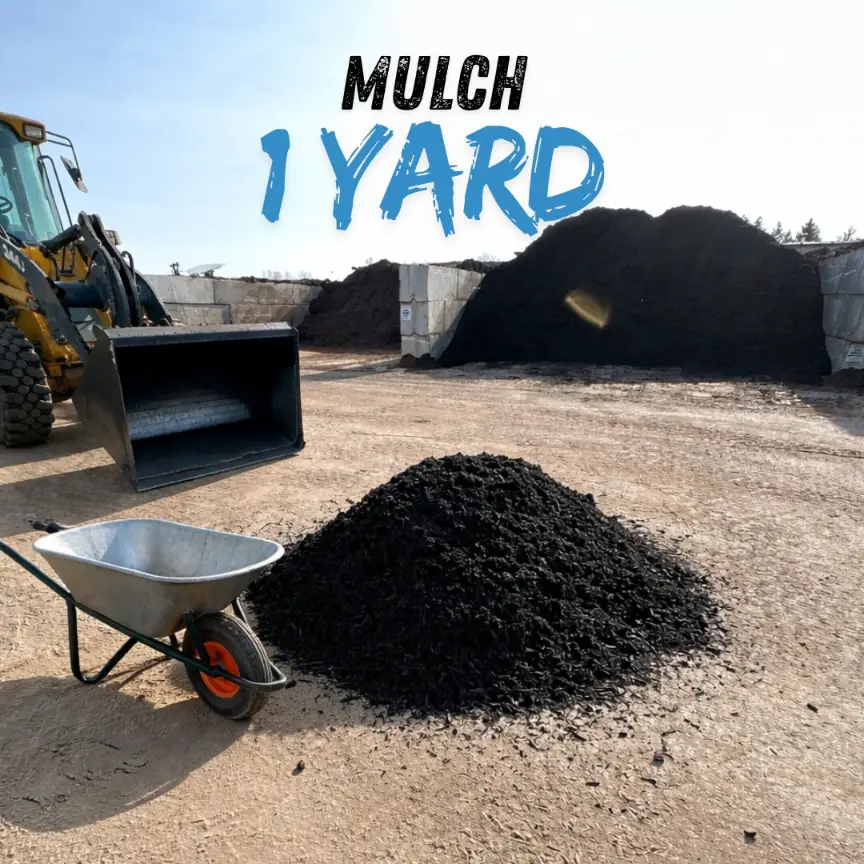
A cubic yard is a unit of volume, not weight. Picture a cube that’s 3 feet wide, 3 feet long, and 3 feet tall — that’s exactly one cubic yard, or 27 cubic feet of space.
Why does this matter? Because mulch is sold by volume, but your truck has a weight limit. A cubic yard of fluffy dry cedar and a cubic yard of waterlogged compost take up the same space — but one could weigh twice as much as the other.
At a 2-inch spread depth, one cubic yard covers approximately 162 square feet. At 3 inches, you’re looking at about 108 square feet. Use a mulch coverage calculator to dial in your project before you order.
Average Weight of a Cubic Yard of Mulch — Quick Reference Table
| Mulch Type | Dry Weight (per yard) | Wet Weight (per yard) |
|---|---|---|
| Shredded Hardwood | 400–700 lbs | 800–1,000+ lbs |
| Cedar / Pine Bark | 450–600 lbs | 700–900 lbs |
| Compost Mulch | 600–1,000 lbs | Up to 1,600 lbs |
| Straw Mulch | 350–500 lbs | Up to 1,400 lbs |
| Rubber Mulch | 800–1,250 lbs | 800–1,250 lbs (no change) |
| Pebble / Gravel Mulch | 1,000–3,000 lbs | Similar |
Now let’s break each one down in detail.
Mulch Weight by Type: How Every Kind Compares
Wood Chip and Shredded Hardwood Mulch Weight
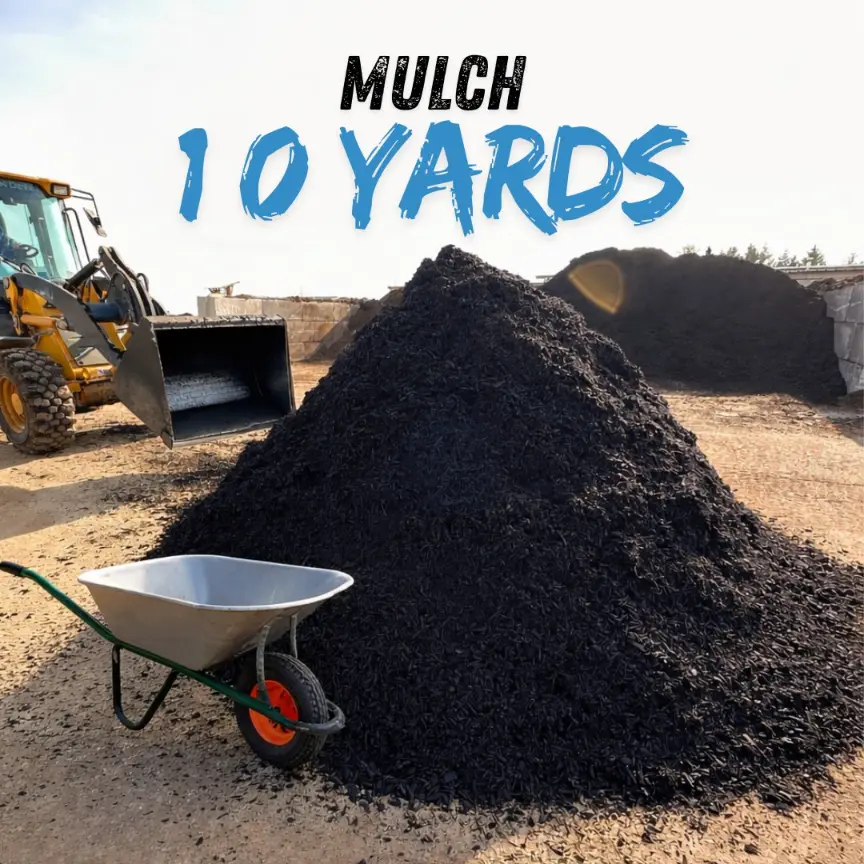
This is the most common mulch you’ll find at any home improvement store or local landscape supplier. When dry, shredded hardwood mulch weighs 400–700 lbs per cubic yard. After rain or irrigation, that number climbs to 800–1,000+ lbs.
Finer-shredded hardwood holds more moisture than coarse chunks — so double-ground mulch will always weigh more than single-ground or nugget-style bark after a rain event.
Cedar and Pine Bark Mulch Weight
Cedar and pine are among the lighter wood mulch options. Dry cedar typically weighs 450–600 lbs per yard, and pine bark runs slightly lighter at 450–500 lbs. Both are easier to haul and spread than hardwood, making them popular for DIY projects.
These are also more naturally resistant to compaction, which keeps them lighter in the bed even as they age.
Straw Mulch Weight — The Biggest Surprise
Here’s the one that catches everyone off guard. Straw mulch is surprisingly light when dry — just 350–500 lbs per yard. But don’t let that fool you.
Because straw is hollow and fibrous, it absorbs water like a sponge. After a rainstorm, a yard of straw mulch can hit 1,400 lbs or more — more than triple its dry weight. That’s not a typo.
If you’re picking up straw mulch after wet weather, assume the high end of that range every single time. Your truck’s payload rating doesn’t care what it weighed before it rained.
Rubber Mulch Weight
Rubber mulch — made from recycled tires — is the one type that plays by different rules. It weighs 800–1,250 lbs per cubic yard, and that number stays the same rain or shine because rubber doesn’t absorb moisture.
It’s heavier than most wood mulches but completely predictable, which makes it easier to plan for. If you’re ordering rubber mulch for a playground or permanent bed, what you see on the weight chart is exactly what you’ll load into the truck.
Compost Mulch Weight
Compost is one of the densest mulch options out there. Expect 600–1,000 lbs per yard when reasonably dry — and significantly more if it’s freshly processed and moisture-heavy. Some suppliers report compost weights closer to 1,600 lbs per yard when saturated.
If you’re using compost primarily as a soil amendment rather than pure mulch, factor this weight into every delivery and transport calculation.
Does Black or Dyed Mulch Weigh More?
Short answer: No. Black, red, and brown dyed mulches are almost always shredded hardwood underneath — just colored with iron oxide or carbon-based dye. The dye itself adds negligible weight.
What matters is the base material and moisture content. A yard of black dyed hardwood mulch weighs the same as a yard of natural hardwood mulch — roughly 500–700 lbs when dry.
Wet vs. Dry Mulch: Why Moisture Can Double the Weight
This is the section most people skip — and it’s exactly why they end up overloading their truck.
How Much Heavier Does Wet Mulch Get?
Most wood-based mulches get 30–70% heavier when wet. A yard of shredded hardwood that weighs 550 lbs on a dry summer afternoon can weigh 900 lbs after two days of rain. Same product. Same volume. Nearly double the load.
Straw is the extreme case — it can more than triple in weight. Rubber is the exception — it never changes.
Here’s a practical way to think about it: if you’re hauling mulch during or after wet weather, always use the high end of every weight range in the table above. Never assume you’re getting the dry estimate when conditions aren’t dry.
What to Ask Your Supplier Before Ordering
Before you load up or schedule delivery, ask your supplier two questions:
- When was this mulch last processed or turned?
- Has it been sitting in rain recently?
Most reputable suppliers will tell you straight. This single conversation can save you from overloading your vehicle or needing an emergency second trip. If they can’t answer, plan conservatively.
How Many Bags of Mulch Equal a Cubic Yard?
If you’re shopping at Home Depot, Lowe’s, or any garden center, you’re buying bags — not cubic yards. Here’s how the conversion works.
Bag Size Conversion Table
| Bag Size | Bags Needed for 1 Cubic Yard | Approx. Weight per Bag |
|---|---|---|
| 1 cu ft | 27 bags | 15–25 lbs |
| 1.5 cu ft | 18 bags | 20–30 lbs |
| 2 cu ft | 13.5 bags | 20–40 lbs |
| 3 cu ft | 9 bags | 30–55 lbs |
The most common bag size in US stores is 2 cubic feet, which means you need 13.5 bags to equal one cubic yard. Always round up to 14 bags so you don’t come up short mid-project.
Bulk vs. Bagged Mulch: Which Makes More Sense for You?
Cost-wise, bulk mulch typically runs around $1.70 per cubic foot, while bagged mulch averages around $3.00 per cubic foot — nearly double. For large projects, the savings add up fast.
But bagged mulch wins on convenience. No wheelbarrow, no mess in the truck bed, and you only buy what you need. For garden beds under 200 square feet, bags are perfectly practical.
For anything larger — especially if you’re mulching multiple beds or doing a full yard refresh — bulk delivery is almost always the smarter call financially and logistically.
Can Your Truck Handle It? Mulch Weight vs. Vehicle Payload
This is where weight stops being academic and starts being a real problem.
How Much Mulch Can a Pickup Truck Carry?
Every pickup truck has a payload rating — the maximum weight it can safely carry in the bed, including passengers, cargo, and anything else loaded in. You’ll find this number on a sticker inside the driver’s door jamb.
Here’s how common trucks stack up against mulch weight:
| Vehicle | Payload Rating | Max Dry Mulch (approx.) |
|---|---|---|
| Half-ton (F-150, Silverado 1500, Ram 1500) | 1,000–2,000 lbs | 1.5–2.5 yards |
| Mid-size (Tacoma, Colorado) | 1,200–1,500 lbs | 1.5–2 yards |
| Three-quarter ton (F-250, Silverado 2500) | 2,000–3,000 lbs | 3–4 yards |
Never exceed your payload rating — especially with wet mulch. One yard of freshly rained-on hardwood mulch can hit 900–1,000 lbs on its own. Two wet yards in a half-ton could put you at or over the limit fast.
When in doubt, make two trips or call for delivery. It’s not worth the suspension damage — or the safety risk on the road.
How to Calculate the Mulch You Need
Before you order, use this simple formula:
Cubic Yards = Length (ft) × Width (ft) × Depth (in) ÷ 324
For example: A 20 ft × 15 ft garden bed at 3 inches deep:
20 × 15 × 3 ÷ 324 = 2.78 cubic yards (round up to 3)
At that quantity — especially with wet mulch — bulk delivery makes far more sense than multiple truck trips. Most suppliers offer residential delivery, and it’s often worth the fee to keep the weight off your vehicle entirely.
Frequently Asked Questions About Mulch Weight
How much does a yard of mulch weigh in pounds?
A cubic yard of mulch weighs between 400 and 1,400 lbs depending on the type and moisture level. Dry wood mulch averages 400–700 lbs, while wet or compost-based mulch can reach 1,000–1,400 lbs. Rubber mulch sits consistently at 800–1,250 lbs regardless of weather.
How much does wet mulch weigh compared to dry mulch?
Moisture adds 30–70% to the weight of most wood mulches. A yard of shredded hardwood that weighs 550 lbs when dry can reach 900 lbs after heavy rain. Straw mulch is the extreme case — it can triple in weight when fully saturated, going from roughly 400 lbs dry to over 1,400 lbs wet.
How many 2 cu ft bags of mulch make a cubic yard?
It takes 13.5 bags of 2 cubic foot mulch to equal one cubic yard. Since you can’t buy half a bag, round up to 14 bags. For 3 cubic foot bags, you need exactly 9 bags per cubic yard.
Can a half-ton pickup truck carry a full yard of mulch?
Yes — but with conditions. Most half-ton trucks (F-150, Silverado 1500, Ram 1500) can handle 1–2 yards of dry mulch within their payload rating. Wet mulch is a different story. A single yard of wet hardwood can weigh 900–1,000 lbs, which eats through your payload fast. Always check your door jamb sticker and err on the side of caution.
How much does a yard of rubber mulch weigh?
Rubber mulch typically weighs 800–1,250 lbs per cubic yard — heavier than most wood mulches. The advantage is consistency: rubber doesn’t absorb moisture, so the weight never changes between dry and wet conditions. What you see on the weight chart is exactly what you get. Learn more about rubber mulch applications and safety standards from ASTM International.
Conclusion: What You Need to Remember Before You Order
Here’s the fast version:
- A cubic yard of mulch typically weighs 400–800 lbs dry and 800–1,400 lbs wet
- Straw mulch is the lightest when dry but the heaviest when wet — plan accordingly
- Rubber mulch never changes weight regardless of moisture
- 1 cubic yard = 13.5 bags (2 cu ft) or 9 bags (3 cu ft)
- Most half-ton trucks safely carry 1–2 yards of dry mulch — less when wet
- Always calculate your need using: L × W × Depth(in) ÷ 324 = cubic yards
- When ordering 3+ yards, bulk delivery almost always beats multiple truck trips on cost and effort
Now you have everything you need to order confidently, load safely, and get the job done right the first time. Go measure those beds, plug in the numbers, and get your mulch ordered.
References & Further Reading
- The Calculator Site — Mulch Calculator
- Friendly Tree Service — Mulch FAQs
- Gardener’s Supply — How Much Mulch Do I Need?
- University of Minnesota Extension — Mulching Trees and Shrubs
- EPA — Facts About Rubber Recycling
- ASTM International — F1292 Impact Attenuation Standard (Rubber Mulch)
About Author
Khalid Fazal is a seasoned lawn care specialist and horticultural researcher with over 15 years of hands-on experience transforming challenging landscapes into lush, resilient green spaces. His journey didn’t start in a lab, but in a backyard full of stubborn, cracked clay that “experts” said would never grow a healthy blade of grass. Refusing to accept a yard full of dust, Khalid spent years experimenting with organic soil restoration and precise mulching—eventually turning that wasteland into a neighborhood showpiece on a shoestring budget.
From mastering core aeration techniques to optimizing soil pH for specialized turf varieties, Khalid’s approach combines old-school grit with modern agronomic science. He founded Gen Lawn to provide homeowners with honest, research-backed advice that prioritizes long-term soil health over quick-fix chemical solutions. When he isn’t analyzing soil profiles, he’s developing precision tools to help others achieve professional results without the professional price tag.

Lawn Winterizer: When to Apply by Grass & Region [2026]
Table of Contents Home / By Khalid Fazal | Updated:...
Read More
Spring Lawn Care: What to Do and When in Every US Region
Table of Contents Home / By Khalid Fazal | Updated:...
Read More
Lawn Maintenance Checklist by Season and Grass Type (2026)
Table of Contents Home / By Khalid Fazal | Updated:...
Read More
Liquid Fertilizer vs Granular Fertilizer: Which Wins?
Table of Contents Home / By Khalid Fazal | Updated:...
Read More