
How Much Will a Yard of Mulch Cover? (Plus the Australian Cubic Metre Guide)
One cubic yard of mulch covers roughly 108 square feet at 3 inches deep. For Australian gardeners, that is about 10 square metres at 7.5 centimetres of depth.
Here is the thing: most Australians do not buy mulch by the yard. Local suppliers sell by the cubic metre. But a large chunk of online search traffic still uses the term “yard” because of US-influenced content. This guide gives you both, so you are covered no matter how you are shopping.
Get this wrong and you either run out mid-job and have to make a second trip, or you end up with a pile of mulch sitting on your driveway for weeks. Neither is fun.
By the end of this article you will know exactly how much a yard (or cubic metre) of mulch covers at every depth, how to calculate your exact needs, and which mulch type suits Australian gardens best.
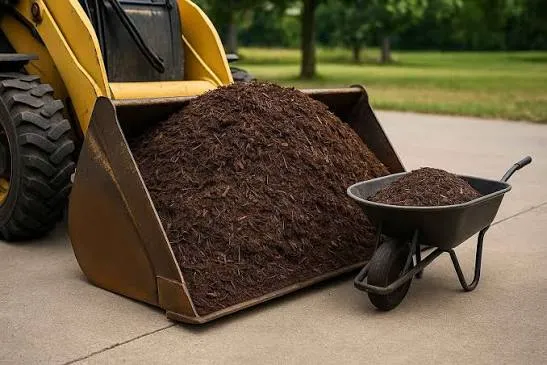
What Does “a Yard of Mulch” Actually Mean?
If you have ever searched for mulch coverage and ended up more confused than when you started, you are not alone. The measurement terminology trips people up all the time.
Cubic Yard vs Cubic Metre: The Australian Conversion You Need
When someone says “a yard of mulch,” they are referring to a cubic yard. That is a block of material measuring 3 feet by 3 feet by 3 feet, which equals 27 cubic feet in total.
In Australia, mulch is sold by the cubic metre (m3). The two are close but not identical:
- 1 cubic yard = 0.765 cubic metres
- 1 cubic metre = 1.308 cubic yards
So if an Australian supplier quotes you 1 m3 of mulch, that is slightly more than a yard. Useful to know when comparing prices or working off US-based coverage guides.
Why the Depth You Choose Changes Everything
This is where most people go wrong. Coverage is not just about volume. It is about how thick you spread that volume across your garden.
Think of it like spreading butter on toast. A thin scrape covers more surface, but a thicker spread gives you better protection. The same logic applies to mulch.
Spread it thin and you cover more ground but lose out on weed suppression and moisture retention. Spread it thicker and you get far better results, but you cover less area per yard or cubic metre.
That relationship between depth and coverage is exactly why knowing your target depth before you order makes such a big difference.
How Much Will a Yard of Mulch Cover? Full Coverage Table
Here is the number you came for.
One cubic yard of mulch covers the following areas depending on the depth you apply:
| Depth (inches) | Depth (cm) | Coverage per 1 Cubic Yard | Coverage per 1 Cubic Metre |
|---|---|---|---|
| 1 inch | 2.5 cm | 324 sq ft | ~30 m2 |
| 2 inches | 5 cm | 162 sq ft | ~20 m2 |
| 3 inches | 7.5 cm | 108 sq ft | ~13 m2 |
| 4 inches | 10 cm | 81 sq ft | ~10 m2 |
For most Australian garden beds, a depth of 7.5 cm (3 inches) delivers solid weed suppression, good moisture retention, and a tidy finish. That means one cubic metre will cover around 13 square metres.
One important note: mulch settles and compacts over time as it begins to break down organically. Always order 10 to 15 percent more than your calculations suggest. It is a small buffer that can save you a costly second delivery fee.
How to Calculate How Much Mulch You Need for Your Garden
Right, let us get into the actual maths. Do not worry. It is simpler than it looks.
The Simple Formula (Imperial and Metric)
If you are working in imperial measurements (feet and inches):
Area in square feet x Depth in inches / 324 = Cubic Yards Needed
If you are working in metric (the Australian standard):
Length (m) x Width (m) x Depth (m) = Cubic Metres Needed
For the metric formula, convert your depth from centimetres to metres first. So 7.5 cm becomes 0.075 m.
Worked example for an Australian garden bed:
Say you have a garden bed that is 5 metres long and 3 metres wide, and you want mulch at 7.5 cm deep.
5 x 3 x 0.075 = 1.13 cubic metres
Round that up to 1.25 m3 to account for settling, and that is your order quantity.
For a free tool, LandscapeCalc.com.au has an Australian mulch calculator that does all the maths in seconds and gives you results in cubic metres, tonnes, and bag quantities.
Irregular Garden Beds: What to Do
Not every garden bed is a neat rectangle. If yours is curved, L-shaped, or oddly proportioned, break it into smaller rectangular sections and calculate each one individually.
Add those sub-totals together and then apply your 10 to 15 percent settling buffer. Round up to the nearest half cubic metre when placing a bulk order. It is always better to have a little extra than to run short at the finish line.
Bags vs Bulk: Which Makes More Sense in Australia?
This decision comes down to how much you need and how easy your property is to access.
Go with bagged mulch if:
- Your project requires under 1 cubic metre
- You have limited delivery access (narrow side gates or no truck access)
- You want a specific colour or premium product not available in bulk
Go with bulk delivery if:
- You need more than 1 cubic metre
- You are covering multiple beds or a large garden
- You want to save money and reduce plastic waste
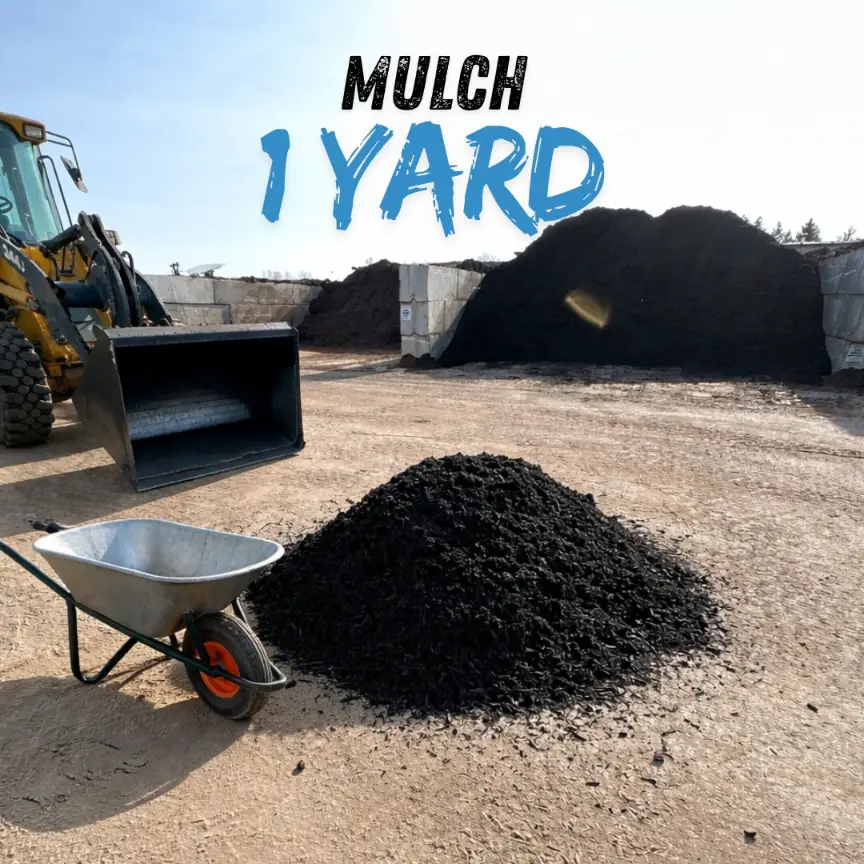
Here is a real cost comparison using current Australian prices:
| Purchase Option | Approx. Cost per m3 | Best For |
|---|---|---|
| Bagged (25 x 40L bags at $10 each) | ~$250 to $400 per m3 | Small jobs, tricky access |
| Bulk delivery | $40 to $150 per m3 | Large gardens, best value |
The savings on bulk are hard to ignore. For any project over 1 cubic metre, bulk delivery is almost always the smarter financial choice. It is also better for the environment since there are no plastic bags to deal with afterwards.
Best Mulch Types for Australian Gardens and How Deep to Apply Each
But wait: not all mulch works the same way. The type you choose affects how deep you should apply it, how long it lasts, and how much area each cubic metre will realistically cover once it is spread.
Sugar Cane Mulch (Apply at 5 to 8 cm)
Sugar cane mulch is lightweight, affordable, and breaks down relatively quickly. That fast decomposition feeds nutrients back into your soil, which is why it is a favourite for veggie gardens and annual flower beds.
The trade-off is that it needs topping up more regularly than bark-based products. Because it is so light, it can also shift around in strong winds. Most suppliers recommend applying it at 5 to 8 cm deep for effective coverage.
Pine Bark and Bark Mulch (Apply at 7 to 10 cm)
Bark mulch is one of the most popular choices in Australian ornamental gardens. It breaks down slowly, looks tidy, and does an excellent job of retaining soil moisture across Australia’s hot summers.
Pine bark is naturally acidic, which makes it ideal for acid-loving plants like azaleas, camellias, and many native Australian species. Apply it at 7 to 10 cm for best results and longevity.
Wood Chip and Euci Mulch (Apply at 8 to 10 cm)
Wood chip is the workhorse of the mulch world. It is chunky, long-lasting, and excellent for pathways and areas around established trees and shrubs.
Euci mulch (eucalyptus chip) has become increasingly popular in Australian native gardens. It is wind-resistant, great at holding moisture, and gradually enriches the soil as it decomposes. Apply at 8 to 10 cm for solid coverage.
Quick Comparison Table:
| Mulch Type | Apply at | Coverage per m3 | Best For | Top-Up Frequency |
|---|---|---|---|---|
| Sugar Cane | 5 to 8 cm | 13 to 20 m2 | Veggie gardens, annuals | Every 6 to 12 months |
| Pine Bark | 7 to 10 cm | 10 to 14 m2 | Ornamental beds, natives | Every 2 to 3 years |
| Wood Chip | 8 to 10 cm | 10 to 13 m2 | Paths, trees, shrubs | Every 1 to 2 years |
| Euci Mulch | 7 to 10 cm | 10 to 14 m2 | Native gardens, windy spots | Every 1 to 2 years |
For a deeper dive into Australian mulch varieties and their specific properties, Aussie Green Thumb’s complete mulch guide is worth bookmarking.
Common Mulching Mistakes That Waste Time and Money
Even experienced gardeners get caught out by these. Here is what to watch for.
Volcano mulching around trees. This is where mulch gets piled up against the trunk like a little mountain. It causes collar rot and creates a perfect environment for pests. Always keep mulch at least 10 to 15 cm away from any trunk or plant stem.
Going too thin. A layer under 5 cm does almost nothing for weed suppression and dries out fast. It is a waste of material and effort. Commit to the proper depth for the product you are using.
Skipping the settling buffer. Fresh mulch looks great right after you spread it. Then it rains, it compacts, and suddenly it looks half as thick. Factor in that 10 to 15 percent extra from the start.
Mulching dry soil. Applying mulch to dry ground seals that dryness in. Water the area thoroughly first, then spread your mulch over moist soil so it actually locks in the moisture you want to keep.
Ignoring nitrogen drawdown with fresh wood chip. Fresh wood chips can temporarily reduce the nitrogen available to your plants as they begin to decompose. If you are using fresh chip around veggie beds, give them a feed of nitrogen-rich fertiliser beforehand.
Frequently Asked Questions
How Much Does a Cubic Metre of Mulch Cover in Australia?
At the standard recommended depth of 7.5 cm, one cubic metre of mulch covers approximately 13 square metres of garden bed. At a shallower 5 cm depth, it stretches to around 20 square metres. The deeper your application, the less area each cubic metre will cover. Always use the formula: Length x Width x Depth (in metres) to get your exact number.
How Much Will a Yard of Mulch Cover at 2 Inches Deep?
At 2 inches (5 cm) deep, one cubic yard of mulch covers approximately 162 square feet. In Australian metric terms, the equivalent volume (0.765 m3) covers roughly 15 square metres at 5 cm depth. This is a common depth for refreshing beds that already have an existing mulch layer underneath.
How Many Bags of Mulch Do I Need for My Garden?
Start by calculating your total cubic metres needed using the formula above. Then divide by the bag size. A standard 40-litre bag equals 0.04 cubic metres, meaning you need approximately 25 bags to make up 1 cubic metre. For anything over 1 cubic metre, bulk delivery will almost always be cheaper and more practical.
Is Bulk Mulch Cheaper Than Bags in Australia?
Yes, significantly. Bagged mulch typically works out to $250 to $400 per cubic metre once you buy enough 40-litre bags at around $10 each. Bulk mulch from a landscape supplier costs $40 to $150 per cubic metre depending on the type and your location. For any project requiring more than 1 cubic metre, bulk is the better value by a wide margin. You can find local bulk suppliers and compare pricing through Airtasker AU’s mulching cost guide.
How Deep Should Mulch Be in Australian Gardens?
It depends on the type. Sugar cane mulch works well at 5 to 8 cm. Pine bark and euci mulch perform best at 7 to 10 cm. Wood chip should go down at 8 to 10 cm. Straw mulch, commonly used in veggie beds, can go as deep as 10 to 15 cm. For a full breakdown by product type, Planting Season AU’s mulching guide has excellent depth recommendations tailored to the Australian climate.
Wrapping It All Up
Getting your mulch quantities right before you order saves you time, money, and a return trip to the supplier. Here are the key points to take away:
- One cubic yard covers 108 sq ft at 3 inches deep, which is roughly 10 square metres per cubic metre at 7.5 cm
- Always add a 10 to 15 percent buffer to your total for settling
- Use the metric formula: Length x Width x Depth (in metres) = cubic metres needed
- Match your mulch type to your garden situation and apply at the correct depth for that product
- For jobs over 1 cubic metre, bulk delivery beats bagged mulch on price every single time
References and Resources
- LandscapeCalc.com.au: Free Australian Mulch Calculator
- Planting Season AU: Mulching Guide for Australian Gardens
- Bunnings AU: Mulch and How to Use It
- Aussie Green Thumb: Ultimate Mulch Guide
- Priority Tree Services AU: Mulch Cost Guide
- Airtasker AU: Mulching Cost in Australia
- ABC Gardening Australia: Weed Suppression with Mulch
- ABC Gardening Australia: Nitrogen Drawdown Explained
About Author
Khalid Fazal is a seasoned lawn care specialist and horticultural researcher with over 15 years of hands-on experience transforming challenging landscapes into lush, resilient green spaces. His journey didn’t start in a lab, but in a backyard full of stubborn, cracked clay that “experts” said would never grow a healthy blade of grass. Refusing to accept a yard full of dust, Khalid spent years experimenting with organic soil restoration and precise mulching—eventually turning that wasteland into a neighborhood showpiece on a shoestring budget.
From mastering core aeration techniques to optimizing soil pH for specialized turf varieties, Khalid’s approach combines old-school grit with modern agronomic science. He founded Gen Lawn to provide homeowners with honest, research-backed advice that prioritizes long-term soil health over quick-fix chemical solutions. When he isn’t analyzing soil profiles, he’s developing precision tools to help others achieve professional results without the professional price tag.

Lawn Winterizer: When to Apply by Grass & Region [2026]
Table of Contents Home / By Khalid Fazal | Updated:...
Read More
Spring Lawn Care: What to Do and When in Every US Region
Table of Contents Home / By Khalid Fazal | Updated:...
Read More
Lawn Maintenance Checklist by Season and Grass Type (2026)
Table of Contents Home / By Khalid Fazal | Updated:...
Read More
Liquid Fertilizer vs Granular Fertilizer: Which Wins?
Table of Contents Home / By Khalid Fazal | Updated:...
Read More