
How to Start a Lawn From Scratch: A Step-by-Step Guide for Homeowners
You bought the house. You love the house. But the yard? It’s a mess of bare dirt, dead patches, or weeds fighting each other for territory.
Starting a lawn from scratch sounds like a big project — and honestly, it is. But it’s also one of the most satisfying things you can do as a homeowner. Done right, you get thick, green grass that holds up to kids, dogs, summer heat, and everything else life throws at it.
Here’s the short answer: to start a lawn, you need to choose between seed and sod, pick the right grass for your region, prep the soil properly, plant at the right time, and water consistently in the first few weeks. That’s the whole game.
This guide breaks each step down clearly — no jargon, no fluff. By the end, you’ll know exactly what to buy, when to plant, and what to do in the first 30 days.
First Things First — Seed or Sod?
Before you buy anything, you need to make one decision: are you starting your lawn from seed or laying sod?
Most guides skip this step and jump straight into soil prep. That’s a mistake. The method you choose changes your budget, your timeline, and how you do everything else.
What Is Sod and When Does It Make Sense?
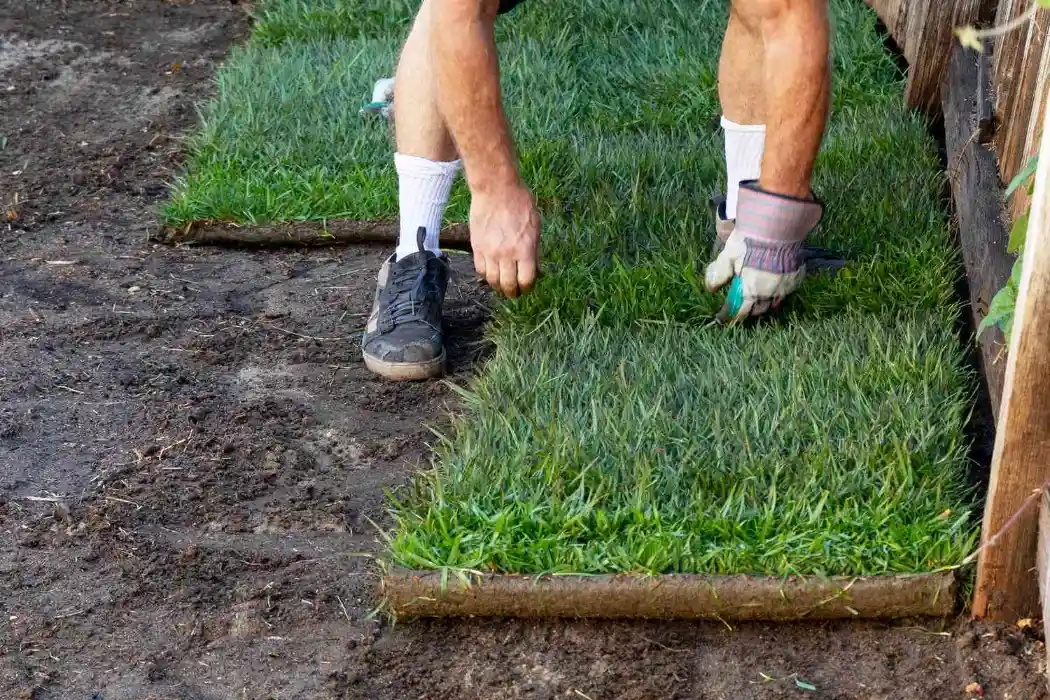
Sod is pre-grown grass. It comes in rolled strips — roots, soil, and all — and gets laid directly onto your prepped ground. You essentially unroll an instant lawn.
The big advantage? Speed. Sod takes only 2–3 weeks to become fully established, compared to seed, which can take a full season. It’s also excellent for controlling erosion on slopes and areas near downspouts where seeds would simply wash away. GreenPal
The catch is cost. Sod typically costs $0.60 to $1.29 per square foot, while grass seed only costs about $0.24 per square foot. On a 2,000 sq ft yard, that’s potentially $2,500+ just for materials — before installation labor. Bob Vila
Sod makes sense when:
- You need a lawn ready for a specific event or deadline
- Your yard has erosion-prone slopes
- Weeds are out of control and seed can’t compete
- You’re sodding a sunny front yard for immediate curb appeal
When Starting From Seed Is the Smarter Move
Seeding takes more patience, but it gives you more control. The cost of premium grass seed is much less when compared to the cost of sod for the same size lawn. You also get far more variety — there are grass types available in seed form that simply aren’t offered as sod in most markets. Pennington
The deeper roots that develop from seeded grass also tend to be more drought-resistant long-term. If you’re willing to wait 8–12 weeks for a mature lawn, seed almost always wins on value.
Seed makes sense when:
- You’re working with a larger area where sod costs would be prohibitive
- You have time (at least one full growing season)
- You want specific grass varieties suited to shade, drought, or your exact soil type
- Budget is a primary factor
Quick Comparison: Seed vs. Sod
| Factor | Seed | Sod |
|---|---|---|
| Cost (materials) | $0.10–$0.25/sq ft | $0.60–$1.29/sq ft |
| Time to establish | 8–12+ weeks | 2–3 weeks |
| Grass variety options | Wide | Limited |
| Weed competition | High risk early on | Low risk |
| DIY-friendliness | Easy | Moderate |
| Best for | Budget, large areas, shade | Speed, erosion, curb appeal |
Choose the Right Grass for Your Region
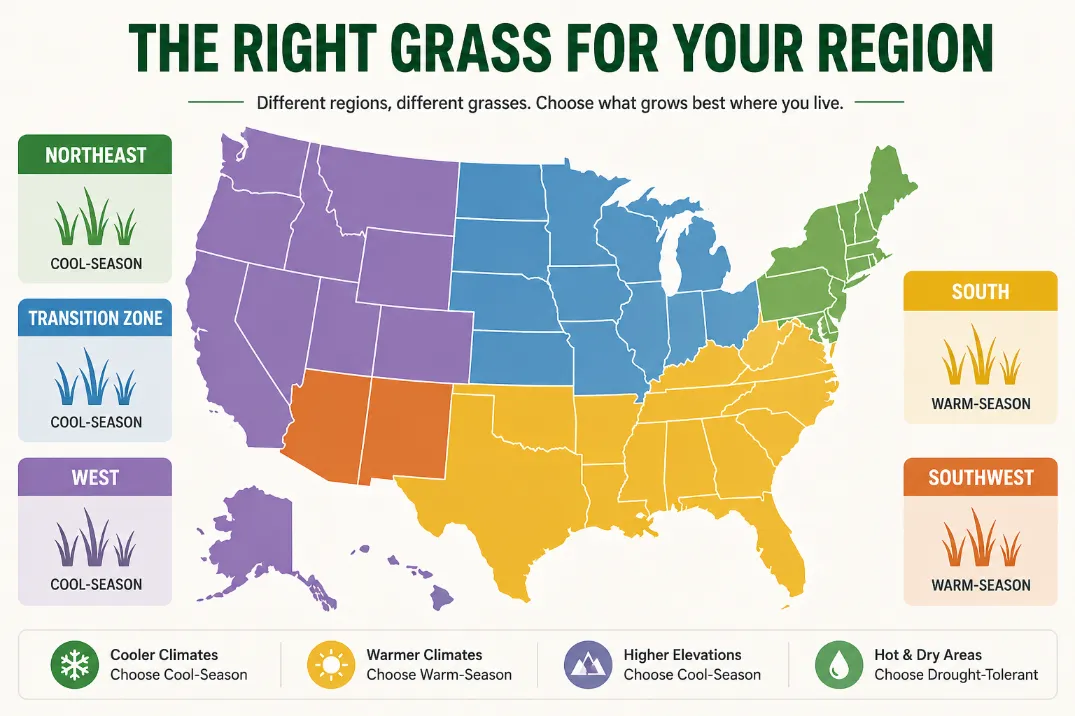
Not all grass is the same. Plant the wrong type and it’ll struggle all season — no matter how well you prep the soil or water.
The U.S. is divided into three general growing zones. Knowing yours is non-negotiable before you buy a single bag of seed.
Cool-Season Grasses (Northern U.S.)
If you live in the northern two-thirds of the country — think Ohio, Pennsylvania, Colorado, Oregon — you’re in cool-season territory. These grasses thrive in the 60–75°F range and go dormant in summer heat.
Top cool-season varieties:
- Kentucky Bluegrass — lush, dark green, great for high-traffic lawns
- Tall Fescue — drought-tolerant, stays green longer, excellent for transitional areas
- Perennial Ryegrass — fast germination, great for overseeding or quick cover
The best planting window for cool-season grass is late summer to early fall — typically August through October. The soil is still warm enough for germination, but the cooler air reduces competition from weeds and heat stress.
Warm-Season Grasses (Southern U.S.)
Southern homeowners — in states like Texas, Georgia, Florida, and Arizona — need grasses that thrive in heat and go dormant in winter. These grasses peak in late spring through summer.
Top warm-season varieties:
- Bermudagrass — aggressive spreader, extremely heat and drought tolerant
- Zoysia — dense, slow-growing, handles foot traffic well
- St. Augustine — thick, carpet-like, best for humid coastal climates
Plant warm-season grasses from late spring to early summer when soil temperatures are consistently above 65°F.
What If You’re in the Transition Zone?
The transition zone cuts diagonally across the middle of the U.S. — roughly Kansas through Virginia. Here’s the challenge: it’s too hot for cool-season grasses in summer and too cold for warm-season grasses in winter.
The most reliable approach in the transition zone is tall fescue, which handles both temperature extremes better than most. Some homeowners also use a mix of Zoysia and tall fescue, accepting that each will look better in its respective season.
How to Prepare Your Soil to Start a Lawn the Right Way
Here’s where most new lawns fail — not at planting, but in the weeks before it.
Skipping proper soil preparation leads to patchy germination, shallow roots, and a lawn that looks decent for one season, then falls apart. Do this right and everything else becomes easier.
Step 1: Clear the Area First
Remove all existing vegetation — old grass, weeds, rocks, and debris. For stubborn weeds or a heavily overgrown area, apply a non-selective herbicide and wait 7–14 days before proceeding. For large areas with existing grass, use a shovel or sod cutter, then rake the surface to remove sticks, stones, and litter. Progardenreview
Take your time here. A smooth, debris-free surface ensures better seed-to-soil contact and prevents uneven growth patterns later.
Step 2: Test Your Soil pH
A soil test is a 15-minute step that can save you months of frustration. The right pH for growing grass is between 6.0 and 7.5 — any soil pH outside this range will yield a less stellar lawn. PRO-MIX Gardening
Home soil test kits are available at any garden center for around $10–$20. If the pH is too low (acidic), add lime. Too high (alkaline), add sulfur. Most extension offices in your state also offer low-cost professional soil testing with specific amendment recommendations.
Step 3: Till, Grade, and Amend
This is the physical heavy lifting — and it’s worth it. Tilling the soil to a depth of 6–8 inches helps roots establish deeply and removes rocks, compacted layers, and debris that would block root growth. Progardenreview
After tilling:
- Grade the surface so water drains away from your house and foundation
- Fill in low spots to prevent standing water after rain
- Add 2–3 inches of compost and till it in — this improves drainage in clay soils and water retention in sandy soils
- Apply starter fertilizer — look for a formula with a higher middle number (phosphorus), which drives root development in new grass
Finish with a light pass of a lawn roller to firm the soil and reveal any remaining low spots.
How to Start a Lawn From Seed — Step by Step
You’ve cleared the area, tested the soil, and amended as needed. Now it’s time to plant.
When to Plant (Timing Is Everything)
The right grass at the wrong time still fails. Cool-season grasses go in from late August through October. Warm-season grasses go in from late May through early July. Planting outside these windows means battling summer heat or the first frost during your lawn’s most vulnerable stage.
How to Spread Seed Evenly
Use a broadcast (rotary) spreader for large areas. Check the seed bag for the recommended spreader setting. Here’s the technique that most homeowners miss: spread the seed across the perimeter first, then fill in the rest with slightly overlapping passes. Apply seed in two perpendicular directions for even coverage. ScottsMiracle-Gro
After spreading, lightly rake the seed into the soil — aim for about ⅛ inch of coverage. Then roll the area with a lawn roller (most equipment rental shops have these) to press seeds into the soil for better germination contact.
Apply a thin layer of straw mulch over the seeded area to retain moisture and protect seeds from birds and erosion.
Watering Your New Lawn (The Most Common Mistake)
New lawns get killed by two extremes: too much water and not enough. The goal is consistency, not saturation.
For new grass seed, keep the top inch of soil consistently moist by watering twice daily — morning and evening — for 5–10 minutes per session. This prevents seeds from drying out before germination, which typically takes 7–21 days. Progardenreview
Once seedlings emerge, gradually reduce the frequency of watering while increasing the duration. You’re training roots to go deeper in search of water — which is exactly what you want for a drought-resistant lawn.
Your First 30 Days After Seeding
The first month is critical. Here’s what to do — and what not to do:
Do:
- Keep foot traffic completely off the seeded area until grass reaches mowing height
- Mow for the first time when grass hits approximately 3 inches tall
- Cut only the top one-third of the blade on your first few mows
- Apply a regular lawn fertilizer 4–6 weeks after germination
Don’t:
- Apply weed killer until you’ve mowed at least 3–4 times
- Use pre-emergent crabgrass products — they’ll block your seeds from germinating
- Let the soil dry out completely even once during the first two weeks
Starting a Lawn With Sod — What You Need to Know
Soil prep for sod is identical to seed — test, till, grade, and amend before you lay a single strip.
Once your sod is delivered: lay sod on slightly moistened soil, staggering the seams so they are offset. Lay the rolls across any slopes and stake each piece to hold it in place. Fill any cracks between strips with soil to prevent edges from drying. University of Minnesota Extension
Roll the sod after laying it to ensure root-to-soil contact, then water heavily. Keep it consistently moist for the first 7–14 days. After about 10–14 days, perform a tug test — gently tug the sod in several areas. If there is resistance, the sod has rooted into the soil and can be treated as an established lawn. University of Minnesota Extension
Frequently Asked Questions About Starting a Lawn
How long does it take to start a lawn from scratch?
With seed, expect 7–21 days for germination and a full growing season (8–12 weeks) for a mature, traffic-ready lawn. Sod establishes in 2–3 weeks with proper watering.
What is the best time of year to start a lawn?
For cool-season grasses, late summer to early fall (August–October) is ideal. For warm-season grasses, late spring to early summer (May–July) is best. Avoid mid-summer planting for cool-season varieties and late fall planting for warm-season types.
How much does it cost to start a new lawn?
Seeding a lawn yourself runs approximately $0.10–$0.25 per square foot in seed costs. Sodding runs $0.60–$1.29 per square foot in material alone. A 2,000 sq ft lawn seeded DIY might cost $300–$500 total with soil amendments and fertilizer. The same area sodded professionally could run $2,500–$4,000.
Can I start a lawn in summer?
It’s possible, but not ideal for most grass types. Warm-season grasses handle summer planting well. Cool-season grasses will struggle in summer heat and compete with more aggressive weed pressure. If you’re in the north and miss the fall window, wait — early spring is your next best option.
What grass seed should I use for my area?
Start with your state’s university extension service for a free, region-specific recommendation. As a general rule: Kentucky bluegrass and fescue for the north, Bermuda and Zoysia for the south, and tall fescue for the transition zone.
Your Lawn Starts With One Good Decision
Starting a lawn from scratch isn’t complicated — but it is sequential. Skip the soil prep and your seed won’t germinate. Plant at the wrong time and your grass won’t survive its first season. Choose the wrong grass type and you’ll be fighting your own lawn’s natural tendencies every year.
Here’s the three-step path forward:
- Decide: seed or sod — based on your budget, timeline, and yard conditions
- Know your zone — pick the grass variety that’s built for your climate
- Prep the soil first — this is the step that determines whether everything else works
Pick up a $15 soil test kit this week and start there. Your future lawn is already waiting under that bare dirt — it just needs the right conditions to show up.
References & Sources:
- University of Minnesota Extension — Seeding and Sodding Home Lawns
- Scotts Miracle-Gro — How to Grow a New Lawn
- Pennington Seed — Sod vs. Seed
- Bob Vila — Sod vs. Seed
- Pro Garden Review — How to Start a Lawn From Scratch
About Author
Khalid Fazal is a seasoned lawn care specialist and horticultural researcher with over 15 years of hands-on experience transforming challenging landscapes into lush, resilient green spaces. His journey didn’t start in a lab, but in a backyard full of stubborn, cracked clay that “experts” said would never grow a healthy blade of grass. Refusing to accept a yard full of dust, Khalid spent years experimenting with organic soil restoration and precise mulching—eventually turning that wasteland into a neighborhood showpiece on a shoestring budget.
From mastering core aeration techniques to optimizing soil pH for specialized turf varieties, Khalid’s approach combines old-school grit with modern agronomic science. He founded Gen Lawn to provide homeowners with honest, research-backed advice that prioritizes long-term soil health over quick-fix chemical solutions. When he isn’t analyzing soil profiles, he’s developing precision tools to help others achieve professional results without the professional price tag

Lawn Winterizer: When to Apply by Grass & Region [2026]
Table of Contents Home / By Khalid Fazal | Updated:...
Read More
Spring Lawn Care: What to Do and When in Every US Region
Table of Contents Home / By Khalid Fazal | Updated:...
Read More
Lawn Maintenance Checklist by Season and Grass Type (2026)
Table of Contents Home / By Khalid Fazal | Updated:...
Read More
Liquid Fertilizer vs Granular Fertilizer: Which Wins?
Table of Contents Home / By Khalid Fazal | Updated:...
Read More