
You look out your window on a Saturday morning, coffee in hand, and instead of a thick green carpet, you see a patchwork of thin grass, stubborn dandelions, and weeds filling every gap. Sound familiar?
Here’s the thing — that lawn didn’t fail on its own. Weeds are opportunists. They move in wherever grass is weak, nutrient-starved, or stressed. And the biggest mistake most homeowners make isn’t choosing the wrong product. It’s treating fertilization and weed control as two separate chores instead of one connected system.
Get that system right, and your lawn essentially defends itself. This guide walks you through everything you need — what to apply, when to apply it, what to avoid, and how to build a seasonal routine that actually works for your grass type and your region.
Why Lawn Fertilization and Weed Control Work Together
Most people buy a bag of weed killer when weeds appear, then grab a fertilizer in spring, and wonder why the results never quite stick. The reason is simple: you can’t out-spray a weak lawn.
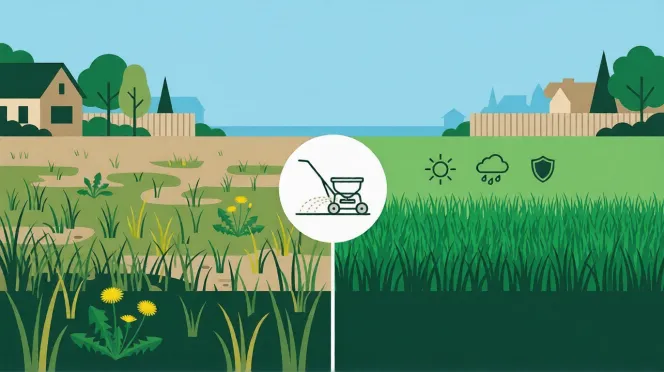
The Fertilization–Weed Connection Explained
A dense, well-nourished lawn is the single most effective weed barrier you have. When grass grows thick and healthy, it physically crowds out weed seeds — blocking sunlight from reaching the soil and competing aggressively for water and nutrients.
Weeds thrive in the gaps — bare patches, thin turf, compacted soil. According to the University of Minnesota Extension, healthy lawns also reduce erosion, control allergens, and cool the local environment. But the moment your grass weakens, weeds rush in. It’s not bad luck. It’s biology.
That said, over-fertilizing creates its own problems — patchy growth, fertilizer burn, and even increased weed pressure from excess nitrogen. Balance is everything.
Understanding the NPK Ratio
Every fertilizer bag displays three numbers — for example, 18-3-6. These represent the percentage of Nitrogen (N), Phosphorus (P), and Potassium (K) in that order.
- Nitrogen (N): Drives leaf growth and gives grass that rich green color
- Phosphorus (P): Supports root development (critical for new lawns)
- Potassium (K): Builds disease resistance and stress tolerance
For most established lawns, you want a fertilizer with a higher first number. A product labeled 30-0-4, for example, is nitrogen-heavy — ideal for feeding a mature lawn during active growth. Knowing what your lawn actually needs starts with a soil test, which we’ll get to shortly.
Know Your Grass Type Before Applying Anything
This is where many homeowners go wrong. Applying the right product at the wrong time — based on the wrong grass type — wastes money and can damage your lawn. Grass in the US falls into two major categories.
Cool-Season Grasses (Fescue, Bluegrass, Ryegrass)
These grasses thrive in the northern US — New England, the Upper Midwest, Pacific Northwest, and mid-Atlantic states. Their two peak growth windows are spring and fall, when temperatures sit between 60–75°F.
For cool-season lawns, fall fertilization is the most important application of the year. The grass absorbs nutrients into its root system and stores them for spring growth. K-State Extension calls the Labor Day fertilization “the most important fertilization of the year” for cool-season turf.
Warm-Season Grasses (Bermuda, Zoysia, St. Augustine, Centipedegrass)
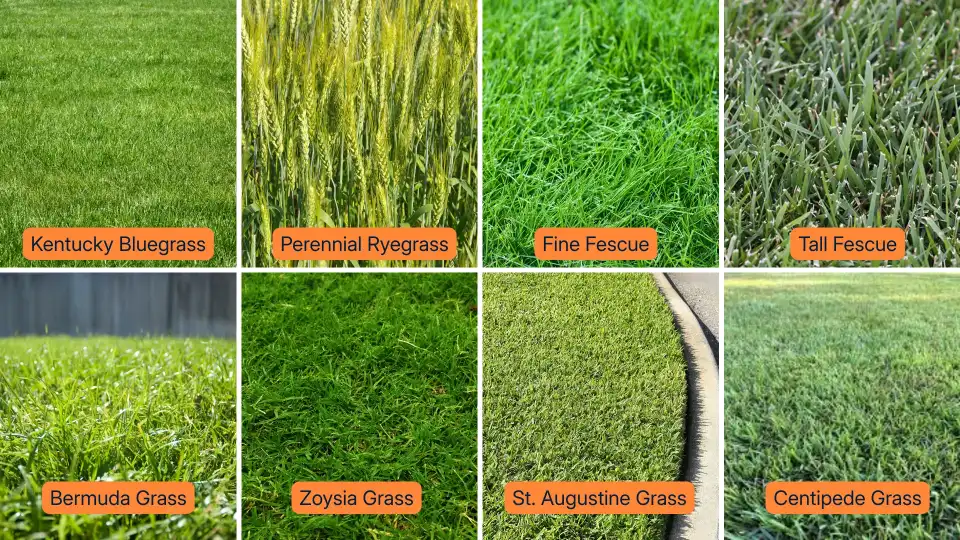
These are the dominant grasses of the South and Southwest — Texas, Florida, Georgia, the Carolinas, and California’s warmer zones. They grow aggressively from late spring through summer, then go dormant when temperatures drop.
For warm-season lawns, spring and early summer are the primary fertilization and weed control windows. Fertilizing too late in the season can push growth right before frost, damaging the root system.
One rule applies to both: never fertilize dormant grass. You’re feeding the weeds, not the lawn.
The Seasonal Lawn Fertilization and Weed Control Schedule
This is the heart of the system. Timing isn’t a nice-to-have — for pre-emergent weed control especially, missing the window by even a week or two means starting over next season.
Spring — The Most Critical Window
Spring is where the season is won or lost, particularly for weed prevention.
Pre-emergent herbicides are your first move. These prevent weed seeds — especially crabgrass — from germinating. The trigger isn’t a date on the calendar. It’s soil temperature. Apply pre-emergents when soil hits 50–55°F, typically February–April depending on your region. Many gardeners use forsythia bloom as a natural cue — when forsythia flowers fully open, it’s time.
Apply your first fertilizer once grass is actively growing and you’ve mowed at least once. For cool-season grasses, mid-April is ideal. For warm-season grasses, wait until late April or May when growth is clearly underway.
Pro tip: If you had a crabgrass problem last year, prioritize a pre-emergent with fertilizer (like a 0-0-7 with Prodiamine). If broadleaf weeds like dandelions and clover were the issue, a selective post-emergent or a combination product targeting broadleaf weeds is your tool.
Summer — Maintain and Protect
Summer is a maintenance season, not a transformation season. Grass is under heat stress, and this is not the time to push heavy growth.
For warm-season grasses, apply a second fertilizer round in June–August using a slow-release product. Slow-release formulas feed gradually over 6–8 weeks, reducing burn risk during high temperatures.
For cool-season grasses, hold off on fertilizer during peak summer heat. UMN Extension is direct: fertilizing cool-season grass in hot mid-summer months can cause irreversible damage.
Use summer for post-emergent weed control — targeting weeds that are actively growing. Apply selective herbicides on calm, cooler days to avoid volatilization and drift onto flower beds.
Fall — The Underrated Power Season
Most homeowners underestimate fall. It’s actually the most productive lawn care window of the year, especially for cool-season grass.
Apply fertilizer 6–8 weeks before your first expected frost — around Labor Day for most of the northern US. Use a high-nitrogen formula. The grass won’t visibly surge in growth, but it’s storing energy underground for spring.
Fall is also dramatically easier for broadleaf weed control. Dandelions, clover, and ground ivy are actively drawing nutrients into their root systems in the fall — which means they absorb herbicides far more effectively than in spring. According to Penn State Extension, broadleaf herbicide applications are most effective when weeds are actively growing in spring or early fall.
Apply a pre-emergent in late fall (when soil drops below 70°F) to prevent cool-season winter weeds like annual bluegrass and henbit.
Winter — Planning Mode
No fertilizer. No herbicide. But don’t go idle.
Winter is the right time to order a soil test through your state’s land-grant university extension office. A soil test tells you your pH, nitrogen levels, phosphorus, and potassium — eliminating the guesswork from your spring plan. Most turfgrasses prefer a soil pH of 6.0–7.0. If your pH is off, lime won’t work fast. Apply it in fall or early winter so freeze-thaw cycles can work it into the soil naturally.
Seasonal Quick-Reference Table
| Season | Action | Grass Type | Product Type |
|---|---|---|---|
| Early Spring | Pre-emergent + first fertilizer | Both | Granular pre-emergent + slow-release N |
| Late Spring | Second fertilizer + spot weed treatment | Both | Balanced NPK + selective post-emergent |
| Summer | Maintenance fertilizer + post-emergent weeds | Warm-season primarily | Slow-release + selective herbicide |
| Fall | Key fertilizer + broadleaf weed control | Cool-season priority | High-N + broadleaf herbicide |
| Late Fall | Pre-emergent for winter weeds | Both | Pre-emergent granular |
| Winter | Soil testing, plan next season | Both | Lime (if needed) |
Pre-Emergent vs. Post-Emergent Weed Control — What’s the Difference?
Understanding these two categories is the difference between preventing a weed problem and chasing one.
Pre-Emergent Herbicides
Pre-emergents work by forming a chemical barrier in the soil that prevents weed seeds from germinating and establishing. They do nothing to weeds you can already see. Common targets include crabgrass, annual bluegrass, and other grassy weeds.
Timing is non-negotiable. Apply pre-emergents before seeds germinate. Miss that window, and the product is useless for that season. Products like Prodiamine (Barricade) and Benefin offer season-long control with a single spring application.
Post-Emergent Herbicides
Post-emergents target weeds that are already visible and growing. They come in two types:
- Selective — Kills specific weed species without harming surrounding grass. These are what you want for most lawn situations.
- Non-selective — Kills any plant it contacts (e.g., glyphosate). Use only for targeted renovations or hardscape edges, never across an active lawn.
Should You Use Weed-and-Feed Combo Products?
Here’s the honest answer: sometimes, but not always.
Combo products like Scotts® Turf Builder® Weed & Feed are convenient, but they force you to apply herbicide and fertilizer at the same moment — which is often not the ideal timing for either. As the University of Minnesota Extension notes, the best time to apply a weed killer often doesn’t match the best time to fertilize, and vice versa.
When combo products work well:
- Small, manageable lawn with consistent broadleaf weed pressure
- You had the problem last year in the same areas
- You’re in the correct application window for both products simultaneously
When to skip them:
- Weeds are scattered, not widespread (spot treatment is more effective and uses less chemical)
- You have mixed landscaping — the herbicide can drift and damage flower beds or shrubs
- You’re dealing with grassy weeds, not broadleaf weeds (most combos only target broadleaf)
Separating your fertilization and weed control applications takes more effort but consistently delivers better results.
5 Common Lawn Fertilization and Weed Control Mistakes to Avoid
Even experienced homeowners fall into these traps.
- Applying pre-emergent too late. Once you see crabgrass, it’s already germinated. Pre-emergent only prevents germination — it can’t kill established weeds. Watch soil temperature, not the calendar.
- Over-fertilizing. More is not better. Excess nitrogen pushes rapid top growth at the expense of roots, creates fertilizer burn (yellow or brown streaks), and can increase thatch buildup. Follow label rates exactly.
- Spraying non-selective herbicide near garden beds. Glyphosate doesn’t know the difference between a dandelion and your rose bush. Apply on calm days, with careful shielding of nearby plants.
- Skipping the soil test. Fertilizing without knowing your soil pH is guesswork. If your soil is too acidic or too alkaline, grass can’t absorb nutrients regardless of how much you apply.
- Fertilizing cool-season grass in peak summer heat. This is one of the most damaging mistakes a homeowner can make. Wait for fall. The grass will reward your patience with stronger root growth and a better spring green-up.
Frequently Asked Questions About Lawn Fertilization and Weed Control
Should I fertilize before or after weed control?
In most cases, perform weed control first, then fertilize. Weeds compete directly with grass for the nutrients in your fertilizer. If you fertilize first, weeds absorb those nutrients right alongside your grass. Wait at least one week after applying herbicide before fertilizing to allow your soil to process the weed control product.
How many times a year should I fertilize my lawn?
Most lawns benefit from 2–4 fertilizer applications per year, depending on grass type, soil conditions, and your performance goals. Cool-season grasses do best with two key feedings — early spring and early fall. Warm-season grasses typically need 3–4 applications from late spring through late summer.
What’s the best lawn fertilization and weed control schedule for cool-season grasses?
Start with a pre-emergent in early spring (when soil hits 50–55°F), followed by a balanced fertilizer in mid-April. Apply post-emergent weed control as needed through May and June. Skip heavy fertilization in July and August. Return in early September for your most important fertilizer application of the year, paired with broadleaf weed control. Apply a winterizer fertilizer 6–8 weeks before your first frost.
Can I apply weed killer and fertilizer at the same time?
You can use combination weed-and-feed products, but the effectiveness of each ingredient is usually compromised. Separating applications by at least a week is the more effective approach, as it allows you to time each product to its optimal window.
When is it too late to apply pre-emergent herbicide?
Once soil temperatures exceed 55°F consistently and weed seeds have begun germinating, pre-emergent is no longer effective for that season. In most northern US regions, this window closes by early to mid-April. In southern states, the window closes earlier — often by late February or early March.
Build the System, Then Let It Run
A great lawn isn’t the result of one good weekend of work. It’s the result of doing the right things at the right time, season after season.
Start with a soil test — it’s the most underused tool in lawn care, and it costs less than a bag of fertilizer. Then build your seasonal schedule around your grass type and region. Pre-emergent in early spring. Fertilize when grass is actively growing. Control weeds when they’re most vulnerable. Feed the roots in fall.
Do that consistently, and the weeds stop winning. Your lawn becomes thick enough to defend itself — and that’s the real goal.
Ready to start? Contact your local university extension office for a free or low-cost soil test, or reach out to a certified lawn care professional in your area to build a plan specific to your grass type and growing zone.
About Author
Khalid Fazal is a seasoned lawn care specialist and horticultural researcher with over 15 years of hands-on experience transforming challenging landscapes into lush, resilient green spaces. His journey didn’t start in a lab, but in a backyard full of stubborn, cracked clay that “experts” said would never grow a healthy blade of grass. Refusing to accept a yard full of dust, Khalid spent years experimenting with organic soil restoration and precise mulching—eventually turning that wasteland into a neighborhood showpiece on a shoestring budget.
From mastering core aeration techniques to optimizing soil pH for specialized turf varieties, Khalid’s approach combines old-school grit with modern agronomic science. He founded Gen Lawn to provide homeowners with honest, research-backed advice that prioritizes long-term soil health over quick-fix chemical solutions. When he isn’t analyzing soil profiles, he’s developing precision tools to help others achieve professional results without the professional price tag.
References

Lawn Winterizer: When to Apply by Grass & Region [2026]
Table of Contents Home / By Khalid Fazal | Updated:...
Read More
Spring Lawn Care: What to Do and When in Every US Region
Table of Contents Home / By Khalid Fazal | Updated:...
Read More
Lawn Maintenance Checklist by Season and Grass Type (2026)
Table of Contents Home / By Khalid Fazal | Updated:...
Read More
Liquid Fertilizer vs Granular Fertilizer: Which Wins?
Table of Contents Home / By Khalid Fazal | Updated:...
Read More