
Lawn Gone to Seed? Here’s What It Really Means — and How to Fix It
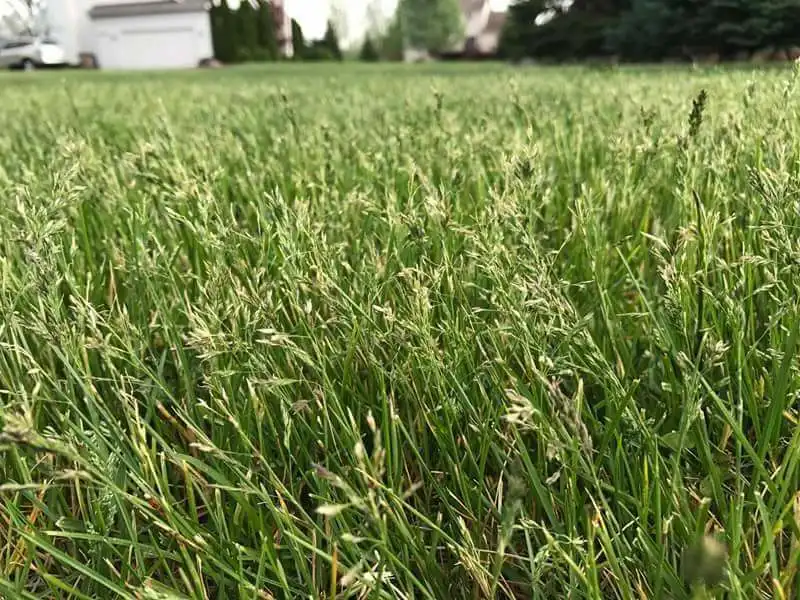
You came back from a long weekend and your lawn looks completely different. There are tall, feathery stalks poking up above the grass, the whole yard has a pale, hazy look, and it almost feels like you accidentally planted a wheat field while you were gone.
Sound familiar?
Here’s the thing: you are not dealing with a lawn disaster. A lawn gone to seed is one of the most common — and most misunderstood — situations homeowners across the US face every year. In most cases, your lawn will be back to normal within a couple of weeks.
But there’s one thing you should know before you Google “lawn replacement services”: those seed heads are not going to naturally reseed and thicken your turf. That idea is one of the most persistent myths in lawn care, and we are going to break it down with real science.
By the end of this guide, you will know exactly what is happening, whether it is a normal phase or an actual warning sign, and a step-by-step plan to fix it — starting this week.
What Does “Lawn Gone to Seed” Actually Mean?
Every grass plant follows a life cycle. During active growth, grass focuses its energy on producing leaves and spreading through the soil. But at certain points — triggered by the season, stress, or both — it shifts gears.
Instead of growing outward and building roots, it channels energy upward into producing seed heads (botanically called inflorescences). These are the tall, feathery, or spike-like structures rising above your normal turf line. The plant is essentially attempting to reproduce before conditions get worse.
What Does a Lawn Gone to Seed Actually Look Like?
If you are not sure whether you are looking at seed heads or a weed takeover, here is a quick way to tell:
- Pattern: Seed heads appear uniformly across the lawn, rising from your normal turf. Weeds grow in patchy, irregular clusters.
- Touch test: Grass seed heads feel slender and flexible. Most weed seed heads feel rigid or bristly.
- Shape cues by grass type: Kentucky bluegrass forms narrow, branching panicles. Bermudagrass shows a flat T-shape or “bird foot” pattern. Perennial ryegrass produces slender, flat spikes.
Not sure which grass type you have? The USDA PLANTS Database has an interactive identification tool to help you confirm.
Why Did Your Lawn Go to Seed?
There are two main reasons a lawn goes to seed — and understanding the difference will shape your entire response.
Reason 1: It Is Seasonal, and That Is Completely Normal
In the US, cool-season grasses — Kentucky bluegrass, perennial ryegrass, and tall fescue — naturally produce seed heads in late spring, typically between May and mid-June.
Warm-season grasses like bermudagrass, zoysiagrass, and buffalo grass can push out seed heads during periods of summer heat or drought stress.
According to Michigan State University Extension, this is a natural process that happens every year in lawns across the country. Seed heads from seasonal cycles typically fade within two to three weeks, and the lawn returns to its normal appearance with basic ongoing care.
If it is May or June, your cool-season lawn is seeding, and the grass otherwise looks healthy — you can relax. This is biology, not neglect.
Reason 2: Stress Is Forcing the Issue
Here is where it becomes a real problem. Grass also goes to seed as a survival response when it is under stress from heat, drought, low soil nutrients, or compacted soil.
When those conditions exist, grass shifts into emergency reproduction mode. The plant says, in effect: I might not make it — I need to produce offspring now. As a result, it spends whatever energy it has left on seeding rather than on building strong roots and blades — which explains the thin, worn-out patches you might also be noticing.
The Mowing Gap Is the Number One Trigger
Missing just two or three mowing cycles during peak growing season can push your lawn into seeding mode faster than almost anything else.
The golden rule is the one-third rule: never cut more than one-third of the blade height in a single mowing session. When grass is allowed to reach 6 inches or taller and then cut back all at once, the shock stresses the plant — and stressed plants seed. Stick to your mowing schedule and this trigger disappears.
Is a Lawn Gone to Seed Actually a Problem?
It depends — and this is the question where homeowners either panic unnecessarily or miss a real warning sign.
Normal Phase vs. Warning Signs — Know the Difference
| What You Are Seeing | What It Means |
|---|---|
| Seed heads fade within 2–3 weeks | Normal seasonal reproduction cycle |
| Lawn stays mostly green during seeding | Plant is healthy and just reproducing |
| Uniform seed heads across the turf | Matches normal grass-type behavior |
| Seed heads still present after 3+ weeks | Stress-related — needs attention |
| Pale yellow or browning patches appearing | Possible nutrient or water deficit |
| Lawn visibly thinning after seeding ends | May need overseeding or soil correction |
Busting the “Free Reseeding” Myth — The Science
One of the most common questions we hear: “If I let the seeds drop, won’t they grow and thicken up my lawn for free?”
The answer is no — and here is why.
Most modern turfgrass varieties are hybrid cultivars that produce largely sterile seed. Even in varieties that do produce viable seed, researchers at Michigan State University Extension point out that the seed would need roughly four months to reach maturity, then dry out, and then find its way into actual soil contact in order to germinate. That chain of events simply does not happen in a maintained lawn.
If you want to fill in bare or thin areas, the effective approach is overseeding with quality purchased seed — not waiting on nature to do it.
How to Fix a Lawn That Has Gone to Seed — Step by Step
Good news: most lawns recover quickly with the right three-step approach.
Step 1 — Mow It Right, Not Low
The instinct when you see a lawn gone to seed is to scalp it down and be done with it. Resist that instinct.
Cutting your lawn significantly shorter than its ideal height creates additional stress — and stressed grass produces more seed heads. Bring the height down gradually across two or three mowing sessions instead.
Target mowing heights:
- Cool-season grasses (bluegrass, fescue, ryegrass): 3 to 3.5 inches
- Warm-season grasses (bermuda, zoysia, buffalo): 2 to 2.5 inches
MSU Extension is direct on this point: lowering your mowing height to chase seed heads does not work. Even Poa annua (annual bluegrass) produces seed heads below the 1/8-inch mowing height used on golf course putting greens, so chasing them with a lower cut is a losing strategy. Keep the height correct and focus on sharp blades instead.
On clippings: During a heavy seed head flush, bag and remove clippings to prevent smothering the turf beneath. During lighter seasonal seeding, mulching the clippings is fine — they return valuable nitrogen and micronutrients to the soil.
Step 2 — Fertilize After the Seed Flush
Producing seed heads is energy-intensive work for your grass. Once the flush passes, expect the lawn to look a little thin and pale — that is normal and expected.
MSU Extension specifically recommends a nitrogen fertilizer application after the seed head period to help turf recover its density, especially if the last application was more than 30 days ago. Use a slow-release, balanced fertilizer — not a quick-release formula, particularly during summer heat, which can push a surge of growth followed by more stress.
If color recovery is slow, iron and magnesium micronutrient supplements can accelerate the return of that deep green look.
Step 3 — Water Deep, Not Often
If your lawn is in stress-related seeding mode, shallow or frequent watering is making it worse. Shallow watering trains roots to stay near the surface — which makes the turf dramatically more vulnerable to heat and drought.
Aim for 1 to 1.5 inches of water per week (including rainfall), delivered in fewer, deeper watering sessions — ideally in the early morning. Deep watering pushes roots deeper into the soil where temperatures are cooler and moisture is more stable.
If water puddles or runs off rather than absorbing, soil compaction may be blocking infiltration. A simple test: push a screwdriver into moist soil. If it will not sink 6 inches without significant force, the lawn needs core aeration before any other recovery steps will deliver full results.
What to Do This Week — Quick Action Checklist
- ☐ Mow at the correct height (3–3.5″ cool season / 2–2.5″ warm season) — gradually, not all at once
- ☐ Sharpen your mower blade or have it sharpened before the next cut
- ☐ Begin a deep watering schedule: 1–1.5″ per week, early morning, fewer sessions
- ☐ Apply a slow-release fertilizer if you have not done so in the last 30 days
- ☐ Run the screwdriver test for compaction — aerate if resistance is high
- ☐ Reassess in 3 weeks: if seed heads persist beyond this window, move to a professional evaluation
How to Prevent Your Lawn from Going to Seed Again
Build a Mowing Routine Matched to Your US Region
One of the most effective long-term fixes is matching your mowing frequency to your grass type and your region’s actual growing patterns — not just a general schedule.
- Northern US (cool-season lawns): Mow every 5–7 days during spring and fall peak growth. Slow to every 10–14 days in summer heat. Never skip more than two cycles in a row during the growing season.
- Southern US (warm-season lawns): Weekly mowing during the core growing season — late spring through summer — keeps bermuda, zoysia, and St. Augustine from reaching seeding height.
- Transition Zone (roughly Virginia through Kansas): You may be managing a blend of grass types. Match your mowing frequency to the dominant grass, and adjust as the seasons shift.
Not sure which zone or grass type applies to your lawn? The USDA Plant Hardiness Zone Map and the Turfgrass Producers International grass selection guide are both useful starting points.
Feed and Water Before Stress Hits
Most stress-related seeding is preventable if you get ahead of drought and heat rather than reacting after the fact.
For cool-season lawns, apply a spring fertilizer before the typical seed flush window — early April in most of the northern US. For warm-season lawns, late spring feeding builds the turf’s root reserves before the hardest growing months arrive.
If your region is heading into a dry stretch, water proactively rather than waiting for the lawn to show distress signals. The EPA’s lawn care best practices guide recommends watering in the early morning to reduce evaporation and minimize the risk of turf fungal disease.
When to Call a Lawn Care Professional
DIY care resolves most lawn-gone-to-seed situations. But there are circumstances where professional assessment is the smarter and faster path:
- Seed heads keep returning within 2–3 weeks despite corrected mowing, watering, and fertilization
- Bare or thinning patches are not filling back in after 4–6 weeks of proper care
- A soil test reveals pH imbalances, compaction, or nutrient deficits beyond what basic aeration and fertilization can address
- You are considering Plant Growth Regulators (PGRs) — professional-grade products that suppress seed head formation and redirect plant energy back into leaf and root growth
Professional lawn services typically run between $300 and $600 per season depending on lawn size and service frequency — but they bring soil analysis tools and programs that are simply not available over the counter.
Frequently Asked Questions About a Lawn Gone to Seed
Is it OK to just let my lawn go to seed?
For a short, seasonal flush of 2–3 weeks, yes — it is a natural and harmless process. But if you are regularly allowing your lawn to grow tall and go to seed through neglect, you are creating the conditions for weed invasion, root weakness, and bare patch formation. Consistent mowing is the simplest and most effective prevention available.
Will my lawn reseed itself naturally if I let the seed heads drop?
No. As MSU Extension researchers confirm, most modern lawn grasses are hybrid varieties that produce sterile or near-sterile seed. Even species that do produce viable seed would require months of uninterrupted growth, full maturity, and ideal soil contact conditions to germinate. If you want a thicker lawn, overseeding with purchased grass seed in fall or spring is the practical answer.
How long does it take for a lawn to recover after going to seed?
Lawns showing a normal seasonal seed flush typically recover their density and color within two to three weeks of consistent mowing and proper care. If stress-related seeding has caused noticeable thinning, full recovery — including overseeding — can take four to eight weeks depending on conditions, grass type, and growing season timing.
Should I bag or mulch my clippings when my lawn is seeding?
It depends on volume. During a heavy seed head flush, bag and remove clippings to avoid smothering the lawn beneath and introducing excess seed material. During light, seasonal seeding, mulching is beneficial — the clippings return nitrogen and organic matter directly back to the soil.
Which US grass types go to seed most easily, and when?
Cool-season grasses — Kentucky bluegrass, perennial ryegrass, and tall fescue — typically seed in late spring, between May and mid-June across most of the northern US. Warm-season grasses — bermuda, zoysia, and buffalo grass — seed under summer heat and drought pressure. Annual bluegrass (Poa annua) is a common grassy weed that seeds heavily in spring and is notoriously difficult to eliminate, even with low mowing heights.
The Bottom Line
A lawn gone to seed looks alarming. But in most cases, it is your grass doing exactly what it is biologically designed to do — and your role is simply to know whether it is a normal cycle or a stress signal, and respond accordingly.
Here is what to remember:
- A 2–3 week seed head cycle is normal. It resolves with consistent mowing and basic care.
- Persistent or stress-related seeding signals a deeper issue with water, nutrients, or soil — and those are all solvable problems.
- Seed heads will not thicken your lawn. The free-reseeding idea is a myth backed by the science of hybrid turfgrass genetics.
- The fix is straightforward: correct mowing height, deep watering, and a post-flush fertilizer application.
- Prevention is easier than recovery. Stay on your mowing schedule, feed proactively, and water deeply before stress sets in.
Most lawns bounce back in two to three weeks. Start with this week’s checklist above, stay consistent, and your turf will return to form faster than you think.
And if you have worked through the steps and things still are not improving — or if you would simply rather have a professional assess the situation and build a recovery plan — a qualified lawn care specialist can identify the root cause faster and more precisely than trial and error.
References and Further Reading
- Michigan State University Extension — When Grass Produces Seedheads (Dr. Kevin Frank, MSU)
- Michigan State University Extension — Turfgrass Seedheads
- University of Maryland Extension — Seedling Problems in Lawns
- University of Minnesota Extension — Seeding and Sodding Home Lawns
- University of Minnesota Extension — Overseeding Lawns
- University of Minnesota Extension — Aerating Lawns
- EPA — Landscaping and Lawn Care Best Practices
- Nature’s Seed — Should You Ever Let Your Lawn Go to Seed?
- USDA PLANTS Database — Grass Identification
- USDA Plant Hardiness Zone Map
About Author
Khalid Fazal is a seasoned lawn care specialist and horticultural researcher with over 15 years of hands-on experience transforming challenging landscapes into lush, resilient green spaces. His journey didn’t start in a lab, but in a backyard full of stubborn, cracked clay that “experts” said would never grow a healthy blade of grass. Refusing to accept a yard full of dust, Khalid spent years experimenting with organic soil restoration and precise mulching—eventually turning that wasteland into a neighborhood showpiece on a shoestring budget.
From mastering core aeration techniques to optimizing soil pH for specialized turf varieties, Khalid’s approach combines old-school grit with modern agronomic science. He founded Gen Lawn to provide homeowners with honest, research-backed advice that prioritizes long-term soil health over quick-fix chemical solutions. When he isn’t analyzing soil profiles, he’s developing precision tools to help others achieve professional results without the professional price tag.

Lawn Winterizer: When to Apply by Grass & Region [2026]
Table of Contents Home / By Khalid Fazal | Updated:...
Read More
Spring Lawn Care: What to Do and When in Every US Region
Table of Contents Home / By Khalid Fazal | Updated:...
Read More
Lawn Maintenance Checklist by Season and Grass Type (2026)
Table of Contents Home / By Khalid Fazal | Updated:...
Read More
Liquid Fertilizer vs Granular Fertilizer: Which Wins?
Table of Contents Home / By Khalid Fazal | Updated:...
Read More