
Mulch or Stone for Landscaping? How to Choose What’s Right for Your Yard
Still can’t decide between mulch or stone for your landscaping? You’re not alone — it’s one of the most searched landscaping questions across the US.
Here’s the frustrating part: most answers online give you a watered-down “it depends” and send you on your way. That’s not helpful when you’re standing in your yard trying to make a real decision.
So here’s what we’re going to do differently. By the end of this guide, you’ll know exactly which material fits your yard, your climate, and your budget — based on real cost data, plant science, and what professional landscapers actually recommend.
Let’s get into it.
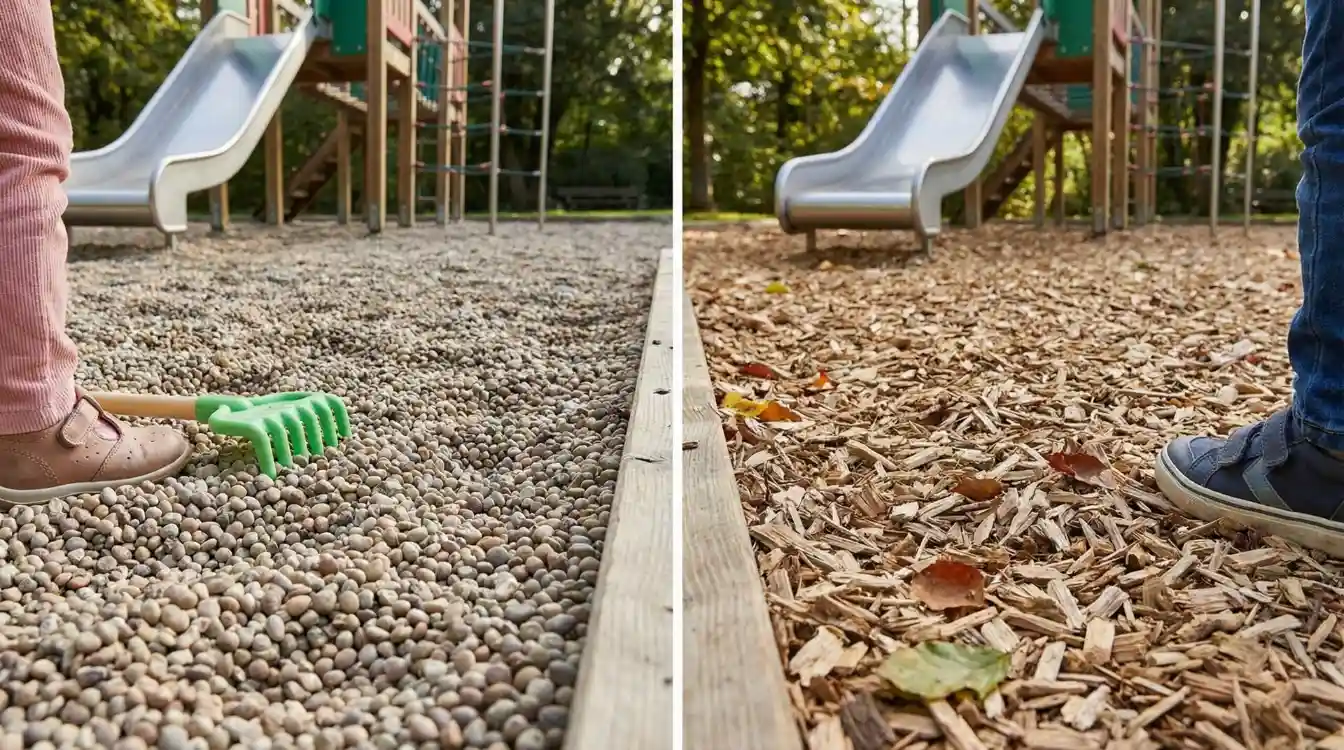
What’s the Difference Between Mulch and Stone for Landscaping?
Before comparing them head-to-head, it helps to understand what each material actually does — and why the difference matters more than most people think.
What Is Mulch and How Is It Used in Landscaping?
Mulch is a material — organic or synthetic — spread over the soil surface in garden beds, around trees, and along planting borders. The most common types include:
- Shredded hardwood — the most popular option; breaks down in 1–2 years and feeds the soil
- Cedar bark — naturally pest-resistant and slower to decompose
- Wood chips — great around trees and large shrubs
- Pine straw — lightweight, affordable, and common in the Southeast
- Rubber mulch — long-lasting and often used around playgrounds and high-traffic areas
Organic mulch is the go-to for most homeowners because as it breaks down over time, it feeds the soil with nutrients and improves plant health. The trade-off? You’ll need to refresh it every season or two.
What Is Landscape Stone and How Is It Used?
Landscape stone — also called rock mulch or decorative gravel — is an inorganic ground cover that doesn’t decompose. Common varieties include:
- River rock — smooth, rounded stones that give a natural streambed look
- Pea gravel — small and affordable; great for pathways and borders
- Crushed granite — angular particles that lock together; ideal for dry landscapes
- Lava rock — lightweight and porous; excellent for drainage
- Slate chips — flat and modern; a popular choice for contemporary yard designs
Unlike organic mulch, stone is a long-term investment. Once it’s down, it stays — for 15 to 20+ years with minimal upkeep.
The Real Pros and Cons of Mulch for Landscaping
Why Mulch Works So Well
Here’s something most homeowners don’t realize: organic mulch isn’t just decorative. It’s one of the most effective tools for supporting plant health.
According to Davey Tree, mulch can nearly double how fast trees and plants grow. It improves rainwater infiltration, reduces water evaporation from the soil, and continuously feeds plants with nutrients as it decomposes. Here’s why it remains the most popular landscaping ground cover in the US:
- Retains moisture — reduces evaporation so your plants stay hydrated longer between waterings
- Regulates soil temperature — keeps roots cool in summer heat and insulated during cold winters
- Suppresses weeds — a 3–4 inch layer blocks sunlight from reaching weed seeds (here’s how mulch depth affects weed control)
- Improves soil health — organic matter builds soil structure and attracts beneficial earthworms over time
- Budget-friendly upfront — materials run $25–$100 per cubic yard, making it one of the most accessible ground cover options
Where Mulch Falls Short
But it’s not all upside. Here’s what mulch won’t tell you on the bag:
- It needs replacing every 1–2 years as it decomposes — that recurring cost adds up fast
- It can wash away on slopes or in heavy rain, especially lighter varieties like pine straw
- Mulch piled against your home’s foundation can attract termites and other pests — always keep it at least 6 inches away from structures
- Certain mulches are prone to artillery fungus — a nuisance mold that shoots dark, sticky spores onto nearby siding, cars, and surfaces
- In very dry conditions, lighter organic mulches can be a fire hazard — a real concern in wildfire-prone regions of the Western US
The Real Pros and Cons of Stone for Landscaping
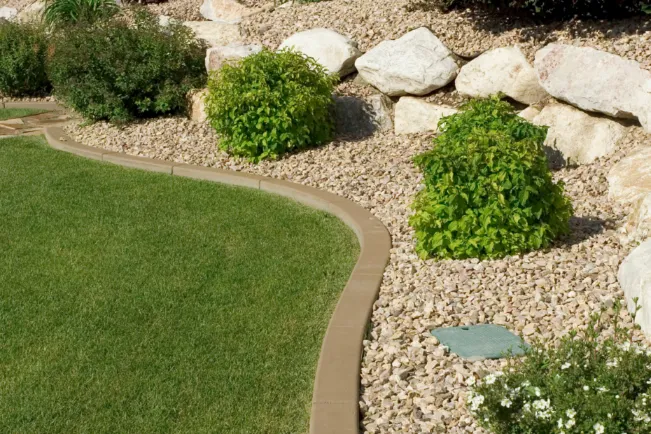
Why Stone Is Worth the Investment
Let’s be direct: stone has a higher upfront cost. But for the right yard, it pays off significantly over time.
- Virtually permanent — landscape stone lasts 15 to 20+ years without needing replacement
- Pays for itself — when you factor in the recurring cost of annual mulch refresh, stone typically breaks even within 2–3 years
- Superior drainage — stone allows water to move freely through it, making it ideal for slopes, drainage channels, and areas prone to pooling (learn more about yard drainage solutions)
- Fire-resistant — unlike organic mulch, stone won’t ignite; this matters especially in California, Colorado, Nevada, and parts of Texas
- Low maintenance — a quick pass with a leaf blower keeps it clean; no annual refresh required
- Modern, clean aesthetic — stone pairs beautifully with contemporary home styles and xeriscaping (water-efficient, drought-tolerant landscaping)
Where Stone Falls Short
Stone isn’t a perfect solution either. Before you commit, know these drawbacks:
- Higher upfront cost — expect to pay $50–$180 per cubic yard depending on stone type, vs. $25–$100 for mulch
- Retains and radiates heat — stone absorbs heat during the day and releases it at night, which can stress plant roots; this is a serious issue in Southern US climates during summer
- Zero soil benefit — unlike organic mulch, stone doesn’t feed or improve your soil in any way
- Weeds still happen — without landscape fabric installed underneath, wind-blown weed seeds will eventually take root in debris collected between stones
- Difficult to remove — if you change your mind down the road, stone removal is heavy, time-consuming, and often requires a professional
Mulch or Stone for Landscaping — Which One Is Right for You?
Here’s the part where most guides let you down. Instead of giving a clear answer, they throw their hands up and say “it depends on your preference.”
We’re going to be more specific than that.
Choose Mulch If…
Mulch is the right call when:
- You have active garden beds with flowers, shrubs, or vegetables that need consistent moisture and nutrients
- You’re working with a tighter upfront budget and can’t absorb a large one-time cost
- Your yard is in a cooler or wetter US climate — the Northeast, Pacific Northwest, or Upper Midwest
- You want to build soil quality over time, especially if your yard has clay-heavy or nutrient-depleted soil (how to identify poor soil)
- You’re planting new trees or shrubs that need root insulation and moisture support through their first few seasons
Choose Stone If…
Stone is the better call when:
- You want a low-maintenance, permanent ground cover solution with minimal annual upkeep
- You live in a hot, dry US climate — Southwest, Southern California, Texas, or Nevada — where plants are drought-tolerant and heat-hardy
- You’re covering pathways, slopes, drainage channels, or dry creek beds where stone’s weight and drainage properties are a real advantage
- You prefer a modern or minimalist yard aesthetic that complements contemporary architecture and hardscaping
- You’re in a wildfire-prone region and need fire-resistant material near structures (CAL FIRE landscaping guidance)
Why Most Pros Recommend Using Both
Here’s the thing: it doesn’t have to be an either/or decision.
The most effective — and professional — approach is to use both materials strategically, each in the zone where it performs best:
- Mulch in planting and flower beds → moisture retention, nutrient support, and soil health for your plants
- Stone along pathways, driveways, and property borders → permanence, drainage, and a clean, finished look
- Lava rock or pea gravel in drainage channels → allows water to flow freely without erosion or pooling
Many professional landscapers take this layered approach because it eliminates the weaknesses of each material while keeping their strengths exactly where they’re needed.
Cost Comparison: Mulch vs. Stone for Landscaping
Let’s talk numbers — because the upfront vs. long-term cost story here is one most homeowners don’t see coming.
How Much Does Mulch Cost?
According to HomeGuide and LawnStarter:
- Material only: $25–$100 per cubic yard
- Professionally installed: $50–$150 per cubic yard
- Bagged mulch: $2–$8 per bag (useful for small beds or touch-ups)
The catch? Most yards need a full refresh every 1–2 years. A 500 sq ft bed refreshed annually can cost $600–$1,500+ over five years when you factor in material, delivery, and labor.
How Much Does Landscape Stone Cost?
According to Fixr:
- Decorative rock mulch: $50–$180 per cubic yard
- River rock: $45–$75 per cubic yard
- Lava rock: $75–$140 per cubic yard
Yes, it’s more upfront. But it’s essentially a one-time investment. That same 500 sq ft bed in stone? You pay once — and you’re done for the next 15+ years.
Side-by-Side Comparison Table
| Factor | Mulch | Stone |
|---|---|---|
| Material Cost | $25–$100/cu yd | $50–$180/cu yd |
| Installation (Professional) | $50–$150/cu yd | $60–$200/cu yd |
| Lifespan | 1–2 years | 15–20+ years |
| 5-Year Total Cost | Higher (annual refresh) | Lower (one-time) |
| Soil Benefit | Yes | No |
| Heat Retention | Low | High |
| Best US Climate | Cool / Wet | Hot / Dry |
| Weed Control | Good (3–4″ depth) | Excellent (with fabric) |
| Aesthetic | Natural / Earthy | Modern / Clean |
| Fire Resistance | No | Yes |
| Ease of Removal | Easy | Labor-intensive |
Frequently Asked Questions: Mulch or Stone for Landscaping
Is mulch or stone better for weed control in landscaping?
Both suppress weeds, but they work differently. A 3–4 inch layer of organic mulch blocks sunlight and prevents weed seeds from germinating effectively. Stone, when installed over landscape fabric, provides excellent long-term weed control because its weight makes it nearly impossible for weeds to push through from below. Over time, however, airborne debris accumulates between stones and gives surface weeds a foothold — so neither option is completely hands-off.
Which is more cost-effective long-term — mulch or landscape stone?
Stone wins in the long run. While mulch costs less upfront ($25–$100/cu yd vs. $50–$180/cu yd for stone), the need to refresh organic mulch every 1–2 years means recurring costs that quickly overtake the one-time investment of stone. Most landscapers estimate stone pays for itself within 2–3 years compared to ongoing mulch replacement.
Does stone or mulch retain more moisture for plants?
Mulch is the clear winner here. Organic mulch slows evaporation and keeps soil consistently moist, making it significantly better for active plant beds. Stone, by contrast, retains and radiates heat, which can actually pull moisture from the soil surface and stress plant roots — especially in summer. If healthy, moisture-dependent plants are your priority, mulch is the right choice.
Can I use both mulch and stone in the same yard?
Absolutely — and it’s what most professional landscapers actually recommend. Use mulch in active planting beds where plants need moisture and nutrients, and use stone along pathways, driveways, slopes, and decorative borders where durability and drainage matter most. This combination gives your yard a polished, layered look while getting the most out of each material’s strengths.
Which is better for hot climates — mulch or stone?
It depends on what you’re covering. For plant beds in hot climates, mulch is actually better because stone’s heat retention can stress plant roots and increase soil temperature. For non-planted areas — pathways, decorative borders, or ground cover — stone is the practical choice in hot, dry climates like Texas, Arizona, or Nevada. For full xeriscaping or desert landscape designs, stone combined with drought-tolerant plants is the go-to professional approach.
The Bottom Line
There’s no universal winner between mulch or stone for landscaping — but there is a right answer for your yard. Here’s what to take away:
- Choose mulch if you have active plant beds, a tighter upfront budget, or a cooler/wetter US climate
- Choose stone if you want permanent, low-maintenance coverage in a hot, dry region — or near fire-prone areas
- Use both strategically for the most effective and professional-looking result in most US yards
- Always install landscape fabric under stone for long-term weed control
- Cost-wise: mulch is cheaper upfront; stone saves more money over 5+ years
Not sure which direction makes the most sense for your specific yard? The best move is talking with a local landscaping professional who can actually look at your beds, your soil, and your climate — and give you a straight answer instead of a generic one.
Gen Lawn’s team is ready to help you build the right plan for your yard — no guesswork, no filler advice. Contact us today to get a recommendation you can actually act on.
References & Further Reading
- Davey Tree: Landscaping Pros and Cons of Rocks vs. Mulch
- HomeGuide: How Much Does Mulch Cost?
- LawnStarter: Mulch Cost Guide 2026
- Fixr: Cost of Landscaping Stones
- EPA WaterSense: Xeriscaping & Water-Efficient Landscaping
- Penn State Extension: Artillery Fungus in Mulch
- University of Minnesota Extension: Mulching in the Garden & Landscape
- Penn State Extension: Understanding Your Soil
- Bob Vila: Landscape Fabric Guide
- Bob Vila: Yard Drainage Solutions
- CAL FIRE: Landscaping for Fire Safety
- Tropical Gardens Landscape: Mulch vs Stone in Florida Climates
About Author
Khalid Fazal is a seasoned lawn care specialist and horticultural researcher with over 15 years of hands-on experience transforming challenging landscapes into lush, resilient green spaces. His journey didn’t start in a lab, but in a backyard full of stubborn, cracked clay that “experts” said would never grow a healthy blade of grass. Refusing to accept a yard full of dust, Khalid spent years experimenting with organic soil restoration and precise mulching—eventually turning that wasteland into a neighborhood showpiece on a shoestring budget.
From mastering core aeration techniques to optimizing soil pH for specialized turf varieties, Khalid’s approach combines old-school grit with modern agronomic science. He founded Gen Lawn to provide homeowners with honest, research-backed advice that prioritizes long-term soil health over quick-fix chemical solutions. When he isn’t analyzing soil profiles, he’s developing precision tools to help others achieve professional results without the professional price tag.

Lawn Winterizer: When to Apply by Grass & Region [2026]
Table of Contents Home / By Khalid Fazal | Updated:...
Read More
Spring Lawn Care: What to Do and When in Every US Region
Table of Contents Home / By Khalid Fazal | Updated:...
Read More
Lawn Maintenance Checklist by Season and Grass Type (2026)
Table of Contents Home / By Khalid Fazal | Updated:...
Read More
Liquid Fertilizer vs Granular Fertilizer: Which Wins?
Table of Contents Home / By Khalid Fazal | Updated:...
Read More