
Playground Mulch: The Complete 2026 Guide to Types, Safety, Installation and Cost
Every parent knows that split-second silence after a child falls from the monkey bars. What happens in that moment depends less on luck and more on what is underneath their feet.
Here is the hard truth. The CDC estimates around 200,000 children visit emergency rooms each year due to playground injuries. According to the CPSC Public Playground Safety Handbook 2026, falls account for nearly 75% of all playground injuries, and the surface underneath makes the difference between a minor scrape and a serious head injury.
The good news? Choosing the right playground mulch is one of the most effective steps you can take to protect children at play. This guide covers every mulch type, CPSC-backed depth requirements, real 2026 cost data, and a step-by-step installation process so you can make the right call with total confidence.
What Is Playground Mulch and Why Does It Matter?
Playground mulch is a specialized ground cover designed to cushion falls and reduce the risk of injury in play areas. Unlike standard garden mulch, it is engineered specifically for impact absorption beneath playground equipment.
But it is about more than just softness. The right playground mulch creates a safer environment, meets federal accessibility standards, and keeps maintenance headaches to a minimum year after year.
How Playground Mulch Protects Kids from Fall Injuries
The technical term for what playground mulch does is fall attenuation, which simply means the surface slows down the energy of a fall before it reaches the child. The deeper and more compliant the surface, the better it absorbs that impact.
Two organizations set the standards all certified playground surfacing must meet. The CPSC Public Playground Safety Handbook provides installation depth guidelines, and ASTM International’s F1292 standard defines the minimum impact attenuation performance any surface must achieve. If your playground surface does not satisfy both, it is not truly safe.
Who Needs Playground Mulch?
Playground mulch is not just for public parks. It is essential for:
- Homeowners with backyard play structures
- Schools and daycares
- HOAs and apartment communities
- Churches and community centers
- Municipal parks and recreation departments
Simply put, if there is equipment children can fall from, there needs to be certified playground mulch underneath it.
Types of Playground Mulch: A Side-by-Side Breakdown
Not all playground mulch performs the same. Choosing the wrong type can mean higher long-term costs, more maintenance work, or worse, inadequate fall protection. Here is what you need to know about each option before spending a dollar.
Engineered Wood Fiber (EWF): The Gold Standard for Playground Safety

Engineered Wood Fiber is the most widely recommended playground surface material among safety professionals in the US. It is manufactured from processed wood fibers using construction-grade lumber, designed specifically to interlock and absorb impact far better than standard wood chips.
EWF must meet ASTM F2075, the standard governing purity, fiber size, and performance. When properly installed at the correct depth, it also satisfies ADA accessibility guidelines, making your playground inclusive for children who use wheelchairs or mobility aids.
Cost: $30 to $40 per cubic yard. Lifespan: 7 to 10 years.
Wood Chip Mulch: The Budget-Friendly Playground Mulch Option
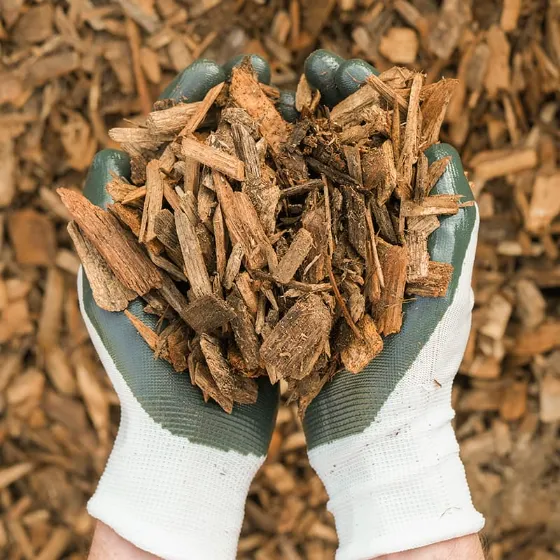
Standard wood chip mulch is made from shredded natural hardwood and is one of the most common choices for residential playgrounds. It has a natural look, is widely available, and costs less upfront than most alternatives.
The tradeoff is maintenance. Wood chips decompose faster, compact more quickly under heavy use, and need to be topped off or replaced more often. For a backyard playset with light-to-moderate use, it is a solid and affordable choice. For a high-traffic school playground, ongoing replenishment costs can add up quickly.
Cost: $30 to $140 per cubic yard. Lifespan: 2 to 3 years.
Rubber Mulch: The Low-Maintenance Playground Mulch Pick
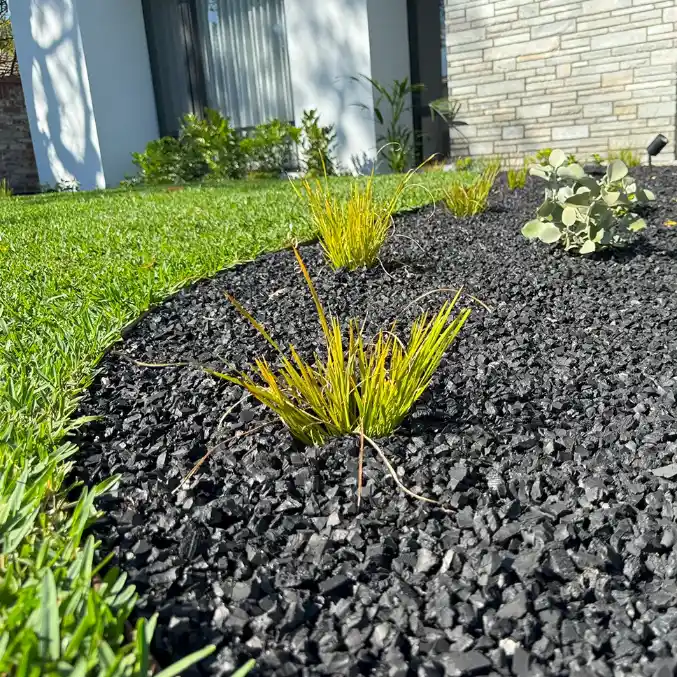
Rubber mulch is made from recycled tires and has become increasingly popular for both residential and commercial play areas. It does not decompose, resists compaction, and can last over a decade with minimal upkeep.
Here is what most buyers do not realize upfront: rubber mulch must meet ASTM F3012, which covers particle size, lead content, and sharp metal fragment limits. Always verify certification before purchasing. Lower-quality products that skip this standard represent a real safety risk.
The main downside is cost. Rubber mulch runs $300 to $500 per cubic yard compared to $30 to $40 for EWF. However, when you factor in 10 or more years of lower maintenance and fewer replacement cycles, it often comes out ahead financially for commercial installations.
Cost: $300 to $500 per cubic yard. Lifespan: 10 to 15 years.
Shredded Bark or Cedar Mulch: The Aesthetic Playground Surface Choice
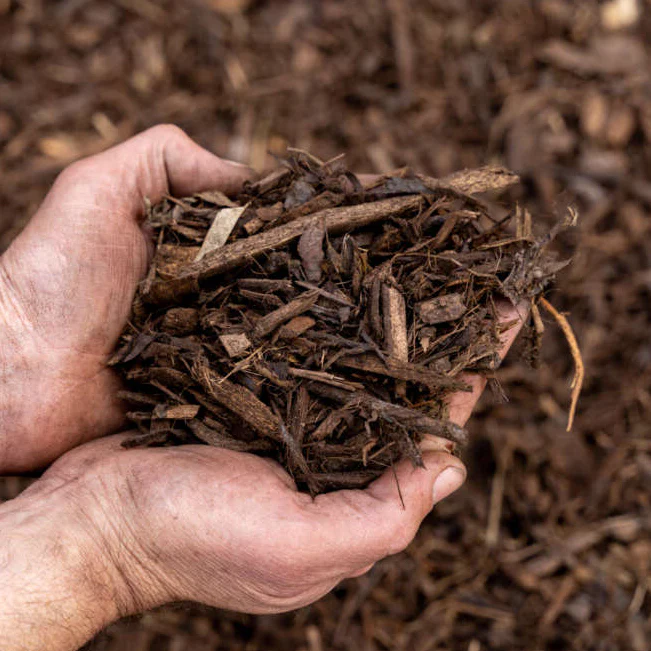
Shredded bark, including popular cedar varieties, gives playgrounds a natural, landscaped appearance. It is best suited to light residential use where aesthetics matter and children are not putting in heavy hours of play every day.
It breaks down faster than other options and does not meet ADA accessibility standards when compacted. If you go this route, plan on seasonal replenishment and more frequent depth inspections.
Cost: $25 to $80 per cubic yard. Lifespan: 1 to 2 years.
Playground Mulch Comparison Table
| Type | Safety Standard | ADA Compliant | Cost per Cu. Yd | Lifespan | Best For |
|---|---|---|---|---|---|
| Engineered Wood Fiber | ASTM F2075 | Yes (if maintained) | $30 to $40 | 7 to 10 years | Schools, parks, daycares |
| Wood Chip Mulch | CPSC guidelines | No | $30 to $140 | 2 to 3 years | Residential, light use |
| Rubber Mulch | ASTM F3012 | No | $300 to $500 | 10 to 15 years | Commercial, low-maintenance |
| Shredded Bark or Cedar | CPSC guidelines | No | $25 to $80 | 1 to 2 years | Residential, light aesthetics |
How Deep Should Playground Mulch Be? (2026 CPSC Guidelines)
This is where a lot of playground projects go wrong. People install the right type of mulch but at the wrong depth, and that defeats the entire purpose of having it there in the first place.
Playground Mulch Depth Requirements by Equipment Height
The CPSC 2026 Public Playground Safety Handbook is clear: depth requirements are directly tied to how high children can fall from. Here are the EWF depth guidelines from CPSC and ASTM:
| Equipment Fall Height | Minimum Mulch Depth |
|---|---|
| Under 10 feet | 6 inches |
| 10 feet | 8 inches |
| Up to 12 feet | 10 inches |
| Up to 14 feet | 12 inches |
Here is the single most important rule most people overlook: loose-fill materials compress by at least 25% over time due to use and weathering. That means if you need a final depth of 9 inches, you must install 12 inches from day one. A practical tip from the CPSC is to mark your equipment supports at the minimum fill level so you can track depth over time without guessing.
The Rubber Mulch Exception: The 6-Inch Rule
Rubber mulch follows different rules. Because it does not compress the same way organic materials do, the CPSC requires a minimum recommended depth of only 6 inches for rubber mulch versus 9 inches for every other loose-fill surface type. This is one of its biggest practical advantages for busy playgrounds with lean maintenance budgets.
Use Zone: How Far Should Playground Mulch Extend?
Depth is only part of the picture. CPSC guidelines require playground mulch to extend at least 6 feet in all directions from stationary equipment like climbers and slides. For swings, the use zone extends in front of and behind the swing at a distance equal to twice the height of the pivot point. Do not underestimate this coverage area when you are calculating how much material to order.
How to Install Playground Mulch: Step-by-Step
The good news is that installing playground mulch is a manageable weekend project for most residential setups. For commercial playgrounds or any ADA-compliant installation, working with a certified professional is the smarter move.
What You Need Before You Start Installing Playground Mulch
Gather these materials before you begin:
- Weed barrier landscape fabric and staples
- Border edging (rubber curbing, timber, or plastic)
- Rake and flat shovel
- Measuring tape
- Your chosen playground mulch material
Step-by-Step Playground Mulch Installation
Step 1: Clear and level the area. Remove old mulch, rocks, roots, stumps, and debris. Level the ground so mulch settles evenly and drains properly. Poor drainage leads to pooling water, which accelerates breakdown in organic mulch and creates a slip hazard.
Step 2: Install weed barrier fabric. Lay landscape fabric across the entire area and overlap seams by at least 3 inches. Secure with staples every 2 to 3 feet along the edges and seams. This step dramatically reduces future maintenance time.
Step 3: Set your border edging. Install borders using rubber curbing, pressure-treated timber, or plastic edging. Borders should sit 1 to 2 inches above your final mulch height to contain the material and minimize kick-out in high-traffic zones.
Step 4: Calculate how much playground mulch you need. Here is the quick math you need:
Length (ft) x Width (ft) x Depth (ft) divided by 27 = Cubic yards needed
For example: a 20 x 20 ft playground at a 12-inch depth requires 20 x 20 x 1 divided by 27, which equals roughly 14.8 cubic yards. Add 10 to 15% on top of that number to account for displacement in high-use spots like under swings and at the base of slides.
Step 5: Spread and rake evenly. Distribute mulch across the area and rake it to an even depth throughout. Give extra attention to the areas directly under swings and slide exits, where settling occurs fastest and depth loss is most dangerous.
Step 6: Always install 25% above your target depth. If your target finished depth is 9 inches, start at 12 inches. This accounts for the compaction the CPSC warns about and keeps your playground compliant longer between top-offs.
DIY vs. Professional Playground Mulch Installation
For a backyard playset, DIY installation is completely doable over a weekend. For schools, daycares, public parks, or any setup requiring ADA compliance, working with a Certified Playground Safety Inspector (CPSI) is well worth the investment. A certified installer ensures your playground meets ASTM and CPSC standards and significantly reduces liability exposure if an injury ever occurs.
Playground Mulch Cost: What to Budget in 2026
Let us break down the numbers clearly, because sticker shock on rubber mulch stops a lot of buyers from making the right long-term decision.
Playground Mulch Cost by Type in 2026
As of 2026, here is what you can expect to pay:
- Engineered Wood Fiber: $30 to $40 per cubic yard
- Standard Wood Chips: $30 to $140 per cubic yard
- Rubber Mulch: $300 to $500 per cubic yard
- Shredded Cedar or Bark: $25 to $80 per cubic yard
For a concrete real-world example: a 20 x 20 ft playground area at a 12-inch depth needs roughly 13 to 15 cubic yards of material, which means:
- EWF: approximately $450 to $600 total for materials
- Rubber Mulch: approximately $4,000 to $6,000 total for materials
Delivery fees, border edging, and professional installation can add several hundred to several thousand dollars on top of those figures depending on your location and project scale.
Long-Term Playground Mulch Cost: Which Is Actually Cheaper?
Here is what most people get wrong about the price tag: they only look at day one.
Wood-based mulch needs replenishing every 1 to 3 years. Factor in delivery, labor, and playground downtime, and those lower per-yard prices add up fast over a decade. Rubber mulch, on the other hand, lasts 10 to 15 years with minimal upkeep. For schools and parks managing large areas, the long-term math often favors rubber despite the larger upfront number.
For homeowners with a small backyard playset, EWF is typically the best overall value. For commercial settings planning for 10 or more years of use, rubber mulch deserves a serious look. This detailed cost breakdown from Kids World Play walks through the scenarios clearly.
Maintaining Your Playground Mulch Year-Round
Installing playground mulch is not a set-it-and-forget-it task. Regular maintenance is what keeps it safe, compliant, and looking good for years.
Seasonal Playground Mulch Raking and Top-Off Schedule
- Spring: Deep clean the surface, measure depth across all use zones, and top off anywhere winter displaced material
- Summer: Inspect high-traffic areas like swings and slides monthly; rake and redistribute mulch that has shifted
- Fall: Clear leaves and debris that accelerate decomposition in wood-based materials
- Winter: Expect some displacement during snow removal; budget for a spring top-off before play season begins
For active commercial playgrounds, budget for 10 to 15% annual material replacement to maintain compliance with ASTM F1292 impact performance standards throughout the year.
Signs It Is Time to Replace Your Playground Mulch
Do not wait until someone gets hurt. Watch for these warning signs:
- Mulch will not fluff when raked. Healthy mulch rebounds when worked. Compacted, worn-out mulch stays flat no matter how much effort you put in.
- Depth has fallen below safety minimums. If your surface drops below the CPSC minimums for your equipment height, the playground is no longer safe to operate.
- Persistent odor or visible mold. These are signs of advanced decomposition and possible health hazards. Replace the affected material immediately.
- Failed ASTM F1292 impact testing. Annual testing is best practice for any public playground. A failed test means the surface must be replaced. This is a liability issue, not just a maintenance note.
As a general guide: EWF lasts 7 to 10 years, and rubber mulch lasts 10 to 15 years under typical conditions. For a detailed look at lifecycle planning, this playground mulch lifecycle guide from GetMulch is an excellent resource.
Frequently Asked Questions About Playground Mulch
What is the best type of playground mulch?
For public settings like schools, parks, and daycares, Engineered Wood Fiber is the top recommendation. It meets ADA accessibility requirements, satisfies CPSC and ASTM standards, and delivers strong impact protection at a reasonable cost. For homeowners with a backyard playset that sees light-to-moderate use, standard wood chips or cedar mulch work well when maintained regularly.
How deep should playground mulch be?
Depth depends on the height of your equipment. CPSC guidelines require a minimum of 6 inches for equipment with fall heights under 10 feet, scaling up to 12 inches for equipment up to 14 feet tall. Always install 25% more than your target depth to account for compaction over time. Rubber mulch is the exception, requiring only a recommended 6-inch minimum because it compresses far less than organic materials.
Is rubber mulch safer than wood mulch for playgrounds?
Both can provide equivalent safety when installed correctly at the proper depth. Rubber mulch holds its depth longer, requires less maintenance, and does not decompose. However, it must meet ASTM F3012 certification to be considered safe, so always verify before purchasing. EWF performs just as well as rubber for fall protection when properly maintained and is the preferred option for ADA-compliant surfaces.
How much playground mulch do I need?
Use this formula: Length x Width x Depth (all in feet), then divide by 27 to get your cubic yardage. Add 10 to 15% extra to account for displacement in high-traffic areas. For a 20 x 20 ft area at 12 inches deep, you need roughly 15 to 17 cubic yards once you factor in that buffer.
How often should playground mulch be replaced?
The answer depends on the material:
- Standard wood chips and cedar: every 1 to 3 years
- Engineered Wood Fiber: every 7 to 10 years
- Rubber Mulch: every 10 to 15 years
The real indicator is not age, it is depth and performance. If mulch cannot be raked back to its required depth or fails impact testing, it needs replacing regardless of how recently it was installed.
Wrapping It All Up
Choosing the right playground mulch comes down to three things: who is using the space, how often they are using it, and what your long-term budget looks like.
Here is a quick recap of the most important takeaways:
- EWF is the best all-around choice for schools, parks, and ADA-compliant spaces
- Wood chips work well for light residential use where budget is a priority
- Rubber mulch is the premium, low-maintenance pick for high-traffic commercial playgrounds
- Depth and use zone coverage matter just as much as the material you choose
- Always install 25% above your minimum depth target to account for compaction over time
The surface beneath a playground is not just mulch. It is the last line of defense between a child and a serious injury. Getting it right is worth every bit of the time and investment.
Ready to get your playground surface done right? The team at Gen Lawn can help you choose, install, and maintain the right playground mulch for your property. Contact us today for a local consultation and a free quote.
References and Resources
- CPSC Public Playground Safety Handbook 2026
- ASTM F1292: Standard for Impact Attenuation of Surfacing Materials
- ASTM F2075: Standard Specification for Engineered Wood Fiber
- ASTM F3012: Standard Specification for Loose-Fill Rubber
- ADA Accessibility Guidelines for Outdoor Recreation Areas
- National Program for Playground Safety (NPPS)
- Certified Playground Safety Inspector (CPSI) Directory
- Playground Mulch Cost Guide, Kids World Play
- Playground Mulch Lifecycle and Durability, GetMulch
- EWF Depth Requirements Guide, Superior Ground Cover
About Author
Khalid Fazal is a seasoned lawn care specialist and horticultural researcher with over 15 years of hands-on experience transforming challenging landscapes into lush, resilient green spaces. His journey didn’t start in a lab, but in a backyard full of stubborn, cracked clay that “experts” said would never grow a healthy blade of grass. Refusing to accept a yard full of dust, Khalid spent years experimenting with organic soil restoration and precise mulching, eventually turning that wasteland into a neighborhood showpiece on a shoestring budget.
From mastering core aeration techniques to optimizing soil pH for specialized turf varieties, Khalid’s approach combines old-school grit with modern agronomic science. He founded Gen Lawn to provide homeowners with honest, research-backed advice that prioritizes long-term soil health over quick-fix chemical solutions. When he isn’t analyzing soil profiles, he’s developing precision tools to help others achieve professional results without the professional price tag.

Lawn Winterizer: When to Apply by Grass & Region [2026]
Table of Contents Home / By Khalid Fazal | Updated:...
Read More
Spring Lawn Care: What to Do and When in Every US Region
Table of Contents Home / By Khalid Fazal | Updated:...
Read More
Lawn Maintenance Checklist by Season and Grass Type (2026)
Table of Contents Home / By Khalid Fazal | Updated:...
Read More
Liquid Fertilizer vs Granular Fertilizer: Which Wins?
Table of Contents Home / By Khalid Fazal | Updated:...
Read More