
When Is the Best Time to Mulch? A Season-by-Season Guide
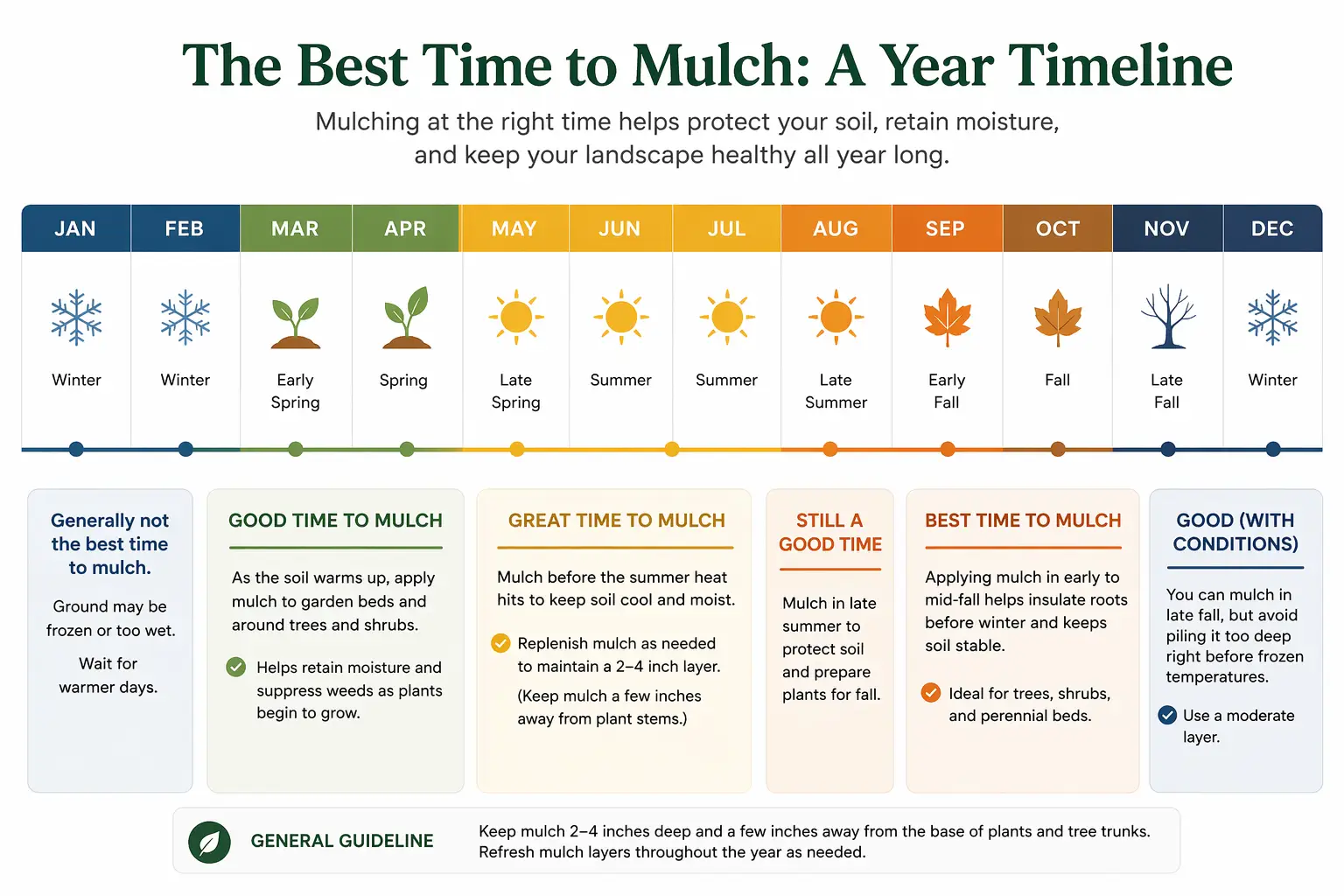
The short answer? Spring and fall are the two best times to mulch. But when exactly within those seasons — and how you apply it — makes all the difference between a thriving garden and one that’s quietly struggling under a layer of well-intentioned bark.
Here’s the thing: mulch applied at the wrong time doesn’t just underdeliver. It can trap cold soil, trigger root rot, or give weeds the very cover they need to take hold. Timing isn’t a small detail. It’s everything.
In this guide, you’ll learn exactly when to mulch by season, what to do for different areas of your yard, and the most common mistakes to avoid — so every bag of mulch you spread actually does what it’s supposed to.
Why Mulch Timing Actually Matters (More Than You Think)
Most gardening guides tell you how to mulch. Fewer explain why the calendar matters so much. Before we get into the seasonal windows, it helps to understand what’s at stake.
The Benefits Mulch Delivers (When Applied Correctly)
A well-timed layer of mulch does a lot of heavy lifting for your garden:
- Moisture retention — Mulch reduces evaporation, keeping soil consistently hydrated during dry spells
- Weed suppression — A thick layer blocks the sunlight weed seeds need to germinate
- Temperature regulation — Insulates roots from summer heat and winter freeze cycles
- Erosion control — Shields topsoil from heavy rain and wind
- Soil enrichment — Organic mulches break down over time, feeding the soil with nutrients
These benefits are real. But they only kick in when mulch is applied at the right time, at the right depth, in the right conditions.
What Goes Wrong When You Mulch at the Wrong Time
Timing errors are more common than most gardeners realize — and the consequences show up weeks later, when it’s harder to pinpoint the cause.
Mulch too early in spring and you trap cold soil underneath. The insulating layer prevents the ground from warming naturally, which delays plant growth and slows seed germination. Waterlogged spring mulch can also create conditions for root rot before your plants even get started.
Mulch too early in fall and you risk trapping residual heat in the soil, which can actually stimulate new plant growth — right before a killing frost arrives. That’s the opposite of protection.
Apply too much at any time and you suffocate your plants. The classic “mulch volcano” — a thick pile mounded against tree trunks and plant stems — traps moisture against the bark, invites pests, and causes slow rot that takes years to diagnose.
The good news? All of these mistakes are easy to avoid once you know what to look for.
When Is the Best Time to Mulch in Spring?
Spring is the season most gardeners think of first when mulch comes to mind — and for good reason. But the window is more specific than “when it feels warm outside.”
The Spring Mulching Window: Late March to Early May
The golden rule for spring mulching is simple: wait for the soil to warm before you mulch it.
If you lay mulch while the ground is still frozen or saturated from snowmelt, you’re locking that cold in place. The soil needs direct exposure to warming spring air to thaw and dry out properly. Once daytime temperatures are consistently above 50°F and the ground is no longer soggy, you’re in the window.
For most of the US, that sweet spot falls between late March and mid-April, though gardeners in northern states may be closer to early May. The goal is to get mulch down before weed seeds begin germinating — not after you can already see them pushing through.
Bucket brigade: Think of it this way — you’re trying to block the weeds at the starting line, not chase them after they’ve already sprinted ahead.
Spring Mulching Tips for Different Garden Areas
Not every part of your yard needs the same approach:
Flower beds: Apply a fresh 2–3 inch layer once beds are cleared of winter debris. If existing mulch is compacted, matted, or showing signs of mold, rake it away before adding new material. A clean surface means better airflow and moisture penetration.
Vegetable gardens: Here, patience pays off. If you’re starting from seed, hold off on heavy mulching until seedlings are several inches tall — mulch can prevent seeds from getting the warmth and light they need to germinate. For transplants, mulch right after planting to lock in moisture and keep soil temperatures stable.
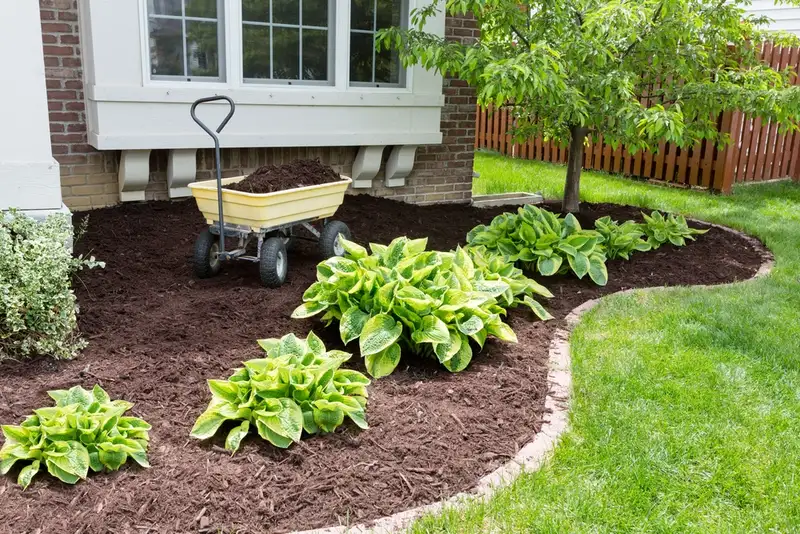
Around trees and shrubs: Spread 3–4 inches of mulch across the root zone, but keep it at least 1 inch away from the trunk. This is where mulch volcanoes do the most damage. A donut shape — not a mound — is what you’re going for.
When Is the Best Time to Mulch in Fall?
Fall mulching serves a completely different purpose than spring mulching. Where spring mulch is about momentum — suppressing weeds and retaining moisture as growth kicks off — fall mulch is about protection. You’re tucking your garden in for winter.
The Fall Mulching Window: After the First Hard Frost
The timing signal in fall is clear: wait until after your first hard frost, when plants have entered dormancy.
Mulching too early in fall is a common mistake. If the soil is still warm and plants are still actively growing, a thick layer of mulch can trap that warmth — which sounds helpful but actually stimulates tender new growth just as freezing weather approaches. That new growth has no cold hardiness and can be killed off quickly, weakening plants heading into winter.
Once plants have gone dormant — typically late October through November across most of the US — mulch acts as a true insulating blanket. It protects root systems from harsh freeze-thaw cycles that can heave roots out of the ground and damage them.
What to Mulch (and What to Skip) in Fall
Prioritize:
- Perennials, especially tender varieties that struggle with cold
- The root zones of trees and shrubs
- Bare garden beds left empty after summer crops are pulled
Vegetable gardens: Once summer crops are spent, clear out plant debris and cover bare soil with a 2–3 inch layer of straw or shredded leaves. This protects soil structure over winter and gives you a head start in spring.
A practical tip: Choose lighter organic materials for fall coverage — straw, shredded leaves, or pine straw. They’re easy to rake back in spring without disturbing emerging growth.
Can You Mulch in Summer or Winter?
Spring and fall get the spotlight, but questions about off-season mulching come up constantly. Here’s the honest answer.
Summer Mulching — Yes, But Strategically
You don’t need to do a full mulching job in summer, but there’s one situation where it makes sense: when existing mulch has thinned below 1 inch.
Mulch breaks down over time — that’s actually a good thing for soil health. But once the layer gets too thin, it loses its ability to retain moisture and suppress weeds. A light top-dress of fresh mulch in mid-summer can make a real difference during drought conditions, reducing how often you need to water.
Just avoid applying fresh mulch over waterlogged soil, and never pile it on during a heat wave when the ground is bone dry — water the bed first, then mulch.
Winter Mulching — Only for Maintenance
Generally speaking, winter is not the time to add fresh mulch. Applying mulch to frozen ground traps cold, delays spring warming, and provides little real benefit.
What is worthwhile in winter is maintaining your existing coverage. After storms, check that wind or ice hasn’t shifted or thinned your mulch layer. Redistribute where needed to ensure consistent coverage over root zones.
In early spring, gradually pull winter mulch back from plants rather than removing it all at once — sudden temperature swings can shock plants that have been cozy under their insulating layer.
How Much Mulch to Apply (And Common Mistakes to Avoid)
Knowing when to mulch is half the battle. The how much question trips up even experienced gardeners.
The Right Depth by Garden Type
| Garden Area | Ideal Mulch Depth | Best Mulch Type |
|---|---|---|
| Flower beds | 2–3 inches | Shredded bark, wood chips |
| Vegetable gardens | 2–3 inches | Straw, shredded leaves, grass clippings |
| Trees & shrubs | 3–4 inches | Double-shredded hardwood bark |
| Perennial beds | 2–3 inches | Pine straw, shredded leaves |
| Pathways | 3–4 inches | Wood chips, gravel |
The goal is enough depth to suppress weeds and retain moisture — but not so much that you’re smothering plant roots or inviting fungal problems.
The 3 Most Common Mulching Mistakes
1. Mulching too early in spring Patience is the hardest gardening skill to practice, especially after a long winter. But laying mulch on cold, wet soil works against you. Wait for the soil to warm — your plants will thank you.
2. Building mulch volcanoes around trees It looks tidy. It feels thorough. But piling mulch against tree trunks and plant stems traps moisture against the bark, creating ideal conditions for rot, fungal disease, and pest activity. Keep a clear gap.
3. Applying too much mulch More is not better. Beyond 4 inches, mulch can actually repel water, preventing rain and irrigation from reaching roots. It also creates dense, oxygen-poor conditions that suffocate beneficial soil organisms. Stick to the recommended depths above and check existing layers before adding more.
Frequently Asked Questions About the Best Time to Mulch
Is it better to mulch in spring or fall?
Both seasons serve different purposes, and ideally you’d do both. Spring mulching focuses on weed suppression and moisture retention heading into the growing season. Fall mulching is about protecting roots from winter temperature extremes. If you can only choose one, spring is generally the higher-impact application for most garden types.
Can you put mulch down in April?
Yes — mid-April is often ideal for most of the continental US. By then, soil has typically warmed enough that mulch won’t trap cold, and weed seeds haven’t yet had a chance to establish. Check your local last frost date and soil temperature (aim for above 50°F) before applying.
What happens if you mulch too early in spring?
Applying mulch before the soil has warmed acts like an insulating barrier in reverse — it keeps cold locked in rather than letting spring air warm the ground. This slows plant growth, delays seed germination, and can contribute to waterlogging. If you jumped the gun, simply rake the mulch back temporarily and let the soil breathe.
How often should you replace mulch?
Organic mulch typically needs refreshing once a year. Rather than stripping everything out, check the depth each spring. If you’re still sitting above 1–2 inches of existing mulch, a light top-dress is all you need. If it’s compacted or has broken down below 1 inch, apply a fresh layer to your target depth.
Should you remove old mulch before adding new?
Not always. If existing mulch is loose and healthy, you can top-dress without removing it. If it’s compacted into a mat, growing mold, or showing signs of pest activity, rake it away before applying fresh material. Matted mulch can actually repel water rather than retain it — defeating the whole purpose.
The Bottom Line on Mulching Timing
Mulch is one of the most useful tools in any gardener’s arsenal — but only when it’s applied at the right time.
Here’s what to remember:
- Spring mulching sweet spot: Late March to mid-May, once soil has warmed above 50°F
- Fall mulching sweet spot: After your first hard frost, when plants have gone dormant
- Summer mulching: Only to refresh thinned layers during dry periods
- Ideal depth: 2–3 inches for beds, 3–4 inches around trees
- Always avoid: Mulch volcanoes, overly wet soil, and mulching on frozen ground
Get the timing right, and a single afternoon’s work pays dividends all season long — in fewer weeds, less watering, and healthier plants from the ground up.
About the Author
Khalid Fazal is a seasoned lawn care specialist and horticultural researcher with over 15 years of hands-on experience transforming challenging landscapes into lush, resilient green spaces. His journey didn’t start in a lab, but in a backyard full of stubborn, cracked clay that “experts” said would never grow a healthy blade of grass. Refusing to accept a yard full of dust, Khalid spent years experimenting with organic soil restoration and precise mulching—eventually turning that wasteland into a neighborhood showpiece on a shoestring budget.
From mastering core aeration techniques to optimizing soil pH for specialized turf varieties, Khalid’s approach combines old-school grit with modern agronomic science. He founded Gen Lawn to provide homeowners with honest, research-backed advice that prioritizes long-term soil health over quick-fix chemical solutions. When he isn’t analyzing soil profiles, he’s developing precision tools to help others achieve professional results without the professional price tag.

Lawn Winterizer: When to Apply by Grass & Region [2026]
Table of Contents Home / By Khalid Fazal | Updated:...
Read More
Spring Lawn Care: What to Do and When in Every US Region
Table of Contents Home / By Khalid Fazal | Updated:...
Read More
Lawn Maintenance Checklist by Season and Grass Type (2026)
Table of Contents Home / By Khalid Fazal | Updated:...
Read More
Liquid Fertilizer vs Granular Fertilizer: Which Wins?
Table of Contents Home / By Khalid Fazal | Updated:...
Read More