
When to Replace Mulch: 6 Signs, Best Timing & How Often You Really Need To
You’re walking your yard in early spring. The garden beds look flat. The mulch has gone gray and papery. It’s not doing much of anything — or is it still working?
Here’s the honest answer: most organic mulch needs to be replaced every 1 to 2 years, but knowing when to replace mulch has less to do with the calendar and more to do with what your mulch is actually telling you. The signs are there. You just need to know what to look for.
This guide covers exactly that — the six warning signs, the best time of year to act, and how to decide whether you need a full replacement or just a quick refresh.
How Long Does Mulch Last? It Depends on What You’re Using
Not all mulch ages the same way, so the replacement schedule looks very different depending on your material.
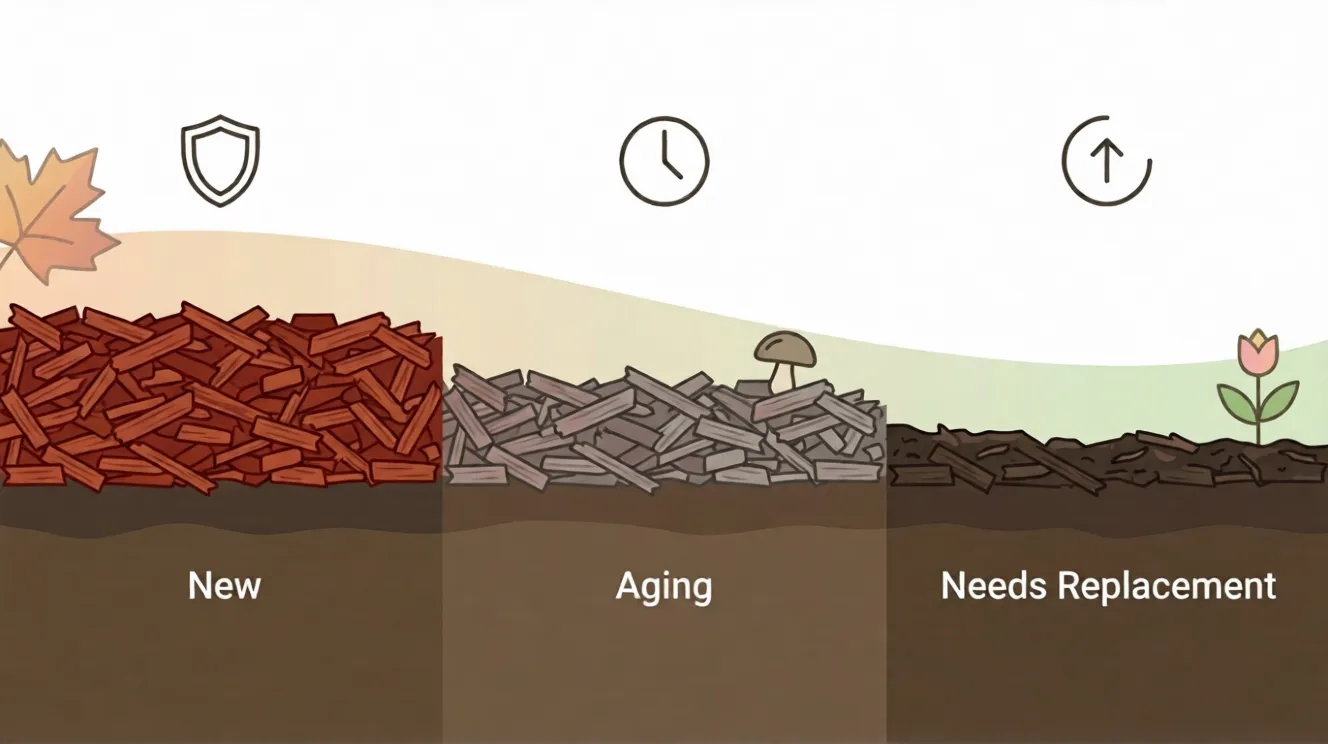
Organic mulches — shredded bark, wood chips, straw, grass clippings — decompose naturally over time. That decomposition is part of the benefit: it feeds your soil. But once it breaks down too far, it stops doing its job.
| Mulch Type | Average Lifespan | Replacement Trigger |
|---|---|---|
| Wood chips / bark | 1–2 years | Crumbling to fine particles |
| Shredded bark mulch | 12 months | Fading, compression |
| Grass clippings | 4–6 months | Rapid decomposition |
| Pine needles | 2–3 years | Significant thinning |
| Rubber mulch | 8–10+ years | Shifting coverage, weed growth |
| Gravel / rock | 10+ years | Sediment buildup, weed infiltration |
Inorganic mulches — rubber, gravel, rock — don’t decompose, so “replacement” looks different for them. You’re not fighting breakdown; you’re watching for sediment accumulation, shifting coverage, and weeds sneaking through gaps.
6 Signs It’s Time to Replace Your Mulch
1. It Looks More Like Soil Than Mulch
Pick up a handful. If the texture is fine, crumbly, and dark — closer to garden soil than wood — it has decomposed past the point of usefulness. LayLa Burgess, an urban horticulture agent at Clemson University Extension, puts it plainly: when chip mulch starts to look like compost, it has served its primary function and is now just a soil amendment.
That’s not a bad thing — but it means the weed-suppressing, moisture-retaining layer you laid down is gone. Time to replenish.
2. It Smells Sour or Vinegary
This one matters. A sour, vinegar-like odor from your mulch is a red flag, not just an unpleasant smell. It signals anaerobic decomposition — the mulch is breaking down without oxygen, which produces compounds including acetic acid, methanol, and ammonia that can chemically burn plant roots.
Landscaping professionals call this “sour mulch”, and unlike standard decomposition, you can’t just top it off and move on. If your mulch smells like vinegar, remove it before it damages your plants.
3. Water Beads on the Surface — The Pour Test
Here’s a quick field test: pour a cup of water directly onto your mulch. If it soaks in, you’re in good shape. If it beads up and rolls off like water on a freshly waxed car, your mulch has become hydrophobic — a condition where dry, compacted organic matter starts to repel rather than absorb water.
Hydrophobic mulch blocks moisture from reaching the root zone, meaning your plants are being starved even when you water or it rains. Rake it out and start fresh — adding new mulch on top won’t fix the problem.
4. The Color Has Faded Significantly
Fading color is often the first visible sign that mulch is breaking down. Undyed organic mulch typically turns gray within about a year of application. Dyed mulch holds color longer but usually fades within 6 to 12 months.
Color alone doesn’t mean the mulch is functionally dead — but it usually signals the depth has thinned and a refresh is overdue. Check depth alongside color. If you’re below 2 inches in flower beds or below 3 inches around trees and shrubs, act now.
5. Weeds Are Breaking Through Consistently
Mulch works as a weed barrier by blocking sunlight. When it thins out, that barrier collapses and weeds push through. If you’re pulling weeds that are sprouting directly through the mulch layer, the coverage has fallen below the effective threshold.
A minimum of 2 inches is required for meaningful weed suppression. Anything less, and your mulch is doing little more than decorating the soil.
6. Fungal Growth or Pest Activity
Seeing mushrooms, slime molds, or artillery fungus in your mulch? Mild fungal activity is a normal part of the decomposition process and generally harmless to plants. Artillery fungus in particular — a small, cream-colored cup fungus — tends to appear in wood-based mulch near home foundations and can shoot sticky black spore masses onto siding and vehicles, but it doesn’t harm plants directly.
However, if you notice a heavy, spreading mold combined with the sour vinegar smell from Sign #2, that points to anaerobic decomposition. In that case, remove and replace rather than treating the surface.
When to Replace Mulch — Best Timing for US Homeowners
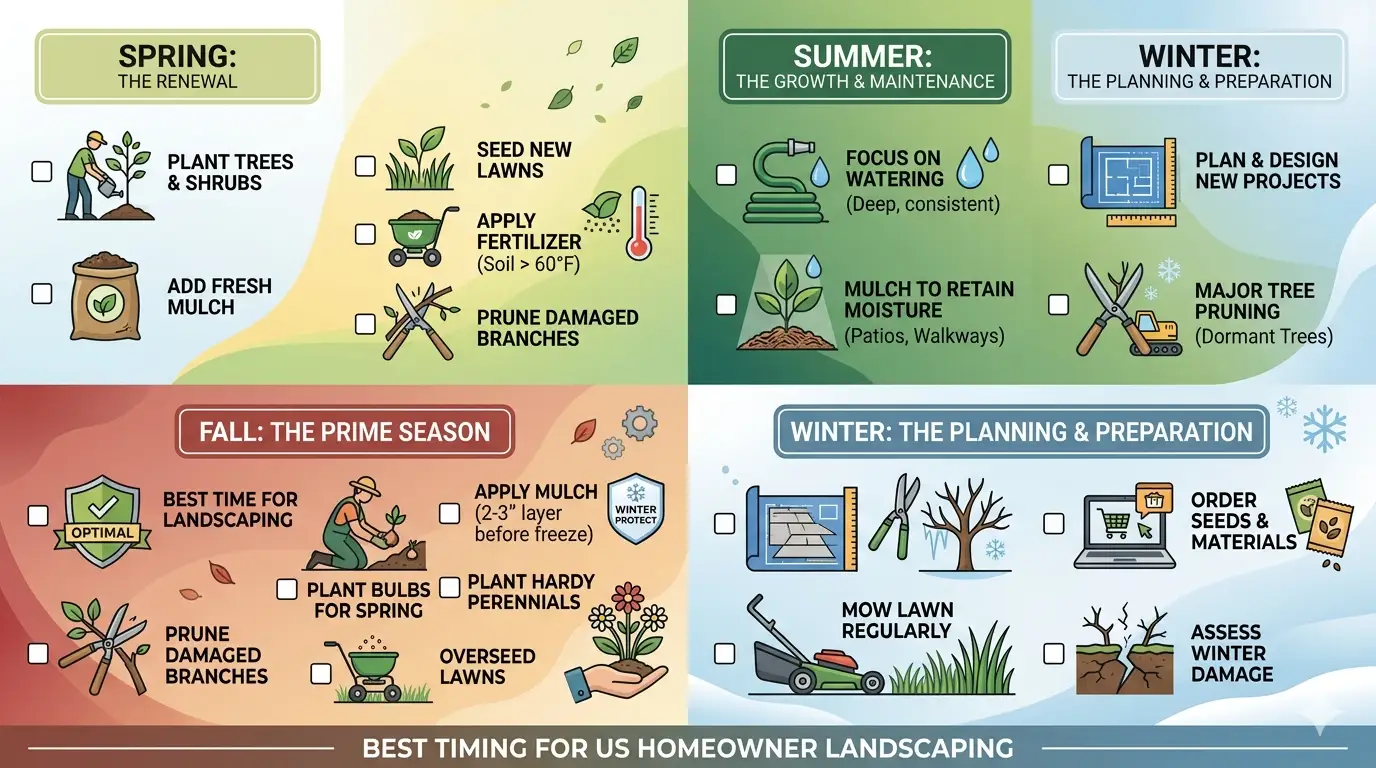
Spring Is the Best Window (for Most of the Country)
Early spring — after the last frost and once soil temperatures are consistently above 50°F — is the most popular and effective time to replace mulch. Timing varies across the US based on your USDA Plant Hardiness Zone:
- Southeast and Southwest (Georgia, Texas, Arizona): Late March to mid-April
- Midwest (Ohio, Illinois, Missouri): Early to mid-May, per Ohio State University Extension guidance
- Pacific Northwest (Oregon, Washington): April, but watch for excess moisture — wet climates speed up decomposition
- Northeast (New York, Pennsylvania): May, after the ground has dried from spring thaw
Spring mulching locks in moisture from seasonal rains, suppresses weeds before summer heat hits, and gives your garden a clean, finished look for the growing season.
Fall Mulching for Winter Root Protection
Fall is the second-best window — not for aesthetics, but for plant health. Apply fresh mulch from October through early November, before the first frost, to insulate root systems from freezing temperatures and prevent soil erosion from winter rains and snowmelt.
This is especially valuable for perennials, foundation shrubs, and newly planted trees that haven’t yet developed deep root systems.
Summer and Winter? Generally Skip Both
Replacing mulch in mid-summer is counterproductive — hot, dry conditions break down fresh mulch faster, and you lose much of the benefit quickly. Winter replacement rarely makes sense unless you’re providing emergency insulation to a vulnerable plant during an unexpected cold snap.
Replace vs. Refresh — You Don’t Always Need to Start Over
Full mulch replacement is not always the answer. Understanding the difference saves you time, money, and effort.
When a Refresh (Top-Dressing) Is Enough
If the existing mulch is still structurally intact — no sour smell, no hydrophobic surface, no heavy compaction — and the depth has simply dropped below 2 inches, you can top-dress rather than replace.
Rake the existing layer first to break up minor compaction and restore airflow. Then apply 1 inch of fresh mulch on top. The old layer continues to decompose and feed your soil while the new layer restores coverage and color.
When Full Replacement Is Necessary
Full removal and replacement is needed when:
- The mulch smells sour or vinegary
- The pour test fails (water beads up)
- Mold, disease, or pest infestation is present
- Total depth has exceeded 4 inches from repeated top-dressing without removal
That last point is critical. Layering new mulch on top of old every year without ever removing any creates what landscapers call a “mulch volcano” — a thick, compacted mound piled against plant stems or tree trunks. According to Penn State Extension, this traps moisture against the bark, encourages rot, promotes stem girdling roots, and can slowly kill even established trees over several years.
How Much New Mulch Do You Need?
Use the Texas A&M AgriLife Extension formula to estimate before you buy:
(Length ft × Width ft × Depth inches ÷ 12) ÷ 27 = Cubic yards needed
Maintain a depth of 2–3 inches in flower and planting beds, and 3–4 inches around trees. Always keep mulch at least 2–3 inches away from plant stems and 6 inches from tree trunks to protect the critical root flare — the natural flared base where trunk meets roots.
Frequently Asked Questions About When to Replace Mulch
How do I know if my mulch is still good?
Pick up a handful. If it still looks and feels like the material you laid down — chunky, fibrous — it’s still working. If it crumbles into fine, soil-like particles, it has decomposed past usefulness. The pour test is another quick check: if water beads up on the surface, your mulch has gone hydrophobic and needs replacing.
Can I add new mulch on top of old mulch?
Yes, in most cases. If the existing layer is structurally intact and total depth won’t exceed 4 inches after adding new material, top-dressing works well. Rake the old layer first to break up compaction. If depth is already near or above 4 inches, remove some old mulch before adding fresh to avoid over-mulching problems.
What is the best time of year to replace mulch in the US?
Early spring — once soil temperatures reach 50°F — is ideal for most US regions. Find your specific zone using the USDA Plant Hardiness Zone Map and plan accordingly. Fall (October through early November) is the second-best window, primarily for winter root insulation.
What happens if you never replace old mulch?
Fully decomposed mulch loses its weed-suppressing and moisture-retaining function. You’ll see more weeds, drier soil, and greater erosion risk. Worse, years of top-dressing without removal can build an anaerobic layer that actively harms the plants the mulch was meant to protect.
How thick should mulch be after replacing?
Aim for 2–3 inches in garden and planting beds, and 3–4 inches around trees and large shrubs. Never exceed 4 inches. Per Clemson Cooperative Extension, always keep mulch pulled back from stems and trunks to prevent rot and pest entry.
Bottom Line: What to Do This Weekend
Walk your beds and run through this quick checklist:
- Handful test — does it crumble like soil? Needs replacing.
- Smell test — any vinegar odor? Remove it now — it can burn your plants.
- Pour test — does water bead on top? Rake out and start fresh.
- Depth check — under 2 inches? Top-dress. Over 4 inches? Remove before adding more.
- Trunk check — is mulch touching tree bark? Pull it back at least 6 inches.
Most homeowners find that organic mulch needs attention every 1 to 2 years — not as a hard rule, but as a working guide. Let the mulch tell you when it’s ready.
When you’re ready to replace, aim for early spring or fall, stay within the 2–4 inch depth range, and keep mulch clear of plant stems and tree trunks. Your garden will be better for it.
Need help calculating how much mulch you need? Use the Texas A&M AgriLife mulch formula or a free online mulch calculator to get an accurate quantity before you buy.
References & Sources
- Clemson Cooperative Extension — Mulch
- UMass Amherst Extension — Sour Mulch
- Penn State Extension — Artillery Fungus in Mulch
- Penn State Extension — Mulch Volcanoes
- Ohio State University Extension — Mulch in the Landscape
- UNH Extension — Volcanoes Kill Trees
- Illinois Extension — Benefits of Mulch
- Texas A&M AgriLife Extension — Mulching
- USDA Plant Hardiness Zone Map
- University of Connecticut Extension — Mulch Basics
About Author
Khalid Fazal is a seasoned lawn care specialist and horticultural researcher with over 15 years of hands-on experience transforming challenging landscapes into lush, resilient green spaces. His journey didn’t start in a lab, but in a backyard full of stubborn, cracked clay that “experts” said would never grow a healthy blade of grass. Refusing to accept a yard full of dust, Khalid spent years experimenting with organic soil restoration and precise mulching—eventually turning that wasteland into a neighborhood showpiece on a shoestring budget.
From mastering core aeration techniques to optimizing soil pH for specialized turf varieties, Khalid’s approach combines old-school grit with modern agronomic science. He founded Gen Lawn to provide homeowners with honest, research-backed advice that prioritizes long-term soil health over quick-fix chemical solutions. When he isn’t analyzing soil profiles, he’s developing precision tools to help others achieve professional results without the professional price tag.

Lawn Winterizer: When to Apply by Grass & Region [2026]
Table of Contents Home / By Khalid Fazal | Updated:...
Read More
Spring Lawn Care: What to Do and When in Every US Region
Table of Contents Home / By Khalid Fazal | Updated:...
Read More
Lawn Maintenance Checklist by Season and Grass Type (2026)
Table of Contents Home / By Khalid Fazal | Updated:...
Read More
Liquid Fertilizer vs Granular Fertilizer: Which Wins?
Table of Contents Home / By Khalid Fazal | Updated:...
Read More