
Lawn Maintenance Checklist: What to Do Every Week, Month, and Season
You mow every Saturday, water when the grass looks dry, and spread fertilizer when the bag says spring. Then July shows up and the lawn is thin, patchy, and full of crabgrass anyway.
Here’s the thing: effort is rarely the problem. Timing is. The crabgrass preventer goes down a week too late. A cool-season lawn gets fed in April instead of September. The mower sits at 2 inches all summer.
A lawn maintenance checklist only works when every task is tied to your grass type and your region, not a generic calendar. So that’s exactly how this one is built, starting with the one thing that decides everything else.
Match Your Lawn Maintenance Checklist to Your Grass Type
Every task on a lawn maintenance checklist depends on one question: does your grass grow hardest in cool weather or hot weather? Get that wrong and you’ll fertilize, seed, and aerate at the exact moment your lawn can’t use it.
Lawn type | Where it grows | Peak growth |
|---|---|---|
Cool-season | Northern US | Spring and fall |
Warm-season | Southern US | Summer |
Transition zone | Middle belt | Depends on grass |
Cool-Season Lawns (Northern US)
Kentucky bluegrass, tall fescue, and perennial ryegrass cover most lawns across the Northeast, Midwest, and Pacific Northwest. They grow fastest in spring and fall, then slow down or go semi-dormant in summer heat.
That’s why fall is their big season. The University of Missouri Extension lawn calendar names September as the most important time to fertilize cool-season grass. Not sure which one you have? Our guide to the 7 types of cool-season grass breaks each one down by region.
Warm-Season Lawns (Southern US)
Bermuda, zoysia, St. Augustine, and centipede run the South. They green up as spring warms, peak in summer, and turn brown and dormant after the first frost.
Their checklist flips the cool-season calendar. Feeding, aerating, and seeding all happen from late spring through summer. The University of Georgia keeps species profiles for every warm-season grass, each with its own mowing height and lawn calendar.
Transition Zone Lawns
The transition zone is the middle belt where neither grass type is fully adapted. Summers are too hot for cool-season grass, and winters are too cold for warm-season grass. It runs roughly through Virginia, North Carolina, Tennessee, Kentucky, Arkansas, Missouri, and Kansas.
Here’s the simple rule: follow the checklist for the grass you actually grow, not your region’s label. Tall fescue in Tennessee follows the cool-season schedule. Bermuda in the same town follows the warm-season one.
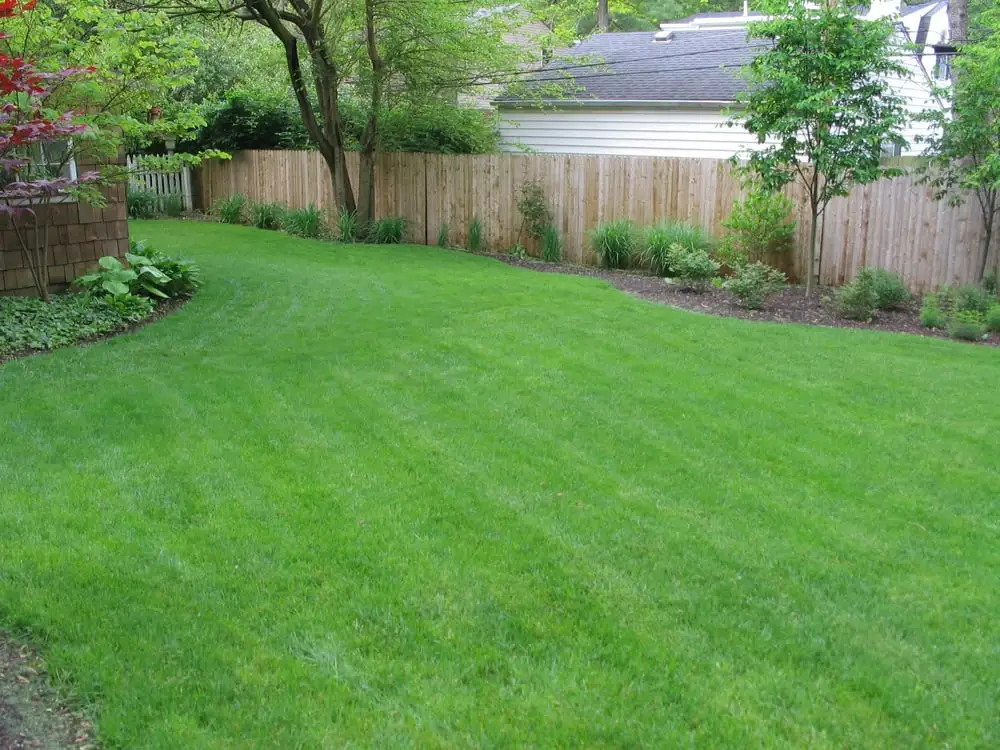
Weekly and Monthly Lawn Maintenance Checklist
Most lawn damage doesn’t come from skipping the big seasonal jobs. It comes from small weekly habits nobody thinks twice about. Nail these, and the seasonal work gets a lot easier.
Your Weekly Lawn Maintenance Checklist
Mow by the one-third rule. Never cut off more than one-third of the grass blade in a single mowing. Cutting lower strips away the leaf the plant needs to feed its roots, and the University of Missouri Extension points to short mowing as a major cause of lawn decline. If the grass got away from you, cut it halfway down, then finish the job a few days later.
Leave the clippings. Short clippings break down fast and return nutrients to the soil. Bag them only when they clump on top of the lawn.
Water deep, not daily. Most lawns need about 1 inch of water a week, rain included. Water early, between 6 and 8 a.m., so the blades dry quickly and disease has less chance to settle in.
Not sure your lawn is thirsty? MU Extension lists the signs a lawn actually needs water: blue-gray wilted blades, footprints that stay visible for hours, and folded leaves. Here’s a quick trick: set a few straight-sided cans on the lawn, run the sprinkler, and time how long it takes to collect 1 inch. That’s your watering time.
Your Monthly Lawn Maintenance Checklist
Scout for weeds while they’re small. A young weed pulls out easily or dies with a quick spot spray. A mature one has already dropped seed for next year.
Check brown patches for grubs. If a dead patch peels back like carpet, look underneath it. Mississippi State Extension recommends cutting a few 1-foot squares of turf and counting the grubs. An average of three to five per square foot is the point where treatment makes sense.
Inspect your sprinklers. Look for clogged heads, spray hitting the driveway, and dry spots that point to poor coverage.
Check your mower blade. A dull blade tears grass instead of slicing it, which leaves frayed tips that turn brown. Sharpen it as soon as you see that ragged look. And if your old mower costs more to fix than it’s worth, our riding vs push mower comparison matches the right machine to your yard size.
Seasonal Lawn Maintenance Checklist by Region
This is where timing makes or breaks your lawn. Use this quick view to see where you are, then read your season below.
Season | Cool-season lawns | Warm-season lawns |
|---|---|---|
Spring | Weed preventer, light feed | Weed preventer, feed after green-up |
Summer | Mow high, water deep | Feed, aerate, dethatch |
Fall | Aerate, overseed, main feed | Stop feeding, treat weeds |
Winter | Service mower | Let it rest |
Spring Lawn Maintenance Checklist
Start with cleanup. Rake out leaves, sticks, and matted patches so sunlight and air reach the crowns of the grass.
Next, test your soil if you haven’t in a while. A soil test tells you the pH and exactly which nutrients your lawn is missing, so you stop guessing at the fertilizer aisle. Rutgers Extension explains how to take a lawn soil sample and recommends repeating the test every 2 to 3 years.
Then comes the most time-sensitive job of the year: crabgrass preventer. This is a pre-emergent herbicide, meaning it stops weed seeds from sprouting instead of killing weeds you can already see. According to NDSU Extension, crabgrass germinates once soil 2 inches deep averages 55°F for three to five days. Apply before that point and water it in with about half an inch of water.
But wait: skip the pre-emergent on any area you plan to seed this spring. It can’t tell crabgrass seed from grass seed, so it blocks both.
Cool-season lawns: keep spring feeding light or skip it. Virginia Cooperative Extension’s cool-season turf calendar strongly discourages spring fertilizing because it raises the risk of disease.
Warm-season lawns: hold off until the grass has fully greened up. Feeding a half-dormant lawn mostly feeds the weeds.
Summer Lawn Maintenance Checklist
Cool-season lawns: raise your mower. Taller grass shades the soil, holds moisture, and crowds out weeds, so going up half an inch to an inch helps, especially on thin lawns. Water deeply when the lawn shows stress.
Here’s something most guides skip. If a cool-season lawn turns brown in July, it’s often dormant, not dead. The University of Missouri Extension notes these grasses usually bounce back once cooler weather and water return in September.
Warm-season lawns: this is your prime season. Fertilize during active growth, and handle core aeration now. Core aeration pulls small plugs of soil out of the lawn so air, water, and fertilizer can reach the roots. The University of Maryland Extension recommends June through July for warm-season grass.
Summer is also the time to dethatch warm-season grass if it needs it. Nebraska Extension suggests dethatching only when the thatch layer runs deeper than three-quarters of an inch, and only while the grass is actively growing.
For every lawn type, midsummer is the time to watch for grubs. If brown patches pull up easily, run the square-foot check from the monthly list above.
Fall Lawn Maintenance Checklist
For cool-season lawns, fall is the most important season of the year. This is when you build the root system that carries the lawn through next summer.
Start with core aeration, then overseed thin areas right after so the seed drops into the holes. Next, apply your main fertilizer feeding. MU Extension names September the single best month to fertilize cool-season grass. If you just seeded, our new lawn seed watering schedule walks you through watering week by week.
Does your lawn feel spongy underfoot? That’s often thatch, a layer of dead stems and roots between the grass and soil. MU Extension recommends dethatching in early fall once that layer passes half an inch.
Warm-season lawns: stop fertilizing as growth slows. Fall is the best time to treat broadleaf weeds like dandelion and clover, and Nebraska Extension suggests timing that spray around the first frost.
For both types, keep mowing until the grass stops growing, and don’t let fallen leaves mat down on the lawn.
Winter Lawn Maintenance Checklist
Winter is about protecting what you built. Stay off frozen or frosty grass, because the blades snap and leave brown footprints behind.
Service your mower before you store it. MU Extension advises storing it with clean oil and an empty fuel tank. In freezing regions, drain and shut down your irrigation system so pipes and sprinkler heads don’t crack.
Warm-season lawns sit dormant through winter. They don’t need fertilizer, and Nebraska Extension notes they don’t need irrigation during dormancy either. For your exact grass, the University of Georgia publishes free lawn care calendars by grass type that cover every month.
Lawn Maintenance Checklist Mistakes That Undo Your Work
You can follow every step above and still lose ground if one of these habits slips in. They’re common because each one feels like it’s helping.
Cutting Too Short
A short lawn looks neat for a day, then pays for it all season. Scalped grass can’t feed its roots, and bare, sunny soil is exactly what crabgrass seed needs to sprout. MU Extension notes that keeping a proper mowing height is one of the simplest ways to keep weeds out.
The fix is easy. Find the right height for your grass type, set the mower there, and leave it.
Watering a Little Every Day
A quick daily sprinkle feels responsible. It isn’t. The University of Missouri Extension calls shallow, frequent watering the worst way to water a lawn, because it trains roots to stay near the surface and invites crabgrass and disease.
Water less often, but longer, so moisture soaks deep into the root zone. And if your city has watering limits, it may be worth turning part of your yard into a drought tolerant landscape that needs far less water.
Fertilizing in the Wrong Season
This is the big one for cool-season lawns. Heavy spring feeding pushes soft, fast leaf growth at the expense of roots, and that tender growth is a magnet for fungus once summer heat arrives.
For cool-season grass, shift most of your fertilizer to fall. For warm-season grass, feed only while it’s actively growing, never while it’s dormant.
When It’s Worth Calling a Local Lawn Pro
Most of this lawn maintenance checklist is easy to handle yourself. Bringing in a local pro makes sense when you’d need to rent heavy equipment for a big aeration or renovation job, when disease keeps coming back, or when you can’t identify a pest that’s killing patches of grass.
Before you pay anyone, try your county extension office. Most offer low-cost soil testing and free answers to lawn questions from local experts, and you can find your county extension office here.
Frequently Asked Questions About Lawn Maintenance
What should be included in a lawn maintenance checklist?
A complete lawn maintenance checklist covers mowing, watering, fertilizing, weed control, aeration, overseeding, pest checks, and mower care. The key is organizing those tasks by week, month, and season, then timing each one to your grass type.
How often should lawn maintenance be done?
Mow weekly during the growing season and water about 1 inch per week, rain included. Do quick weed, grub, and sprinkler checks once a month. Bigger jobs like aeration happen less often; the University of Maryland Extension suggests every 2 to 4 years for most home lawns and every 1 to 2 years for lawns with heavy foot traffic.
What order should spring lawn care tasks go in?
Clean up debris first, then test your soil. Apply crabgrass preventer before the soil hits 55°F, start mowing once the grass actively grows, and feed last. If you plan to seed in spring, skip the preventer on those areas.
When should I fertilize my lawn in the US?
It depends on your grass. Cool-season lawns get their main feeding in September, with an optional lighter one in late fall. Warm-season lawns should be fed after spring green-up and through summer, with UGA Extension pointing to May through August as the best window.
Is a lawn maintenance checklist different for warm-season and cool-season grass?
Yes. Both lawns need the same tasks, but on nearly opposite calendars. Cool-season grass does its heavy growing and recovery in fall, while warm-season grass does it in summer.
Put Your Lawn on the Right Schedule
A thick, healthy lawn isn’t about working harder. It’s about doing the right job at the right time for the grass you actually have.
- Know your grass first. Cool-season and warm-season lawns run on nearly opposite calendars.
- Protect the weekly basics. Mow by the one-third rule and water deeply about once a week.
- Time the big jobs by season. Cool-season lawns get their main care in fall, while warm-season lawns get it in summer.
- Watch soil temperature, not the calendar. Crabgrass preventer has to go down before soil reaches 55°F.
Save this lawn maintenance checklist and check it at the start of each season. When you’re ready to tackle the next step, from choosing grass seed to fixing thin spots, explore the free guides and tools at GenLawn.
About Author
Khalid Fazal is a seasoned lawn care specialist and horticultural researcher with over 15 years of hands-on experience transforming challenging landscapes into lush, resilient green spaces. His journey didn’t start in a lab, but in a backyard full of stubborn, cracked clay that “experts” said would never grow a healthy blade of grass. Refusing to accept a yard full of dust, Khalid spent years experimenting with organic soil restoration and precise mulching, eventually turning that wasteland into a neighborhood showpiece on a shoestring budget.
From mastering core aeration techniques to optimizing soil pH for specialized turf varieties, Khalid’s approach combines old-school grit with modern agronomic science. He founded Gen Lawn to provide homeowners with honest, research-backed advice that prioritizes long-term soil health over quick-fix chemical solutions. When he isn’t analyzing soil profiles, he’s developing precision tools to help others achieve professional results without the professional price tag.

Lawn Winterizer: When to Apply by Grass & Region [2026]
Table of Contents Home / By Khalid Fazal | Updated:...
Read More
Spring Lawn Care: What to Do and When in Every US Region
Table of Contents Home / By Khalid Fazal | Updated:...
Read More
Lawn Maintenance Checklist by Season and Grass Type (2026)
Table of Contents Home / By Khalid Fazal | Updated:...
Read More
Liquid Fertilizer vs Granular Fertilizer: Which Wins?
Table of Contents Home / By Khalid Fazal | Updated:...
Read More