
Most people spread mulch every spring without giving it a second thought. It comes in a bag, it goes around the plants, and that’s that.
But here’s the thing: that bag of rich, dark wood chips didn’t just appear. It went through a surprisingly detailed journey — from a storm-damaged oak tree or a recycled shipping pallet, all the way through an industrial grinder, a screen, a colorizer, and eventually your garden bed.
So, how is mulch made? In short: organic mulch is produced by chipping, shredding, or composting raw materials like wood, bark, and leaves — then screening and often dyeing the result. Inorganic options like rubber or gravel go through an entirely different manufacturing process.
This guide walks you through both, step by step. You’ll also find out what NOT to put in homemade mulch (one common mistake can actually starve your plants), why the difference between single-ground and triple-ground mulch matters, and how to spot colored mulch that’s genuinely safe versus the kind worth avoiding.
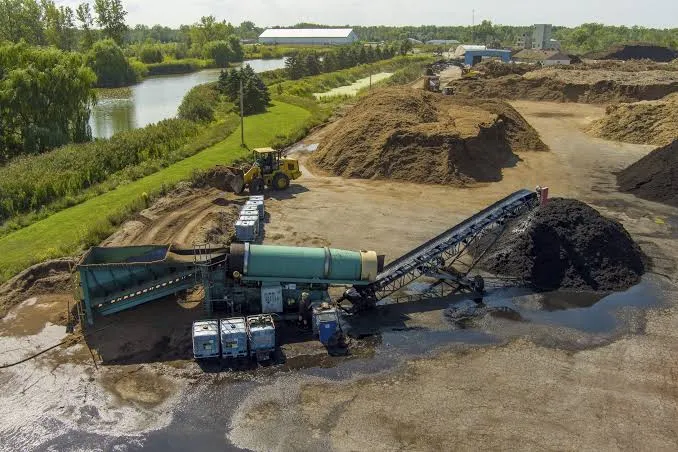
What Is Mulch Made From?
Before diving into the manufacturing process, it helps to understand what goes in.
Mulch falls into two broad categories: organic and inorganic. Each starts with completely different raw materials and goes through a different production process.
Organic Mulch Materials
Organic mulch comes from plant matter that will eventually break down and return nutrients to the soil. Common raw materials include:
- Wood chips and bark — from tree branches, trunks, or lumber mill by-products
- Grass clippings — collected after mowing; best applied thin or partially dried first
- Leaves — raked, shredded, and left to decompose into leaf mold
- Straw — a by-product of grain harvesting (wheat, oats, rice)
- Pine straw — shed needles from pine trees, popular across the American South
- Compost — fully decomposed organic matter; technically a soil amendment as much as a mulch
The advantage of going organic? As it breaks down, it feeds the soil, improves drainage, and attracts beneficial organisms like earthworms.
Inorganic Mulch Materials
Inorganic mulch doesn’t decompose — it lasts much longer, but it adds nothing to your soil. Common options include:
- Rubber mulch — shredded from recycled tires
- Gravel and stone — crushed rock in various sizes; excellent for drainage
- Landscape fabric — woven or spun material placed under other mulch to suppress weeds
| Type | Primary Raw Material | Breaks Down? | Best Use Case |
|---|---|---|---|
| Wood chip mulch | Tree branches, trunks | Yes (1–3 years) | Garden beds, around trees |
| Bark mulch | Lumber mill by-product | Yes (slower) | Decorative landscaping |
| Straw | Harvested grain stalks | Yes (one season) | Vegetable gardens |
| Rubber mulch | Recycled tires | No | Playgrounds, footpaths |
| Gravel/stone | Crushed rock | No | Drainage areas, dry gardens |
How Is Mulch Made Commercially — Step by Step
Commercial mulch production is more industrial than most people expect. Here’s exactly how it works.
Step 1 — Sourcing and Collecting Raw Materials
Most commercial mulch starts with wood waste that would otherwise go to a landfill. Facilities source material from:
- Tree removal companies — branches, stumps, and trunks from residential and commercial jobs
- Lumber mills — bark scraped off logs before they’re processed into timber
- Recycled pallets — broken or unusable shipping pallets ground into chips
- Municipal yard waste programs — leaves, brush, and clippings dropped off by residents
According to the U.S. Environmental Protection Agency (EPA), yard trimmings and food scraps make up nearly 28% of what Americans throw away each year. Recycling this into mulch diverts thousands of tons from landfills and turns waste into a genuine landscaping resource.
Step 2 — Grinding and Shredding
Once the raw material arrives, it goes into industrial-grade machines called horizontal grinders or tub grinders. These machines can pulverize everything from tiny twigs to full tree trunks.
Here’s where grind level makes a real difference:
- Single-ground mulch — one pass through the grinder; produces larger, chunkier pieces that decompose slowly and last longer
- Double-ground mulch — two passes; finer texture with a more uniform appearance
- Triple-ground mulch — the finest result; breaks down faster but provides excellent weed suppression and moisture retention
Most bagged retail mulch is double or triple-ground. Landscapers handling larger projects often prefer single-ground for its durability and slower decomposition rate.
Step 3 — Screening and Sorting
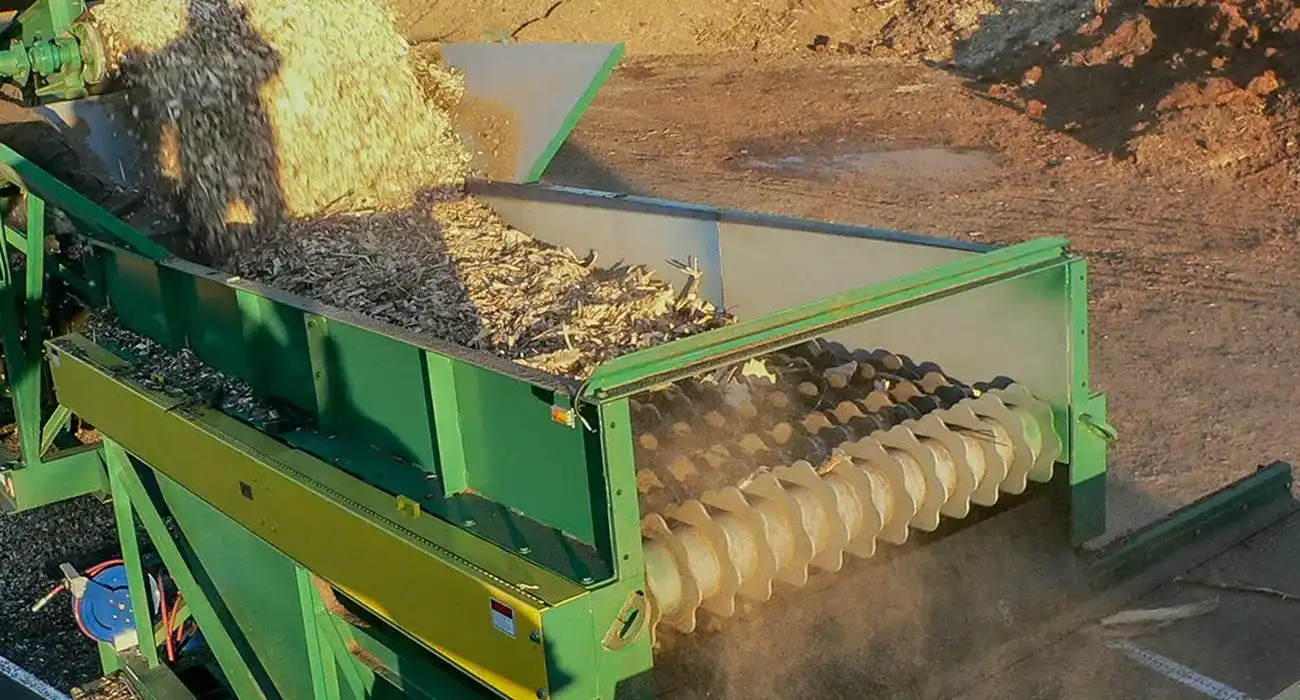
After grinding, the shredded material passes through a trommel screen — a large rotating drum with holes of specific sizes. This separates the product into distinct grades:
- Fines (1 inch or less) — used for colored mulch and high-quality bagged products
- Mids (1–3 inches) — often sent for energy production or put back through the grinder
- Oversized pieces — returned to the grinder for another pass
This screening step is what gives commercial mulch its consistent, professional look. Without it, every bag would contain chunks of wildly different sizes.
Step 4 — Curing and Aging
Here’s something that surprises most people — and it matters for your garden.
Fresh wood chips straight out of the grinder are not immediately safe to use as mulch. Wood has a very high carbon-to-nitrogen (C:N) ratio. When fresh chips start to decompose, the bacteria breaking them down actively pull nitrogen from your surrounding soil — a process called nitrogen robbery. This can temporarily starve nearby plants of a nutrient they need to grow.
Quality producers let mulch cure in large open-air piles for several weeks to months before selling it. During curing, decomposition begins, internal temperatures can climb to 140–160°F (which also kills weed seeds and pathogens), and the C:N ratio stabilizes. The result is mulch that works with your garden instead of competing against it.
Practical tip: If you ever get fresh, hot-smelling wood chips from a tree service for free, let them sit in a pile for at least 4–6 weeks before using them around established plants.
Step 5 — Coloring the Mulch
Red, black, brown — most dyed mulch gets its color from one of two pigments:
- Iron oxide — used for red and brown shades; the same compound that gives rust its familiar color
- Carbon black — used for deep black mulch; a carbon-based pigment also used in cosmetics and food packaging
The process involves spraying a water-based dye solution onto the chips as they move through a colorizer drum or conveyor. The mulch is then allowed to dry thoroughly before packaging — this curing step ensures the dye adheres to the wood and won’t wash off immediately in rain.
According to the Mulch and Soil Council, the colorants currently used by the industry pose no threat to people, pets, or the environment. There is one important caveat, however — covered in the next section.
Step 6 — Packaging and Distribution
Finished mulch is either:
- Bagged into 2-cubic-foot retail bags for home use
- Sold in bulk by the cubic yard for landscapers and large-scale projects
A useful conversion to remember: one cubic yard covers approximately 100 square feet at a 3-inch depth — a helpful calculation for ordering the right amount without waste.
How Is Colored Mulch Made — And Is It Actually Safe?
Red and black mulch raise eyebrows among many homeowners. It’s a fair concern — but the concern is usually pointed in the wrong direction.
The Dyes Are Not the Problem
As noted above, the iron oxide and carbon black pigments approved for mulch are non-toxic. They’re used in cosmetics, food packaging, and children’s playground surfacing. The International Play Equipment Manufacturers Association (IPEMA) certifies many colored wood mulches for use in children’s play areas — which tells you something about their actual safety profile.
The Real Risk Is the Wood Source
The genuine concern with colored mulch is what raw material was used. Before 2004, CCA-treated lumber — pressure-treated wood preserved with Chromated Copper Arsenate — was widely used in residential decking, fencing, and playground equipment. CCA-treated wood contains arsenic. If that wood ends up chipped and dyed, you cannot tell the difference visually.
The EPA phased out residential CCA use in 2003, but old decking and structures from before that era are still being demolished and recycled. Buying from a reputable, transparent supplier matters.
How to buy colored mulch safely:
- Ask suppliers where their raw material comes from
- Look for products certified or tested by the Mulch and Soil Council
- Be skeptical of unusually cheap colored mulch from unknown sources
How to Make Mulch at Home
You don’t need an industrial operation to make your own. With a little patience and the right approach, your yard waste becomes free, quality mulch.
No Equipment Required
The simplest homemade methods need nothing special:
- Leaf mold — rake leaves into a pile, keep them moist, and let them sit for 12–18 months. The result is a dark, crumbly material that the Royal Horticultural Society calls one of the best soil conditioners available. It won’t suppress weeds as well as wood chip mulch, but it’s excellent for moisture retention.
- Grass clippings — spread no more than 1 inch thick around plants immediately after mowing. Applied too thick, they mat together, block water penetration, and start to smell.
- Shredded newspaper — surprisingly effective for vegetable beds; stick to black ink newsprint and avoid glossy or color-printed pages.
Using a Mower or Wood Chipper
For faster, more uniform results:
- Mulching mower — run your mower over leaf piles on its mulching setting. Most modern mowers chop leaves into fine particles in a single pass — no raking required.
- Electric leaf shredder — purpose-built for leaves and light twigs; quiet, compact, and effective for garden-scale production
- Wood chipper — handles branches up to 2–3 inches in diameter; worth renting if you have significant pruning or storm debris. Renting a wood chipper from a hardware store typically runs $100–$200 per day.
What Wood Should NOT Be Used for Mulch
This is the section most gardeners wish they’d read before their first DIY batch.
Not all wood makes safe mulch. Some trees contain natural compounds that suppress or damage surrounding plant life — a phenomenon known as allelopathy (from Greek roots meaning “mutual harm”). Others carry chemical contamination.
Avoid these in any mulch you apply to garden beds:
| Wood / Material | Why to Avoid | Risk Level |
|---|---|---|
| Black walnut | Contains juglone — toxic to tomatoes, peppers, apples, and many more | High |
| Eucalyptus | Natural oils suppress plant growth, especially seedlings | Moderate |
| CCA-treated lumber | Pre-2004 pressure-treated wood contains arsenic | High |
| Diseased wood | Chipping doesn’t kill fungal pathogens or bacteria | Moderate–High |
| Cedar (near seedbeds) | Mildly allelopathic; safe around established plants | Low–Moderate |
Black walnut deserves special mention: even dried chips retain juglone toxicity, and it persists in soil for years after the wood has broken down. If you have a black walnut tree on your property, keep its chips away from any vegetable garden or fruit tree.
If you’re unsure what species a piece of wood came from — don’t use it near vegetables or sensitive plants.
Frequently Asked Questions About How Mulch Is Made
Is mulch made from recycled wood?
Yes — most commercial mulch is made from recycled wood waste. Facilities collect material from tree removal companies, lumber mills, demolition sites, and municipal yard waste programs. According to the EPA, recycling yard trimmings into mulch is one of the most effective ways to divert organic material from landfills.
What is the difference between mulch and compost?
Mulch is applied on top of soil as a protective layer — it conserves moisture, suppresses weeds, and regulates soil temperature. Compost is worked into the soil as a nutrient amendment. Some organic mulch eventually becomes compost as it decomposes, but fresh mulch and finished compost serve different functions. You can use both together: compost into the bed first, then mulch on top.
How long does it take for mulch to break down?
It depends on the material. Grass clippings decompose in a matter of weeks. Straw typically lasts one growing season. Wood chip mulch, depending on particle size and climate, lasts one to three years. Triple-ground mulch breaks down faster than single-ground because the smaller particles expose more surface area to decomposing microbes. Most lawns and garden beds benefit from a fresh top-up each spring.
What is triple-ground mulch?
Triple-ground mulch is wood chip mulch that has been run through an industrial grinder three times, producing very fine, uniform particles. It provides excellent weed suppression and moisture retention, blends into garden beds cleanly, and is the most common type in retail bags. The trade-off is that it breaks down faster than coarser options — typically needing replacement every one to two seasons.
Can mulch attract termites to my home?
Mulch does not attract termites from elsewhere in your neighborhood, but it can provide shelter if termites are already present in your area. Research from the University of Florida confirms that mulch is not a preferred food source for termites. The practical risk is placing mulch directly against your home’s foundation or any wooden structure. Keep mulch at least 6 inches away from foundation walls and siding to eliminate any potential habitat.
Conclusion: There’s More Behind That Bag Than You’d Think
Understanding how mulch is made changes how you shop for it, how you use it, and whether you feel confident making your own.
Here’s the short version:
- Organic mulch is made by grinding, screening, curing, and sometimes dyeing wood waste and plant material
- The curing step is what separates quality mulch from product that robs nitrogen from your soil
- Colored mulch dyes are safe — the real risk is CCA-treated wood in the raw material supply chain
- Homemade mulch works well — but avoid black walnut, diseased wood, and fresh uncured chips near sensitive plants
- Triple-ground mulch breaks down faster; single-ground lasts longer — match your choice to how often you want to reapply
The right mulch, properly applied, can cut your watering needs by up to 50%, nearly eliminate seasonal weeding, and keep your soil insulated year-round. That’s a lot of return on one spring morning’s work.
Need a professional hand? Gen Lawn’s team handles material selection, correct depth application, and clean installation — so you get all the benefits without the guesswork. Contact us for a free estimate
References & Further Reading
Primary Sources:
- U.S. EPA — Learn About Composting & Yard Waste
- U.S. EPA — Chromated Arsenicals (CCA) Safety
- Penn State Extension — Using Wood Chips as Mulch
- Penn State Extension — Black Walnut Toxicity to Plants
- Mulch and Soil Council — Mulch Colorant Safety
- University of Florida EDIS — Mulch and Termites
- Royal Horticultural Society — Making Leaf Mould
- IPEMA — Playground Surface Certification
- Rotochopper — Mulch Production Equipment
Reference Definitions:
About Author
Khalid Fazal is a seasoned lawn care specialist and horticultural researcher with over 15 years of hands-on experience transforming challenging landscapes into lush, resilient green spaces. His journey didn’t start in a lab, but in a backyard full of stubborn, cracked clay that “experts” said would never grow a healthy blade of grass. Refusing to accept a yard full of dust, Khalid spent years experimenting with organic soil restoration and precise mulching—eventually turning that wasteland into a neighborhood showpiece on a shoestring budget.
From mastering core aeration techniques to optimizing soil pH for specialized turf varieties, Khalid’s approach combines old-school grit with modern agronomic science. He founded Gen Lawn to provide homeowners with honest, research-backed advice that prioritizes long-term soil health over quick-fix chemical solutions. When he isn’t analyzing soil profiles, he’s developing precision tools to help others achieve professional results without the professional price tag.

Lawn Winterizer: When to Apply by Grass & Region [2026]
Table of Contents Home / By Khalid Fazal | Updated:...
Read More
Spring Lawn Care: What to Do and When in Every US Region
Table of Contents Home / By Khalid Fazal | Updated:...
Read More
Lawn Maintenance Checklist by Season and Grass Type (2026)
Table of Contents Home / By Khalid Fazal | Updated:...
Read More
Liquid Fertilizer vs Granular Fertilizer: Which Wins?
Table of Contents Home / By Khalid Fazal | Updated:...
Read More