Pine Straw as Mulch: Benefits, How to Use It, and What No One Tells You
Your garden soil is losing moisture right now. Every hour it sits bare, weeds take root and water evaporates into thin air — and if you’re spending more time watering and weeding than actually enjoying your garden, you already know the frustration.
Most gardeners reach for expensive wood chips or plastic sheeting. But there’s a simpler, cheaper solution that farmers across the US have relied on for generations — one that also feeds your soil while it works.
That solution is Pine straw. And when used correctly, Pine straw as mulch is one of the most effective, affordable, and beginner-friendly choices you can make for your garden or lawn.
This guide covers everything: what straw mulch actually is, its real benefits (backed by data), exactly how to apply it, and the honest downsides that most articles quietly skip.
What Is pine Straw Mulch — And Why It’s Not the Same as Hay
Before you buy a single bale, get this straight: Pine straw and hay are not the same thing.
Mixing them up is the most common — and most damaging — mistake new gardeners make. So let’s clear this up right away.
Pine Straw vs. Hay: The Difference That Could Wreck Your Garden
According to the University of Maryland Extension, straw is made up of the dry, hollow stalks remaining after cereal crops like wheat, barley, or oats are harvested. The key detail? Straw contains few or no seed heads.
Hay, on the other hand, is cut grass grown specifically as animal feed. It’s typically harvested before or during seed production — which means it’s loaded with seeds that will sprout straight into your garden beds.
Use hay instead of straw and you’ll be pulling weeds for the rest of the season. Ask anyone who’s made that mistake once.
| Straw | Hay | |
|---|---|---|
| Made from | Grain stalks (wheat, oat, barley) | Grasses + alfalfa |
| Seed content | Very few | Often many |
| Best use | Garden mulch, animal bedding | Animal feed |
| Weed risk | Low | High |
| Texture | Light, fluffy | Dense, heavier |
| Cost | $7–$14/bale | Similar, but weed risk offsets value |
Types of Straw You Can Buy in the US
Not all straw is created equal. Here’s what you’ll typically find at garden centers and farm co-ops across the country:
- Wheat straw — Most widely available, budget-friendly (~$7–$14/bale). Slightly higher seed risk than other types, but still far cleaner than hay.
- Oat and barley straw — Similar to wheat straw; breaks down slightly faster and adds comparable organic matter.
- Rice straw — Cleanest option with the fewest weed seeds. Less common in the US but worth seeking out for organic growers.
- Certified weed-free straw — Steam-treated or mechanically cleaned to remove seeds. Slightly pricier, but the most predictable and safest option for vegetable gardens.
If this is your first time using straw as mulch, certified weed-free straw gives you the peace of mind to start without surprises.
The Real Benefits of Using Straw as Mulch
Here’s why gardeners keep coming back to straw — and why the data actually backs them up.
It Keeps Your Soil Moist — And Cuts Watering Dramatically
This is the biggest practical win.
According to the Old Farmer’s Almanac, gardeners using straw mulch typically water just once a week instead of every day or two. Research also suggests that properly mulched gardens can use up to 50% less water — a significant saving during dry US summers.
The science is straightforward: straw’s loose, airy structure slows evapotranspiration — the process by which moisture escapes from soil into the air. If you’re in a drought-prone region — the Southwest, Southeast, or Great Plains — straw mulch isn’t just helpful. It’s essential.
It Suppresses Weeds Without Chemicals
A 3–4 inch layer of straw blocks sunlight from reaching weed seeds sitting in your soil. No light, no germination. No germination, no weeding.
Here’s the honest caveat though: straw won’t eliminate every weed. Established weeds already growing need to be pulled before you lay the straw down. But it dramatically reduces new weed growth — meaning less time on your knees and more time enjoying your harvest.
It Protects Your Crops From Soil-Borne Disease
This one surprises a lot of gardeners, but it’s one of straw’s most underappreciated benefits.
When it rains (or you water), soil particles splash upward onto plant leaves. Those splashes carry soil-borne pathogens like early blight — one of the most destructive diseases for tomato crops across the US. Straw absorbs the impact of rain and irrigation before it hits the soil, eliminating that splash-back entirely.
It also maintains consistent soil moisture, which directly reduces the risk of blossom-end rot in tomatoes, peppers, and squash — a calcium-uptake disorder triggered by irregular watering. If you grow tomatoes, this alone makes straw worth it.
It Feeds Your Soil as It Breaks Down
Here’s the long game: straw is organic matter, and organic matter equals healthier soil over time.
As straw decomposes, it releases carbon and nutrients that feed soil microbes and encourage earthworm activity. Earthworms aerate the soil, improve drainage, and leave behind worm castings — one of the most nutrient-rich natural fertilizers available.
And unlike wood chips, straw doesn’t temporarily tie up nitrogen in the soil as it decomposes. Your plants keep getting the nutrients they need, uninterrupted.
How to Use Straw as Mulch: Step-by-Step
Using straw as mulch is simple — but getting a few key details right makes a meaningful difference in results.
When to Apply Straw Mulch (Seasonal Guide)
Timing matters more than most gardening guides let on.
- Spring — Wait until soil has warmed and seedlings are at least 2–3 inches tall. Applying straw over cold, wet soil keeps it cold longer, which slows seed germination and early growth.
- Summer — Apply before peak heat to lock in moisture and keep root zones cool. This is the most critical window for vegetable gardens.
- Fall — Lay a thick layer (4–6 inches) over perennials, strawberries, and garlic to buffer against freeze-thaw cycles and protect root systems through winter.
- New grass seed — Straw is one of the best covers for newly seeded lawns, protecting seeds from wind, rain, and birds while still allowing sunlight and moisture to pass through.
How Much Straw to Apply
Depth is everything. Here’s the breakdown:
| Depth | Result |
|---|---|
| Under 2 inches | Insufficient — won’t suppress weeds or retain meaningful moisture |
| 2–4 inches | Ideal — full weed suppression, strong moisture retention, good airflow |
| Over 6 inches | Too thick — can block water penetration and create excess slug habitat |
Sandy soils benefit from the thicker end of the range (closer to 4″). Heavy clay soils do better with 2–3 inches to avoid waterlogging.
One standard bale of straw covers more than you’d expect. Start with one and buy more only if needed.
Step-by-Step Application
- Pull all existing weeds first — Straw prevents new weeds from germinating but won’t smother ones already growing
- Water the soil deeply if it hasn’t rained recently — moisture gets locked in under the mulch, so starting with damp soil maximizes the benefit
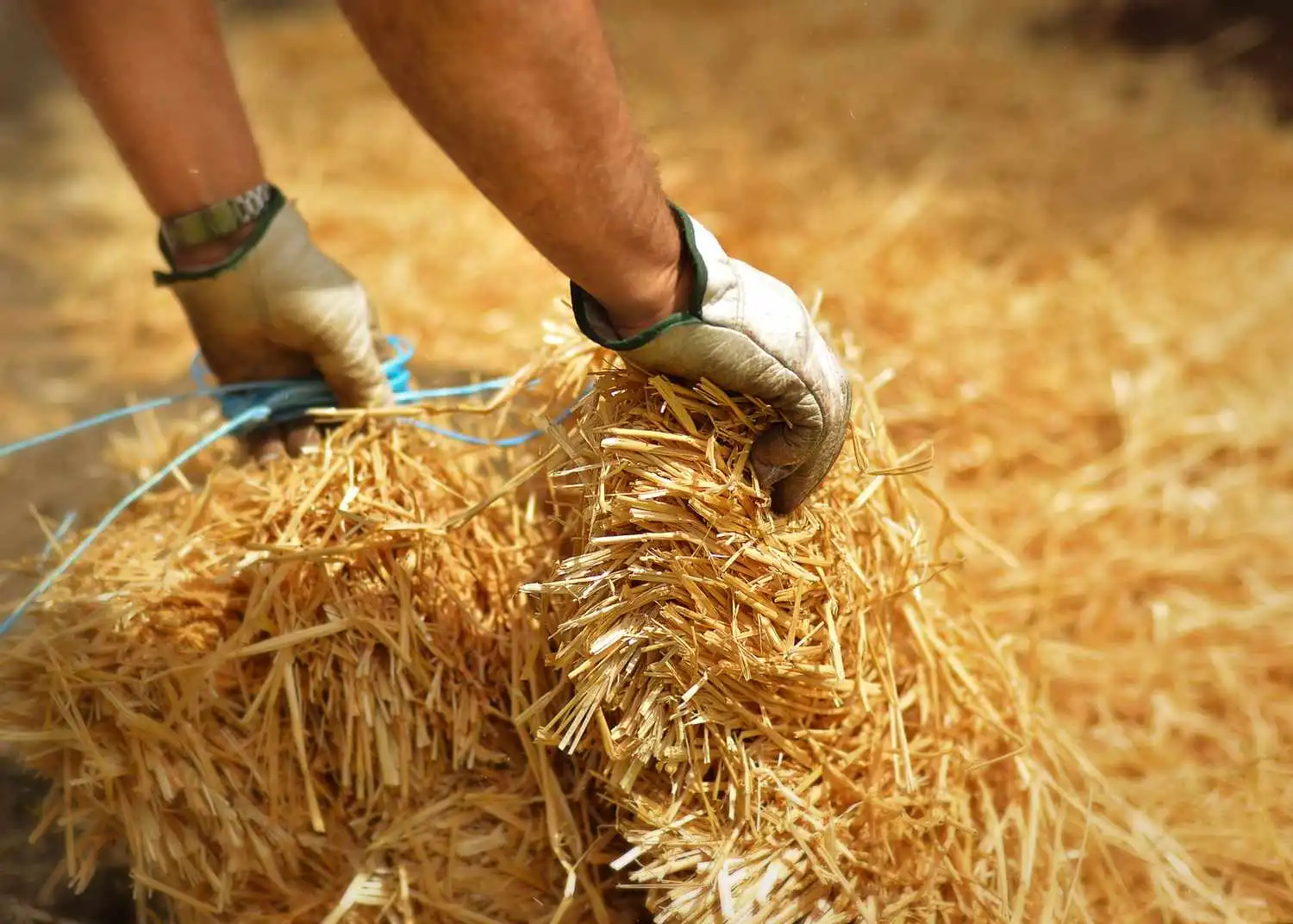
- Break apart the bale — clip the ties and use your hands or a trowel to fluff the compressed flakes apart
- Spread evenly in a 2–4 inch layer across the garden bed between and around your plants
- Keep straw 1–2 inches away from plant stems — direct contact traps moisture against stems and can cause crown rot or fungal issues
- Lightly mist the surface after applying to help the straw settle and resist wind
- Check depth after 6 weeks — straw decomposes faster in warm, moist conditions; top up with 2–3 more inches as the season progresses
Where to Use Straw Mulch (and Where to Be Careful)
Excellent uses for straw mulch:
- Vegetable gardens — especially around tomatoes, peppers, squash, and potatoes
- Flower beds and perennial borders
- Around trees and shrubs (keep clear of trunks to prevent collar rot)
- Newly seeded lawns
- Strawberry beds — keeps fruit clean and protects against gray mold
Where to use caution:
- Very wet or humid climates — moisture-loving slugs thrive beneath straw in these conditions
- Gardens with existing heavy slug pressure — straw can make the situation significantly worse
- Directly against plant stems or tree trunks — creates conditions for fungal rot
The Downsides of Straw as Mulch (What Most Articles Skip)
Straw is excellent. But it’s not perfect. Here are the real-world issues — and how to handle them.
Slugs and Pests Love Straw
Let’s not sugarcoat it: straw is prime slug real estate.
The moist, dark environment beneath a layer of straw is exactly what slugs and snails are looking for. In consistently wet regions — the Pacific Northwest, New England, the Southeast — straw mulch can noticeably increase slug populations in your garden.
How to manage it:
- Water in the morning so the surface dries out by evening (slugs are nocturnal and active in moisture)
- Keep the top layer of straw as dry as possible between waterings
- Leave a gap between straw and plant stems to improve airflow
- Use diatomaceous earth — a natural, non-toxic powder — as a barrier around vulnerable plants
- Set out slug traps and monitor regularly, especially in spring
If you already have a serious slug problem in a wet climate, consider wood chips or shredded leaves as an alternative.
Herbicide Contamination — The Risk Nobody Talks About
This one catches gardeners completely off guard — and it’s the most important warning in this guide.
Many commercial straw bales come from grain fields treated with persistent herbicides — particularly aminopyralid and clopyralid. Unlike glyphosate, these chemicals don’t break down quickly. They can remain active in straw, in compost made from that straw, and even in your garden soil for months or even years.
The result? Tomatoes, peppers, beans, and other broadleaf vegetables wilting and dying just days after you lay down what looked like clean, dry straw.
How to protect yourself:
- Always ask your supplier what herbicides were used on the source crop
- Buy certified organic straw or straw directly from a trusted local farm
- Specifically look for certified weed-free straw from reputable agricultural suppliers
- Avoid straw of unknown origin from big-box stores if you’re growing food
This risk doesn’t mean straw is dangerous — it means sourcing matters. One conversation with your supplier can save your entire garden.
Wind Displacement and Residual Seeds
Two more manageable issues worth knowing:
Wind — Straw is lightweight and can scatter before it settles. Misting the surface after applying helps immediately. In exposed spots, garden fabric staples or a thin net layer can keep it in place until it settles.
Residual seeds — Even “true straw” can carry the occasional wheat or barley seed. If you spot green sprouts emerging from your mulch layer, gently rake the surface to expose them to sun and dry them out. Certified weed-free straw reduces this risk significantly.
Straw Mulch vs. Other Mulch Types: Which Is Right for You?
Not sure if straw is the right fit for your situation? Here’s how it stacks up against the most common alternatives:
| Mulch Type | Cost | Weed Control | Moisture Retention | Soil Benefit | Best For |
|---|---|---|---|---|---|
| Straw | Low | Good | Excellent | High | Vegetable gardens |
| Wood Chips | Medium | Excellent | Good | Medium (slow) | Trees, shrubs, paths |
| Pine Straw | Low–Med | Good | Good | Medium | Acid-loving plants |
| Grass Clippings | Free | Moderate | Good | High | Quick seasonal cover |
| Shredded Leaves | Free | Good | Good | High | General garden beds |
| Rubber Mulch | High | Excellent | Poor | None | Playgrounds, paths |
The verdict: For vegetable gardens and budget-focused gardeners, straw is hard to beat. For ornamental beds and permanent landscaping where aesthetics matter, wood chips may be the better long-term investment.
Frequently Asked Questions About Straw as Mulch
Is straw a good mulch for vegetable gardens?
Yes — straw is widely considered one of the best mulch options for vegetable gardens specifically. It’s lightweight, affordable, easy to work with, and breaks down to improve soil quality over time. Its ability to prevent soil-splash disease (especially early blight on tomatoes) makes it particularly valuable for food growers.
How long does straw mulch last before it decomposes?
In most US garden conditions, a straw mulch layer lasts approximately one growing season. In warm, moist climates it breaks down faster — check depth after 6 weeks and top up as needed. In drier climates like the Southwest, a single application can last most of the year. As it decomposes, it’s actively improving your soil, so breakdown is a feature, not a flaw.
Does straw mulch attract bugs, slugs, or rodents?
It can — particularly slugs and snails in wet climates. Straw creates a moist, sheltered environment these pests love. Applying straw correctly (2–4 inches deep, kept away from stems, surface kept dry), watering in the morning, and using diatomaceous earth as a barrier are the most effective natural management strategies. Learn more about managing slugs organically in your garden.
What’s the difference between straw and hay as mulch?
Straw = grain stalks with little to no seeds. Hay = cut grass grown for animal feed, often containing many weed seeds. Using hay in your garden risks introducing a fresh wave of weeds you’ll spend the season fighting. Always buy straw — not hay — for mulching. The Piedmont Master Gardeners offer an excellent breakdown of this distinction with photos.
Where can I buy straw mulch near me in the US?
Straw bales are available at farm supply stores (Tractor Supply Co. has locations across the US), local nurseries, garden centers, and directly from farms. Prices typically range from $7 to $14 per bale depending on region. For certified weed-free or organic straw, check local agricultural co-ops or use your state’s cooperative extension service to find recommended local suppliers.
The Bottom Line on Straw as Mulch
Here’s the short version:
- One of the most cost-effective and practical mulches for vegetable gardens in the US
- Cuts watering frequency significantly and naturally suppresses weed growth
- Protects crops from soil-borne disease and improves soil health over time
- Easy to source, easy to apply — perfect for beginners and experienced growers alike
- Always vet your source — herbicide contamination is a real risk worth taking seriously
- In wet climates, manage slug pressure proactively from day one
Straw isn’t a perfect mulch. Nothing is. But for most US home gardeners tending vegetable beds, it’s one of the smartest, most practical choices at any budget level.
Ready to try straw as mulch this season? Start with a single bale from a trusted local source. Apply it correctly, keep an eye on depth, and let it do the work. Your soil — and your water bill — will thank you for it.
References & External Sources
- University of Maryland Extension — What Is Straw?
- Old Farmer’s Almanac — Using Straw Mulch
- USDA NRCS — Soil Health and Organic Matter
- Penn State Extension — Herbicide Carryover in Hay, Manure, and Straw
- Penn State Extension — Blossom-End Rot
- Penn State Extension — Fungal Diseases of Vegetables
- University of Minnesota Extension — Early Blight in Tomato and Potato
- University of Minnesota Extension — Wood Chip Mulch
- Piedmont Master Gardeners — Straw vs. Hay as Mulch
About Author
Khalid Fazal is a seasoned lawn care specialist and horticultural researcher with over 15 years of hands-on experience transforming challenging landscapes into lush, resilient green spaces. His journey didn’t start in a lab, but in a backyard full of stubborn, cracked clay that “experts” said would never grow a healthy blade of grass. Refusing to accept a yard full of dust, Khalid spent years experimenting with organic soil restoration and precise mulching—eventually turning that wasteland into a neighborhood showpiece on a shoestring budget.
From mastering core aeration techniques to optimizing soil pH for specialized turf varieties, Khalid’s approach combines old-school grit with modern agronomic science. He founded Gen Lawn to provide homeowners with honest, research-backed advice that prioritizes long-term soil health over quick-fix chemical solutions. When he isn’t analyzing soil profiles, he’s developing precision tools to help others achieve professional results without the professional price tag.

Lawn Winterizer: When to Apply by Grass & Region [2026]
Table of Contents Home / By Khalid Fazal | Updated:...
Read More
Spring Lawn Care: What to Do and When in Every US Region
Table of Contents Home / By Khalid Fazal | Updated:...
Read More
Lawn Maintenance Checklist by Season and Grass Type (2026)
Table of Contents Home / By Khalid Fazal | Updated:...
Read More
Liquid Fertilizer vs Granular Fertilizer: Which Wins?
Table of Contents Home / By Khalid Fazal | Updated:...
Read More