
How Long Does Weed Killer Last on Lawn? (A Data-Backed Answer by Type)
Published: [Date] | By: [Author Name], Gen Lawn
Reading time: Approx. 9–10 minutes
Most weed killers stop being active on your lawn within 24 hours to 6 months — but that range is nearly useless without knowing which type you used.
Here’s the thing: a contact weed killer and a pre-emergent herbicide are completely different products that behave completely differently in your soil. Treating them the same way is why homeowners end up with dead grass seed, frustrated pets waiting at the door, or weeds that bounce right back three weeks later.
In this guide, you’ll get exact timelines by product type, a quick-reference table, safety windows for kids and pets, when it’s safe to reseed, and — something most lawn blogs skip entirely — what to do if you think you over-applied.
Quick Answer: How Long Does Weed Killer Last on Lawn?
The answer starts with your product type. Here’s a clean breakdown:
| Weed Killer Type | Active in Soil | First Results Visible | Safe to Reseed |
|---|---|---|---|
| Contact/organic (vinegar, citrus-oil) | 2–7 days | Within hours | 1–3 days |
| Systemic post-emergent (glyphosate) | 14 days – 6 months* | 7–10 days | 2–4 weeks |
| Selective post-emergent (2,4-D, dicamba) | 2–4 weeks | 7–14 days | 3–4 weeks |
| Pre-emergent (prodiamine, dithiopyr) | 2–6 months | N/A — preventive | 3–6 months |
| Long-term residual (e.g., Roundup Max Control 365) | Up to 12 months | 7–14 days | 12 months |
*Glyphosate’s field half-life averages around 47 days per Oregon State University’s National Pesticide Information Center (NPIC), though the USDA reports a range of 3 to 249 days depending on soil and climate.
One critical distinction before diving deeper: “detectable in soil” is not the same as “still actively killing plants.” A product can show up on a soil test long after it’s lost its ability to harm your grass seed or your new transplants. Keep that in mind as we go through each type.
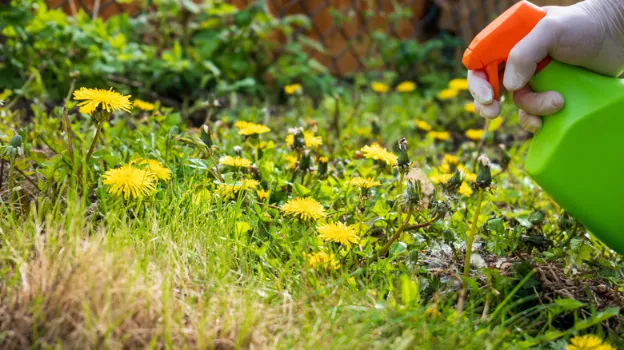
Breaking It Down — How Long Each Type of Weed Killer Lasts
Contact Weed Killers — 2 to 7 Days
Contact weed killers are the sprinters of the herbicide world. They hit fast — wilting often starts within hours — but they only destroy the plant tissue they physically touch. Roots survive intact, which means deep-rooted perennial weeds like dandelions and clover will typically grow back.
These are most commonly acetic acid (vinegar-based), clove oil, or iron-based formulas. They break down in the soil within 2 to 7 days, leaving virtually no residual presence. They’re a solid choice for organic-preferred lawns or tight spot-treatment work between garden beds — just don’t expect one application to solve a serious weed problem.
Systemic Post-Emergent Herbicides — 14 Days to 6 Months in Soil
This is the category that trips most homeowners up — because “systemic” means the herbicide travels through the plant, down into the root system, rather than just burning what’s on the surface.
Glyphosate — the active ingredient in Roundup and dozens of other brands — is the most widely used systemic herbicide in residential lawn care. It delivers visible results in 7 to 10 days and is generally effective before that. But here’s where things get complicated.
According to NPIC at Oregon State University, published soil studies report glyphosate’s half-life ranging from 2 to 197 days, with a typical field half-life of around 47 days. In warm, biologically active soil, it breaks down in weeks. In cold, dry, or compacted soil — the kind you’d find after a drought or a hard Midwest winter — residues can linger for several months.
Selective post-emergents like 2,4-D and dicamba work through a similar mechanism but target broadleaf weeds while leaving established grass unharmed. Under normal US conditions, these typically break down within 2 to 4 weeks in the soil.
Pre-Emergent Herbicides — 2 to 6 Months (By Design)
Here’s the most misunderstood product in lawn care: pre-emergent herbicides don’t kill existing weeds. They create a chemical barrier in the soil that prevents seeds from germinating in the first place.
And they’re supposed to last. That longevity is the entire point.
Common active ingredients include prodiamine (up to 5–6 months of control) and dithiopyr (sold as Dimension — around 3–4 months). These are typically applied in early spring once soil temperatures reach 50–55°F, or in early fall to block winter annual weeds. Timing is everything — apply too late and the weed seeds have already sprouted and the product is wasted.
Because pre-emergents stay active for months, this is the category that creates the most headaches for homeowners who want to reseed shortly after treating. More on that in the reseeding section below.
Long-Term Residual Products — Up to 12 Months
These sit in a completely different category. Products like Roundup Max Control 365 are specifically formulated to prevent all plant growth for up to a year. They’re engineered for driveways, gravel paths, fence lines, and hardscaping — not residential lawns.
If one of these has been applied to a lawn area by mistake, plan on at least 12 months before grass or garden plants have a realistic chance to establish.
5 Factors That Change How Long Weed Killer Stays Active
The same product can behave very differently from one yard to the next. Here’s what actually determines longevity on your lawn.
1. Soil Type and Texture
Sandy soils drain quickly and allow faster breakdown of most herbicides. Clay soils hold chemicals longer due to their tight particle structure and lower permeability. Soils rich in organic matter break herbicides down faster, thanks to higher populations of soil microbes.
2. Temperature and Microbial Activity
Soil bacteria and fungi are the primary engine of herbicide breakdown. In warm, moist conditions — typical of US spring and summer growing seasons — glyphosate can degrade in weeks. In cold, dry, or compacted soil, those same microbes slow dramatically and residues persist far longer. The USDA NRCS notes that soil biological activity is the single most critical factor in how quickly organic chemicals degrade underground.
3. Rainfall and Irrigation Timing
Most herbicides need 30 minutes to 2 hours of absorption time before rain can wash them away — this window is called the “rainfast period“ and is listed on every product label. Once absorbed, rainfall doesn’t reduce effectiveness. For granular pre-emergents, it actually activates them by moving the product into the soil where it forms the germination barrier.
4. UV Exposure and Sunlight
Direct sunlight degrades certain contact-based formulas faster — particularly organic options left on plant surfaces. This is less of a factor for systemic products, which are absorbed within hours of application, but it’s worth noting if you’re using citrus-oil or clove-based spot treatments on a sun-exposed lawn.
5. Application Rate and Concentration
Over-applying doesn’t make a weed killer work longer or more effectively — it extends residual risk while increasing the probability of damage to nearby grass, plants, and soil biology. Always apply at label-specified rates. The EPA’s guide to reading pesticide labels breaks down exactly what each section of a product label means and why application rate matters legally and practically.
When Is It Safe to Reseed After Using Weed Killer?
This is one of the most practical questions after treating a lawn — and the most common source of frustration. Homeowners treat, wait a week, throw down grass seed, and wonder why nothing germinates.
Here’s the timeline you need:
- Contact/organic products: Reseed after 1–3 days.
- Systemic post-emergents (glyphosate): Wait 2–4 weeks. Some product labels allow as few as 3 days for standard Roundup, but 2 weeks is the safer bet to let soil biology clear residues before seeds go in.
- Selective post-emergents (2,4-D, dicamba): Wait 3–4 weeks. These can inhibit germination at residual concentrations, even in treated grass turf.
- Pre-emergent herbicides: Wait 3–6 months — or until the stated control period on the label ends. Pre-emergents are designed to stop germination. Your grass seed won’t sprout any more than the target weeds will while the product is active.
Before reseeding any treated area, topdress with a thin layer of quality compost. It reintroduces soil biology and gives new seed better contact and nutrient conditions to establish. See our guide to overseeding your lawn for timing by US region and grass type.
How Long After Weed Killer Is It Safe for Kids and Pets?
The short answer: once the surface has dried, most standard products are safe for foot traffic.
The complete answer is product-specific — because this is a legally required disclosure. Every EPA-registered herbicide must include a re-entry interval on its label. That label is your most reliable and authoritative source, not general internet advice.
Here’s a practical framework to work from:
- Liquid contact herbicides: Safe once the spray dries completely — typically 1 to 4 hours after application.
- Glyphosate-based products: The widely cited precaution is 24 to 48 hours before children or pets return to the area.
- Granular pre-emergents: Keep kids and pets off until granules are watered in and the lawn has dried completely — usually within the same day if you irrigate after application.
- Organic/natural options: “Natural” doesn’t automatically mean immediately safe. Concentrated acetic acid (vinegar) can irritate paws and skin until it dilutes and dries. Check the label regardless of how the product markets itself.
As an Extension.org resource on glyphosate explains, glyphosate binds tightly to soil particles once it contacts the ground, which limits how much residue can transfer to skin from foot traffic on treated areas. The 24-hour window remains the most cited precaution for households with children and pets.
Frequently Asked Questions
How long does Roundup last in the soil?
Standard Roundup (glyphosate) breaks down within 2 weeks to 6 months in most residential soils. Per NPIC’s Glyphosate Technical Fact Sheet, the typical field half-life is around 47 days — though compacted, dry, or cold soils can extend residue detection significantly. Roundup Max Control 365 is an entirely different formula: it’s designed to remain active for up to 12 months and is not appropriate for lawn use.
When is it safe for kids and pets after weed killer?
Most liquid herbicides are safe once the surface has dried — usually 1 to 4 hours after application. For glyphosate-based products, 24 to 48 hours is the standard precaution. Always check the re-entry interval on your specific product’s label. This interval is a legally required disclosure under EPA registration requirements.
How long after weed killer can I reseed my lawn?
After systemic post-emergents like glyphosate: 2 to 4 weeks. After selective post-emergents like 2,4-D: 3 to 4 weeks. After pre-emergent herbicides: 3 to 6 months minimum. Pre-emergents stop seed germination — which includes grass seed. Your lawn won’t fill in until the residual window has closed.
Does rain wash away weed killer before it works?
Yes — if it rains before the product is absorbed. Most herbicides have a rainfast window of 30 minutes to 2 hours after application. Rain after that window doesn’t reduce effectiveness; for granular pre-emergents, it actually activates them. Your product label will specify the exact rainfast period.
How long after weed killer can I mow?
For systemic products like glyphosate, wait at least 2 to 3 days before mowing. Mowing too early removes the leaf surface where the herbicide is actively absorbing — cutting the delivery system off before it reaches the root. Let the weeds begin to yellow and wilt before you mow.
The Bottom Line
The question “how long does weed killer last on lawn?” has a real, specific answer — it just depends on what you applied.
Contact killers are gone in days. Systemic products like glyphosate take weeks to break down in typical US soil. Pre-emergents are designed to last months — because that’s what they’re built for. And long-term residual formulas can lock up a section of soil for up to a full year.
Know your type, read your label, and plan your reseeding and foot traffic windows accordingly. Your lawn — and your grass seed — will thank you for it.
Have a question about what’s right for your specific lawn situation? Gen Lawn’s weed control team is available for free consultations. We’ll take a look at what you’re dealing with and point you in the right direction — no guesswork, no upsell pressure. Book your free lawn assessment here.
References & External Sources
- NPIC/Oregon State University — Glyphosate Technical Fact Sheet
- Extension.org — Glyphosate in Soil: Ask Extension
- U.S. EPA — Reading Pesticide Labels
- Penn State Extension — Vinegar as an Herbicide
- Purdue University Extension — Broadleaf Weed Control (2,4-D, Dicamba)
- University of Minnesota Extension — Preventing Weeds in Your Lawn (Pre-Emergents)
- University of Minnesota Extension — Aerating Lawns
- USDA NRCS — Soil Health and Microbial Activity
- Texas A&M AgriLife Extension — Pesticide Application and Rainfast Periods
- Gardening Know How — Activated Charcoal in Soil
Related posts:
About Author
Khalid Fazal is a seasoned lawn care specialist and horticultural researcher with over 15 years of hands-on experience transforming challenging landscapes into lush, resilient green spaces. His journey didn’t start in a lab, but in a backyard full of stubborn, cracked clay that “experts” said would never grow a healthy blade of grass. Refusing to accept a yard full of dust, Khalid spent years experimenting with organic soil restoration and precise mulching—eventually turning that wasteland into a neighborhood showpiece on a shoestring budget.
From mastering core aeration techniques to optimizing soil pH for specialized turf varieties, Khalid’s approach combines old-school grit with modern agronomic science. He founded Gen Lawn to provide homeowners with honest, research-backed advice that prioritizes long-term soil health over quick-fix chemical solutions. When he isn’t analyzing soil profiles, he’s developing precision tools to help others achieve professional results without the professional price tag.

Lawn Winterizer: When to Apply by Grass & Region [2026]
Table of Contents Home / By Khalid Fazal | Updated:...
Read More
Spring Lawn Care: What to Do and When in Every US Region
Table of Contents Home / By Khalid Fazal | Updated:...
Read More
Lawn Maintenance Checklist by Season and Grass Type (2026)
Table of Contents Home / By Khalid Fazal | Updated:...
Read More
Liquid Fertilizer vs Granular Fertilizer: Which Wins?
Table of Contents Home / By Khalid Fazal | Updated:...
Read More