
What Is Landscaping? Everything US Homeowners Need to Know
Landscaping is the process of modifying and improving outdoor spaces using plants, structures, and terrain changes to create environments that are both beautiful and functional.
But here is the thing: most homeowners think landscaping just means mowing the lawn or planting a few flowers. It is actually a whole lot more than that.
Whether you are trying to boost your home’s curb appeal, increase property value, or just figure out what services to hire, this guide has you covered. You will learn exactly what landscaping is, what it includes, how much it costs in the US, and whether the investment is truly worth it.
What Is Landscaping, Exactly?
The Simple Definition of Landscaping
The Oxford Dictionary defines landscaping as “the process of making a yard or other piece of land more attractive by altering the existing design, adding ornamental features, and planting trees and shrubs.”
In plain English? It is everything you do to shape, design, and maintain the outdoor areas around your home or property.
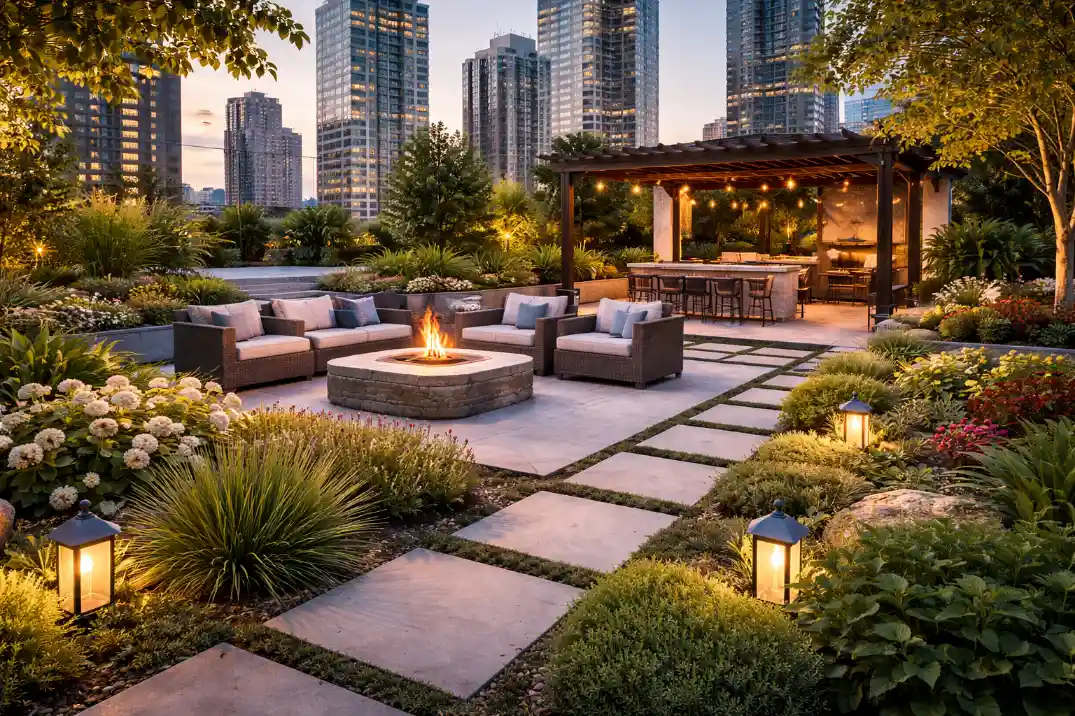
Landscaping covers both living elements like grass, trees, and flowers and non-living structures like patios, walkways, and fences. Together, these elements transform a plain yard into a functional, attractive outdoor space that adds real value to your life and your home.
Landscaping vs. Lawn Care: What Is the Difference?
This trips up a lot of homeowners, so let us clear it up fast.
Lawn care is a subset of landscaping. It focuses specifically on maintaining your grass, including mowing, fertilizing, aerating, and weed control.
Landscaping is the broader term. It includes lawn care, but also covers outdoor design, planting bed installation, hardscaping, drainage, irrigation, and full property transformations.
Think of it this way: lawn care keeps your grass healthy. Landscaping shapes the entire outdoor picture.
What Does Landscaping Include?
Softscaping: The Living Elements
Softscaping refers to all the living, organic parts of your landscape. This includes:
- Grass and turf
- Trees and shrubs
- Flowers and garden beds
- Ground cover plants
- Soil and mulch
These elements bring color, texture, and life to your yard. They also play a significant role in natural drainage, temperature control, and local wildlife support.
Not sure whether to use mulch or stone in your garden beds? This guide on Mulch or Stone for Landscaping breaks down which option works best for different setups.
Hardscaping: The Built Elements
Hardscaping is the structural side of landscaping. It uses hard, non-living materials to define and organize your outdoor space. Common hardscape features include:
- Patios and decks
- Walkways and driveways
- Retaining walls
- Fences and pergolas
- Outdoor kitchens and fire pits
A well-designed landscape blends both softscape and hardscape. The two work together to create a yard that looks great and functions well year-round.
Other Elements That Count as Landscaping
Beyond plants and structures, landscaping also covers:
- Irrigation systems: Sprinkler lines and drip systems that keep your plants watered efficiently
- Outdoor lighting: Path lights, uplights, and spotlights for safety and ambiance
- Grading and drainage: Reshaping the land to control water flow and prevent flooding
- Water features: Ponds, fountains, and streams that add a focal point to the yard
If you want to understand how grading and drainage actually work, the EPA’s Green Infrastructure guide is a solid starting point.
Want to sharpen the look of your yard’s edges? These landscape edging ideas will give you plenty of inspiration.
Types of Landscaping You Should Know About
Residential Landscaping
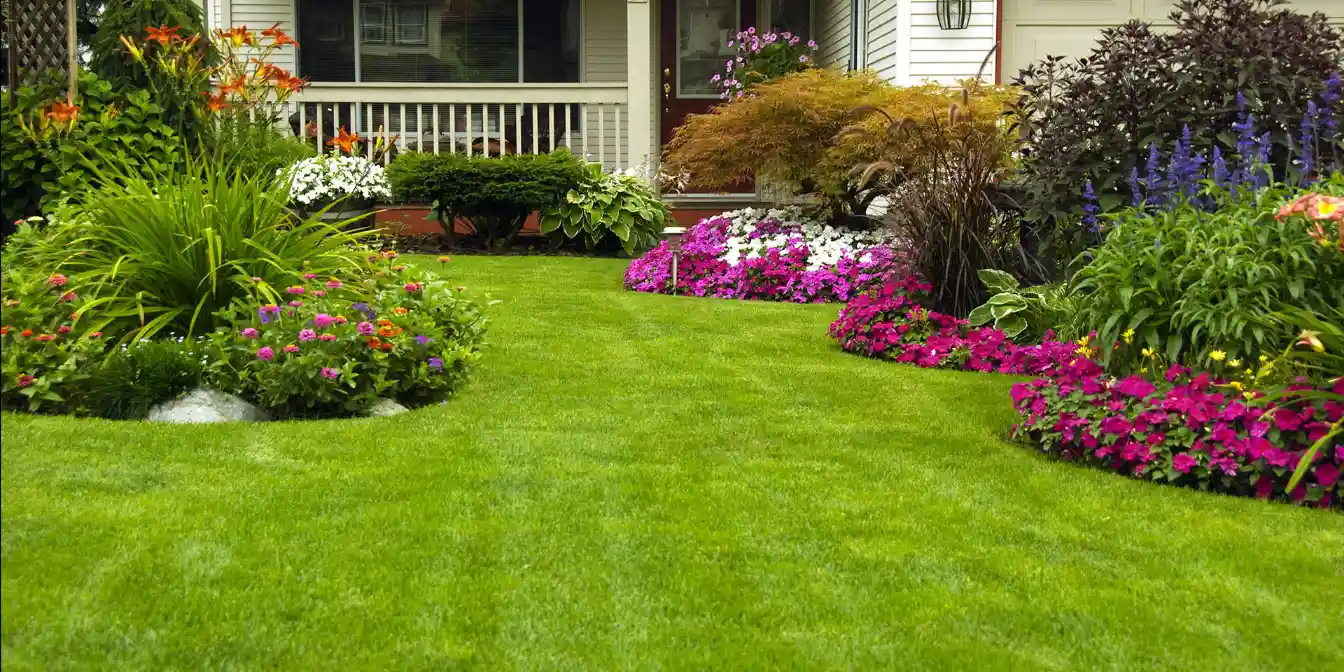
This is what most homeowners are referring to when they talk about landscaping. It covers everything from front yard curb appeal to backyard entertaining spaces.
Residential landscaping focuses on making your property look great, function well for daily use, and hold or increase its value over time. Projects range from simple garden bed refreshes to full outdoor living room installations.
Commercial Landscaping
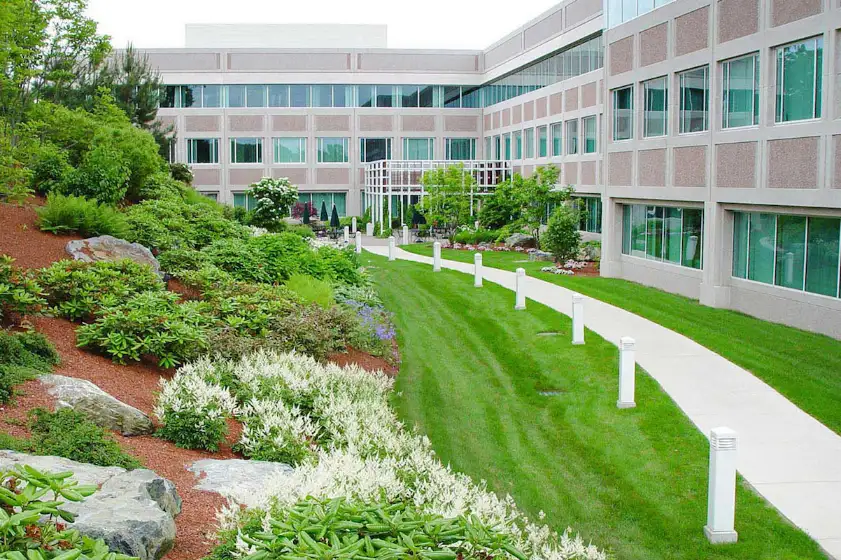
Commercial landscaping serves businesses, apartment complexes, HOAs, and public spaces. The focus is on professional appearance, brand image, and low-maintenance upkeep that stays consistent throughout the year.
These projects typically include long-term maintenance contracts, seasonal clean-ups, parking lot greenery, and irrigation system management.
Sustainable Landscaping and Xeriscaping
One of the biggest trends in 2026 is sustainable landscaping. Homeowners across the US are replacing traditional high-maintenance lawns with native plants, drought-resistant species, and low-water designs.
Xeriscaping is a specific style that originated in arid regions like Arizona and Nevada. It uses rocks, gravel, and native plants that require minimal irrigation, making it a smart move if you want a beautiful yard without high water bills or heavy maintenance.
The EPA’s WaterSense program also offers helpful tips for homeowners looking to create water-efficient landscapes.
Why Landscaping Is Worth It (The Numbers Prove It)
It Adds Real Home Value
This is probably the biggest reason US homeowners invest in landscaping, and the data fully backs it up.
A widely cited study from Virginia Tech Extension found that quality landscaping increases perceived home value by 5.5% to 12.7%. On a $400,000 home, that translates to a potential increase of $22,000 to $50,800.
Here is what makes this number even more compelling. According to the National Association of Realtors, 97% of real estate professionals say curb appeal is important for attracting buyers, and 92% recommend improving the yard before listing a home.
That is not a small detail. That is near-unanimous professional agreement that your yard matters at sale time.
The ROI Numbers Are Hard to Ignore
Here is something most homeowners do not know: basic lawn care has one of the highest returns on investment of any home improvement project you can make.
According to industry data compiled by Lawn Love:
- Basic lawn maintenance (mowing, fertilizing, weed control): up to 217% ROI at resale
- General landscape maintenance like mulching and pruning: around 104% ROI
- Tree care: approximately 87% ROI, and homes with mature trees sell faster
These figures make routine landscaping one of the smartest, most cost-efficient investments you can make as a homeowner.
It Is Good for Your Mental Health Too
This one often surprises people, but the science is clear.
Research highlighted by NASA Earth Observatory found that green spaces significantly protect against mood disorders, depression, and stress-related conditions. The effect is also dose-dependent, meaning that more regular exposure to green space leads to greater mental health benefits.
Even having a well-maintained, green yard visible from your window can improve your mental state on a daily basis. That is a benefit you get to enjoy long before you ever sell the home.
How Much Does Landscaping Cost in the US?
What You Can Expect to Pay in 2026
Landscaping costs vary widely depending on the project scope, your location, and materials used. Here is a realistic breakdown based on current US market data from HomeAdvisor and LawnStarter:
| Project Type | Typical Cost Range |
|---|---|
| Basic lawn care (monthly) | $50 to $250/month |
| Garden bed installation | $500 to $3,000 |
| Full landscape design | $1,933 to $7,248 |
| Patio or hardscape project | $3,000 to $15,000+ |
| Complete yard overhaul | $4,500 to $22,500 |
Labor typically runs $50 to $100 per hour for a professional two-person crew. Per square foot, softscape projects run $4 to $12, while hardscape work runs $15 to $30.
What Drives the Price Up or Down?
Several factors affect what you will pay for landscaping:
- Yard size: Bigger yards naturally cost more to design and maintain
- Region: Northeast and West Coast markets tend to have higher labor rates
- Materials: Hardscape materials like stone, concrete, and pavers cost significantly more than plants and mulch
- Project complexity: A simple planting refresh costs far less than a full design and installation job
DIY Landscaping vs. Hiring a Pro
Some landscaping tasks are very DIY-friendly. Planting flowers, laying mulch, mowing, and basic bed maintenance are all things most homeowners can handle without professional help.
But for larger projects like grading, retaining walls, irrigation systems, or drainage correction, hiring a licensed and insured professional is almost always the smarter move. Mistakes on these projects can be costly to fix.
Not sure where to start on your own? This DIY Lawn Care guide for beginners walks you through the basics step by step.
And if you want to know what to do and when throughout the year, the Seasonal Lawn Care Guide on Gen Lawn breaks it all down season by season so you never miss the right window for each task.
Frequently Asked Questions About Landscaping
What is landscaping and what does it include?
Landscaping is the process of planning, designing, and modifying outdoor spaces using both living elements (plants, grass, trees) and built structures (patios, walkways, fences). It also covers grading, drainage, outdoor lighting, and irrigation systems. Essentially, anything that shapes or improves the outdoor areas of your property falls under the landscaping umbrella.
What is the difference between landscaping and lawn care?
Lawn care focuses specifically on your grass, including mowing, fertilizing, aerating, and weed treatment. Landscaping is the broader category that includes lawn care plus outdoor design, plant and hardscape installation, and full property maintenance. Lawn care is one piece of the larger landscaping picture.
Does landscaping really increase home value?
Yes, and the research is strong on this point. A study from Virginia Tech found that quality landscaping increases perceived home value by 5.5% to 12.7%. Basic lawn maintenance alone can return up to 217% ROI at resale. The American Society of Landscape Architects notes that professional landscaping can add 15% to 20% to a home’s resale value when done well.
How often should landscaping be done?
It depends on the service type. Lawn mowing typically happens every one to two weeks during the growing season. Mulching and bed maintenance is usually done once or twice a year. Irrigation checks, pruning, and fertilizing follow seasonal schedules. A full landscape design or redesign is generally a one-time or multi-year investment.
Can I do my own landscaping or do I need a pro?
Many basic landscaping tasks are totally DIY-friendly, including planting, mulching, and basic lawn care. For more technical work like grading, drainage systems, or retaining walls, hiring a licensed contractor is the safer and often more cost-effective long-term choice. If you hire a pro, always ask for proof of licensing and insurance before work begins.
Wrapping It Up
Landscaping is one of the most rewarding investments a homeowner can make. It is not just about having a pretty yard. It is about adding real financial value to your property, creating a functional outdoor space your family can enjoy, and improving your wellbeing every time you step outside.
Here is a quick summary of what we covered:
- Landscaping includes both softscape (plants, grass, trees) and hardscape (patios, walkways, walls)
- It is a broader category than lawn care, which is just one piece of the puzzle
- Quality landscaping boosts home value by 5.5% to 12.7%, with basic maintenance returning up to 217% ROI
- Costs range from $50 per month for basic care to $22,500 or more for a full yard overhaul
- Green outdoor spaces also carry proven mental health benefits backed by scientific research
Ready to take your outdoor space to the next level? Explore the Gen Lawn blog for practical guides, calculators, and expert tips built specifically for US homeowners.
References and Sources
- Virginia Tech Extension: Landscape Plants Rated by Deer Resistance
- National Association of Realtors: 2025 Remodeling Impact Report
- HomeAdvisor: How Much Does Landscaping Cost?
- LawnStarter: Landscaping Cost Guide 2026
- Lawn Love: Landscaping Projects That Add Home Value
- NASA Earth Observatory: Green Space Is Good for Mental Health
- EPA: Green Infrastructure
- American Society of Landscape Architects (ASLA)
- Oxford Learner’s Dictionary: Landscaping
About Author
Khalid Fazal is a seasoned lawn care specialist and horticultural researcher with over 15 years of hands-on experience transforming challenging landscapes into lush, resilient green spaces. His journey didn’t start in a lab, but in a backyard full of stubborn, cracked clay that “experts” said would never grow a healthy blade of grass. Refusing to accept a yard full of dust, Khalid spent years experimenting with organic soil restoration and precise mulching, eventually turning that wasteland into a neighborhood showpiece on a shoestring budget.
From mastering core aeration techniques to optimizing soil pH for specialized turf varieties, Khalid’s approach combines old-school grit with modern agronomic science. He founded Gen Lawn to provide homeowners with honest, research-backed advice that prioritizes long-term soil health over quick-fix chemical solutions. When he isn’t analyzing soil profiles, he’s developing precision tools to help others achieve professional results without the professional price tag.

Lawn Winterizer: When to Apply by Grass & Region [2026]
Table of Contents Home / By Khalid Fazal | Updated:...
Read More
Spring Lawn Care: What to Do and When in Every US Region
Table of Contents Home / By Khalid Fazal | Updated:...
Read More
Lawn Maintenance Checklist by Season and Grass Type (2026)
Table of Contents Home / By Khalid Fazal | Updated:...
Read More
Liquid Fertilizer vs Granular Fertilizer: Which Wins?
Table of Contents Home / By Khalid Fazal | Updated:...
Read More