
Crabgrass Pre Emergent: When to Apply It by US Region [2026]
The bag says to apply crabgrass pre emergent in “early spring.” Around Raleigh, that means the end of February. In northern Iowa, it means late April or early May. Follow the bag in the wrong state and the barrier either fades before the last seeds sprout or goes down after they already have.
That is why crabgrass shows up along the driveway every July even after you treated the lawn. The product rarely fails on its own. Timing, rate, and watering do, and all three are easy to fix once you know your local window.
Here’s the short answer. Apply crabgrass pre emergent when soil 2 inches deep reaches 50 to 55°F, before it holds 55°F for three or four days in a row, then water it in within a few days. That lands in February across Florida, mid-February to early March in North Carolina, and April to early May across most of the Midwest.
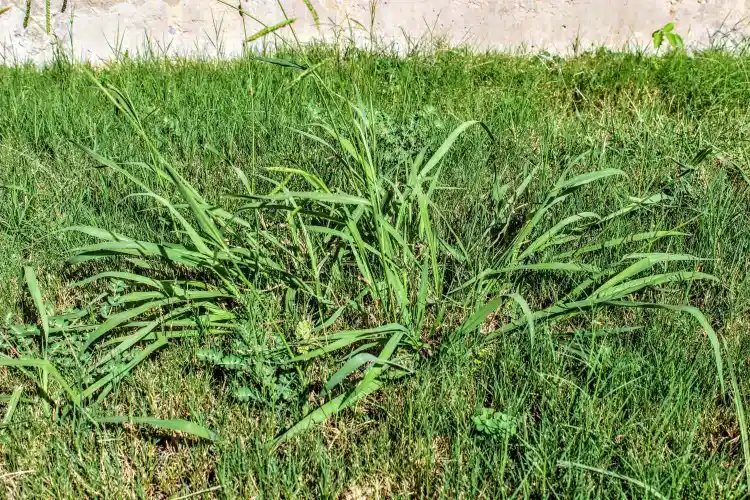
When to Apply Crabgrass Pre Emergent in Your Region
The Soil Temperature Rule Behind Crabgrass Pre Emergent Timing
Crabgrass seed ignores the calendar. NC State found that it germinates once the 24-hour average soil temperature holds around 55°F for three or four days in a row (NC State Extension). Texas A&M uses the same trigger, measured 2 inches below the surface (Texas A&M AgriLife).
A pre-emergent herbicide does not stop seeds from sprouting. It sits in the top layer of soil and kills crabgrass seedlings as they emerge, so it has to be in place and watered in before that 55°F stretch arrives.
Here’s the part most guides skip: early beats late. Purdue turfgrass researchers note that these herbicides don’t start breaking down until late spring, when warm soil wakes up the microbes that degrade them (Purdue Turfgrass Science). Late is the costly mistake. In a three-trial study across Indiana and Pennsylvania, prodiamine applied in June gave no measurable crabgrass control by July (Journal of Environmental Horticulture).
The window is also moving earlier. NC State found crabgrass germinating in February in four of the last five years and now tells North Carolina homeowners to apply weeks ahead of the old dates.
Crabgrass Pre Emergent Timing Chart by US Region
Use this chart as your starting window, then confirm it with a soil reading. Every row comes from a land-grant university extension service in that region.
Region | When to apply | Source |
|---|---|---|
Florida | Early February in South Florida, mid-February in Central Florida, early March in North Florida | |
Texas | Late winter, before 2-inch soil holds about 55°F for three days | |
North Carolina | Mid-February east of Raleigh, by the end of February in central NC, very early March in the western Piedmont, later in the mountains | |
Northern California foothills | Mid to late February in Placer County | |
Pennsylvania | March 15 to April 15 in the southeast, April 1 to May 1 in most areas, April 20 to May 10 in the northern tier and high elevations | |
Illinois | Early to mid-April in the south, mid to late April in central counties, late April to early May in the north | |
Iowa | Early to mid-April in the south, mid-April to May 1 in central Iowa, late April to early May in the north | |
Colorado | By mid-March in Pueblo and Grand Junction, by early April in the Denver metro, by mid-April in the northern Front Range | |
Pacific Northwest | Usually not needed west of the Cascades; east of the Cascades, apply when soil reaches 50 to 55°F |
A warm March pulls these dates forward and a cold spring pushes them back. Iowa State recommends applying early in your window when spring runs warm and late in the window when it runs cold (Iowa State Extension). Colorado State adds that south-facing slopes and turf along sidewalks warm first, so treat those spots earlier (CSU Extension).
How to Check Soil Temperature Before You Spread Crabgrass Pre Emergent
An inexpensive probe soil thermometer is all you need. Push it 2 inches into the turf and read it at the same time each morning for several days, because afternoon sun pushes readings higher than what seeds actually feel.
If you live in Michigan, Illinois, Indiana, or Ohio, Michigan State’s free GDD Tracker does the math for you. Enter your ZIP code and click Crabgrass PRE. It uses growing degree days, a running total of heat the soil has collected, to estimate your soil temperature. Homeowners should aim for the Early or Optimum stage, and anyone already in the Late stage should switch to a dithiopyr product.
Michigan readers can pair it with our Michigan spring lawn care checklist. Everyone else can find free ZIP code soil temperature maps in our spring lawn care timeline.
No thermometer? Watch the shrubs. Iowa State’s cue is when forsythia blossoms start dropping or redbud trees begin to bloom. Penn State warns that plant cues get unreliable in years with odd weather, so treat them as a backup, not a rule.
When Your Lawn Doesn’t Need Crabgrass Pre Emergent
Some lawns can skip it entirely. The Pacific Northwest weed management handbook says summer annual grasses are rarely a problem in western Washington, the Willamette Valley, or coastal Oregon (PNW Weed Management Handbook).
Other lawns are treating the wrong weed. The same handbook stresses identifying the grass first, because pre-emergents do nothing to perennial grasses. True crabgrass is a light green annual whose stems spread flat from one center point and die after the first fall frost. Penn State’s crabgrass identification guide has clear photos.
New lawns are the third exception. Texas A&M advises applying these herbicides only to well-established turf and checking the label if the lawn was seeded, sodded, or sprigged within the past year.
Choosing the Best Crabgrass Pre Emergent for Your Lawn
Shop by active ingredient, not brand. The same chemistry sells under dozens of names, and UF/IFAS tells homeowners to read the label and know exactly which active ingredient they are buying (UF/IFAS Gardening Solutions).
Prodiamine vs. Dithiopyr vs. Pendimethalin for Crabgrass Pre Emergent
Penn State reports that prodiamine, pendimethalin, and dithiopyr have all delivered long-term crabgrass control in its testing. So the choice comes down to your timing and your seeding plans.
Active ingredient | Sold as | Best fit | Watch out for |
|---|---|---|---|
Prodiamine | Barricade and generic prodiamine | Early applications when you want the barrier down well ahead of germination | Works only before crabgrass sprouts |
Dithiopyr | Dimension | Late appliers, since it also kills seedlings up to the one-tiller stage | Stops working on crabgrass that has tillered |
Pendimethalin | Pendulum, Pre-M | Widely sold option with long-term control in Penn State testing | Works only before crabgrass sprouts |
Mesotrione | Tenacity | Spring seeding of most cool-season grasses | Not labeled for new fine fescue; weaker than standard products |
Siduron | Tupersan | Spring seeding of cool-season grasses | Weaker crabgrass control than standard products |
Bottom line: if you are on time, any of the big three works. If you are running late, buy dithiopyr, because it still kills crabgrass up to the one-tiller stage (a tiller is the first side shoot a seedling sends out). If you are seeding this spring, use mesotrione or siduron on those areas.
Granular, Liquid, or Weed-and-Feed Crabgrass Pre Emergent?
Granular products go down with a spreader and suit most homeowners. Liquids go through a sprayer and give an even film if you already own one. Either works, since Texas A&M notes these products only perform when applied uniformly and watered into the soil.
The bigger decision is whether to buy it mixed with fertilizer. UF/IFAS generally recommends against weed-and-feed combinations, because the right week for pre-emergent can be the wrong week to fertilize. Illinois Extension also advises against early spring fertilization and suggests separate applications (Illinois Extension).
Warm-season lawns need extra care here. Texas A&M says crabgrass preventers with nitrogen should not be used in Texas, because warm-season grasses are still mostly dormant when crabgrass germinates. Owners of Bermuda, zoysia, St. Augustine, and centipede across the South should buy a straight herbicide product. Our guide to lawn fertilization and weed control covers how to sequence the two.
Does Organic Crabgrass Pre Emergent Work?
Corn gluten meal is the main organic option, and the research is not on its side. University of Maryland Extension does not recommend it for lawn weed control, citing mixed results and poor performance where weed pressure is high. Texas A&M calls its crabgrass control inconsistent.
There’s also a nitrogen problem. Corn gluten is about 10% nitrogen, and the common label rate of 20 pounds per 1,000 square feet delivers 2 pounds of nitrogen in a single application. That is more than double Maryland’s legal limit of 0.9 pounds per application. Use it as an organic fertilizer if you like it, but don’t count on it to stop crabgrass.
Crabgrass Pre Emergent and New Grass Seed
Most crabgrass pre emergent products stop grass seed just as well as crabgrass seed. Penn State notes the seeding restriction can run up to six months depending on product and rate, and UF/IFAS suggests waiting two to four months before laying new sod.
Siduron (Tupersan) and mesotrione (Tenacity) are the exceptions. Both can go down before, during, or shortly after seeding cool-season grass, though Tenacity is not labeled for new fine fescue. Penn State also points out that neither controls crabgrass as strongly as standard pre-emergents.
If bare spots are your bigger problem, follow our guide on how to overseed a patchy lawn and skip standard pre-emergent on those spots. Otherwise, treat in spring and save seeding for fall with our fall overseeding timing guide. Colorado State gives the same advice: after a spring application, overseeding waits until late summer or early fall.
How to Apply Crabgrass Pre Emergent So It Lasts All Season
Timing gets you most of the way there. Rate, coverage, and water finish the job.
Step-by-Step Crabgrass Pre Emergent Application
- Measure the lawn. Rates are listed per 1,000 square feet, so a guessed lawn size means a guessed dose. Our free Lawn & Garden Calculator gives you exact square footage.
- Calibrate the spreader. The setting on the bag is only a starting point. UF/IFAS recommends calibrating for each product and each person pushing the spreader, since walking speed changes the output. Their spreader calibration guide walks through it.
- Apply the full label rate. Gaps and light spots are where crabgrass breaks through. Research on early applications shows the high label rate matters most when you go down well ahead of germination.
- Sweep stray granules back onto the grass. Product left on sidewalks and driveways does nothing for the lawn and washes into storm drains.
- Water it in. Colorado State says to plan on half an inch to one inch of rain or irrigation to move the herbicide off the leaves and into the soil. Penn State recommends watering it in within 2 to 3 days.
- Leave the barrier alone. Core aeration and dethatching can break the treated layer, so follow the label on timing. Our guide on when to aerate your lawn helps you schedule it around your application.
- Mow high. Penn State recommends a mowing height around 3 inches, and Illinois Extension notes lawns mowed above 3 inches have fewer crabgrass problems. Light, frequent watering favors crabgrass, so water deeply and less often.
Split Applications for Longer Crabgrass Pre Emergent Control
Crabgrass doesn’t sprout all at once. In Pennsylvania, germination peaks a few weeks after it starts and can continue into July. Illinois Extension says it keeps going until soil reaches 95°F, which means a long season in the South.
That is why Penn State recommends a second application 6 to 8 weeks after the first on lawns with heavy crabgrass pressure. Many pros use dithiopyr for that second round, because it also catches seedlings that have just emerged.
One rule matters here. Most labels require a lower rate for each of the two applications so the season total stays under the annual maximum. Read the label before you split.
Missed Your Crabgrass Pre Emergent Window? Here’s the Fix
Seeing tiny crabgrass seedlings already? A standard pre-emergent won’t touch them. Once the weedy grass is visible, the PNW handbook says it is too late for pre-emergent control.
Your best move is dithiopyr, which still controls crabgrass up to the one-tiller stage. Past that point, you need a post-emergent herbicide. Penn State lists quinclorac, fenoxaprop, mesotrione, and topramezone, each with its own turf safety limits, and notes that quinclorac can be inconsistent on plants with two to four tillers.
Florida is the hard case. UF/IFAS says that once crabgrass is growing, few or no herbicides kill it without harming most Florida turfgrasses. Either way, mark next year’s window now. Crabgrass is an annual and dies at the first fall frost, but the seeds it drops this summer will be waiting next spring.
Crabgrass Pre Emergent FAQs
Will crabgrass pre emergent kill existing crabgrass?
No. Standard products only stop seedlings as they emerge. Dithiopyr is the one exception, and it only works until the crabgrass forms its first tiller. Anything larger needs a labeled post-emergent herbicide.
Is it too late to apply crabgrass pre emergent?
If soil has held 55°F for several days and you can see seedlings, it is too late for standard products. If you are right at the edge of your window, switch to a dithiopyr product and apply it immediately. In field trials, June applications gave poor season-long control.
Can you put down crabgrass pre emergent in the fall?
In the Midwest and Mid-Atlantic, yes. A Journal of Environmental Horticulture study found that granular dithiopyr or prodiamine applied in November or March gave season-long control similar to traditional mid-April timing, as long as the high label rate was used. In the South, a fall pre-emergent is usually aimed at winter weeds such as annual bluegrass, not crabgrass.
Does crabgrass pre emergent need to be watered in?
Yes. Plan on half an inch to one inch of rain or irrigation within 2 to 3 days of application. Check your product label for the exact amount, since it can vary by product.
How long does crabgrass pre emergent last?
Long enough to cover one main germination wave, then it fades. Penn State says a product should stay active at least 6 to 8 weeks because crabgrass keeps germinating into summer. If your season runs longer or pressure is heavy, plan a second application.
About Author
Khalid Fazal is a seasoned lawn care specialist and horticultural researcher with over 15 years of hands-on experience transforming challenging landscapes into lush, resilient green spaces. His journey didn’t start in a lab, but in a backyard full of stubborn, cracked clay that “experts” said would never grow a healthy blade of grass. Refusing to accept a yard full of dust, Khalid spent years experimenting with organic soil restoration and precise mulching, eventually turning that wasteland into a neighborhood showpiece on a shoestring budget.
From mastering core aeration techniques to optimizing soil pH for specialized turf varieties, Khalid’s approach combines old-school grit with modern agronomic science. He founded Gen Lawn to provide homeowners with honest, research-backed advice that prioritizes long-term soil health over quick-fix chemical solutions. When he isn’t analyzing soil profiles, he’s developing precision tools to help others achieve professional results without the professional price tag.

Crabgrass Pre Emergent: When to Apply It by US Region [2026]
The bag says to apply crabgrass pre emergent in “early...
Read More
Grub Control Products for Lawns: What to Buy and When
Table of Contents Home / By Khalid Fazal | Updated:...
Read More
Lawn Winterizer: When to Apply by Grass & Region [2026]
Table of Contents Home / By Khalid Fazal | Updated:...
Read More
Spring Lawn Care: What to Do and When in Every US Region
Table of Contents Home / By Khalid Fazal | Updated:...
Read More