
How to Use Compost for Your Lawn: The Complete Guide for US Homeowners
You water it every week. You mow it on schedule. You have even fertilized it twice this season. And yet your lawn still looks patchy, compacted, or just plain tired.
Here is the thing most lawn guides skip right over: the problem is usually not what is growing above the soil. It is what is happening underneath it.
Compost is one of the most effective and underused tools in lawn care. It rebuilds soil structure, feeds the beneficial microbes that unlock nutrients for grass roots, and improves how your lawn holds and drains water. Used consistently, a simple layer of compost applied once or twice a year can transform the way your turf looks, feels, and performs through every season.
This guide covers exactly what compost does for your lawn, which type to buy (and which to avoid), how to apply it correctly step by step, and when to do it based on where you live across the US.
What Is Compost and Why Does Your Lawn Actually Need It?
The Simple Science Behind Compost
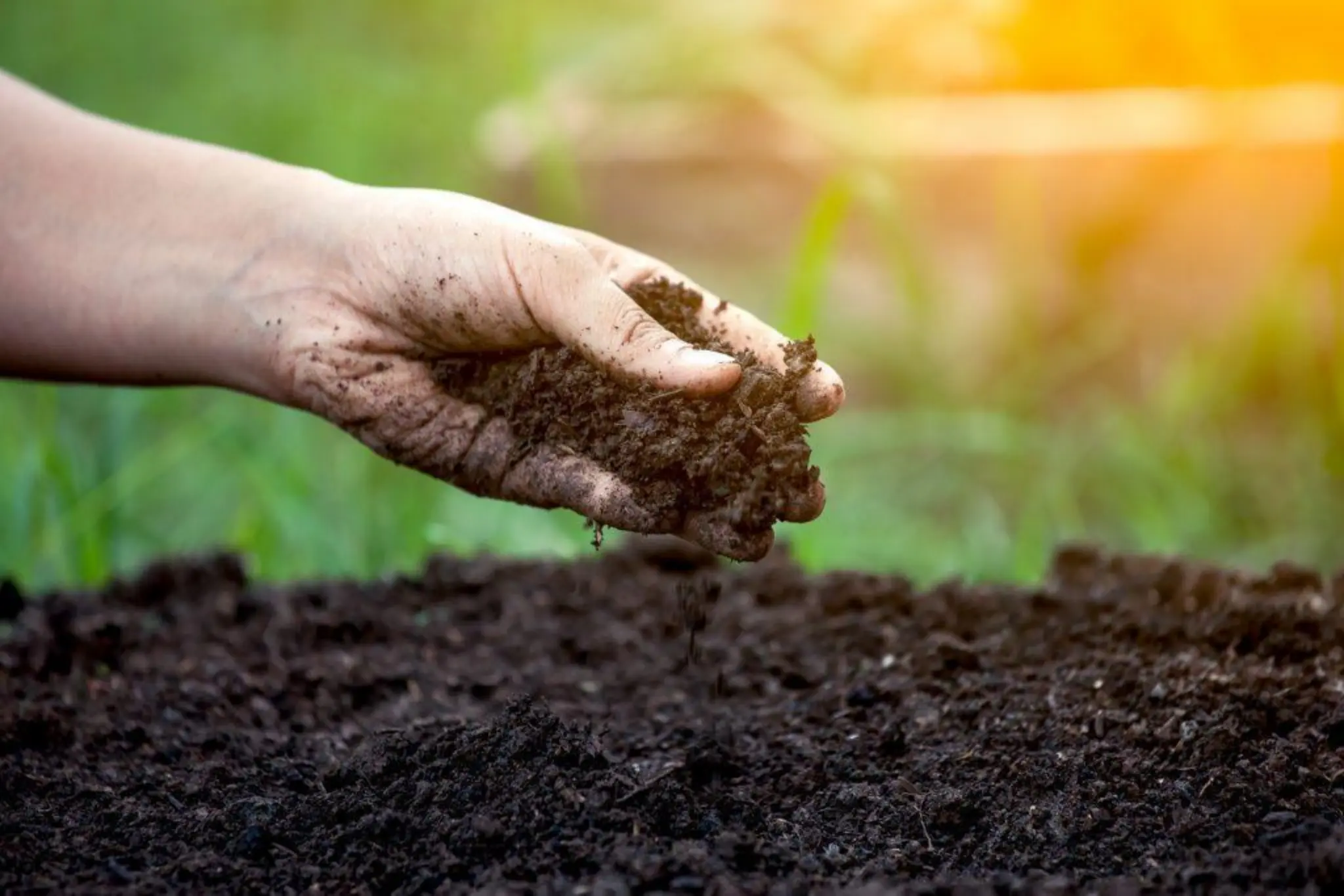
Compost is decomposed organic matter. Think food scraps, leaves, grass clippings, and other natural materials that have broken down over time into a dark, crumbly, soil-like substance. Lawn care professionals have called it “black gold” for decades because of how dramatically it improves what is happening beneath the surface.
The EPA defines compost as a biologically stable soil amendment that adds organic matter, provides slow-release plant nutrients, increases water infiltration and retention, and helps reduce soil erosion. For your lawn, that translates into better root growth, greener color, and grass that withstands summer heat and dry spells far more effectively.
Here is a data point worth remembering: research from the City of Ankeny, Iowa found that just 1 pound of compost added to 100 pounds of soil allows that soil to retain an additional 33 pounds, or roughly 4 gallons, of water. That is a significant difference for any homeowner dealing with dry, compacted ground.
Unlike fertilizer, which feeds the grass plant directly, compost feeds the soil ecosystem that makes those nutrients available in the first place. That distinction matters a lot, and we will come back to it later.
Signs Your Lawn Is Begging for Compost
Not every lawn needs urgent intervention, but most would benefit from compost at some point. These are the clearest signals your soil is running low on organic matter:
- Soil compacts and does not bounce back when you walk across it
- Water pools on the surface after rain instead of soaking in quickly
- Grass yellows even when you are watering and fertilizing on schedule
- You have thin patches, bare spots, or areas that just never fill in
- Thatch accumulates faster than normal mowing and raking can clear it
If two or more of those sound familiar, compost is likely the highest-impact change you can make to your lawn care routine this season.
Best Types of Compost for Your Lawn
Finished vs. Unfinished Compost: Why This Matters
Before you buy anything, understand one critical distinction. Finished compost is dark, crumbly, and smells earthy like a forest floor. Unfinished, or “hot,” compost is still actively breaking down and can actually damage your grass by pulling nitrogen from the soil as it continues to decompose.
According to Penn State Extension’s guide on using composts for turf, a quality compost should have an earthy aroma and be completely free of offensive smells like ammonia or sulfur. Those odors are a reliable sign that decomposition is not complete. For lawn use, always choose fully finished compost.
Homemade vs. Bagged Compost
Both work. The real difference is consistency. Bagged compost from a reputable brand is typically pre-screened and ready to use right out of the bag. Homemade compost can be just as effective and costs almost nothing to produce, but quality depends entirely on what went into the pile and how long it has been composting.
For beginners or anyone without a compost setup, bagged compost is the safer starting point.
| Feature | Homemade Compost | Bagged Compost |
|---|---|---|
| Cost | Very low | Moderate |
| Consistency | Variable | Reliable |
| Convenience | Requires planning | Ready to apply |
| Quality control | Up to the homeowner | Pre-tested |
Top Compost Types for Lawns
Different composts bring different strengths. Here is a quick breakdown:
Blended garden compost is the standard all-purpose option and works well for most topdressing applications on established lawns.
Worm castings are extremely rich in microbial life and nutrients, making them excellent for depleted or clay-heavy soils. They tend to be pricier but highly effective.
Mushroom compost is a byproduct of commercial mushroom farming and is rich in nutrients. It is a solid choice for most lawns but can be high in soluble salts, so use it sparingly on salt-sensitive grass varieties like Kentucky bluegrass.
Leaf mold is simply decomposed leaves. It is lower in nutrients but fantastic for improving soil texture and increasing water retention in sandy or loamy soils.
What to Keep Off Your Lawn
If you are making compost at home, be disciplined about what goes into the pile. Never apply compost containing meat, dairy, oily foods, or pet waste directly to your lawn. These materials either fail to break down properly or introduce harmful bacteria and pathogens.
Hot or steaming compost that has not finished breaking down is also off-limits. Give your pile the time it needs to fully mature before it touches any grass.
How to Apply Compost to Your Lawn Step by Step
The Topdressing Method
Topdressing is the technique used by golf course superintendents and professional lawn managers to gradually improve soil health without disturbing established turf. It involves spreading a thin, even layer of compost directly over existing grass.
Here is the exact process:
Step 1: Mow your lawn short. Cut the grass to around 1.5 to 2 inches and bag the clippings. Exposing as much of the soil surface as possible helps the compost make direct contact where it needs to go.
Step 2: Aerate before you spread (highly recommended). Running a core aerator over your lawn before applying compost dramatically improves results. Aeration pulls small plugs of soil from the ground, creating channels that allow compost to work down into the root zone instead of just sitting on the surface.
Step 3: Spread the compost. Apply an even layer that is no more than one-quarter to one-half inch deep. As the OSU Extension Service confirms, spreading compost at this depth is the correct approach for existing lawns. Applying more than half an inch in one session can smother the grass, block sunlight from reaching the blades, and disrupt soil chemistry.
Step 4: Rake it in. Use a leveling rake to work the compost layer down into the grass so the blades remain mostly visible through the material. You are not burying the lawn, just ensuring contact between the compost and the soil surface.
Step 5: Water thoroughly. Watering immediately after application helps compost settle into the soil, activates soil microbes, and prevents the top layer from drying into a hard crust.
How Much Compost Does Your Lawn Need?
A quarter-inch layer spread over 1,000 square feet requires approximately 1 cubic yard of compost. Most bags sold in hardware stores contain 1 to 2 cubic feet, so a smaller 500-square-foot lawn will need roughly 8 to 12 standard bags.
Apply once or twice a year for best results. Two applications per year, fall and spring, is ideal for lawns with heavily compacted or depleted soil.
Tools That Make the Job Easier
You do not need expensive machinery, but a few items make the process significantly smoother:
- A compost spreader or topdresser (available at most tool rental centers for a half-day fee)
- A leveling rake for working compost down into the grass
- A garden fork for loosening stubborn compacted patches before you begin
When Is the Best Time to Apply Compost for Lawn Health?
Fall Application: The Secret Most Homeowners Miss
Most people assume spring is the right time to feed their lawn. But fall is actually the most effective window for compost topdressing across most of the US.
From September through October, the soil is still warm from summer heat. Warm soil keeps microbial activity high, which means the compost breaks down and integrates into the ground quickly. Grass roots are also in active growth mode as they prepare for winter dormancy, so they are primed to take advantage of the nutrients compost releases. Think of a fall application as a slow-release investment that fully pays off in April and May when your lawn wakes up looking noticeably healthier than the one next door.
Spring Application: Kickstart After Dormancy
A spring topdress from March through April, once the ground has fully thawed, gives your grass an early boost as it breaks out of dormancy. This is also an ideal time to combine compost with overseeding since the organic matter improves seed-to-soil contact and helps new seedlings germinate faster.
Timing by Grass Type Across US Regions
Grass variety changes everything when it comes to timing.
Cool-season grasses such as Kentucky bluegrass, tall fescue, and perennial ryegrass are common in the Northeast, Midwest, and Pacific Northwest. Apply compost in early fall (September to October) and optionally in early spring (March to April).
Warm-season grasses such as Bermuda, Zoysia, St. Augustine, and Buffalo grass dominate the Southeast, Southwest, and Texas. Apply compost in late spring (May to June) when these grasses are growing actively, and again in mid-summer if needed.

Compost vs. Fertilizer: Do You Actually Need Both?
Short answer: yes, in most cases.
Here is what most lawn care articles fail to spell out clearly. Compost and fertilizer are not competing products. They do entirely different jobs.
Compost feeds the soil ecosystem. It improves structure, adds organic matter, and builds long-term biological health below the surface. Fertilizer delivers specific nutrients, primarily nitrogen, phosphorus, and potassium (the NPK ratio you see labeled on every bag), quickly and directly to the plant itself.
| Factor | Compost | Fertilizer |
|---|---|---|
| What it feeds | Soil biology | The grass plant |
| Release speed | Slow (weeks to months) | Fast (days to weeks) |
| Long-term soil benefit | High | Low |
| Risk of burn | Very low | Moderate to high |
| Application frequency | Once or twice per year | Per seasonal schedule |
The practical takeaway: use compost to build your soil foundation over time, and use fertilizer to address specific nutrient deficiencies or push growth during peak season. As your soil improves year over year, you will find you need less and less synthetic fertilizer to maintain the same results.
Frequently Asked Questions About Compost for Lawn
Can I use compost instead of fertilizer on my lawn?
Not entirely, no. Compost releases nutrients slowly and in relatively small quantities compared to fertilizers, particularly when it comes to nitrogen. Using compost alone is a sound long-term strategy for soil health, but most US lawns will still benefit from a targeted fertilizer application at least once or twice per season, especially for color and quick growth response during the growing season.
How long does it take for compost to work on a lawn?
You may notice improved moisture retention and slightly greener grass within two to four weeks of application. More significant improvements to soil structure, like reduced compaction and better drainage, typically develop over one to three full seasons of consistent annual applications. Compost is a long game, and the results compound over time.
Can you put too much compost on your lawn?
Yes. Applying more than half an inch in a single topdressing can smother grass blades, prevent sunlight from reaching the turf, and cause a phosphorus buildup that blocks your grass from absorbing important micronutrients like iron. This leads to yellowing that ironically looks similar to a nutrient deficiency. Stick to the recommended quarter-to-half-inch layer per application every time.
Is compost good for new grass seed?
Absolutely. A thin layer of finished compost applied over a newly seeded area helps retain moisture around germinating seeds, improves seed-to-soil contact, and creates a gentle nutrient-rich environment for young seedlings. Keep the layer thin (under a quarter inch) to avoid burying the seed or creating a crust that blocks germination.
What is the best compost for lawn topdressing?
A screened, fully finished compost that passes through a three-eighths-inch screen is ideal for surface applications on lawns. Blended garden compost and worm casting blends are both excellent starting points. Avoid anything that smells of ammonia, contains visible large chunks of undecomposed material, or arrives wet and clumped together.
Start Small, See Big Results
Most lawn problems start underground. Compacted soil, low organic matter, and poor microbial activity are the real reasons grass struggles, and no amount of surface-level mowing or fertilizing fully solves them long-term.
Compost works from the bottom up. It feeds soil microbes, improves drainage and water retention, helps roots grow deeper and stronger, and makes your entire lawn more resilient to heat, drought, and foot traffic season after season.
Here is the quick version to take with you:
- Apply a quarter to half-inch layer of finished compost once or twice a year
- Fall (September to October) is the best window for cool-season lawns; late spring for warm-season grass
- Aerate before you apply to get compost into the root zone where it does the most good
- Compost builds the soil; fertilizer feeds the plant. A smart lawn uses both
- Always use fully finished, screened compost and skip anything hot, wet, or contaminated
Pick up one bag of quality compost this season, spend an afternoon topdressing, and compare your lawn next spring to the one it is today. For more practical lawn care guides, step-by-step tutorials, and helpful tools, visit the Gen Lawn blog.
About Author
Khalid Fazal is a seasoned lawn care specialist and horticultural researcher with over 15 years of hands-on experience transforming challenging landscapes into lush, resilient green spaces. His journey didn’t start in a lab, but in a backyard full of stubborn, cracked clay that “experts” said would never grow a healthy blade of grass. Refusing to accept a yard full of dust, Khalid spent years experimenting with organic soil restoration and precise mulching, eventually turning that wasteland into a neighborhood showpiece on a shoestring budget.
From mastering core aeration techniques to optimizing soil pH for specialized turf varieties, Khalid’s approach combines old-school grit with modern agronomic science. He founded Gen Lawn to provide homeowners with honest, research-backed advice that prioritizes long-term soil health over quick-fix chemical solutions. When he isn’t analyzing soil profiles, he’s developing precision tools to help others achieve professional results without the professional price tag.
Cost of Synthetic Grass Per Square Foot (2026 Pricing Guide)
Table of Contents Home / By Khalid Fazal | Updated:...
Read More
Artificial Turf Installation Cost: $10-$20/sq ft [2026 Data]
Table of Contents Home / By Khalid Fazal | Updated:...
Read More
Soil Amendments for Lawn: Which One You Need (By Region)
Table of Contents Home / By Khalid Fazal | Updated:...
Read More
Topsoil vs Garden Soil: Which One to Buy [2026 Price Guide]
Table of Contents Home / By Khalid Fazal | Updated:...
Read More