Mulching vs Bagging: Which Is Better for Your Lawn (and When to Switch)
You mow on Saturday, drag three heavy bags to the curb, then spend Sunday spreading fertilizer to replace the nutrients you just threw away. That’s the real cost of bagging every week: you pay for nitrogen twice and do double the work to get it.
Here’s the short answer to mulching vs bagging. Mulch your clippings by default. Bag only when the grass is overgrown or wet, when disease or weed seedheads are active, when you’ve just overseeded, or when fall leaves pile up faster than your mower can chop them.
The exceptions matter, and so does where you live. A Bermuda lawn in Texas and a bluegrass lawn in Michigan don’t follow the same schedule, and in some states bagged clippings can’t go in the trash at all.
Mulching vs Bagging Grass: The Quick Answer
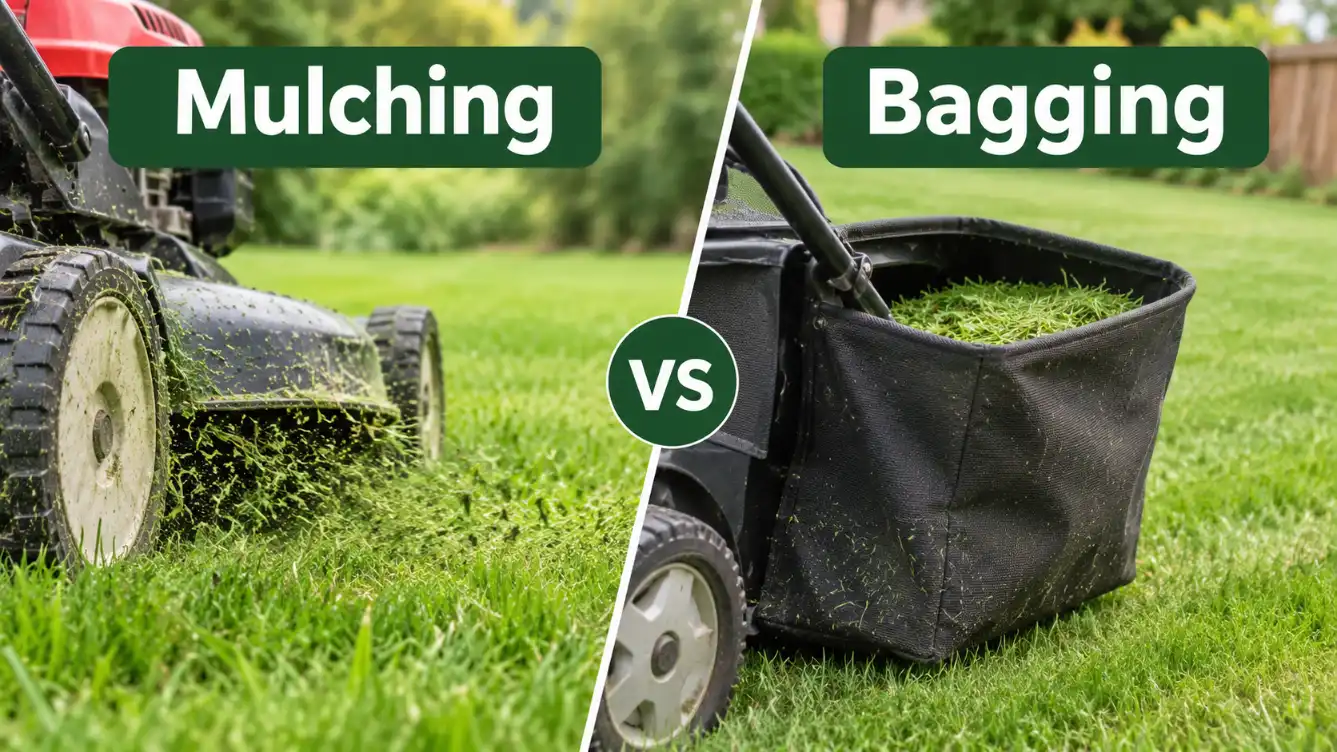
Mulching means your mower chops the clippings into small pieces and drops them back onto the lawn. Extension services call this grasscycling. Bagging means the mower collects the clippings in a catcher so you can haul them away.
Mulching | Bagging | |
|---|---|---|
Time per mow | Faster, no stopping to empty | Slower, with emptying and hauling |
Fertilizer value | Returns nutrients to the soil | Removes them from the lawn |
Best conditions | Dry grass, mowed on schedule | Tall, wet, diseased or weedy grass |
Look after mowing | Fine clippings settle out of sight | Cleanest finish right away |
Disposal | None | Compost, yard waste cart or drop-off |
What Mulching Grass Clippings Does for Your Soil
Grass clippings are fertilizer you already paid for. According to Kansas State University Research and Extension, clippings contain about 4 percent nitrogen, 0.5 percent phosphorus and 2 percent potassium, and an average lawn produces around 1,500 pounds of them a year. That nutrient mix sits close to the 4-1-2 NPK ratio many lawn fertilizers aim for.
The payoff is measurable. The University of Missouri Extension says clippings returned to the lawn provide up to 25 percent of a lawn’s total fertilizer needs.
And it happens fast. The University of Georgia Extension points to research showing clippings can break down in less than a week, with nitrogen recovery as high as 20 percent depending on grass type, soil and fertilizer.
Here’s the thing: if you bag every week, part of your fertilizer budget goes to replacing what you set out on the curb.
What Bagging Grass Clippings Gets You
Bagging isn’t wrong. It’s a tool for specific jobs.
It gives you the cleanest finish, removes heavy clumps before they smother the turf, and pulls disease spores and weed seeds out of the lawn instead of spreading them around. It also gives you raw material for a compost pile or for using grass clippings as mulch in garden beds.
The tradeoff is time, bags and disposal rules, which vary a lot from state to state.
When Mulching Wins the Mulching vs Bagging Debate
For a healthy lawn mowed on a regular schedule, mulching is the better choice almost every time. Three conditions make it work.
Routine Mowing on a Healthy Lawn
Mulching only works when clippings are short enough to slip down between the grass blades. That comes down to the one-third rule: never remove more than a third of the blade in a single cut.
UGA’s example is simple. If you keep tall fescue at 3 inches, mow when it reaches 4. Virginia Tech’s turf guide says that works out to about every 5 to 6 days during active growth, and every 10 days or less when growth slows. Our guide on how often to mow your lawn breaks down timing by season.
Keep the blade sharp, too. A dull blade tears the grass and leaves ragged pieces that don’t break down as quickly.
Saving Time and Fertilizer Money
Mulching also saves real hours. A Kansas State University fact sheet found homeowners cut their average mowing time by 30 percent when they stopped bagging.
The Virginia Tech guide cites a study of 184 homeowners who switched to mulching for a season. Their lawns were rated 30 percent better and clipping handling time dropped 38 percent. Less work and a better-looking lawn is hard to argue with.
Mulching vs Bagging and the Thatch Myth
The most common reason people bag is the fear that clippings cause thatch. They don’t.
UGA says research shows thatch is caused by grass stems, shoots and roots, not clippings. Thatch is a tight layer of tough, slow-to-decay plant tissue between the green grass and the soil. The University of Minnesota Extension says it only becomes a concern once it’s more than half an inch thick.
Clippings are soft, mostly water, and break down quickly. If you have a thatch problem, it started somewhere else.
Mulching vs Bagging: When the Bag Is the Better Call
There are times when mulching does more harm than good. The University of Minnesota Extension lists the main ones, and they line up with what turf pros see in the field.
Overgrown or Wet Grass
Tall or wet grass produces too many clippings at once. Instead of filtering down, they mat on top and block light and air from the turf underneath.
Virginia Tech notes that wet grass clings to the mower and clumps on the lawn, and wet clippings don’t filter through the canopy to add nitrogen as easily as dry ones. If you can’t wait for the lawn to dry, bag that cut. Our guide on mowing the lawn in the rain explains what else wet mowing does to your grass.
For an overgrown lawn, raise the deck to its highest setting, bag the first pass, then lower it a notch on the next mow.
Lawn Disease and Weed Seedheads
UMN recommends picking up clippings when the lawn has a heavy infestation of leaf spot, rust or dollar spot. Mulching diseased clippings spreads the problem across the whole lawn.
The same logic applies to weeds that have gone to seed. Bagging during those few weeks removes the seeds instead of planting them for you.
Overseeding and Heavy Leaf Drop
After overseeding, bag the first few mows so clippings don’t shade out young seedlings.
Fall leaves are a judgment call. Michigan State University Extension recommends mulching leaves into the lawn: start once a thin layer covers the grass, mow at your highest setting, then make a second pass at a right angle to the first. When there are too many leaves to mulch, MSU suggests bagging them with the mower and using them around flower beds, trees, shrubs and vegetable gardens.
Mulching vs Bagging by US Region and Grass Type
The basic rule holds everywhere, but your grass type changes how often you mow and when the bag makes sense.
Cool-Season Lawns in the North
Cool-season grasses like tall fescue, Kentucky bluegrass and perennial ryegrass grow hardest in spring and fall. The spring surge is when most homeowners fall behind and end up bagging clumps.
The fix is to mow more often during that surge, not to bag more. Bunch-type grasses like tall fescue and perennial ryegrass are less prone to thatch than spreading grasses, according to Virginia Tech, so mulching them is about as low-risk as it gets. In fall, expect to bag when leaves pile up faster than you can mulch them.
Warm-Season Lawns in the South
Warm-season grasses like Bermuda, zoysia and St. Augustine grow fastest in summer heat. Virginia Tech notes that thatch is more of a problem in these spreading grasses (stoloniferous and rhizomatous types that spread by runners above or below ground) than in bunch-type grasses.
That doesn’t mean you should bag. It means you need to stay on schedule. Bermuda and zoysia are often mowed short, so a missed week in July can leave a heavy layer of clippings. Mow frequently in peak season and mulch. Bag only when you’ve fallen behind or the thatch layer has passed half an inch.
Transition Zone Lawns
The transition zone is the middle band of the country where temperate and subtropical climates meet. The University of Maryland Extension notes that neither cool-season nor warm-season grasses fit the climate perfectly all year.
Lawns here are usually tall fescue or Bermuda and zoysia, so follow the guidance for your grass type. The main difference is that you get both growth surges: spring and fall for fescue, mid-summer for warm-season grass. Mow more often during those stretches instead of switching to the bag.
Check Your Local Yard Waste Rules Before You Bag
Bagging comes with a disposal question many homeowners don’t think about until the bag is full. The EPA estimates the US generated 35.4 million tons of yard trimmings in 2018, or 12.1 percent of all municipal waste. Many states have responded by keeping it out of landfills.
A few examples:
- Michigan: Michigan EGLE says yard clippings should be composted on site or taken to a composting facility. Only clippings that are diseased, infested or part of an invasive species control program can be landfilled.
- Wisconsin: The Wisconsin DNR lists yard waste, including grass clippings, as banned from disposal.
- Delaware: DNREC has banned yard waste from all Delaware landfills since 2007.
- Pennsylvania: The state bans yard trimmings from landfills, but according to the Institute for Local Self-Reliance, that ban doesn’t extend to grass clippings.
Rules also change at the city level, so check with your trash hauler before you bag. Some areas offer a yard waste cart or paper bag pickup. Others only take clippings at a drop-off site, sometimes for a fee. If none of those options are easy where you live, that’s one more reason to mulch.
Frequently Asked Questions About Mulching vs Bagging
Is it better to mulch or bag grass in the fall?
Mulch in the fall whenever your mower can handle the leaf load. Chopped leaves and clippings break down over winter and feed the soil. Bag when the leaf layer is too thick to mulch in one or two passes, then use those leaves in your garden beds.
Do you need a mulching mower to mulch grass clippings?
No. Virginia Tech says a mulching mower helps but isn’t required. A dedicated mulching mower cuts clippings into smaller pieces before they drop. A standard side-discharge mower also works, though it can spread clippings unevenly and leave rows that smother the grass. A mulching plug or kit for your current mower is a cheap middle ground.
Can you mulch wet grass?
You can, but you shouldn’t. Wet clippings clump, stick under the deck and sit on top of the lawn instead of filtering down to the soil. Wait for the grass to dry, or bag that cut.
Should you bag grass clippings after fertilizing or spraying weed killer?
After fertilizing, mulching is fine and helps keep nutrients in the lawn. After a weed killer application, mulching back onto the same lawn is usually fine too. Read the product label before using treated clippings anywhere else, though, because some herbicide labels restrict using them as garden mulch or compost.
Does mulching grass clippings attract bugs or cause disease?
Fine clippings from a regular mow don’t create a pest or disease problem. Heavy, wet clumps can, because they hold moisture against the turf. Keep the clippings small, and bag only when the lawn already has an active disease outbreak.
The Final Word on Mulching vs Bagging
- Mulch by default. Clippings can provide up to 25 percent of your lawn’s fertilizer needs and break down within days.
- Bag when grass is overgrown or wet, when disease or weed seedheads are active, after overseeding, or during heavy leaf drop.
- Clippings don’t cause thatch. Stems, shoots and roots do.
- Check your state and city yard waste rules before you plan on bagging regularly.
Ready to cut back on fertilizer? Use the free GenLawn lawn calculator to work out how much your lawn actually needs, then let your clippings cover part of it.
About Author
Khalid Fazal is a seasoned lawn care specialist and horticultural researcher with over 15 years of hands-on experience transforming challenging landscapes into lush, resilient green spaces. His journey didn’t start in a lab, but in a backyard full of stubborn, cracked clay that “experts” said would never grow a healthy blade of grass. Refusing to accept a yard full of dust, Khalid spent years experimenting with organic soil restoration and precise mulching, eventually turning that wasteland into a neighborhood showpiece on a shoestring budget.
From mastering core aeration techniques to optimizing soil pH for specialized turf varieties, Khalid’s approach combines old-school grit with modern agronomic science. He founded Gen Lawn to provide homeowners with honest, research-backed advice that prioritizes long-term soil health over quick-fix chemical solutions. When he isn’t analyzing soil profiles, he’s developing precision tools to help others achieve professional results without the professional price tag.

Mulching vs Bagging: Which Wins for Your Lawn? [By Region]
Table of Contents Home / By Khalid Fazal | Updated:...
Read More
How Often to Mow Lawn? [The One-Third Rule Explained]
Table of Contents Home / By Khalid Fazal | Updated:...
Read More
How to Get Rid of Japanese Beetles (What Actually Works)
Table of Contents Home / By Khalid Fazal | Updated:...
Read More
Chinch Bug Treatment: What Works and When to Apply by Region
Table of Contents Home / By Khalid Fazal | Updated:...
Read More