
Snow Mold on Lawns: How to Identify, Fix & Prevent It (By Region)
The snow is finally gone, and your lawn looks worse than it did in November. Circles of flattened, straw-colored grass, some crusted with gray fuzz, some ringed in pink. That’s snow mold, a cold-loving fungus that grows under the snowpack and shows itself the week it melts.
Here’s the good news: most snow mold damage is cosmetic. In most yards, the fungus eats the leaf blades and spares the growing points, so the grass greens back up within a few weeks once the ground dries.
But here’s the catch. One of the two types can kill grass down to the roots, and the usual panic fixes (spraying fungicide, dumping fertilizer on wet patches) waste money and slow recovery. Identify the type first. It decides everything else.
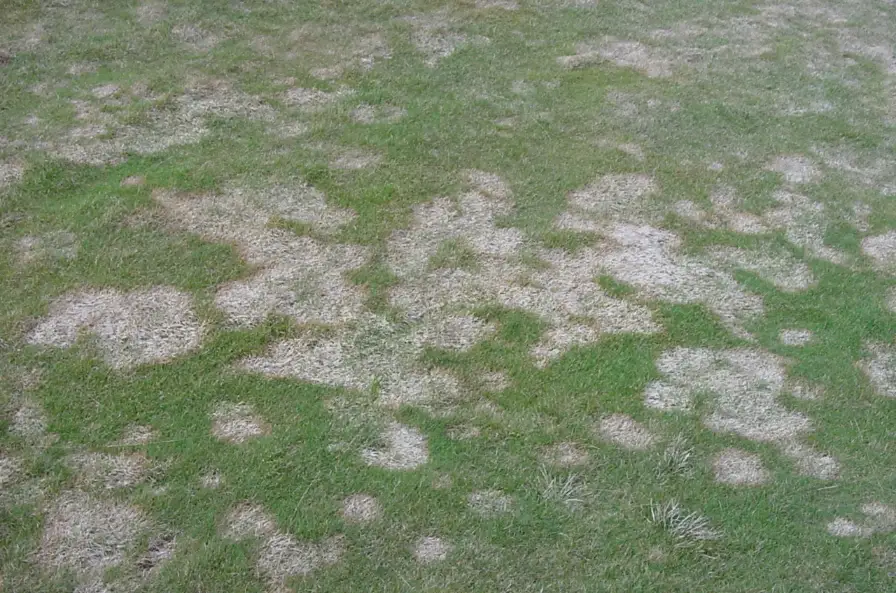
What Snow Mold Looks Like and Which Type You Have
Two fungi cause almost all snow mold in US lawns: gray snow mold and pink snow mold. They often show up together in the same yard, but they behave very differently. That difference decides whether you rake and wait or rake and reseed.
Gray Snow Mold (Typhula Blight)
Gray snow mold is caused by Typhula fungi. Its patches run from a few inches to a few feet across, with matted, bleached grass and sometimes a gray-white web of mycelium (the thread-like body of the fungus) that disappears within hours of drying out.
The giveaway is tiny, pinhead-sized dark specks stuck to the blades. Those are sclerotia, hard resting capsules the fungus uses to survive summer and strike again next winter.
Gray snow mold needs long, steady snow cover. Disease typically develops 30 to 45 days after permanent snow cover begins, which is why it’s worst in the corners of your yard where drifts sit longest. The upside? It usually attacks only the leaf blades and leaves the crown (the growing point at the soil line) alive.
Pink Snow Mold (Microdochium Patch)
Pink snow mold is caused by Microdochium nivale. Patches are smaller, usually 2 inches to about 1 foot across, white or light tan, with a salmon-pink ring at the edge while the fungus is active.
This is the one to take seriously. It doesn’t need snow at all, since the fungus stays active from roughly 30°F to 60°F, so it can strike in late fall, all winter, and well into a cold, wet spring. In severe cases it rots the crowns and kills the grass outright.
Gray snow mold | Pink snow mold | |
|---|---|---|
Patch size | A few inches to a few feet | 2 inches to about 1 foot |
What you see | Gray-white fuzz, dark specks | White fuzz, pink or salmon edge |
Needs snow cover? | Yes, 30+ days | No, cool wet weather is enough |
Damage depth | Mostly leaf blades | Can reach crowns and roots |
Spring fungicide worth it? | No | Rarely on home lawns |
Snow Mold vs. Other Winter Lawn Damage
Not every dead spot in March is snow mold. Before you treat anything, rule out the three common lookalikes.
Vole damage shows up as winding runways of chewed-down grass, not circles. Salt damage is a strip of yellow or brown grass along driveways, sidewalks, and streets. Winter desiccation (grass drying out in cold wind) hits exposed slopes and high spots that had little snow on them.
Here’s the simple rule: round, matted patches in the spots where snow sat longest are snow mold.
Why Snow Mold Shows Up and Where in the US It Hits Hardest
Snow mold needs three things: temperatures hovering just above freezing, constant moisture, and something that traps that moisture against the grass. Where you live decides which type you’re most likely to fight.
Snow Mold Risk by US Region
Upper Midwest, Northern Plains, northern New England, and Mountain West high country. Snow sits for months here, so gray snow mold is the main problem, often with pink mixed in. These are the regions where gray snow mold is a regular winter disease because snow cover lasts so long.
Lower Midwest and the transition zone. Gray snow mold is uncommon in the lower Midwest because snow rarely stays long enough. Pink snow mold is the one to watch, and it can even infect dormant bermudagrass and zoysia lawns.
Pacific Northwest. Western Oregon and Washington barely hold snow, yet the pink snow mold fungus thrives there from September through May thanks to cool, soggy winters. East of the Cascades and in northern Idaho, it shows up as classic pink snow mold during freeze and thaw cycles.
Northeast and Great Lakes cities with on-and-off snow. Expect both types, sometimes side by side in the same patch.
What Triggers Snow Mold in Your Yard
The worst setup is snow falling on unfrozen ground. The soil stays just warm enough for the fungus to grow, and the snow seals in the moisture.
After that, it comes down to what you left on the lawn in fall. Long, lush grass mats down under snow. Leaf piles hold water against the blades. Thatch (the spongy layer of dead stems and roots above the soil) becomes a problem once it passes half an inch. Heavy nitrogen late in the season keeps grass soft right when it should be hardening off.
Then there’s the snow itself. Big shoveled piles and snow packed down by foot traffic melt slowly, which stretches out the time the fungus has to work.
Grasses Most and Least Prone to Snow Mold
Every cool-season grass can get snow mold. Creeping bentgrass and annual bluegrass take the worst damage, while Kentucky bluegrass, perennial ryegrass, and tall fescue sit in the middle.
If snow mold wrecks your lawn every spring, look at fine fescues. Hard fescue is the most resistant, creeping red and sheep fescue are moderately resistant, and Chewings fescue is surprisingly susceptible. Compare your options in our guide to cool-season grass types.
How to Treat Snow Mold in Spring
Spring treatment comes down to one job: dry the lawn out faster. Snow mold fungi slow down as the weather warms and stall out near 55°F, so everything below is about helping sun and air finish the work.
Rake Snow Mold Patches Once the Lawn Dries
Wait until the surface is firm enough that you don’t leave footprints. Raking wet, muddy turf tears out healthy grass along with the dead.
Then lightly rake the matted areas with a leaf rake to lift the blades, let light reach the crowns, and pull out the dead, slimy material. Light means light. You’re fluffing, not dethatching. If you have mold allergies, wear a dust mask for this step.
Give Snow Mold Damage 2 to 3 Weeks Before Reseeding
Most patches recover on their own. In one University of Minnesota case, snow mold damage photographed on April 23 was mostly healed by May 9.
Not sure if a patch is dead? Here’s a quick test. Dig up a few plugs with about 2 inches of soil, water them, and set them on a plate in a sunny window. Live grass greens up in about 5 to 10 days. Once the lawn is waking up, pick up your regular spring lawn care routine.
Reseed Bare Spots Left by Snow Mold
If a patch is still brown after three weeks and your plug test failed, it’s dead. Rake out the debris, loosen the top half inch of soil, and overseed the patchy areas. If your lawn missed its fall feeding, a modest dose of starter fertilizer helps the new seedlings fill in.
If the same spots die every year, reseed them with a hard fescue blend instead of matching what’s already there.
Do You Need Fungicide for Snow Mold in Spring?
No. For gray snow mold, a spring fungicide offers little to no benefit because the damage is already done. Extension specialists say fungicides are rarely needed on home lawns at all, since the injury is normally superficial.
Pink snow mold is the only exception, and it’s a narrow one. Fungicides are generally not recommended for home lawns even here, because the grass usually recovers once the weather turns. Save your money for seed.
How to Prevent Snow Mold Before Next Winter
Next spring’s snow mold is decided in October and November. A few fall habits remove most of what the fungus needs to get going.
Mow to About 2 Inches Before Snow Mold Season
Keep mowing until the grass stops growing, then make the last cut at a final height of about two inches. Shorter grass can’t fold over into the thick, wet mat that snow mold loves.
Skip the advice to scalp your lawn down to half an inch. That cuts off most of the leaf a cool-season grass needs to store energy for winter. Two inches gives you the airflow benefit without the stress.
Clear Leaves and Thatch That Feed Snow Mold
A layer of wet leaves under snow is a ready-made incubator, and the disease can develop right under fallen leaves. Rake or bag them before the first lasting snow. A light pass with a mulching mower is fine, as long as you can still see grass between the pieces. Here’s when mulched leaves start to smother grass.
Check your thatch while you’re at it. Cut out a small wedge of turf and measure. If the spongy layer is thicker than half an inch, plan to core aerate or dethatch in early fall, while the grass is still growing hard enough to recover.
Stop Nitrogen About 6 Weeks Before the First Snow
Here’s why timing matters: fast nitrogen pushes soft, leafy growth, which is exactly what pink snow mold attacks. Hold off on nitrogen for about 6 weeks before a killing frost or the first expected snow, and use slow-release products for your fall feedings. Our lawn winterizer guide has the timing by region.
Snow mold also likes soil that runs too alkaline. The same Illinois guidance recommends keeping soil pH at or just under 6.5. A university soil test shows you exactly where you stand.
Don’t Pile or Pack Snow on the Lawn
Shovel and blow snow onto driveways, beds, or the curb strip, not into a mountain on the grass. Keep foot traffic off snow-covered lawn as much as you can, because compacted snow melts more slowly and gives the fungus extra weeks. If a big drift forms in the same spot every year, a snow fence upwind can keep it off the lawn.
When a Preventive Snow Mold Fungicide Makes Sense
For most homeowners, never. The fall steps above handle it.
The exception is a spot that gets hit hard every single year despite good care. Extension guidance supports applying a fungicide preventively to areas with a history of the disease, in late fall before lasting snow. Treat only that spot, and follow the product label exactly.
Frequently Asked Questions About Snow Mold
Is snow mold harmful to humans or pets?
Snow mold is a grass disease, not a household toxin. The real issue for people is allergies. Spores released as patches dry out can trigger mold allergy symptoms like sneezing, a stuffy nose, itchy eyes, and asthma flare-ups in sensitive people. Wear a mask when raking, and keep pets off active patches until you’ve dried and cleaned them up.
Will grass grow back after snow mold?
In most cases, yes. Gray snow mold usually damages only the leaf blades, so the lawn regrows from the crowns within two to three weeks of warm, dry weather. Patches hit hard by pink snow mold may need reseeding.
Can you get snow mold without snow?
Yes. Pink snow mold develops in any cool, wet stretch between about 30°F and 60°F, snow or no snow. That’s why it’s common in the Pacific Northwest, where lawns rarely see lasting snow.
How long does snow mold last in spring?
The fungus stays active as long as the lawn is cold and wet. Once the soil dries and daytime temperatures hold in the mid-50s or higher, it shuts down, and most patches fade within a few weeks.
What kills snow mold fast?
Sun, airflow, and dry soil. A light raking that lifts the matted grass does more than any product you can buy, because snow mold stops growing once the lawn dries out.
Final Thoughts on Snow Mold
Snow mold looks alarming, but it’s one of the easiest lawn problems to fix and prevent.
- Gray snow mold is mostly cosmetic. Pink snow mold can kill grass and doesn’t need snow.
- In spring, rake lightly once the lawn dries, wait two to three weeks, and reseed only what stays brown.
- Skip spring fungicide. It won’t fix damage that’s already done.
- Prevent it in fall: mow to about 2 inches, clear leaves, stop nitrogen six weeks before snow, and keep snow piles off the grass.
Got bare patches to fill? Measure them with our Free Lawn & Garden Calculator to get the exact amount of seed you need, then come back to this guide in October to stop snow mold before it starts.
About Author
Khalid Fazal is a seasoned lawn care specialist and horticultural researcher with over 15 years of hands-on experience transforming challenging landscapes into lush, resilient green spaces. His journey didn’t start in a lab, but in a backyard full of stubborn, cracked clay that “experts” said would never grow a healthy blade of grass. Refusing to accept a yard full of dust, Khalid spent years experimenting with organic soil restoration and precise mulching, eventually turning that wasteland into a neighborhood showpiece on a shoestring budget.
From mastering core aeration techniques to optimizing soil pH for specialized turf varieties, Khalid’s approach combines old-school grit with modern agronomic science. He founded Gen Lawn to provide homeowners with honest, research-backed advice that prioritizes long-term soil health over quick-fix chemical solutions. When he isn’t analyzing soil profiles, he’s developing precision tools to help others achieve professional results without the professional price tag.

Snow Mold Patches After the Melt? Most Recover in 3 Weeks
Table of Contents Home / By Khalid Fazal | Updated:...
Read More
Dollar Spot Fungus: Fix It Without Fungicide (By Region)
Table of Contents Home / By Khalid Fazal | Updated:...
Read More
Best Weed and Feed for Lawns: 7 Picks by Grass Type [2026]
Table of Contents Home / By Khalid Fazal | Updated:...
Read More
How to Get Rid of Dandelions in Lawn for Good (By Region)
Table of Contents Home / By Khalid Fazal | Updated:...
Read More