
How to Get Rid of Dandelions in Lawn (By Grass Type & Region)
You dug them out in spring. A few weeks later they were back in the same spots, and the lawn looked worse than before. That happens because a dandelion’s taproot usually sits 6 to 18 inches deep, and a broken piece as short as one inch can grow an entire new plant.
To get rid of dandelions in your lawn for good, you have to kill the root, not the leaves. Dig out the whole taproot, or spot-spray a selective broadleaf herbicide in fall, when dandelions pull energy down into their roots and carry the herbicide with it. Then thicken your grass so new seeds have nowhere to land.
If it’s fall where you live right now, you’re in the best treatment window of the year.
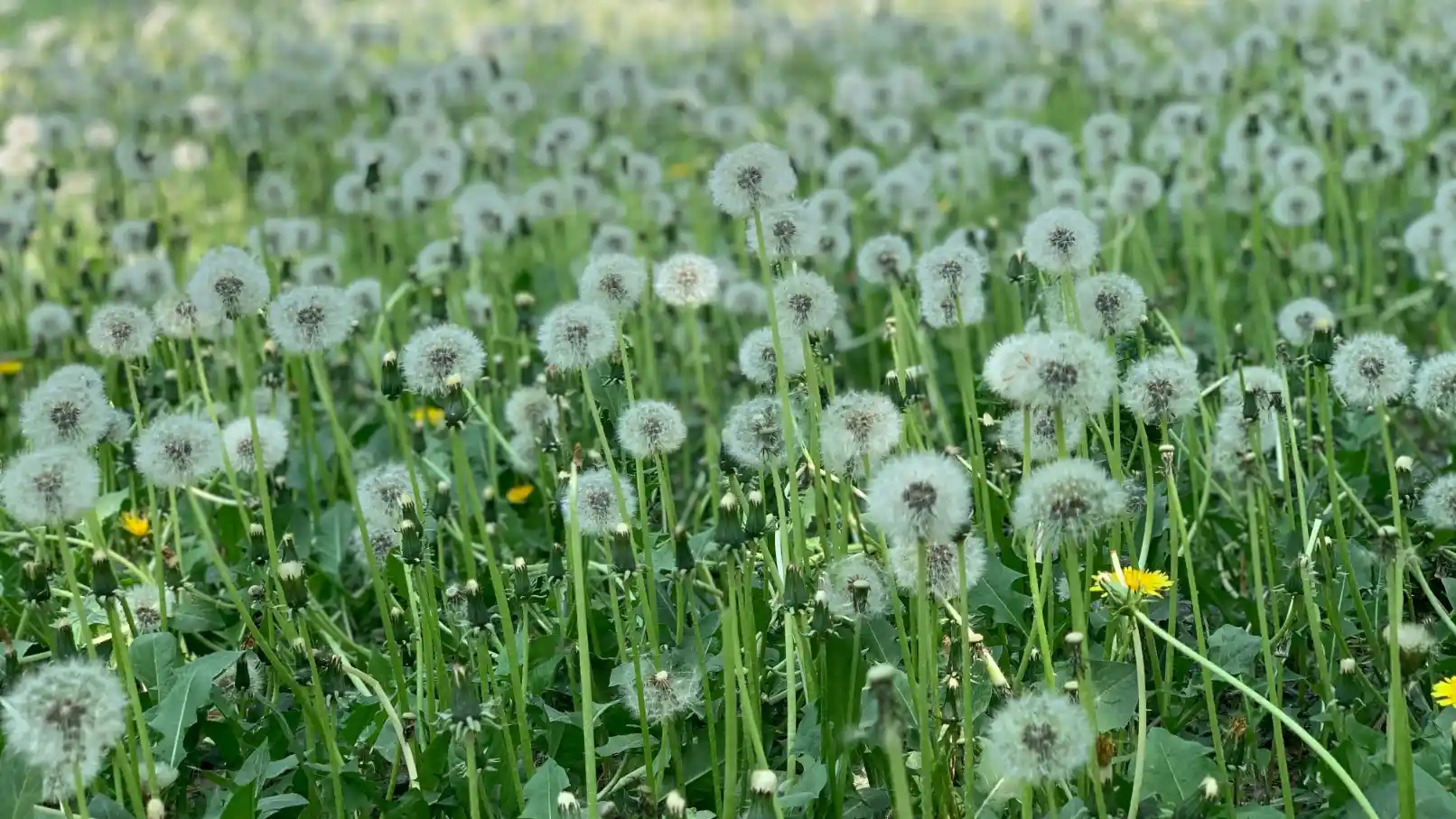
Why Dandelions Keep Coming Back to Your Lawn
The Taproot Is the Real Problem
Dandelions don’t return because their leaves are tough. They return because the root survives. Buds form at the very top of the taproot, so a plant snapped off at or just below the soil line simply regrows from that crown.
This is also why mowing does nothing. Dandelion leaves grow in a flat circle called a rosette, which sits lower than your mower blade can reach.
Thin Turf Gives Seeds a Place to Land
Each puffball releases seeds that can ride the wind for miles. They sprout right at the soil surface once it warms to about 50°F, and sunlight speeds that up.
Here’s the thing: a thick lawn shades the soil, and shaded soil produces far fewer seedlings. Bare patches and thin spots are where new dandelions get their start.
How to Get Rid of Dandelions in Your Lawn: 3 Methods Ranked
Your best method depends on how many you’re dealing with. If you can count the dandelions in a minute or two, dig them. If the lawn looks speckled yellow from the street, spray.
1. Dig Out Dandelions the Right Way
Hand-pulling usually fails because the root snaps. Digging works when you do it in moist soil with the right tool. Iowa State University Extension recommends pulling or digging after a soaking rain or a deep watering.
Use a dandelion knife or a long forked weeder. Push it straight down beside the root as deep as it will go, then lever the plant up instead of yanking it. Check the bottom of the root. A clean taper means you got it all, while a snapped stub means part of it is still in the ground.
Fill the hole with soil and a pinch of grass seed so another weed doesn’t move in. Then watch that spot for a few months, because any missed root piece will push up new leaves.
2. Spot-Spray a Selective Broadleaf Herbicide
For more than a handful of dandelions, a selective herbicide is the practical fix. “Selective” means it kills broadleaf weeds but not most lawn grasses. The most effective products blend two or three active ingredients, usually 2,4-D, mecoprop (MCPP), and dicamba, often sold as a “three-way” herbicide. Read the active ingredients on the label, not just the brand name.
These herbicides are systemic. The leaves absorb them and the plant moves them down into the taproot, which is exactly where you need them.
For the best results, follow these rules from Purdue University’s broadleaf weed guide:
- Spray on a calm day between 50 and 85°F.
- Skip mowing for 3 days before and 3 days after.
- Wet the leaves, but stop before the spray drips off.
- Don’t spray a drought-stressed lawn.
- If it rains within 24 hours and you see no results after 10 days, reapply.
Wondering when it’s safe to water, mow, or let kids and pets back on the grass? Our guide on how long weed killer lasts on a lawn covers it.
One rule with no exceptions: never use glyphosate (Roundup) on dandelions in your lawn. It’s non-selective and kills the grass around them too.
3. Natural Options: One That Works and Two That Don’t
If you’d rather skip synthetic herbicides, iron-based weed killers are your strongest option. They contain chelated iron (FeHEDTA), which broadleaf weeds absorb much faster than grass does. Dandelion leaves turn black within hours.
But here’s the catch: one spray rarely kills the root. In a Cornell trial cited by University of Maryland Extension, dandelions recovered completely. Ohio research in the same review found that three applications spaced 21 days apart gave excellent control. Plan on a repeat schedule, don’t spray when it’ll be above 80°F, and keep it off light-colored concrete because it stains.
Vinegar and boiling water aren’t worth your time. Household vinegar is only about 5% acetic acid and won’t kill dandelions. Horticultural vinegar is stronger and carries a DANGER label, but like boiling water, it only burns what it touches. The leaves die, the root lives, and the grass around the weed gets scorched.
When to Get Rid of Dandelions in Lawn Grass by US Region
Timing matters more than the product. The same spray can give you near-total control or a weak half-kill depending on the month you use it.
Why Fall Beats Spring for Dandelion Control
In fall, dandelions move stored energy down into their roots for winter, and a systemic herbicide rides along with it straight to the taproot. University tests reported by K-State Research and Extension show a fall treatment often gives over 90% control the following spring. A single spring or summer spray gives 50% or less.
Don’t expect instant results. Fall-treated dandelions can hang on for weeks, and SDSU Extension notes you’ll see the real payoff next spring.
Cool-Season Lawns: North, Midwest, and Transition Zone
If you grow Kentucky bluegrass, tall fescue, or perennial ryegrass, your window runs roughly mid-September through early November. Not sure what you’re growing? Check our guide to cool-season grass types.
The sweet spot is right after the first light frost. Research cited by Purdue’s turf team found that 2,4-D and dicamba controlled dandelions far better when applied 1 to 10 days after the first fall frost than before it. Colder areas close sooner. In Indiana, Purdue suggests finishing by November 1 in the north and before December 1 in the south.
Warm-Season Lawns: South and Gulf Coast
Bermudagrass, zoysia, bahia, centipede, and St. Augustine lawns need more care. Centipedegrass and St. Augustinegrass are sensitive to 2,4-D, so choose a product labeled for your grass and use the lower rate the label lists for those species. See our warm-season grass types guide if you’re unsure what’s in your yard.
Clemson Extension recommends treating broadleaf weeds in spring or fall when temperatures sit between 65 and 85°F. Never spray during spring green-up; wait until the lawn is fully green. Heat is the other risk, because 2,4-D products can injure centipede and St. Augustine above 85°F.
| Region | Common grasses | Best window | Watch out for |
|---|---|---|---|
| North and Midwest (cool-season) | Bluegrass, tall fescue, ryegrass | Mid-September to early November, ideally just after the first frost | Hard freezes that damage the leaves |
| Transition zone | Tall fescue, zoysia, bermudagrass | October to late November | Mixed lawns: the label must cover every grass you have |
| South and Gulf Coast (warm-season) | St. Augustine, centipede, bermudagrass, zoysia, bahia | Fall while the grass is still green, at 65 to 85°F | 2,4-D sensitivity and spring green-up |
Your local county extension office can confirm exact dates for your area.
Is It Too Late to Spray Dandelions This Fall?
Probably not. As long as the leaves are still green and you get a day that reaches at least 50°F, a fall application can still work. Michigan State research cited by Purdue found good dandelion control from applications made through late October, even when the plants weren’t actively growing.
The real cutoff comes when sustained hard freezes damage the leaves. No healthy leaves means no uptake.
Spring Cleanup Before the Puffballs
Fall spraying won’t catch every plant. In spring, dig or spot-spray survivors before they flower, and pinch off any yellow heads before they turn into puffballs. Purdue rates late spring, after flowering, as the second-best spray window. Go easy near flower beds and vegetable gardens, though, because drift can damage them.
How to Keep Dandelions Out of Your Lawn for Good
Killing dandelions is only half the job. Purdue is blunt about it: complete eradication isn’t realistic, because new seeds keep blowing in. A dense lawn is what stops them from taking hold.
Mow Higher and Feed on Schedule
Mow cool-season lawns at 3 to 3.5 inches, and never cut off more than a third of the blade at once. Taller grass shades the soil, and shaded soil means fewer seedlings.
Feed in fall, too. Purdue recommends putting most of a cool-season lawn’s yearly nitrogen down in two fall feedings, one in September and one in November. Our lawn fertilizer schedule breaks down timing for every region.
Overseed and Aerate Thin Spots
Every bare patch is an open invitation for dandelion seed. Overseeding in fall closes those gaps. Clemson notes that core aeration relieves the soil compaction that weakens grass roots and favors many weeds, and our guide on when to aerate your lawn helps you time it.
One warning: herbicides and new grass don’t mix. Purdue advises waiting until new seedlings have been mowed at least three times before spraying a broadleaf herbicide over them. If you’re doing both this fall, spray first and seed afterward. Clemson suggests waiting three to four weeks, but always follow your product label.
Your Crabgrass Preventer Isn’t a Dandelion Plan
Plenty of guides tell you to spread a pre-emergent and call it done. Purdue states plainly that crabgrass pre-emergents won’t stop perennial broadleaf weeds like dandelions from infesting a lawn.
Some pre-emergents containing dithiopyr or isoxaben have helped manage dandelion seedlings, but none of them touch the plants already growing in your yard. Treat them as a small extra layer, not the plan. If you already apply one for crabgrass, our crabgrass pre-emergent timing guide shows when to put it down.
Frequently Asked Questions About Dandelions in Your Lawn
What kills dandelions permanently in a lawn?
Anything that kills the entire taproot. That means digging out the full root, or applying a selective systemic herbicide such as a 2,4-D, MCPP, and dicamba blend in fall. Keeping them gone depends on your grass, because new seeds land every year and only thick turf stops them from rooting.
Can you get rid of dandelions without killing the grass?
Yes. Use a selective broadleaf herbicide labeled for your grass type, an iron-based weed killer, or a dandelion weeder. Avoid glyphosate and vinegar, since both damage grass along with the weed.
Does pulling dandelions make them spread?
Pulling doesn’t spread seed unless the plant already has puffballs. The bigger problem is a snapped root, which regrows from the piece left in the soil. Pull or dig only when the soil is moist, and bag any seed heads.
Does vinegar kill dandelions in the lawn?
No. Kitchen vinegar is too weak, and horticultural vinegar only burns the leaves while the root survives. It also kills any grass it touches.
Can you spray dandelions after a frost?
Yes, and it often works better. Research cited by Purdue found 2,4-D and dicamba far more effective when applied 1 to 10 days after the first fall frost. Spray on a day that reaches at least 50°F while the leaves are still green.
Your Dandelion-Free Lawn Plan
- Kill the root, not the leaves, by digging the full taproot or using a systemic selective herbicide.
- Treat in fall, ideally just after the first light frost, on a day that reaches 50°F or warmer.
- Match the product to your grass, especially if you have centipede or St. Augustine.
- Skip vinegar, boiling water, and crabgrass preventers as dandelion fixes.
- Mow high, feed in fall, and overseed thin spots so new seeds can’t take hold.
Check your grass type today. Then watch the forecast for the next calm day that reaches 50°F and spot-spray every dandelion you can see. Come spring, you’ll be pulling a few stragglers instead of staring at a yellow lawn.
About Author
Khalid Fazal is a seasoned lawn care specialist and horticultural researcher with over 15 years of hands-on experience transforming challenging landscapes into lush, resilient green spaces. His journey didn’t start in a lab, but in a backyard full of stubborn, cracked clay that “experts” said would never grow a healthy blade of grass. Refusing to accept a yard full of dust, Khalid spent years experimenting with organic soil restoration and precise mulching, eventually turning that wasteland into a neighborhood showpiece on a shoestring budget.
From mastering core aeration techniques to optimizing soil pH for specialized turf varieties, Khalid’s approach combines old-school grit with modern agronomic science. He founded Gen Lawn to provide homeowners with honest, research-backed advice that prioritizes long-term soil health over quick-fix chemical solutions. When he isn’t analyzing soil profiles, he’s developing precision tools to help others achieve professional results without the professional price tag.

Snow Mold Patches After the Melt? Most Recover in 3 Weeks
Table of Contents Home / By Khalid Fazal | Updated:...
Read More
Dollar Spot Fungus: Fix It Without Fungicide (By Region)
Table of Contents Home / By Khalid Fazal | Updated:...
Read More
Best Weed and Feed for Lawns: 7 Picks by Grass Type [2026]
Table of Contents Home / By Khalid Fazal | Updated:...
Read More
How to Get Rid of Dandelions in Lawn for Good (By Region)
Table of Contents Home / By Khalid Fazal | Updated:...
Read More