
How to Use Compost for Lawn Seeding the Right Way
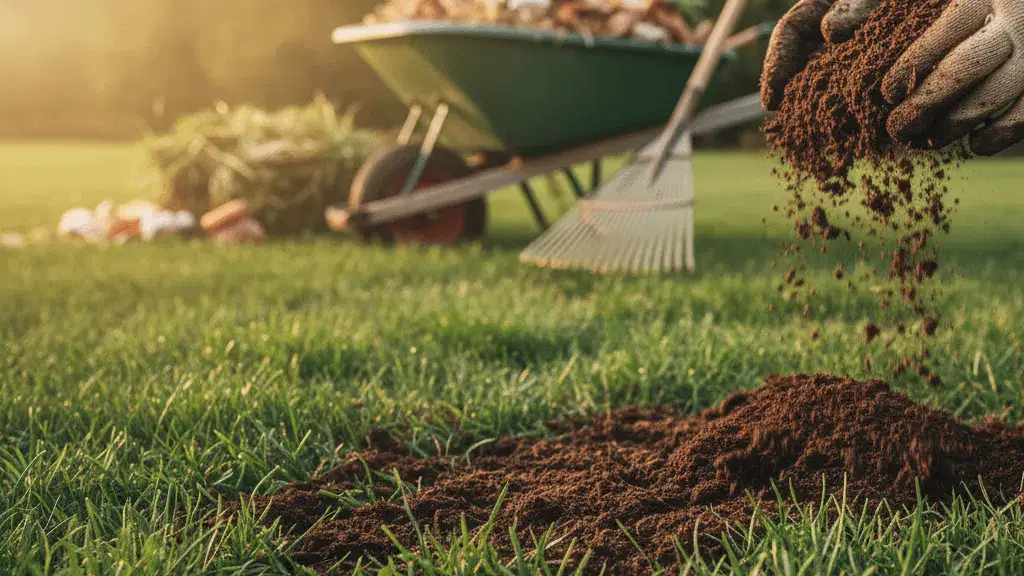
Poor soil repels moisture, suffocates roots before they start, and gives seeds nowhere to anchor. That is exactly where compost for lawn seeding comes in. A correctly applied layer of finished compost locks in moisture around germinating seeds, feeds the microbes that grass roots depend on, and creates the soft, crumbly seedbed that turns scattered seed into a thick, even lawn.
Why Compost Makes Such a Difference for Lawn Seeding
Most lawn problems start underground. Compacted soil, low organic matter, and sluggish microbial activity are the real reasons grass seed struggles to establish, and surface-level fixes like more watering or more seed rarely solve them.
Compost works at the root level, and that is why it outperforms almost every other quick fix.
What Compost Actually Does Underground
When you apply a thin layer of finished compost over a seeding area, a few key things happen at once. The organic matter loosens compacted soil, making it easier for tiny seedling roots to push downward. The compost holds moisture consistently around the seed, which is critical because a germinated seed that dries out even once will not recover.
Beyond that, compost feeds soil microorganisms. These microbes break down organic material into plant-available nutrients and actively suppress some fungal diseases that attack young seedlings. Research from Michigan State University confirmed that quality compost applied to turf results in faster establishment, improved grass density, deeper root growth, and reduced need for both fertilizer and irrigation over time.
Compost vs. Topsoil vs. Starter Fertilizer
People often confuse these three, and using the wrong one at the wrong time leads to disappointing results. Here is a simple breakdown:
| Product | What It Does | Best Use Case |
|---|---|---|
| Finished Compost | Improves soil structure, feeds microbes, retains moisture | Topdress over seed or incorporate before seeding |
| Topsoil | Adds volume and structure, fills bare areas | Grading, filling low spots, new lawn base |
| Starter Fertilizer | Delivers immediate phosphorus for root development | Apply alongside or after seeding |
The short version: compost improves your soil long-term, topsoil fills and structures, and starter fertilizer gives seedlings a fast nutrient boost. For thin or poor-quality soil, combining compost and a starter fertilizer gives you the best of both worlds.
What Type of Compost Works Best for Lawn Seeding
Not all compost is the same, and using the wrong kind can damage your seed or stall germination entirely.
Always Use Finished, Fully Cured Compost
This is the single most important rule. As NC State Extension confirms, fresh or “hot” compost can kill grass seed by tying up nitrogen in the soil and creating conditions that burn delicate seedlings before they even emerge.
Finished compost should look and feel like dark, crumbly soil. Here is a three-point check before you apply anything:
- Smell test: Earthy and pleasant, like forest floor. Ammonia or sulfur smell means it is not ready.
- Texture test: Crumbles easily in your hand. No recognizable scraps, chunks, or stringy material.
- Color test: Dark brown to near-black throughout. Uniform in appearance.
If you are buying bagged or bulk compost, ask the supplier whether it has been fully cured. With bulk compost, visit the storage site if you can. A site full of weeds is a red flag for contaminated product.
Screened vs. Unscreened Compost
Particle size matters more than most people realize. According to Composting For Dummies, you should only top-dress seed with screened compost at a particle size of 3/8 inch or smaller. Large chunks sit on top of the soil surface rather than filtering down between grass blades and seed, which means poor seed-to-soil contact and uneven germination.
Most bagged compost from garden centers is already screened. If you are buying bulk, ask specifically for screened compost and look for fine, uniform texture without large clumps.
Can You Use Homemade Compost for Lawn Seeding?
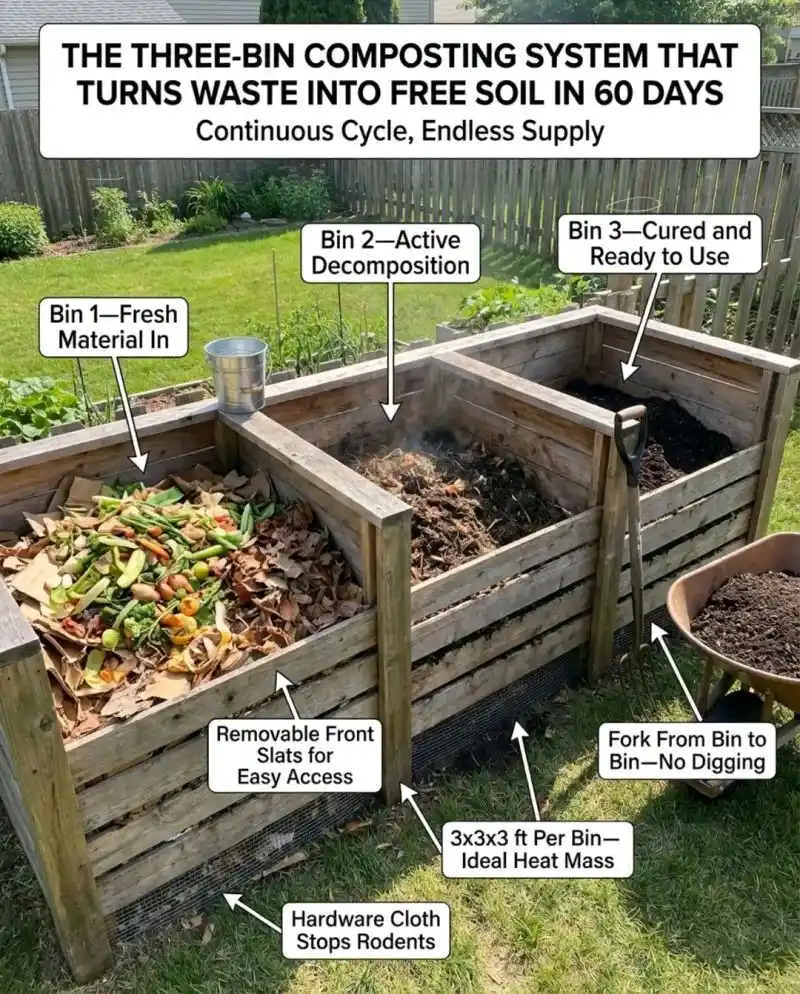
Yes, absolutely, but only if it is fully broken down. Homemade compost that still has visible food scraps, recognizable leaves, or a sharp smell is not ready and should not go near seed.
If you want to make sure your homemade compost is ready to use, Penn State Extension has a detailed home composting guide that walks through the full curing process. The short version: run it through a half-inch screen before applying it to your lawn, and trust your nose. If it smells like good soil, it is good to go.
How to Apply Compost When Seeding Your Lawn (Step-by-Step)
The application process depends on whether you are starting from bare soil or overseeding an existing lawn. Both work well with compost, but the steps are a bit different.
Scenario A: Starting a New Lawn from Bare Soil
Step 1: Grade and Prep the Area
Remove rocks, roots, old vegetation, and any debris. Grade the surface so it slopes slightly away from structures to prevent pooling. You want a reasonably level seedbed before anything else goes down.
This is also the right time to test your soil pH. Grass grows best in soil with a pH between 6.0 and 7.0. If you skip this step and your soil is too acidic or alkaline, the grass will struggle no matter how much compost you use. Penn State Extension has a solid resource on understanding soil pH if you want to dig deeper.
Step 2: Incorporate Compost Into the Top Layer
For new lawns, work compost into the top 2 to 3 inches of soil rather than just laying it on top. Spread a 1 to 2 inch layer of finished compost across the area and rake or till it into the existing soil. This changes the soil structure throughout the root zone, not just at the surface.
Step 3: Broadcast the Seed
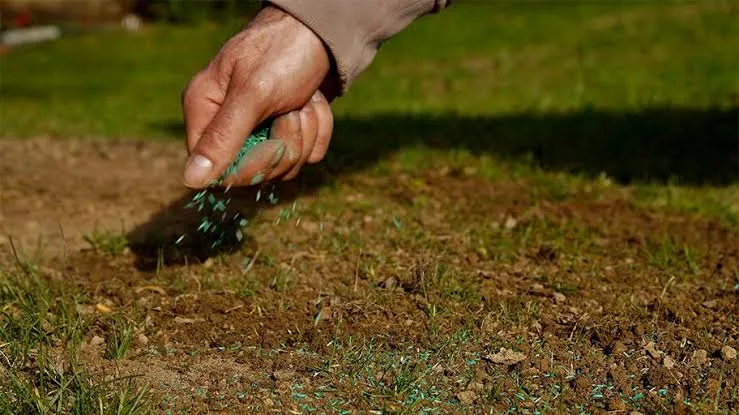
Use a broadcast spreader for larger areas or apply by hand for smaller patches. Aim for even coverage. Split your seed into two passes, one going north-south and the other east-west, to avoid thin strips.
Step 4: Apply a Thin Compost Topdress
After seeding, apply a light topdress of compost over the entire seeded area. The target depth is 1/4 inch, no more than 1/2 inch in any spot. You should still be able to see some seeds through the compost after applying it. Too thick a layer is one of the most common mistakes and smothers germination before it starts.
Step 5: Press the Seed In and Water
Tamp the area lightly with the back of a rake or roll it with a lawn roller if you have one. This presses seed into contact with the soil and keeps it from washing away during the first watering.
Water immediately after applying. Keep the top 1 inch of soil consistently moist, not saturated, for the first 2 to 3 weeks. Light, frequent watering beats heavy, infrequent sessions during germination.
Scenario B: Overseeding an Existing Lawn
Step 1: Mow Low and Aerate
Cut your lawn shorter than usual, around 1.5 to 2 inches, and remove the clippings. Then core aerate the lawn. Core aeration pulls plugs of soil from the ground, reducing compaction and creating direct pathways for seed to reach the soil. Leave the plugs on the surface; they break down naturally.
Step 2: Broadcast the Seed
Spread your grass seed evenly using the same two-pass approach as with a new lawn. Use overseeding rates as listed on the seed bag, which are typically lower than new lawn rates.
Step 3: Topdress With Compost
Apply a 1/4 inch layer of screened, finished compost evenly across the seeded area. Rake lightly to work the compost down between the grass blades without displacing the seed. For more detail on the benefits of using compost across lawn applications, the genlawn.com compost guide is a solid resource worth bookmarking.
Step 4: Water Consistently
Water lightly twice a day for the first week, then once a day as seedlings emerge. After two weeks, reduce frequency and increase depth to encourage roots to grow downward.
When Is the Best Time to Use Compost for Lawn Seeding?
Timing your seeding and compost application around your grass type makes a significant difference in how well the seed establishes.
Cool-Season Grasses: Late Summer to Mid-October
Cool-season grasses like tall fescue, Kentucky bluegrass, and perennial ryegrass are the dominant lawn types across the northern US. Their peak germination window is late August through mid-October, when soil temperatures are still warm but air temperatures are dropping.
Seeding in this window means the grass has fall and spring to establish roots before it faces summer heat. Compost applied at this time also breaks down slowly through winter, conditioning the soil before the most demanding growing season.
Warm-Season Grasses: Late Spring Through Early Summer
If your lawn is Bermuda grass, Zoysia, St. Augustine, or centipede grass, your seeding window is late spring through early summer, when soil temperatures hit and stay above 65 degrees Fahrenheit.
Compost topdress at this time supports fast establishment because the warm soil activates microbial activity quickly, turning compost nutrients into plant-available form right when young roots need it most.
Why Compost Beats Straw as a Seed Cover
A lot of homeowners reach for wheat straw to cover seed after seeding. Here is the problem: straw frequently contains weed seeds (including wheat itself), it can mat down and smother seedlings, and it provides zero nutritional value to the soil.
Finished compost retains moisture just as well as straw, its dark color absorbs warmth to speed germination, and it feeds the soil at the same time. It is a clear upgrade in almost every situation.
Common Mistakes When Using Compost for Lawn Seeding
Even people who understand the value of compost often make these errors.
Applying too thick a layer. The 1/4 inch rule exists for a reason. A layer thicker than 1/2 inch blocks sunlight and suffocates seed before it can germinate. If in doubt, go thinner.
Using unfinished compost. If it smells like ammonia, it is not ready. Fresh compost burns seed and ties up nitrogen. Always check before you apply.
Skipping soil prep. Compost is a conditioner, not a miracle fix. If you drop compost on top of hardpan clay or severely compacted soil without breaking it up first, you are wasting your time and your compost.
Watering too hard or too infrequently. A hard stream of water washes seed across the surface before it anchors. Use a mist setting or a sprinkler head with low throw pressure for the first two weeks.
Using mulch instead of compost. These are two different products. Wood chip mulch is for garden beds and trees, not for seeding. It does not integrate with soil and can tie up nitrogen in the same way fresh compost does.
Frequently Asked Questions About Compost for Lawn Seeding
How much compost do I need per 1,000 square feet of lawn?
For overseeding with a light topdress, one cubic yard of screened compost covers roughly 2,400 square feet at a 1/4 inch depth. That means you need about half a cubic yard for every 1,000 square feet. For a new lawn where you are incorporating compost into the soil, plan on 1 cubic yard per 1,000 square feet.
Should I use compost or starter fertilizer when seeding my lawn?
Both, ideally. They serve different purposes. Compost improves your soil structure and feeds microbes over the long term. Starter fertilizer delivers fast-acting phosphorus that promotes early root development. If your soil is already in decent shape, compost alone may be sufficient. If it is thin, sandy, or heavily compacted, use both.
Can I put compost on top of grass seed, or does it go underneath?
Both approaches work, and combining them is ideal. For new lawns, work compost into the soil before seeding, then apply a thin 1/4 inch layer on top after broadcasting the seed. For overseeding, seed first, then topdress lightly with compost and rake to settle it in. The seed needs to be in contact with the soil, not buried under compost.
Will compost help prevent birds from eating my grass seed?
Partially. A thin layer of compost provides some visual coverage that makes seed harder for birds to spot, but it is not foolproof. If bird pressure is high in your area, a light topdress of compost combined with row cover fabric or bird netting for the first week or two gives you the best protection.
How long after applying compost can I seed my lawn?
If you are incorporating compost into the soil before seeding, you can seed immediately after. If you are using fresh or partially cured compost, wait at least two to four weeks before seeding to let it finish breaking down. With finished, cured compost, there is no waiting period. Seed can go down right on top of it.
Key Takeaways
Getting compost for lawn seeding right comes down to three things: using the right product, applying it at the right depth, and timing it around your grass type.
- Always use finished, screened compost. Fresh compost burns seed and stalls germination.
- Keep your topdress layer at 1/4 inch. More is not better when it comes to covering seed.
- Match your seeding window to your grass type: fall for cool-season grasses, late spring for warm-season varieties.
- For new lawns, incorporate compost into the soil first, then topdress lightly after seeding.
- For overseeding, aerate first, seed second, compost topdress third.
Do this correctly and you will spend far less time reseeding thin spots and far more time enjoying a lawn that actually grows in thick and even.
Sources: NC State Extension Organic Lawn Care Guide, Michigan State University Turfgrass Research, Composting For Dummies (Cathy Cromell, certified master composter), Penn State Extension Soil Management Resources
About Author
Khalid Fazal is a seasoned lawn care specialist and horticultural researcher with over 15 years of hands-on experience transforming challenging landscapes into lush, resilient green spaces. His journey didn’t start in a lab, but in a backyard full of stubborn, cracked clay that “experts” said would never grow a healthy blade of grass. Refusing to accept a yard full of dust, Khalid spent years experimenting with organic soil restoration and precise mulching, eventually turning that wasteland into a neighborhood showpiece on a shoestring budget.
From mastering core aeration techniques to optimizing soil pH for specialized turf varieties, Khalid’s approach combines old-school grit with modern agronomic science. He founded Gen Lawn to provide homeowners with honest, research-backed advice that prioritizes long-term soil health over quick-fix chemical solutions. When he isn’t analyzing soil profiles, he’s developing precision tools to help others achieve professional results without the professional price tag.
Cost of Synthetic Grass Per Square Foot (2026 Pricing Guide)
Table of Contents Home / By Khalid Fazal | Updated:...
Read More
Artificial Turf Installation Cost: $10-$20/sq ft [2026 Data]
Table of Contents Home / By Khalid Fazal | Updated:...
Read More
Soil Amendments for Lawn: Which One You Need (By Region)
Table of Contents Home / By Khalid Fazal | Updated:...
Read More
Topsoil vs Garden Soil: Which One to Buy [2026 Price Guide]
Table of Contents Home / By Khalid Fazal | Updated:...
Read More